
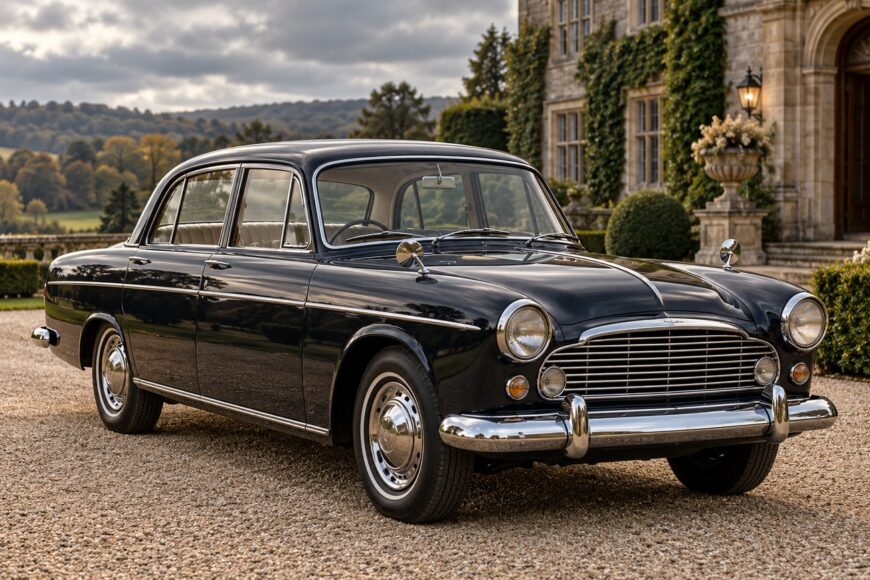
The Humber Super Snipe has the stance of an official car: broad, upright, and built to carry its occupants with composure. Its road performance was more measured than that image might suggest. For anyone studying or buying one, the name covers markedly different Mk and Series cars, rather than a single specification maintained across decades.
“The British general’s car” captures something of the Super Snipe’s formal character. It does not establish that any particular example served in the military. Understanding the distinction begins with the car itself, then with the documents that accompany it.
- Why the ‘British general’s car’ label needs context
- From postwar Mk cars to the final Series
- Humber Super Snipe versions: the differences that matter
- What it is like to drive, rather than merely admire
- The engineering beneath the formal bodywork
- Buying one: identity, completeness, and hidden costs
- Frequently asked questions
- How can I establish whether a particular Super Snipe actually saw military service?
- Which workshop manual should I use for a Super Snipe?
- How should I plan garage space for a Super Snipe?
- What should I ask an insurer before regular classic-car use?
Why the ‘British general’s car’ label needs context
Humber occupied a place in British motoring associated with substantial, comfortably appointed saloons. The Super Snipe fits that tradition: it offers presence and room for passengers, with an emphasis on dignified travel rather than sporting response. Its proportions help explain why a military-sounding nickname has endured.
The description is useful as shorthand for appearance and character, especially when a car is shown in formal paintwork. It is a poor substitute for provenance. A photograph of a similar vehicle, or a seller’s description of one as a “general’s car,” cannot establish the history of the chassis being offered.
There is also no single Super Snipe shape or mechanical specification behind the label. Early Mk cars and later Series models differ in important ways, so even a period-correct impression should be judged against the claimed year. For a buyer, identifying the actual car is more valuable than accepting the nickname at face value.
From postwar Mk cars to the final Series
Viewed from the postwar period to the final Series, the Super Snipe story runs approximately from 1945 to 1967. That span describes the scope of this account; it should not be read as a claim that the model first appeared in 1945. The cars sold across those years belong to distinct phases of Humber design.
The earlier Mk designations describe large saloons whose construction and proportions need to be considered on their own terms. Later Series cars brought different engines, equipment, and styling. Treating a Mk IV and a Series V as successive trim levels of an otherwise unchanged car obscures the differences a restorer or driver will encounter.
The changing roofline makes the distinction visible without opening the bonnet. Series V dispensed with panoramic glazing and adopted a lower, flatter roof, giving it a different profile from earlier Series cars. Photographs can therefore help narrow an identification, though badges, documents, and the car’s own numbers remain necessary checks.
That evolution also changes what “a Super Snipe” means in an advertisement. A familiar model name may bring buyers to a listing, but the Mk or Series designation determines which specifications are relevant and which parts references are likely to help.
Humber Super Snipe versions: the differences that matter
These milestones show why figures should travel with their version labels. Where a reliable figure is unavailable here, it is left unspecified rather than borrowed from another Super Snipe.
| Version | Documented change | Practical significance |
|---|---|---|
| Mk IV | Body-on-frame construction with an X-shaped frame brace; cited length 5,004 mm, width 1,867 mm, and wheelbase 2,940 mm. Engine output unspecified here. | Check the frame’s condition and plan storage around the actual car, rather than applying these measurements to every generation. |
| Series II, October 1959 | Engine enlarged to 3.0 liters; stated 121 bhp and top speed of up to 95 mph. | Use year-specific engine and performance references when assessing a listing. |
| Series V | Stated 128 bhp at 5,000 rpm and 167 lb-ft at 2,600 rpm; lower, flatter roof without panoramic glazing. | Both mechanical figures and body details help distinguish it from earlier cars. |
A 1963 catalogue gives 132.5 bhp, but its precise variant context needs checking before that figure is compared with either Series entry. Catalogue claims are most useful when their year and specification are clear.
What it is like to drive, rather than merely admire
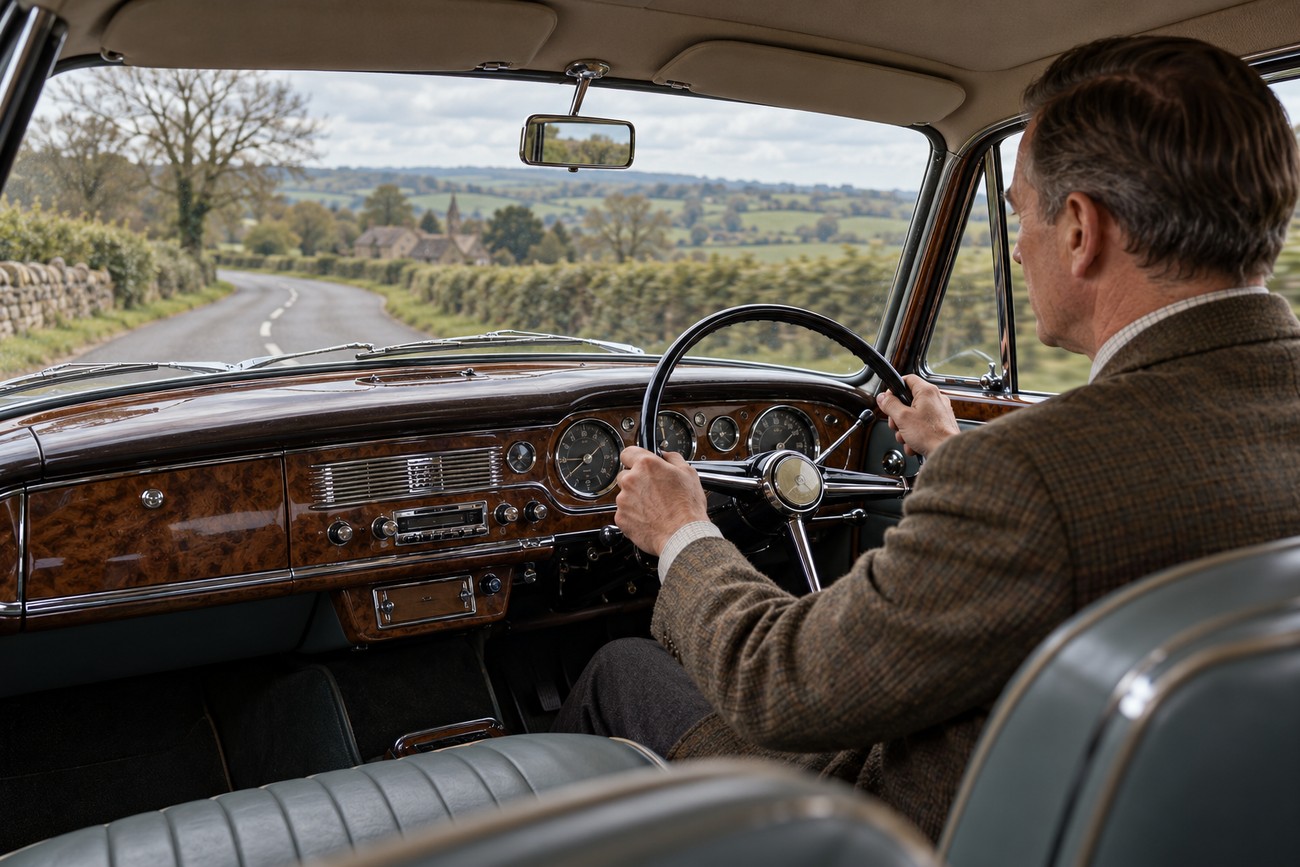
The Super Snipe makes most sense as a spacious saloon for unhurried journeys. Its size and weight contribute to a settled, imposing feel, while asking the driver to think ahead when maneuvering or stopping. Anyone accustomed to a smaller modern car should allow time to learn its dimensions.
An early version was reported to take 21.2 seconds from 0–60 mph. That figure illustrates the modest acceleration of one early car; it is not a test result for the entire range. Nor should the up-to-95-mph figure stated for the October 1959 Series II be used as a measure of every Super Snipe.
Later output figures rose, yet this remained a heavy, large saloon rather than a sports car. On a test drive, the useful questions concern how evenly the engine pulls, whether the controls feel predictable, and whether the car tracks and brakes consistently. A quoted power figure alone cannot answer them.
Its scale matters off the open road as well. Narrow entrances, parking spaces, and turning areas can make an otherwise agreeable cruiser demanding to use regularly. The appeal lies in the manner of travel and the substantial cabin, provided those everyday compromises suit the owner.
The engineering beneath the formal bodywork
Styling was only one part of the Super Snipe’s development. The Mk IV retained body-on-frame construction and gained an X-shaped frame brace, a detail that matters when examining the structure or planning a faithful repair. Its cited dimensions belong to that Mk IV, not to the whole family.
Series V is described with independent front suspension, power steering, front disc brakes, rear drum brakes, and brake servo assistance. Those features complicate the idea that successive cars differed only in their interiors. They also make accurate identification important when ordering brake or steering components.
Transmission descriptions require similar care. Gearbox and synchromesh arrangements should be checked against the relevant year and version, rather than assumed from a general model summary. During a drive, note how each gear engages, then compare its behavior with the correct workshop information before deciding what is normal.
A 1963 catalogue states 132.5 bhp and a 16 imperial gallon (72-liter) fuel tank. Neither claim should be silently substituted for a Series V specification without confirming the catalogue car’s precise variant. Period literature is valuable evidence, but its small print can matter as much as its headline number.
Buying one: identity, completeness, and hidden costs
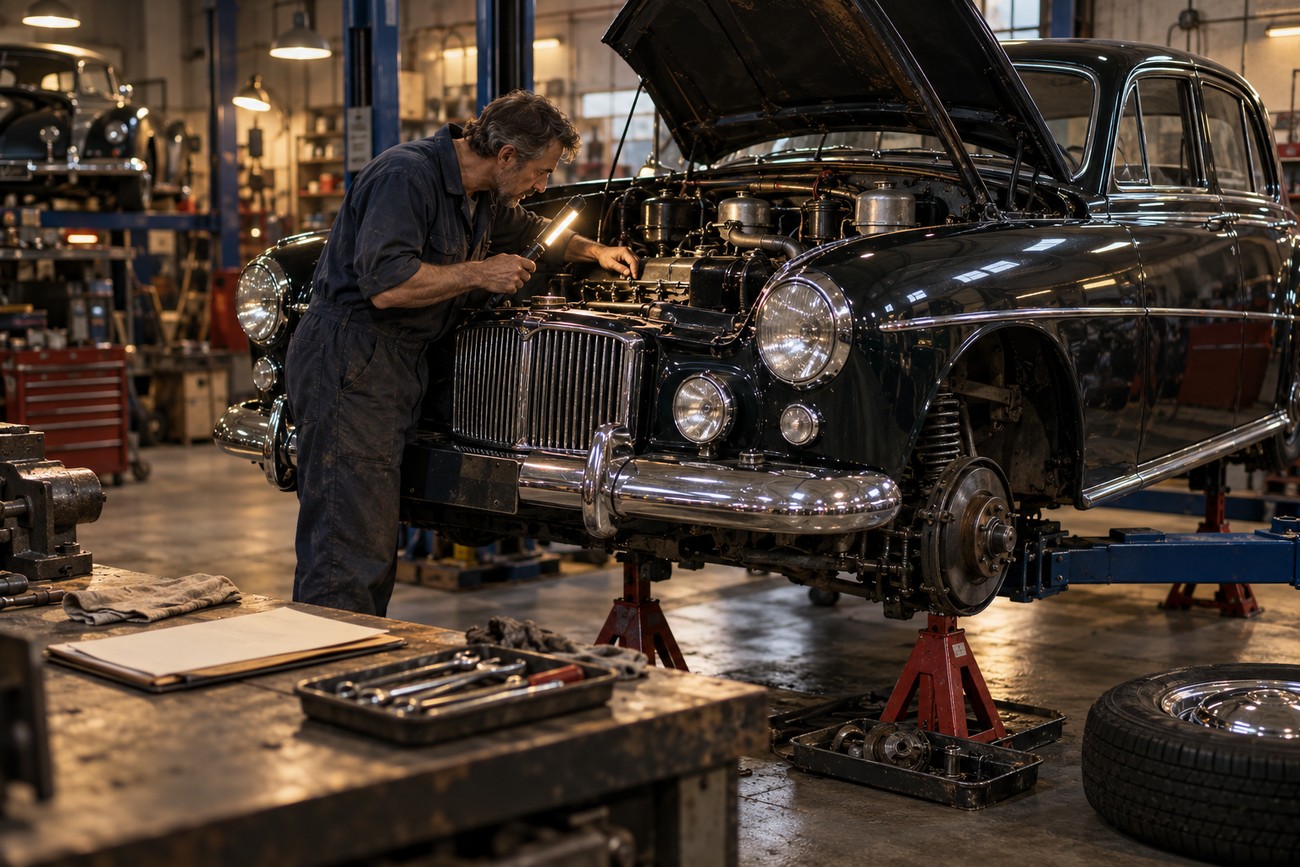
Start by establishing the exact Mk or Series and its production details. Compare the chassis and engine identification on the car with its documents, and investigate any discrepancy before discussing value. An engine replacement may be workable for a driver, but it can change the car’s originality and its appeal to a buyer seeking a particular specification.
Next, inspect the structure and running gear rather than taking a clean exterior or a successful short drive as reassurance. Look closely at the frame or body structure appropriate to the version, then have the brakes, suspension, and steering assessed for condition and wear. These are car-specific inspection risks, not faults established for every Super Snipe.
Price missing version-specific trim before treating a running car as an economical restoration. A component that looks minor in a photograph may govern how long it takes to return the car to its intended appearance.
Check the completeness of body fittings and cabin pieces against photographs or a parts list for the correct version. Availability may vary by component and market, so establish what can actually be sourced before assigning a restoration budget. A complete, less polished car can be easier to plan around than one that looks finished but lacks difficult-to-identify pieces.
Running costs deserve the same measured approach. A large, older saloon will need room to store and maneuver, and fuel use should form part of the ownership plan. The cited Mk IV is 5,004 mm long and 1,867 mm wide, while earlier versions may be smaller: measure the particular car, then check your garage and access route. Its condition, completeness, and identity will tell you more than the Super Snipe badge alone.
Frequently asked questions
Ownership questions often turn on evidence and arrangements specific to one car. The answers below provide a starting point for checking claims, choosing references, and planning regular use.
How can I establish whether a particular Super Snipe actually saw military service?
Seek vehicle-specific records that connect its identification numbers to the claimed service, ideally with a continuous trail through later ownership. Period photographs, registration material, or correspondence may support that trail if they clearly identify the same car. Formal styling, similar paintwork, or the “general’s car” nickname alone proves no individual service history.
Which workshop manual should I use for a Super Snipe?
Choose a workshop manual and parts list that match the car’s Mk or Series designation and production details. Check that their engine, transmission, and equipment descriptions agree with the vehicle before relying on an illustration or procedure. A manual labeled simply “Super Snipe” may cover a different generation from the one in your garage.
How should I plan garage space for a Super Snipe?
Measure the actual car and the route into its storage space. Allow for open doors, access to the bonnet and boot, room to walk around the vehicle, and the turning space needed to enter without repeated tight maneuvers. Published overall dimensions vary by generation and do not account for the layout of your garage.
What should I ask an insurer before regular classic-car use?
Confirm how the insurer sets the car’s value, whether an agreed value is available, and what evidence it requires. Describe your intended mileage and use, including ordinary journeys if you expect to make them, and ask about storage conditions. Classic-car policies can differ, so obtain terms that reflect how you will actually keep and drive the Humber.







