
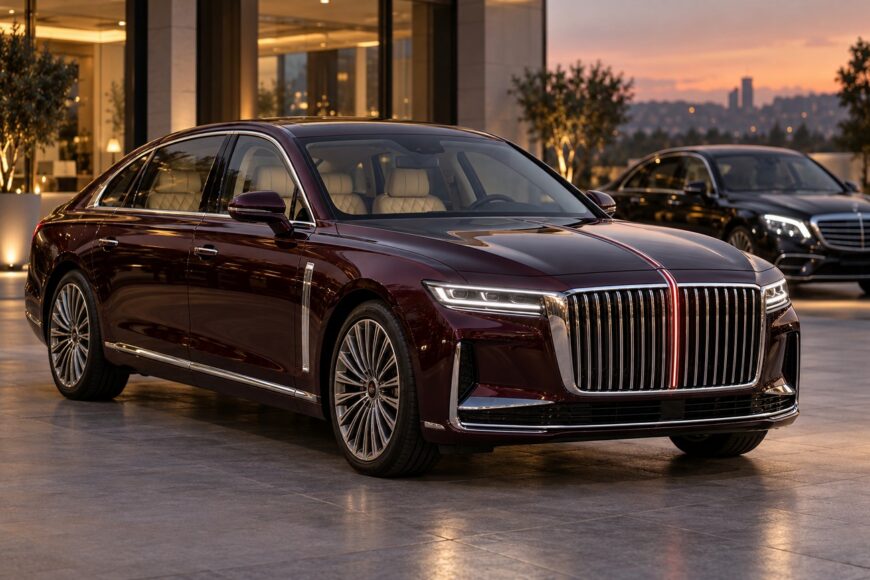
The Hongqi H9 makes its case quickly. Its long, formal body, distinctive grille, generous rear-seat space, and equipment-rich cabin give it the visual authority expected of a luxury flagship. For passengers, especially those using the rear seats, the combination of reclining functions, multi-mode seating, and chauffeur-oriented design can feel more expensive than the badge suggests.
The harder question is whether a lower purchase price compensates for weaker brand recognition, uncertain specifications, regional software limitations, and a less established ownership network. A Mercedes comparison therefore has to cover the complete ownership experience: ride quality, refinement, support, resale, and everyday software, rather than dimensions, horsepower, or feature count alone.
- What Is the Hongqi H9—and Why Is the Mercedes Comparison Difficult?
- Engines, Gearboxes and Ride Comfort Depend on the Market
- Where the H9 Feels Luxurious—and Where Mercedes Still Has the Edge
- The Hidden Cost of Owning a Chinese Luxury Flagship
- Hongqi H9 vs Mercedes: What You Actually Get for the Money
- Should You Buy a Hongqi H9?
- Frequently asked questions
- How much does a Hongqi H9 cost?
- What is the most luxurious Chinese car brand?
What Is the Hongqi H9—and Why Is the Mercedes Comparison Difficult?
The Hongqi H9 is a full-size luxury sedan from FAW Hongqi. It is positioned as a more accessible alternative to Mercedes S-Class-style ownership and long-wheelbase E-Class alternatives, with a strong emphasis on visual presence and rear-seat comfort. That puts it in an interesting space: its size and presentation invite a premium comparison, while its market position is closer to a value-led flagship.
Equipment is one of the H9’s clearest strengths. Depending on the market and trim, buyers may receive substantial comfort hardware, powered rear-seat functions, driver-assistance systems, and a cabin designed to make the car feel ceremonial rather than sporty. The result can be persuasive during a showroom visit, particularly for an owner who values space and specification more than brand heritage.
Mercedes retains an advantage that is difficult to show on a specification sheet. Its cars are supported by a mature service ecosystem, familiar diagnostic processes, established resale expectations, and years of development in chassis calibration and cabin refinement. The H9 may create a convincing luxury impression without delivering the same consistency across every road, software function, and ownership stage.
That distinction matters most after the initial novelty fades. A car can offer impressive materials and a long equipment list while still having less polished suspension responses, more intrusive tire noise, or less predictable electronic behavior. The H9 can rival Mercedes in presence and perceived value, but it should not be treated as a direct S-Class equivalent simply because it occupies a similar amount of road space.
Engines, Gearboxes and Ride Comfort Depend on the Market
The H9 name covers different market and model-year specifications, so a badge comparison is not enough. Reported versions include 2.0T, 2.0T mild-hybrid, and 3.0T V6 engines. Exact availability and outputs vary by market, model year, and facelift, and published power figures can conflict when export and domestic specifications are mixed.
Transmission information also requires care. Sources report both seven-speed dual-clutch and automatic configurations, while drivetrain settings can vary between versions. A used-car advertisement that lists only “H9 V6” or “automatic” leaves out information that may affect performance, maintenance, software compatibility, and parts supply.
Adaptive dampers or air suspension may be offered, depending on market and trim. These systems can give the H9 the composed, cosseting feel expected from a large luxury sedan, especially on smooth roads. They also add components that may become expensive after the warranty period, particularly where specialist diagnostics and replacement parts are not readily available.
The suspension should be judged outside the showroom. A slow urban drive can reveal how the car manages low-speed bumps and transmission behavior, while poor roads expose body control and suspension calibration. Motorway testing is equally important because wind and tire noise, lane-centering behavior, and high-speed stability may alter the impression created by the cabin materials.
Before comparing two cars, verify the VIN, build market, model year, engine, gearbox, drivetrain, and exact trim. The market of origin can be more informative than the registration year because it may determine the available comfort hardware, languages, maps, telematics, and update path.
Where the H9 Feels Luxurious—and Where Mercedes Still Has the Edge
The H9’s strongest argument is its rear cabin. Its design prioritizes passenger comfort, chauffeur use, and a sense of occasion, with multi-mode seating and equipment intended to make long journeys easier. For a buyer who spends more time being driven than driving, this emphasis can be more relevant than steering feedback or cornering ability.
Exterior styling also helps the H9 stand apart. The formal proportions and prominent grille communicate status without copying the understated look of a typical European executive sedan. Inside, materials, displays, ambient features, and the amount of standard equipment can make the car feel generously specified in comparison with a more conservatively equipped rival.
Mercedes still has the edge in the details that are felt continuously rather than noticed once. Owner and reviewer discussions do not consistently place H9 sound insulation, chassis tuning, or electronics at Mercedes benchmark level. Wind and tire noise may become more apparent at speed, and some drivers find the steering, damping, or powertrain calibration less natural than expected from a mature luxury sedan.
Electronic behavior is another variable. Reports of inconsistent cameras, sensors, parking functions, menus, or voice-assistant behavior are especially relevant to imported cars. The H9 is often more compelling for rear passengers and relaxed cruising than for an enthusiastic driver, and that is a valid design choice, provided expectations are set accordingly.
The Hidden Cost of Owning a Chinese Luxury Flagship
Fuel use is one of the less glamorous ownership realities. Actual consumption is typically higher than official claims, particularly in city driving and with an active driving style. The H9 is a heavy full-size sedan, so its comfort and road presence come with a running-cost penalty that may be more noticeable than the purchase discount.
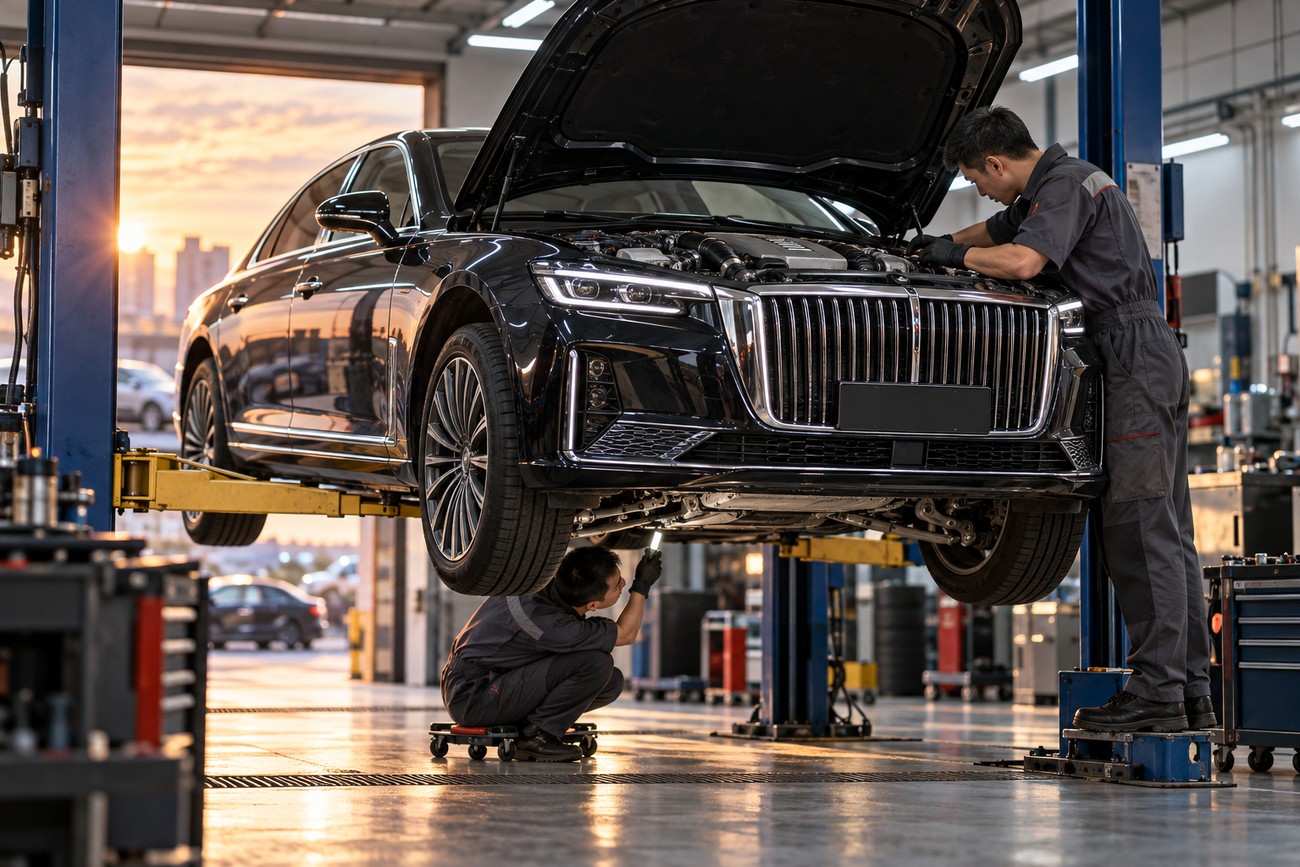
Routine maintenance may be manageable where official distribution is strong. The greater risk outside established Hongqi markets is access to competent service, diagnostic equipment, and technicians who understand the specific version of the car. A small fault can become a prolonged ownership problem if the workshop cannot identify the correct module or obtain the required part.
Technicians first need the VIN, regional software details, and module history before diagnosing an imported H9. A specification mismatch can make a software or compatibility issue look like a mechanical fault.
Air suspension, adaptive systems, cameras, radar sensors, and interconnected control modules can all increase post-warranty exposure. The concern is not that every H9 will fail, but that a failure may require more time and specialist knowledge than a comparable Mercedes issue. Body panels and electronic components can also face long supply delays where the local market has limited stock.
Imported and grey-market cars deserve a separate software inspection. Language options, navigation maps, telematics, smartphone integration, voice functions, and update availability may reflect the original market rather than the country where the car is now registered. A top trim does not guarantee that every advertised online service will work locally.
Resale is the final hidden cost. H9 resale liquidity and residual value are generally weaker than those of comparable Mercedes models because buyers know less about the brand, worry about service access, and have less confidence in future pricing. A lower purchase price can therefore narrow the apparent saving if the car is difficult to sell or requires a larger discount later.
Hongqi H9 vs Mercedes: What You Actually Get for the Money
The comparison below focuses on ownership value rather than a single equipment list. Exact results depend on the H9 market specification and the Mercedes model, engine, wheelbase, and trim selected.
| Area | Hongqi H9 | Comparable Mercedes luxury sedan |
|---|---|---|
| Purchase positioning | More accessible luxury-flagship positioning, with strong perceived equipment value | Higher brand premium and typically higher entry position |
| Rear-seat comfort | Strong focus on chauffeur use, passenger space, and multi-mode seating | Highly developed rear-seat packages, with broader availability of premium options |
| Standard equipment | Often generous, though exact functions depend on market and trim | Can require options, but configuration and support are more familiar |
| Ride refinement | Comfort-oriented, with adaptive dampers or air suspension on selected versions | More consistently polished across ride, body control, and noise management |
| Driving calibration | Relaxed and passenger-focused, with less consistent chassis polish | Generally more mature steering, damping, and powertrain integration |
| Software support | Regional language, maps, telematics, and updates may be restrictive | More established local integration and update support |
| Service network | Depends heavily on official distribution and local specialist knowledge | Broader network and more familiar diagnostic infrastructure in many markets |
| Resale liquidity | Generally weaker, with uncertain residual pricing | Stronger buyer recognition and more predictable resale demand |
| Ownership risk | Higher uncertainty around parts, electronics, and complex suspension after warranty | Still expensive to repair, but support and fault patterns are usually better established |
The H9 can deliver more visible luxury per unit of purchase cost, but that does not automatically make it cheaper to own. Service access, fuel use, software limitations, depreciation, and repair delays can outweigh part of the initial advantage.
Should You Buy a Hongqi H9?
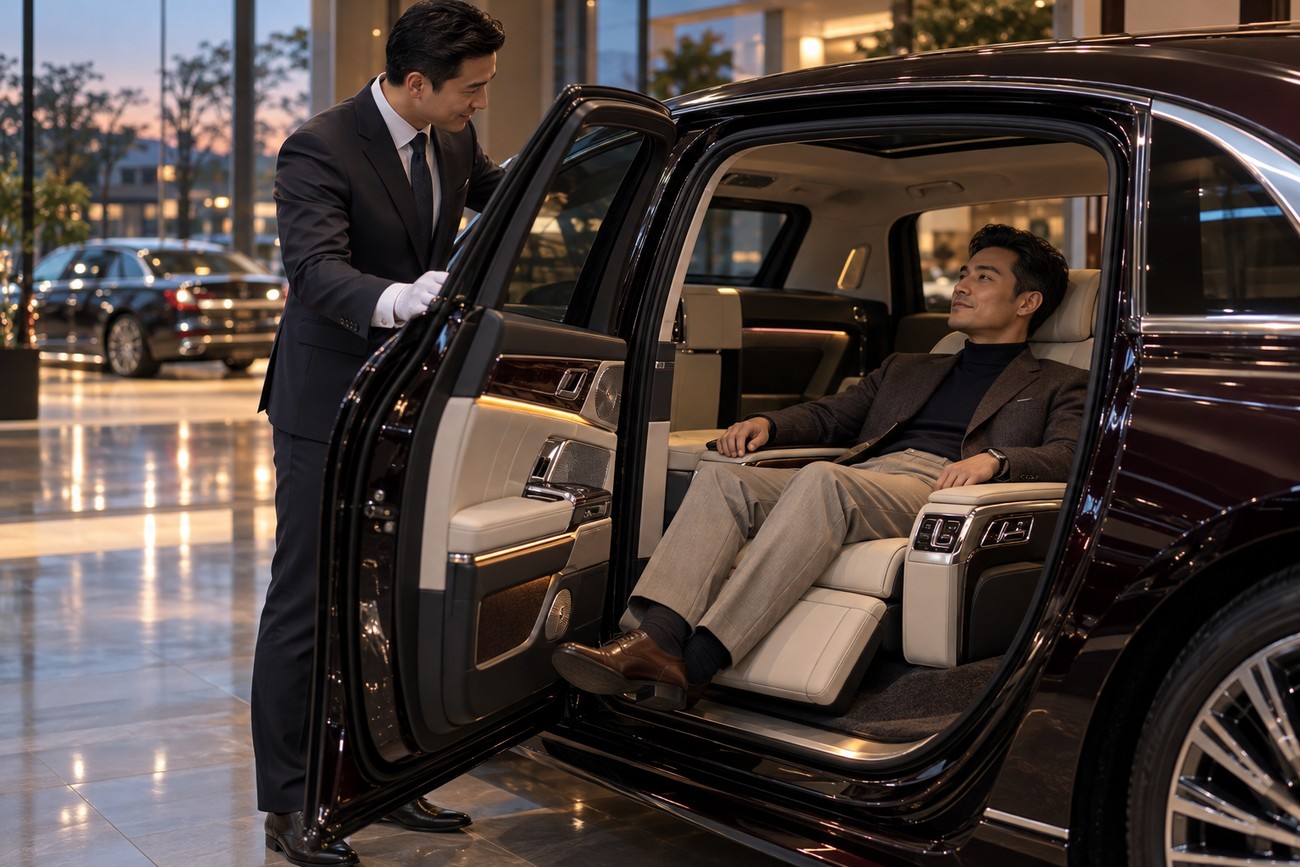
The H9 makes most sense for a buyer who values rear-seat comfort, distinctive styling, generous equipment, and a lower purchase position than a comparable Mercedes. It can suit relaxed cruising and chauffeur-oriented use, particularly when the car comes through an official local channel with a clear warranty and parts support.
Mercedes is the safer choice for an owner who prioritizes predictable servicing, mature software, stronger resale liquidity, and a consistently refined chassis. That preference is especially reasonable if the car will be kept beyond its warranty or sold after a relatively short ownership period.
Before buying, complete a version-specific inspection:
- Verify the VIN, market of origin, model year, engine, gearbox, drivetrain, and trim.
- Check the language, maps, smartphone integration, telematics, voice functions, and available software updates.
- Confirm local access to diagnostic equipment, electronic modules, suspension parts, and body panels.
- Test the car in traffic, on poor roads, and at motorway speeds.
- Obtain a clear written warranty position for the air suspension, adaptive systems, batteries where fitted, sensors, and infotainment.
A showroom impression is insufficient for this model. The right H9 can be an appealing luxury sedan, but its value depends heavily on the exact specification and the quality of support behind it.
Frequently asked questions
How much does a Hongqi H9 cost?
There is no single dependable global price for the Hongqi H9. The figure changes with country, trim, engine, model year, official distribution, taxes, and whether the car is a grey import. A locally supported car may cost more to buy than an imported example while offering better warranty coverage, software compatibility, parts access, and resale confidence.
Purchase price should therefore be separated from ownership cost. Fuel consumption, insurance, specialist servicing, delayed parts, electronic repairs, and weaker resale can materially change the financial comparison with Mercedes.
What is the most luxurious Chinese car brand?
Hongqi is commonly viewed as a flagship Chinese luxury marque, and the H9 reflects that positioning through its formal styling, rear-seat emphasis, and equipment. “Most luxurious” remains subjective, however, because buyers may prioritize state-backed prestige, passenger comfort, technology, performance, or overall refinement.
For practical shopping, compare the specific model and support network rather than relying on the brand label. A premium badge and a rich cabin do not by themselves guarantee Mercedes-level software maturity, chassis calibration, service coverage, or residual value.







