
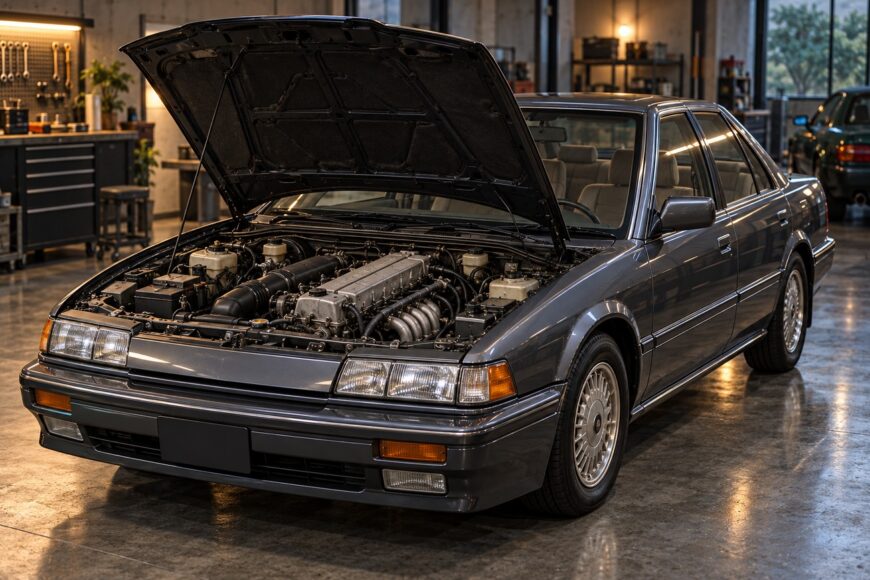
The Honda Vigor is the kind of Japanese sedan that can sound unlike an Accord before it has even left the driveway. Its five-cylinder engine, unusual longitudinal layout, and more formal cabin give it a character that ordinary family Hondas rarely share. The connection to the Accord is real, but the later Vigor became its own engineering exercise.
That individuality creates the buyer’s dilemma. A healthy Vigor offers rare mechanical character and an engaging sense of occasion; a neglected one can demand specialist parts, careful diagnosis, and patience. Age matters more than a flattering odometer reading, especially when cooling components, ignition hardware, rubber seals, and timing-belt service are undocumented.
The Vigor was an Accord-related premium sedan developed for buyers who wanted more distinction than the mainstream model provided. Its most interesting form is the later car with a longitudinal inline-five, model-specific drivetrain components, and a distinctly Japanese approach to packaging.
- How the Vigor Became More Than an Accord Variant
- The Longitudinal Inline-Five Is the Point
- Honda Vigor and Acura Vigor Specifications by Market
- What the Driving Experience Feels Like—and What It Does Not Mean
- The Pre-Purchase Inspection an Accord Checklist Misses
- The Hidden Cost: Parts, Diagnosis, and Deferred Maintenance
- The Three Claims Most Likely to Mislead a Buyer
- Frequently asked questions
- Can I register a Japanese-market Honda Vigor where I live?
- What should I request before traveling to inspect a Vigor for sale?
- How should a long-stored Vigor be recommissioned before its first drive?
How the Vigor Became More Than an Accord Variant
The Vigor began within Honda’s Accord family, sharing the broad mission of providing a refined, well-equipped sedan. That relationship helps explain its familiar proportions and some shared engineering principles. It does not describe the later car completely.
Honda progressively gave the Vigor a more premium identity, including a longitudinal engine arrangement and a five-cylinder powertrain. That decision affected the engine bay, transmission layout, drivetrain components, and the way parts interchange with other Hondas. Calling the car an Accord with a different badge overlooks the engineering that makes it unusual.
The later inline-five cars are the main focus for enthusiasts because they combine the Vigor’s executive-sedan ambitions with an uncommon powertrain. Earlier or differently specified versions should not automatically be treated as mechanically identical. Market, generation, trim, and drivetrain all matter when researching a car or ordering parts.
Vigor production ended on 13 May 1994, with weak demand cited as a reason. The model’s limited numbers and decades out of production help explain its present-day parts situation: there are fewer cars to support and less shared knowledge than exists for a conventional Accord. Rarity adds interest, but it also raises the cost of mistakes.
The Longitudinal Inline-Five Is the Point
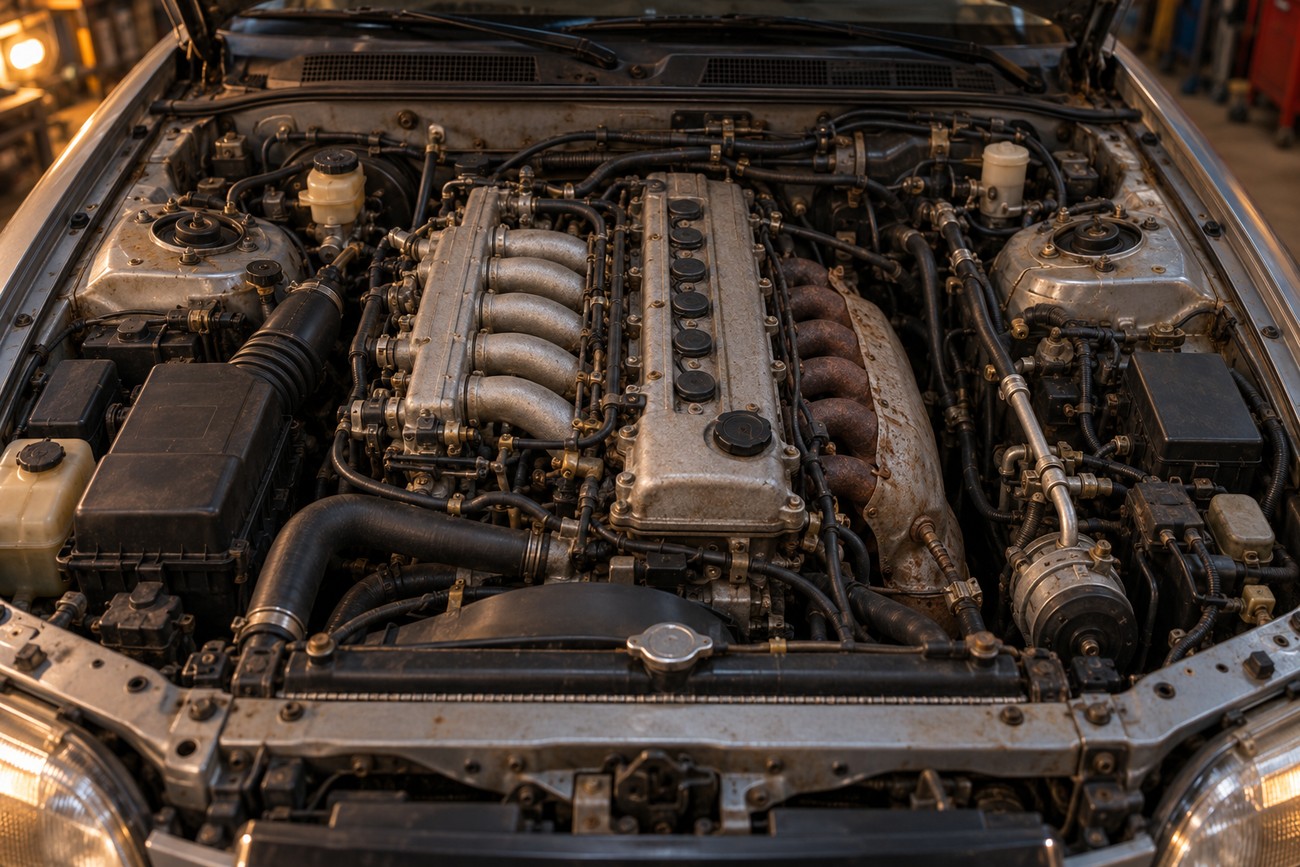
Japanese CB5 Vigor cars used a longitudinal G20A inline-five with a displacement of 1,996 cm³. North American CC2 Acura Vigor cars used the G25A inline-five, displacing 2,451 cm³. The longitudinal installation is a defining feature because it separates these cars from the transverse-engine layout associated with most Accords.
An inline-five has a distinctive exhaust note and a different rhythmic quality from a four-cylinder engine. The sound is a consequence of the cylinder arrangement, rather than evidence of VTEC. The G25A is generally described as a SOHC engine without VTEC, although its intake system can create a noticeable change in the way power arrives.
That two-stage intake effect can make the engine feel as though it has a distinct change in character as revs and load build. It should not be labeled VTEC without version-specific evidence. Descriptions that use the word casually can lead buyers to expect a different cylinder-head system and a different parts catalog.
Power figures also require market discipline. The North American Acura Vigor G25A is commonly quoted at approximately 176 hp and 170 lb-ft, while some Japanese G25A specifications are quoted at approximately 188–190 PS. These are market- and measurement-specific figures, so they should not be merged into one universal rating or used to identify an engine without checking its market and documentation.
Honda Vigor and Acura Vigor Specifications by Market
The following comparison keeps the main specifications separate. Japanese Honda Vigor or Inspire cars and North American Acura Vigor cars can differ in engine details, ECU calibration, emissions equipment, trim, and drivetrain components.
| Market and chassis | Engine and displacement | Stated output | Parts and identification caution |
|---|---|---|---|
| Japan, CB5 Honda Vigor | G20A longitudinal inline-five, 1,996 cm³ | Unspecified here | Confirm the exact engine, ECU, emissions equipment, transmission, and drivetrain before ordering parts. |
| North America, CC2 Acura Vigor | G25A inline-five, 2,451 cm³ | Approximately 176 hp and 170 lb-ft | North American specification; do not assume Japanese G25A components or calibrations are identical. |
| Selected Japanese G25A specifications | G25A inline-five, 2,451 cm³ | Approximately 188–190 PS in some specifications | Figures reflect a different market and measurement convention; verify the vehicle’s exact specification. |
The table illustrates why an engine-size search is an inadequate parts strategy. Two cars can carry a G25A designation while differing in control electronics, emissions hardware, sensors, wiring, and ancillary components. A cataloged part number and the vehicle’s market identity are safer references than displacement alone.
Output figures should also be read as identification clues, not promises of performance. A Japanese specification quoting approximately 188–190 PS does not revise the commonly quoted North American figure of approximately 176 hp. The numbers belong to different market contexts and measurement conventions.
What the Driving Experience Feels Like—and What It Does Not Mean
The Vigor’s appeal starts with its sound. The inline-five produces a mechanical note that is smoother and more unusual than the four-cylinder soundtrack most people associate with an Accord-related sedan. It gives ordinary traffic a little ceremony without requiring a high-performance driving style.
The two-stage intake can add another layer to the experience by changing the engine’s response as operating conditions develop. That transition may be noticeable from the driver’s seat, especially in a well-maintained car. It remains an intake characteristic, not proof that the engine has VTEC.
Transmission choice changes the car’s personality. A five-speed manual lets the driver work through the engine’s sound and changing intake response, while the four-speed automatic makes the sedan calmer and more formal. Both were offered on Vigor models, with availability depending on the specific version and market.
Condition matters more than the badge on the trunk. A worn distributor, tired automatic transmission, restricted cooling system, or incorrect engine-control component can make a distinctive car feel slow, rough, or unreliable. The Vigor’s character is mechanical, so deferred maintenance directly affects the experience rather than remaining an invisible background issue.
The Pre-Purchase Inspection an Accord Checklist Misses
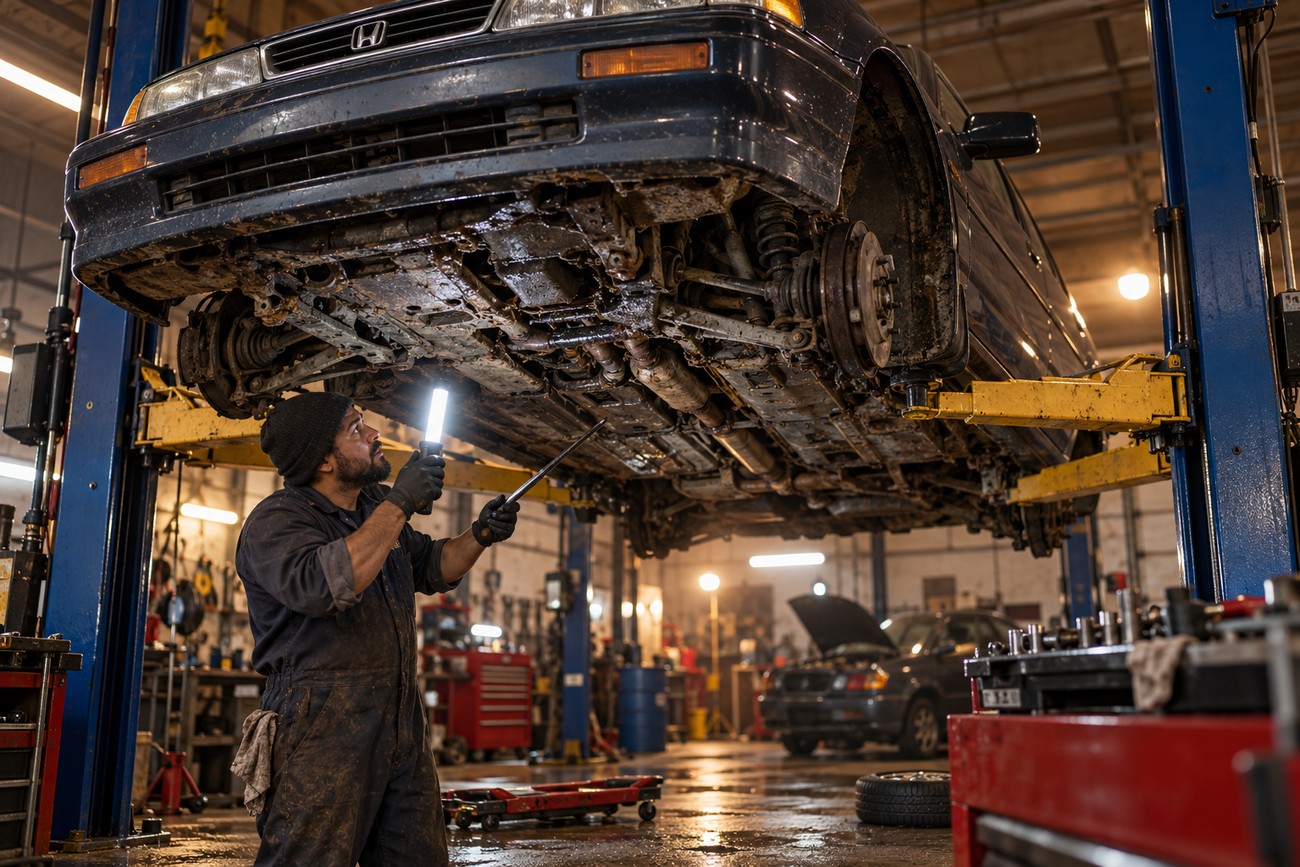
Start by confirming exactly what is being sold. Match the chassis and engine numbers with the title or import documents where recorded, establish whether the car is a Japanese Honda or a North American Acura, and request an auction sheet or service history where available. A low indicated mileage does not establish maintenance quality, freedom from corrosion, or the condition of age-sensitive components.
Inspect the underside before spending time on cosmetic details. Pay particular attention to the floor, wheel arches, subframes, suspension and drivetrain mounting points, and any areas where repairs may have concealed corrosion. Structural rust can matter more than faded paint because it affects safety, repairability, and the value of the entire project.
A radiator leak deserves a cooling-system pressure check and an assessment for previous overheating before it is priced as a radiator-only repair. A replacement radiator cannot undo a damaged head gasket, repair a compromised water pump or failed thermostat, or reverse distortion caused by earlier heat.
Ageing plastic radiator tanks and rubber hoses can allow coolant loss, but the inspection should continue through the complete cooling system. Check the radiator, hoses, thermostat, water pump area, fan operation, coolant condition, and evidence of combustion gases or previous overheating. A car that has overheated may need substantially more investigation than a simple cooling-component replacement.
Oil leaks deserve equal attention because oil from the valve-cover area or camshaft and crankshaft seals can reach the timing belt. Establish the belt’s age and service evidence rather than relying only on mileage. Examine the engine’s running quality, measure compression across all five cylinders for consistency, check oil pressure where appropriate, and look for signs of overheating.
The distributor is a specific diagnostic point. Its cap, rotor, and coil can contribute to hard starting, misfires, or stalling as they age. A cold start, warm restart, scan for relevant faults, and independent mechanical diagnosis provide far more confidence than a brief drive around the seller’s neighborhood.
The Hidden Cost: Parts, Diagnosis, and Deferred Maintenance
Vigor ownership can become expensive through delay rather than through one dramatic failure. Body panels, interior trim, and G-series-specific engine parts may be difficult to source, leaving the owner to search for used components or a donor vehicle. Availability varies by market, and a part that is common for an Accord may have no direct application to a Vigor.
Ordering by engine size alone is a common way to waste money. Confirm the cataloged part number, chassis code, market, transmission, and connector or mounting details before buying. Japanese Honda Vigor or Inspire cars and North American Acura Vigor cars may differ in engine specification, ECU, emissions equipment, and trim even when their exterior appearance is similar.
Ignition faults can interrupt normal running, while a failing oxygen sensor may bring on an engine warning, rough operation, or increased fuel consumption. Diagnosis should identify the failed component rather than treating every drivability problem as an engine rebuild. A workshop familiar with ordinary Accord systems may still need the correct documentation for the G-series layout.
The four-speed automatic deserves particular scrutiny when fluid service has been neglected. Check engagement quality, shift behavior, fluid condition, service records, and evidence of slipping or overheating. For a long-term project, keeping practical spares such as distributor components, sensors, and cooling-system parts may reduce downtime, although no stockpile substitutes for correct diagnosis.
The Three Claims Most Likely to Mislead a Buyer
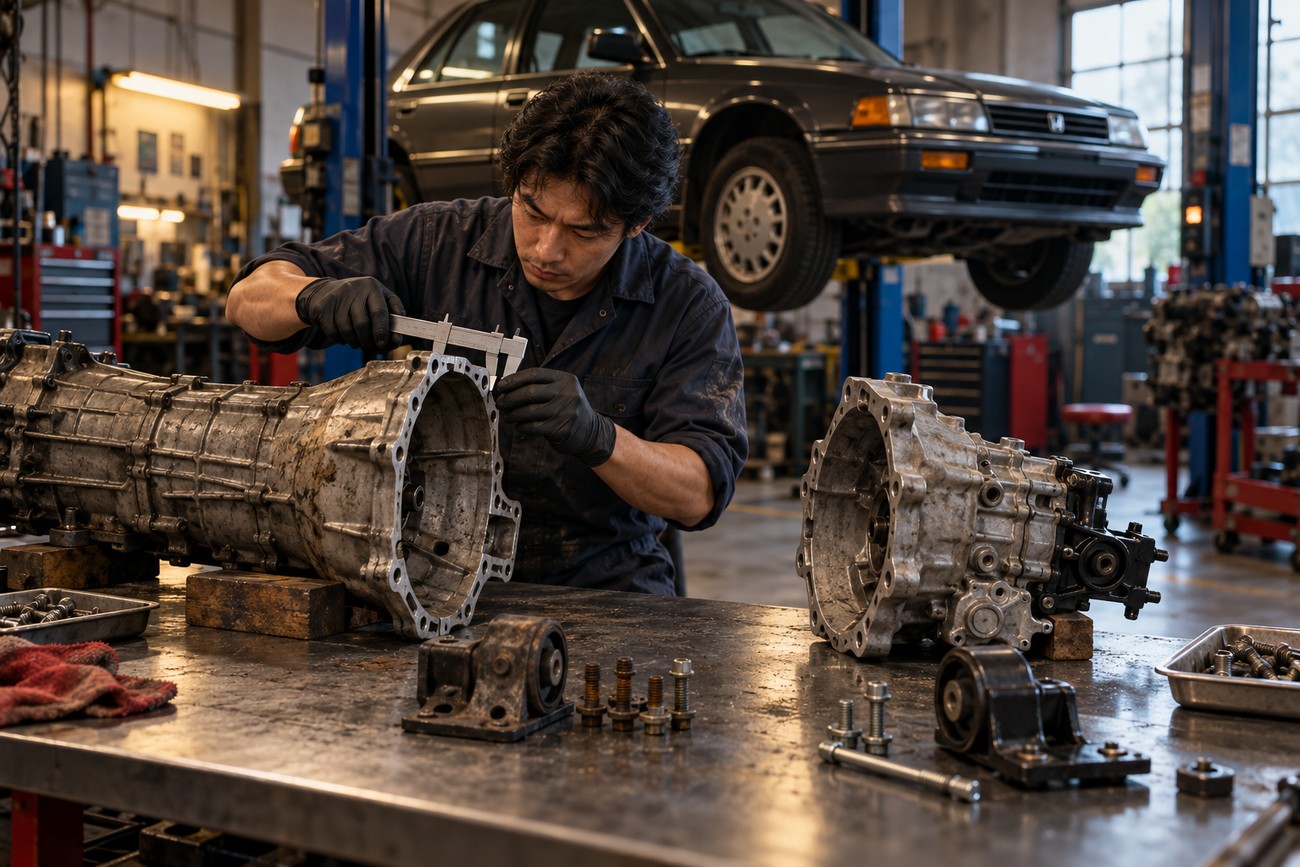
“It is just an Accord” is useful only as a broad family reference. Later Vigors use a longitudinal inline-five and model-specific drivetrain components, so the assumption of universal Accord interchangeability is unsafe. The claim may justify casual familiarity with the brand, but it should not justify a lower inspection standard or a parts order made without catalog verification.
“All G25As make 190 horsepower” confuses specifications from different markets. North American Acura Vigor cars are commonly quoted at approximately 176 hp and 170 lb-ft, while some Japanese G25A specifications are quoted at approximately 188–190 PS. A seller’s headline number should therefore be checked against the chassis, market, ECU, engine identification, and available documentation.
“Low Japanese mileage means trouble-free ownership” ignores the effects of time. Rubber hoses, seals, belts, distributor components, tires, cooling-system plastics, and electrical connections age while a car is parked. Storage can preserve a body in some conditions, but it can also leave a low-mileage car needing recommissioning before reliable use.
Price should reflect evidence, not the odometer alone. A documented, structurally sound car with a verified belt service can justify a stronger position than a supposedly low-mileage example with missing records and corrosion. An engine swap adds another layer of risk: wiring, ECU, mounts, drivetrain compatibility, emissions requirements, and legal status all need verification before the car is treated as finished.
Frequently asked questions
Can I register a Japanese-market Honda Vigor where I live?
Registration depends on the jurisdiction, the car’s age, import rules, emissions requirements, and the documents accompanying the vehicle. Before buying, contact the relevant registration or import authority and ask whether this specific model and market specification can be admitted, inspected, and titled.
Match the chassis number, import paperwork, invoice or title records, and any emissions documentation before money changes hands. A Japanese-market car may have different equipment from a North American Acura Vigor, so eligibility should be confirmed for the actual vehicle rather than assumed from its appearance.
What should I request before traveling to inspect a Vigor for sale?
Request clear photographs of the identification plates and documents, the engine bay, the underside, wheel arches, subframes, and mounting points. Ask for a cold-start video taken before the engine has been warmed, followed by footage of the idle and a short drive if possible. A seller who cannot demonstrate a cold start may be concealing symptoms that disappear once the engine is warm.
Also request service records, timing-belt information, cooling-system work, transmission-fluid history, and a list of spare parts included with the car. Ask directly about overheating, stalling, misfires, corrosion repairs, engine swaps, and missing trim. This remote screening can prevent a long trip to inspect a car whose condition is already unsuitable.
How should a long-stored Vigor be recommissioned before its first drive?
Begin without assuming the car is ready to start. Check engine oil, coolant, fuel condition, visible leaks, the timing-belt history, battery connections, hoses, radiator, tires, and brake components. Inspect for seized brakes, damaged belts, rodent activity, and deterioration around fuel and cooling systems.
After the static checks, confirm that the engine turns freely and address known age-related faults before running it for long. Build oil pressure as appropriate for the engine and service procedure, monitor temperature and leaks, then test the brakes and tires at low speed in a controlled area before any road drive. A low odometer reading does not remove the need for this sequence.







