
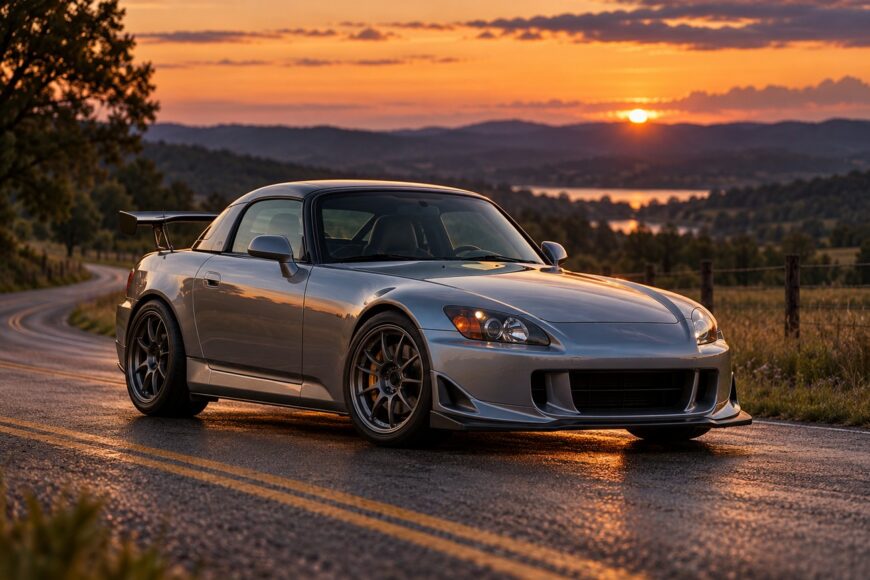
The Honda S2000 CR is a rare, focused version of an already demanding sports car. Its factory setup promises sharper responses on a circuit, yet the same firm ride, reduced insulation, and removable-hardtop routine can make an ordinary journey less appealing. The badge also invites a mistaken expectation: the Club Racer has no engine-power advantage over a comparable S2000 AP2.
That distinction matters because much of a CR’s appeal lies in how its original parts work together—and in how difficult some are to replace. A well-kept example can reward a driver who wants the factory track-oriented package. For someone who mainly wants an open roadster for trips and daily use, the standard AP2 may deliver more of the S2000 experience with fewer compromises.
- What made the S2000 CR a Club Racer
- S2000 CR vs. standard AP2: the factory differences
- Where the CR gains time—and where it does not
- The road-use costs of the track-focused setup
- Buying a used CR without paying for hidden damage
- Is the collector premium worth it?
- Frequently asked questions
- Why do published S2000 CR production totals differ?
- How can I confirm that a car advertised as an S2000 CR is genuine?
- How much should I pay for a Honda S2000 CR?
What made the S2000 CR a Club Racer
The U. S.-market Honda S2000 CR was offered for the 2008–2009 model years. Approximately 700 were built across those years, although published totals differ. Its limited run makes factory identity and original equipment important to buyers, but scarcity alone says little about how a particular car drives or has been maintained.
Under the hood is the same F22C1 2.2-liter four-cylinder used by the comparable AP2, producing approximately 237 hp and 162 lb-ft. Honda did not give the CR a higher-output engine. Its case as a Club Racer rests instead on changes intended to make the familiar powertrain easier to use precisely on a circuit.
Firmer suspension tuning, CR-specific steering calibration, a distinctive front splitter, and a larger rear spoiler shape that character. They address response and stability rather than straight-line speed. Reduced sound insulation and a different roof arrangement also show where Honda accepted road-use compromises to pursue the CR’s purpose.
The standard folding soft top was deleted in favor of a removable hardtop. Air conditioning and audio equipment vary by CR configuration, so an advertisement describing every CR as a completely stripped car is as misleading as one treating it as a regular AP2 with a spoiler. The exact equipment on the car in front of you matters.
S2000 CR vs. standard AP2: the factory differences
The CR shares the AP2’s basic powertrain, but its factory package changes the way the car responds and how it fits into daily life. Compare equipment on individual cars before relying on a quoted weight difference or a seller’s description.
| Feature | S2000 CR | Contemporary standard AP2 |
|---|---|---|
| Engine and output | F22C1 2.2-liter four-cylinder; approximately 237 hp and 162 lb-ft. No CR-specific power increase. | Same F22C1 and comparable output. |
| Suspension and steering | Firmer suspension tuning and CR-specific steering calibration. | Standard road-oriented suspension and steering setup. |
| Aerodynamics | Distinctive front splitter and larger rear spoiler. | Standard AP2 body treatment. |
| Roof | Standard folding soft top deleted in favor of a removable hardtop. | Folding soft top fitted as standard. |
| Weight | A stripped configuration is lighter; the comparison changes with equipment and whether the hardtop is fitted. | Weight likewise depends on equipment, but includes the standard folding-roof arrangement. |
| Cabin equipment | Reduced sound insulation; air conditioning and audio equipment vary by configuration. | Standard AP2 cabin specification, subject to the car’s equipment and market. |
Where the CR gains time—and where it does not
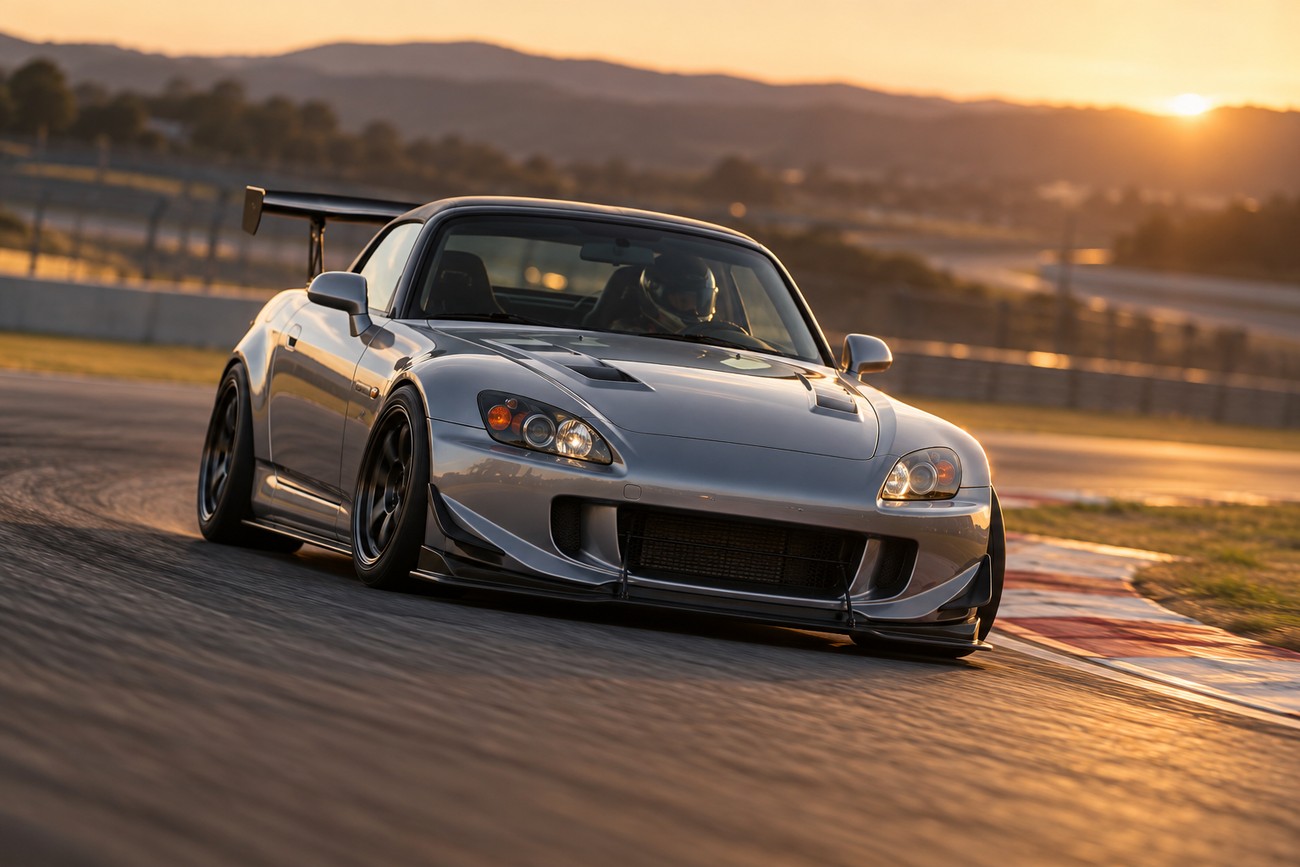
On a circuit, the CR’s firmer suspension can make direction changes feel more immediate, while its steering calibration contributes to a sharper response. The front splitter and larger rear spoiler are part of the same handling brief, with their benefit most relevant to composure at speed. None of these changes increases the F22C1’s output.
Tyres and alignment have considerable influence over the result. A CR on unsuitable or worn tyres may feel less reassuring than a properly set-up standard AP2. Likewise, alignment chosen for a particular circuit can change turn-in and tyre wear; the badge cannot compensate for a poor setup.
For drivers refining a track setup, corner weights and suspension geometry deserve attention once the car and its components are sound. Those measurements help explain why two apparently standard CRs can feel different without invoking an undocumented factory change. They also give a more useful starting point than adjusting the car solely by steering feel.
Straight-line acceleration is the wrong place to expect a meaningful CR advantage. Its potential lies chiefly in cornering response and high-speed stability, and even there the driver, tyres, conditions, and setup affect the outcome. The standard brakes also merit assessment for sustained circuit work; suitable fluid and pads may matter more than a cosmetic upgrade.
The road-use costs of the track-focused setup
The CR’s suspension communicates a great deal on smooth pavement and asks more of its occupants on broken roads. Reduced sound insulation makes long highway stretches louder, while the firm setup can turn repeated bumps into fatigue. A brief drive on good pavement may conceal the compromises that become obvious during a longer trip.
Seat fit is similarly personal. The CR’s more supportive seats help hold a driver in place during cornering, but their shape can be restrictive for some taller or broader occupants. Sit in the car long enough to judge pedal position and support rather than assuming that a track-oriented seat will suit every body type.
Without the standard folding soft top, weather protection depends on the removable hardtop and whether it accompanies the sale. Removing it for an open-air drive also means planning for the return journey if conditions change. A missing hardtop is therefore a practical loss, not merely a gap in a collector’s parts inventory.
Air conditioning and audio equipment vary by configuration, and their presence can substantially change daily usability. A CR with suitable road tyres and a moderate alignment may be workable in regular traffic, though it remains the firmer, louder choice. Buyers seeking a car to soften later should consider whether a standard AP2 better matches that plan from the outset.
Buying a used CR without paying for hidden damage
Begin with identity and paperwork. Reconcile the VIN with original sales or build documents where available, then compare the car’s equipment with that record. A splitter or set of seats can be fitted to another S2000; appearance alone does not establish that a car left the factory as a CR.
Next, account for the distinctive front splitter, rear spoiler, seats, and removable hardtop. Inspect their condition, mounting points, and any evidence of repair. Original CR-specific parts can be difficult and costly to replace, so a cheap-looking bumper repair or an absent hardtop may have consequences well beyond appearance.
An alignment printout describes the settings recorded at the time, not whether the suspension is healthy. Read it alongside tyre wear and component condition: aggressive angles cannot correct worn joints or a bent car.
Examine tyre wear, suspension components, and the car’s behavior on a careful test drive. Uneven wear or unsettled handling warrants an alignment and suspension inspection, particularly if the car has been lowered or fitted with nonstandard parts. Check the brakes and supporting service records as well; their condition tells you more than a claim that the car was “never tracked.”
Track use is a reason to investigate maintenance and repairs, not proof of abuse. Look for consistent records, signs of overheating or poorly repaired damage, and whether modifications have been installed coherently. A documented circuit car may be a sounder purchase than a supposedly untouched example with unexplained tyre wear and mismatched bodywork.
Is the collector premium worth it?
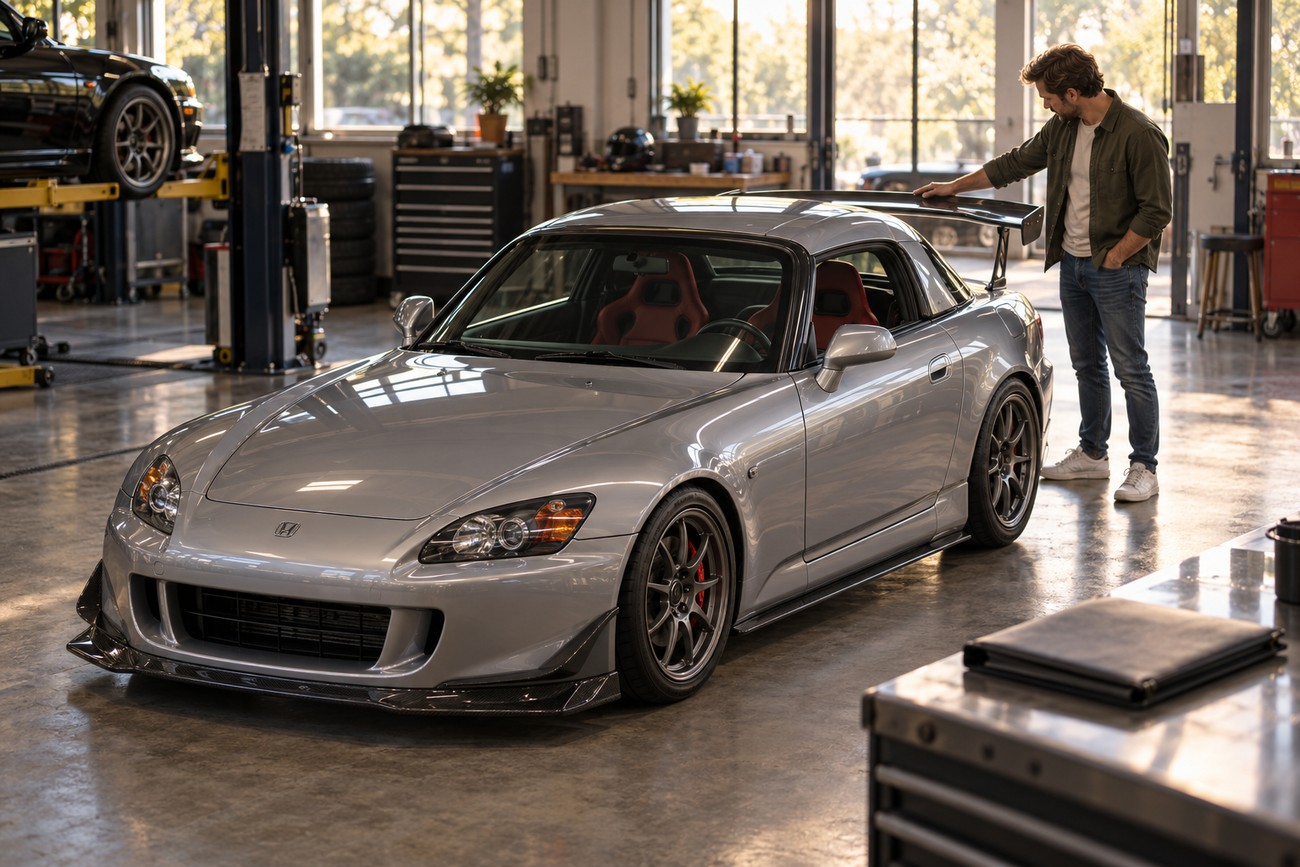
With approximately 700 U. S.-market CRs built across the 2008–2009 model years, an intact example has an understandable appeal to collectors. The hardtop, original aero parts, seats, paperwork, and overall condition all matter because recreating an original-looking car can be expensive. Published production totals differ, so an exact count should not carry more weight than the condition of the car being offered.
Some market observations suggest CR premiums of roughly 30–70% over standard AP2s. That range is not a pricing rule: comparisons can shift substantially with mileage, originality, condition, and which completed sales are included. Nor does rarity guarantee a future return; collectors disagree on whether a CR is a better purchase than an excellent standard S2000.
The premium can also change how an owner uses the car. Circuit driving brings tyre, brake, and repair costs to any S2000, while damage to scarce CR-specific body parts adds another concern. Preserving an original example and using it hard are both defensible choices, but they place different demands on the budget.
For a buyer who wants the factory track-focused package and accepts those costs, the CR offers a distinct version of the AP2. For an everyday roadster or an adaptable starting point for a personal track build, a sound standard AP2 may be the more sensible purchase. Pay for the CR’s actual condition and equipment, rather than assuming the badge alone will repay the difference.
Frequently asked questions
Production claims, identification, and asking prices can look more definite than the evidence behind them. These checks help separate a documented CR from a convincing-looking car and a useful sale comparison from an ambitious listing. They are especially important when original equipment is missing or has been changed.
Why do published S2000 CR production totals differ?
A quoted total may cover only one model year, while another source counts the full 2008–2009 U. S. run. Check the years and criteria behind a figure before comparing it with a forum count. Approximately 700 built across both model years is a useful qualified description; an unexamined exact number is less helpful.
How can I confirm that a car advertised as an S2000 CR is genuine?
Use the VIN to reconcile the car with original sales or build paperwork and its factory equipment. Then inspect whether the distinctive parts and roof arrangement are present and consistent with those documents. A spoiler, seats, or a seller’s description can support a closer look, but none establishes factory identity on its own.
How much should I pay for a Honda S2000 CR?
Start with recent comparable completed sales in the relevant market, rather than asking prices alone. Adjust for condition, originality, documentation, the included hardtop, and any mechanical or body repairs the car needs. A fixed dollar figure would ignore differences that can make two CRs markedly different purchases.







