
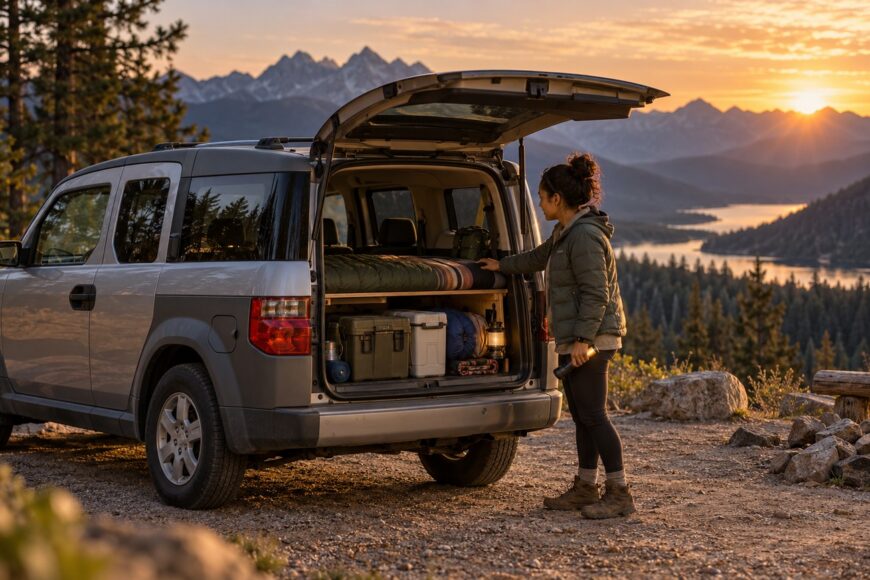
Honda Element prices and buyer interest remain surprisingly strong because its boxy, washable cabin solves camping problems that many newer crossovers leave unresolved. The tall roof, flexible seating, large access openings, and hard-wearing interior create useful sleeping and storage space within a relatively compact footprint.
That practicality comes with trade-offs. The Element is an old vehicle with firm suspension, noticeable road noise, questionable seat comfort, and fuel use that can exceed modern expectations. It makes sense as a carefully chosen camping platform; it makes far less sense as a substitute for a serious off-road vehicle or a quiet, refined family crossover.
- Why Campers Still Hunt for the Honda Element
- The Element’s Platform: Useful, but Not One-Size-Fits-All
- What Makes the Cabin So Good for Simple Camping
- Where the Camper Dream Runs Into Reality
- How to Buy an Element for Camping Without Buying the Legend
- Frequently asked questions
- What year of Honda Element should you stay away from?
- Why do people like the Honda Element so much?
- Why won’t Honda bring back the Element?
Why Campers Still Hunt for the Honda Element
Produced from 2003 to 2011, the Honda Element was shaped around usable interior volume rather than sleek packaging. Its tall, upright body gives camping equipment more vertical room, while the flexible cabin can carry bulky items that would overwhelm a conventional compact crossover. The result feels closer to a compact utility wagon than a typical small SUV.
Unofficial technical references cite up to 2,112 liters of cargo volume with the seats folded. The exact figure matters less than the way the space is arranged: the roof is high, the openings are generous, and the interior can be adapted for sleeping, gear storage, pets, or everyday hauling. Owners regularly praise these qualities after discovering that a short vehicle can still swallow substantial equipment.
Washable and wear-resistant surfaces add to the appeal. Muddy boots, wet clothing, bicycles, camping dogs, and spilled drinks are easier to manage when the cabin is designed for utility rather than delicate trim. This low-fuss character is a major reason the model remains attractive to people who use their vehicles outdoors.
The Element’s following is therefore based on utility within a compact footprint. Buyers generally accept its age, noise, and modest road manners in exchange for a cabin that supports simple camping unusually well. Its boxy shape helps on access roads and campsites, while its approximately 175 mm of ground clearance sets a clear limit: it is a practical outdoor vehicle, not a serious off-road machine.
The Element’s Platform: Useful, but Not One-Size-Fits-All
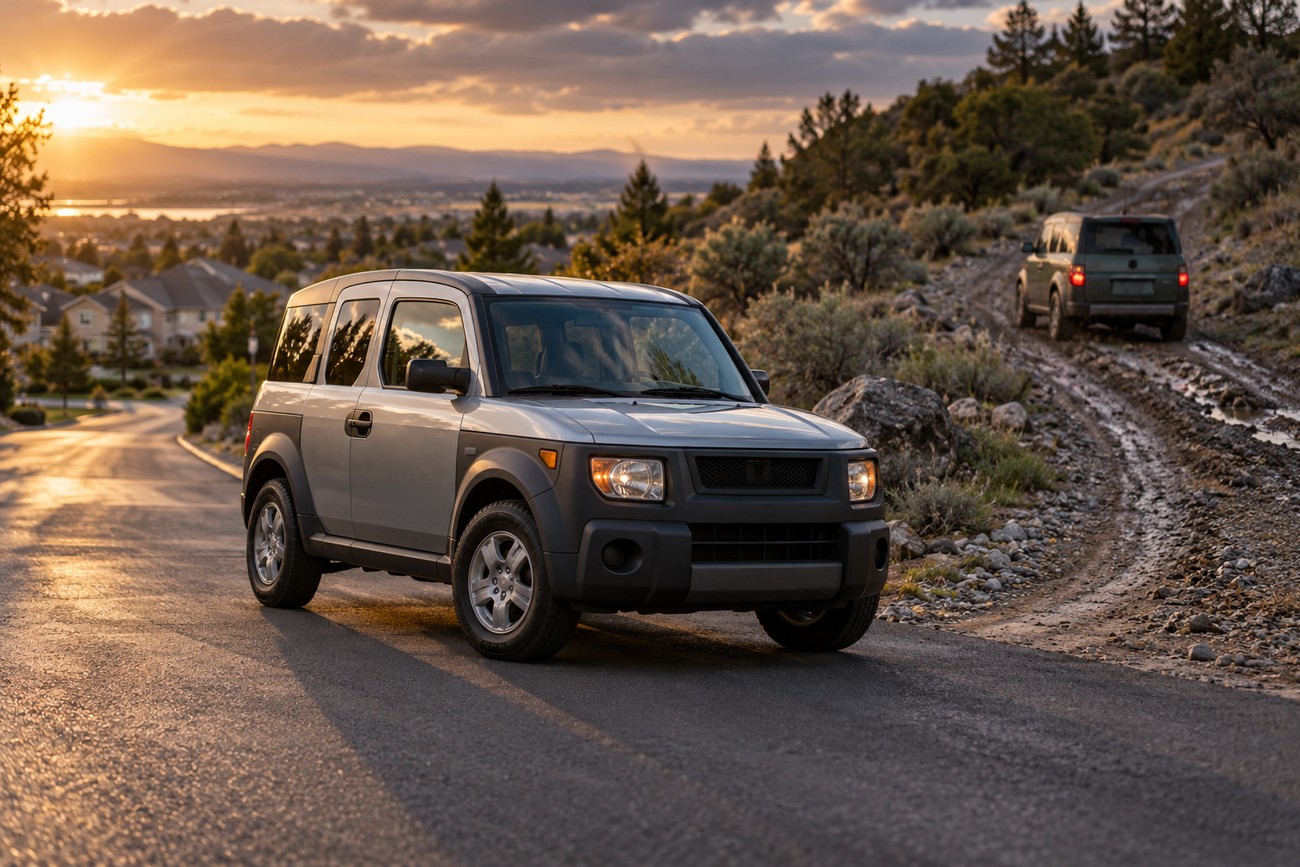
The core mechanical package is the 2.4-liter inline-four K24A/i-VTEC. Reported output varies from 160 to 166 hp by market and model year, with about 218 Nm of torque. That variation matters when comparing listings, ordering parts, or estimating how a loaded vehicle will perform on hills and rough access roads.
Available transmissions included a 4-speed automatic and a 5-speed manual. Real Time 4WD was offered on some versions, so two Elements with similar bodywork can have different traction behavior and maintenance requirements. A front-wheel-drive example may suit paved travel and maintained campsites, while a 4WD version offers extra confidence on slippery access roads without changing the vehicle’s basic limitations.
Reported dimensions vary by source, at approximately 4,300 × 1,815–1,820 × 1,788–1,880 mm, with a wheelbase of approximately 2,575 mm. These figures explain the useful interior: the Element is short enough for ordinary parking, yet tall and wide enough to create a practical load bay. They also explain why checking the exact market version is important before buying accessories or planning a conversion.
Listings should therefore be assessed as individual vehicles rather than interchangeable examples. Confirm the engine, transmission, drivetrain, equipment, and service history from the vehicle itself. A specification sheet can describe the model family, but it cannot tell you whether an aging example will tolerate a camper build.
What Makes the Cabin So Good for Simple Camping
The high roof is the first advantage you notice inside. It gives bedding, storage bins, and clothing more usable volume, and it makes loading easier than in a low-roof crossover. The adaptable seating and cargo area can support a simple sleeping platform without requiring a large van or a permanent conversion.
Up to 2,112 liters with the seats folded is cited in unofficial references, although the practical value comes from access and shape as much as from the headline figure. Large openings make bulky gear easier to load, while the square cabin wastes less space around bags, coolers, and cooking equipment. A well-planned layout can leave room for sleeping gear without turning every trip into a full unpacking exercise.
The interior also suits messy travel. Wear-resistant, easy-to-clean surfaces reduce the penalty for muddy equipment, wet dogs, and sandy campsites. That durability supports practical daily use as well, since the same cabin can carry groceries, tools, bicycles, or outdoor clothing without demanding careful treatment.
Conversion planning still needs discipline. A square cabin does not automatically provide thermal insulation, ventilation, or acoustic comfort. A mattress can make the floor suitable for sleeping, yet condensation, heat buildup, road noise, and limited storage for food and water can remain significant issues unless the build addresses them directly.
Where the Camper Dream Runs Into Reality
The Element’s ride is commonly described as firm, especially over speed bumps and broken pavement. That firmness can make a loaded vehicle feel controlled, but it also transfers sharp impacts into the cabin. On a long trip over poor roads, suspension condition and tire choice can affect comfort more than the vehicle’s camping equipment.
Noise is another recurring complaint. Owners frequently criticize the sound insulation, and the effect becomes more obvious when sleeping inside the vehicle or driving long distances at highway speed. Seats are also often described as uncomfortable, so a camper who plans extended travel should test the driving position rather than assume that a practical cabin guarantees comfortable occupants.
Fuel use can be higher than buyers expect from a compact Honda. Real-world reports commonly fall around 10–15 L/100 km and higher, depending on driving conditions, load, transmission, drivetrain, and traffic. A roof box, camping equipment, rough tracks, and sustained highway speeds can all make the running costs more noticeable.
The exterior styling suggests more off-road ability than the chassis delivers. Approximately 175 mm of reported ground clearance is useful on maintained gravel roads, muddy parking areas, and ordinary campsite access. It leaves less margin on deep ruts, rocks, steep breakovers, or heavily eroded tracks, where owners also mention vulnerability around underbody components, including the fuel tank and exhaust.
That distinction should shape the build. The Element works well for reaching a campsite and creating a dry place to sleep; it is poorly suited to repeated technical off-road travel. Extra equipment underneath can reduce clearance and expose more components, so a conversion that adds weight without considering approach angles, departure clearance, and underbody protection can make the original compromises worse.
How to Buy an Element for Camping Without Buying the Legend
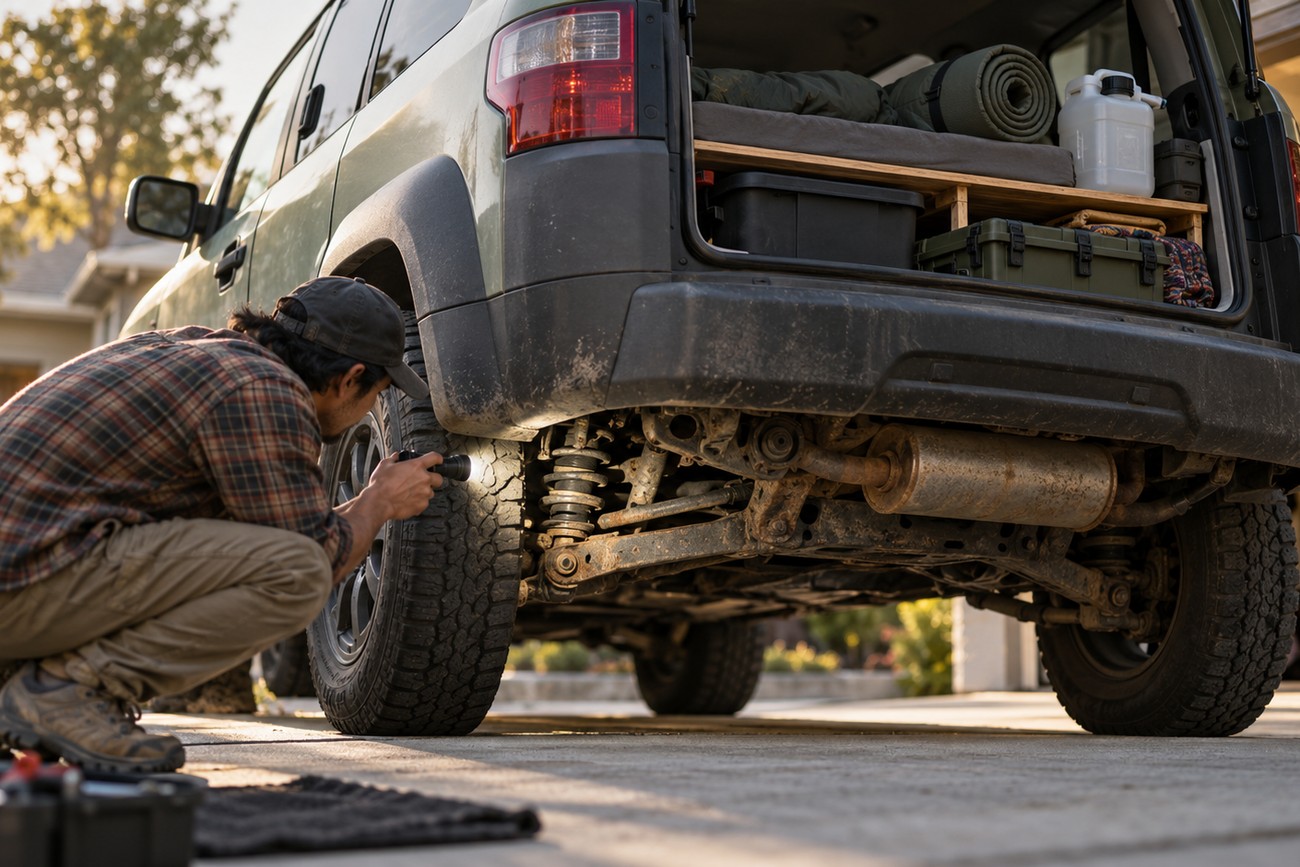
Start with the structure and underbody. The model has been out of production since 2011, so corrosion, previous repairs, and neglected components matter more than the reputation attached to the badge. Inspect the underside carefully, including exposed mechanical and exhaust parts, and look for signs that the vehicle has spent years in conditions that may have accelerated deterioration.
Suspension condition deserves its own inspection. Worn components can turn the Element’s naturally firm ride into an unpleasant one, especially after adding a sleeping platform, water, tools, and camping equipment. Check for leaks, uneven tire wear, damaged mounts, and noises during a proper road test rather than judging the car while it is stationary.
Inspect the underbody and the seat-folding mechanism before discussing camper conversions. A clean-looking cabin cannot compensate for structural corrosion, exposed components, or an interior transformation that no longer works.
Test every part of the interior transformation in person. Fold and reposition the seats, verify that the load area suits your intended sleeping layout, and check whether the doors and openings remain usable with equipment installed. The cabin’s adaptability determines much of the Element’s camping value, so a damaged or incomplete mechanism can remove the feature that attracted you to the vehicle.
Service history should take priority over trim level and mileage alone. Confirm that the engine, transmission, drivetrain, cooling system, and suspension have received age-appropriate maintenance. A lower-mileage example with poor storage and little documentation may require more immediate work than a higher-mileage vehicle that has been consistently maintained.
Rarity affects ownership after the purchase. Parts may take more effort to source, and finding a technician familiar with the model can be harder in some regions. The same niche appeal that supports demand among camping buyers can narrow the future resale audience, so leave room in the budget for inspection, repairs, and practical modifications.
Towing claims require particular caution. A capacity of 680 kg appears in one source only and remains unconfirmed by the available sources. Do not use that figure to plan a trailer setup without checking the exact market version, manufacturer documentation, local requirements, and the condition of the individual vehicle.
Frequently asked questions
The Honda Element has a strong camping following because its unusual layout remains useful, while its age makes careful selection essential. Market, model year, drivetrain, and maintenance history can change the ownership experience substantially.
What year of Honda Element should you stay away from?
There is no single universally bad year that replaces a proper inspection. Since production ended in 2011, drivetrain condition, corrosion, suspension wear, maintenance records, and market-specific equipment can matter more than the model year. A neglected example from a supposedly desirable year can be a worse purchase than a carefully maintained vehicle from another year.
Compare candidates by condition and intended use. Verify the exact engine and drivetrain, inspect the underside, test the seat-folding system, and review evidence of age-related maintenance. This approach also protects buyers from treating specifications reported for one market or model year as universal.
Why do people like the Honda Element so much?
People like the Element because it supports messy, improvised, and practical use without requiring constant care. Dirty gear, pets, wet clothing, and camping equipment fit naturally into a washable, adaptable cabin, while the high roof and large openings make loading and sleeping arrangements easier.
The vehicle also works as an ordinary daily driver between trips. Owners can carry outdoor equipment during the weekend and use the same interior for errands, tools, or bulky purchases without owning a separate utility vehicle. That combination of practical daily use and lifestyle flexibility is difficult to reproduce in many standard compact crossovers.
Why won’t Honda bring back the Element?
A modern replacement would have to satisfy current safety, emissions, efficiency, comfort, and market-volume expectations while preserving the unusual boxy layout. Those requirements can conflict: a tall, square body is excellent for interior utility, yet it may demand careful engineering to meet modern aerodynamic, structural, and refinement targets.
The original Element also occupied a niche rather than a mass-market format. Recreating its washable interior, flexible seating, large openings, and compact exterior would require a product plan with enough demand to justify the development cost. The fact that the old vehicle remains useful to camping buyers does not automatically make the same design commercially viable today.







