
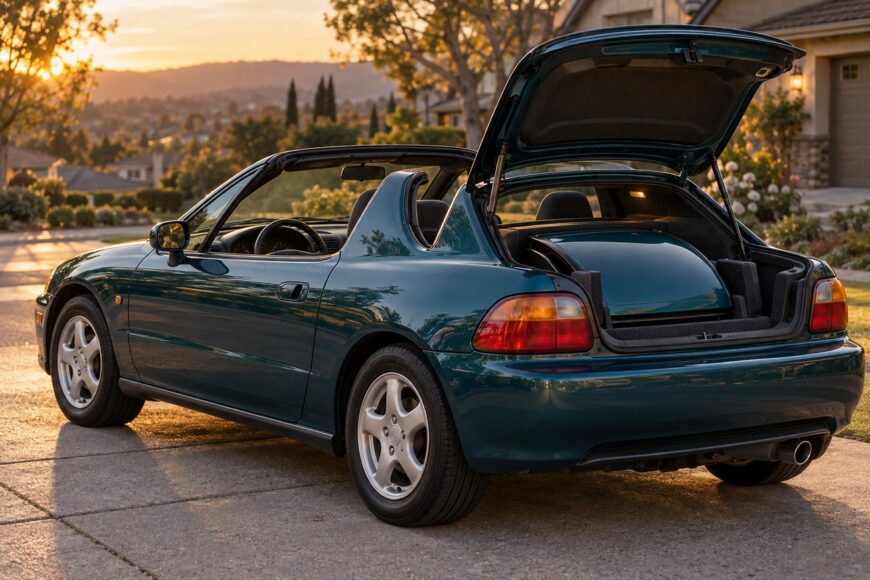
The Honda CR-X del Sol is an appealing compromise: a light, unusual two-seat targa with genuine front-wheel-drive agility and an open-air driving position. It is also a 1990s car with a removable roof, aging seals, vulnerable trim, and a body that may have undergone several repairs. The concept remains clever; surviving examples require more scrutiny than an ordinary Civic.
Condition and completeness matter more than the engine badge. A healthy, structurally sound del Sol with a properly fitted roof is usually a better buy than a more powerful car with corrosion, missing hardware, or a badly assembled targa mechanism. The low purchase price of a rough example can disappear into bodywork, seals, electrical repairs, and market-specific parts.
- What the Honda del Sol Actually Is
- Why the Short, Light Chassis Still Feels Special
- Engines, Trims, and Market Differences
- The Targa Roof Is the Main Ownership Test
- Rust, Donor Cars, and the Hidden Cost of a Cheap Example
- How to Inspect a Honda del Sol Before Buying
- Frequently asked questions
- What is the rarest Honda Civic?
- How can I tell which market a Honda del Sol came from?
- Why do two apparently similar del Sols have different parts?
What the Honda del Sol Actually Is
The Honda CR-X del Sol was produced from 1992 to 1998. Depending on the market, it was also sold as the Civic del Sol, Honda del Sol, or CRX del Sol. Those names can complicate parts research, but they describe the same basic idea: a compact, two-seat targa derived from the fifth-generation Civic.
Its roof is a removable aluminum panel that stores in the trunk. That makes the del Sol a targa rather than a conventional soft-top convertible. There is no folding fabric roof to inspect and no broad convertible frame hidden beneath the body; the roof panel, seals, latches, storage fittings, and surrounding structure all form one system.
The mechanical layout is conventional for Honda of the period: front-engine, front-wheel drive. The car is not a mid-engine sports car, despite occasional assumptions based on its short body and rearward cabin. Its compact proportions create a distinctive driving position, while the Civic platform keeps the basic mechanical architecture familiar to specialists.
That familiarity can be misleading during a purchase. Engine and suspension parts may resemble those used on other Civics, yet the targa body introduces separate structural, sealing, and trim problems. Treating the del Sol as simply a Civic coupe with a removable panel is the quickest way to underestimate the work involved in ownership.
Why the Short, Light Chassis Still Feels Special
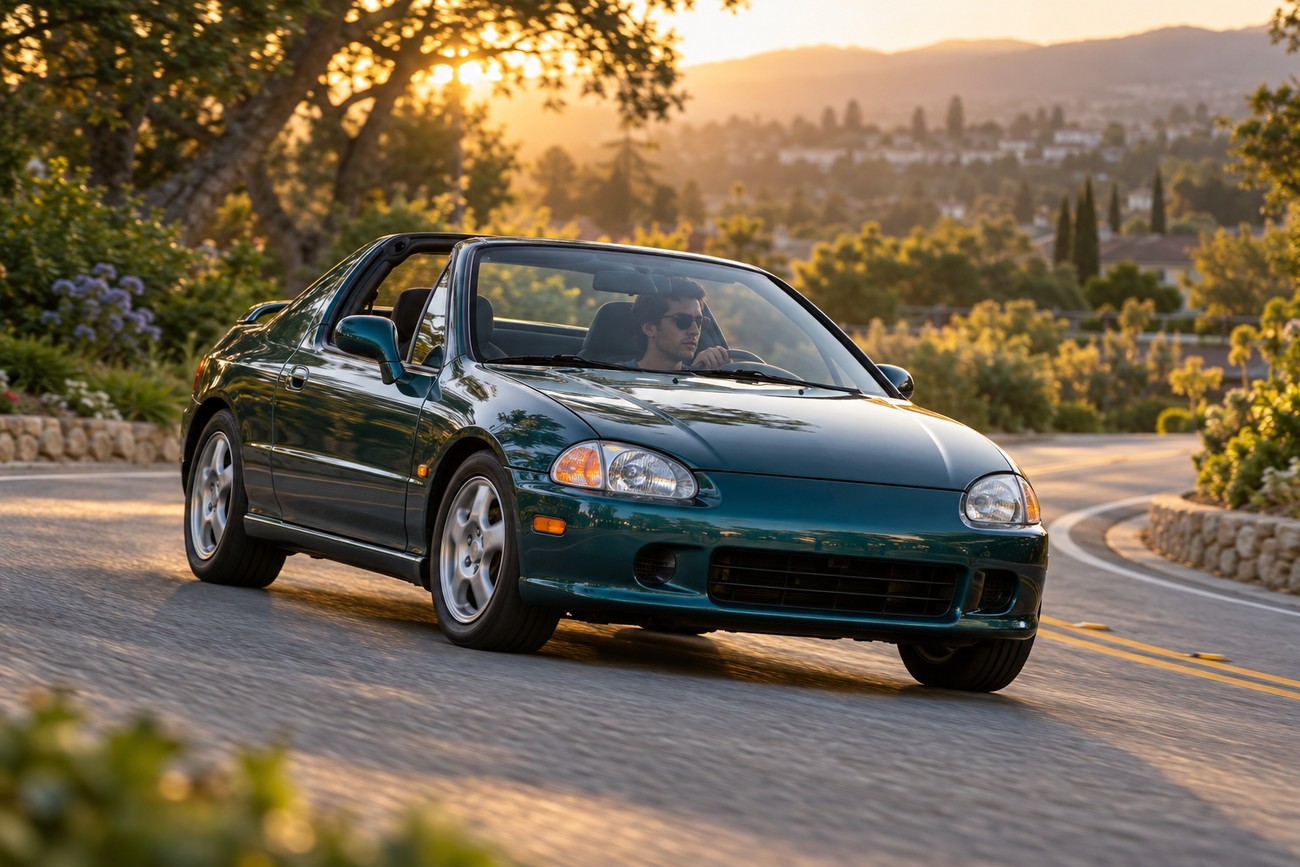
The del Sol has a 2370 mm wheelbase, compared with 2570 mm for the referenced Civic of the period. One factory configuration measures approximately 3995 × 1695 × 1255 mm and weighs about 1110 kg. These figures explain much of its character: the car occupies little road space, changes direction readily, and does not need a large engine to feel responsive.
Honda used double-wishbone suspension in this model line, giving the front end useful control when the components are in good condition. A sound example feels alert rather than heavy, with a short-wheelbase response that makes ordinary roads engaging. That response also exposes worn dampers, tired bushes, poor alignment, and mismatched or degraded tires.
The cabin is genuinely compact. Two adults can use it, but shoulder room, storage, and general space are limited compared with a normal Civic. The trunk is more useful with the roof installed; once the roof is stored there, available cargo space falls sharply, and large or awkward items become difficult to carry.
A targa body also gives up some structural rigidity compared with a comparable fixed-roof coupe. That does not make every del Sol unpleasant to drive, but it makes body condition and previous repairs important. Squeaks, scuttle movement, uneven door gaps, or a roof that needs force to latch should be treated as evidence requiring investigation, not as harmless old-car character.
Engines, Trims, and Market Differences
Del Sol engines generally fall in the approximately 1.5–1.6-liter range, while cataloged output spans roughly 128–170 hp depending on version and market. Those figures are broad because Japanese, European, and American cars were not specified identically. A seller’s trim name is therefore poor evidence of the engine, equipment, or parts fitted to the car.
The best-known Japanese performance example is the SiR and related versions using a 170-hp B16A with a manual transmission. That combination has strong enthusiast appeal, especially because the fifth-generation Civic platform supports tuning and engine swaps. It should still be assessed as one market-specific configuration, not as the universal definition of a del Sol.
Market differences can affect wiring, emissions equipment, interior fittings, brakes, fasteners, roof hardware, and identification marks. Even small mounting details may vary between versions. A replacement part that appears correct in a photograph can be wrong for the car in front of you.
Modified cars need extra caution. A swap may improve performance while removing original brackets, wiring, labels, or trim that later make diagnosis and restoration harder. Before paying a premium for a high-output version, verify the engine code, transmission, documentation, and availability of the specific parts needed to keep the car complete.
Power is also a poor substitute for condition. The lively chassis can be enjoyable with less powerful engines, while a neglected high-performance car may need substantial work before it delivers any benefit. For a road-going purchase, a dry shell and complete roof system normally deserve priority over a claimed specification that cannot be documented.
The Targa Roof Is the Main Ownership Test
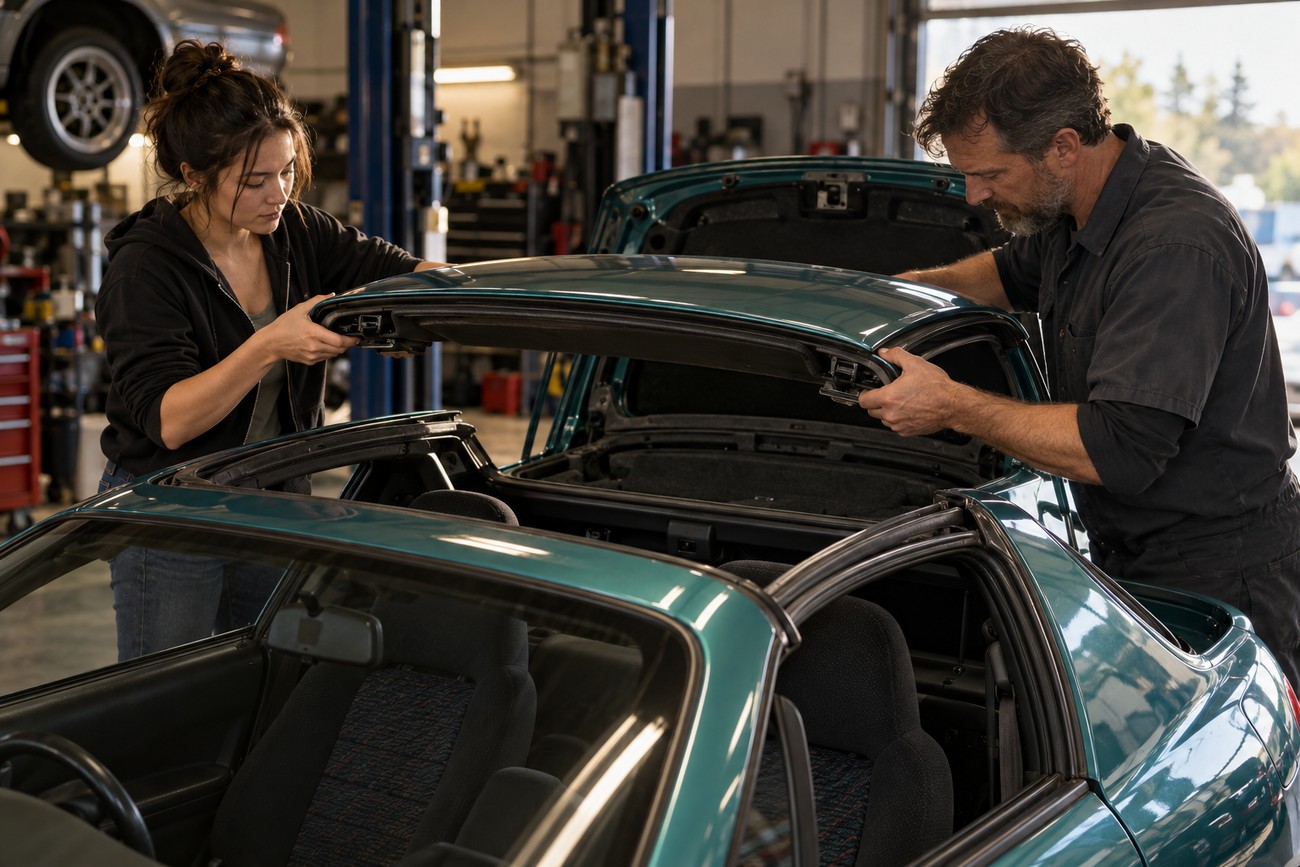
The removable aluminum roof is the defining feature and the main mechanical test. Age, repeated removal, incorrect storage, and previous repairs can produce squeaks, rattles, wind noise, leaks, and latch problems. These faults are often connected: poor alignment can affect latch tension, seal compression, and the way the panel sits in its trunk position.
Inspect the panel for dents, distortion, damaged edges, and signs of repainting. Remove it and refit it yourself if the seller permits. The latches should engage without excessive force, the panel should sit evenly, and the seals should contact consistently around the opening. Check the trunk storage position as well; modifications, replacement panels, or mixed hardware may mean that the roof no longer fits correctly.
Roof alignment, latch tension, seal compression, trunk storage, and water entry must be tested as one system. Replacing seals one at a time will not cure a panel that is distorted, poorly seated, or held by incorrect hardware.
Look for damp carpets, staining, mold odor, corrosion near the roof mounting points, and water in the trunk after a controlled water test. A short drive should reveal wind noise and rattles that a stationary inspection may miss. Seals can look intact while allowing water through under pressure, so visual inspection alone is insufficient.
Some versions have a motorized rear window, which adds another age-related service point. Test its full movement, switches, guides, and sealing. Original roofs, locks, seals, and market-specific hardware can be difficult and expensive to source, so a missing or improvised component deserves a direct cost check before purchase.
Rust, Donor Cars, and the Hidden Cost of a Cheap Example
Inspect the body from underneath, not only in bright exterior light. Typical corrosion concerns include wheel arches, sills, floor areas, and roof mounting points. Surface bubbling may be the visible edge of a larger problem, while fresh underseal can conceal repairs until it is examined closely or tested from the inner side.
The roof mounting areas deserve particular attention because corrosion or poor repairs can affect alignment as well as appearance. Check seams, drain paths, jacking points, and the floor around the cabin and trunk. A straight-looking car with sound doors can still require major structural work underneath.
Age-related faults extend beyond the shell. Electrical components, locks, window drives, switches, and small interior trim can create recurring problems, especially when previous owners have replaced parts with whatever was available. A complete-looking dashboard may hide non-working mechanisms or missing clips that are difficult to replace neatly.
Many surviving cars contain donor-car or mixed-market replacement parts. That is not automatically disqualifying, but it changes the inspection. Confirm that the roof, locks, seals, glass, body panels, and fasteners belong to the same specification or have been adapted correctly.
The engine is often the easiest major component to replace or rebuild. A corroded shell, incomplete roof system, or poorly repaired mounting point is harder to rescue economically. This is why body and structural condition usually matter more than the engine choice when comparing two del Sols.
How to Inspect a Honda del Sol Before Buying
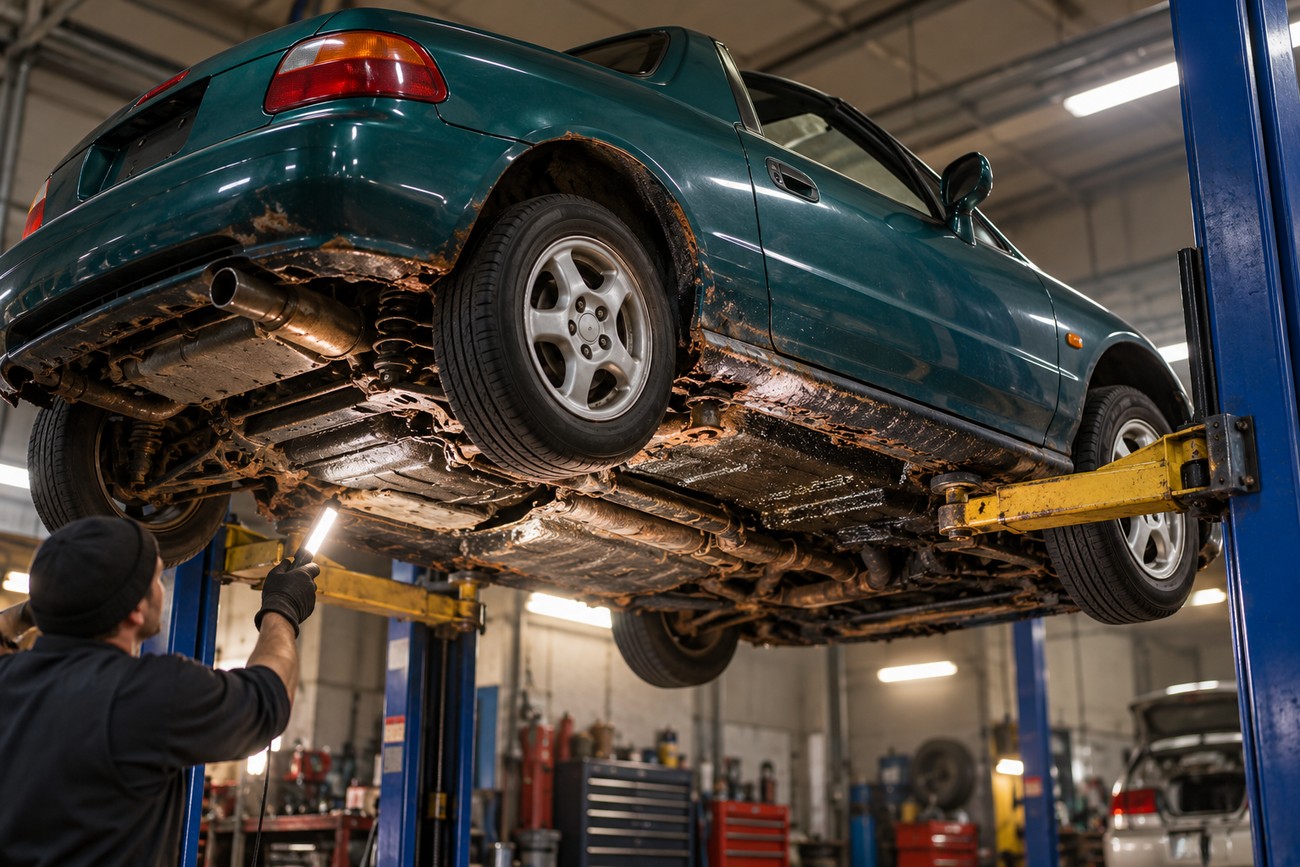
Start underneath. Use a lift where possible and inspect the sills, floor areas, wheel arches, suspension mounting zones, and roof mounting points. Look for corrosion, patched metal, uneven welding, crushed jacking points, and fresh coatings that prevent a clear view. Exterior paint quality should come later in the inspection.
Next, operate the roof completely. Remove it, inspect the panel and latches, place it in the trunk, and refit it. Confirm that it sits correctly in storage and that no modified trim, spare hardware, or replacement carpeting prevents the lid from closing. Test the seals, inspect the cabin and trunk for water entry, and listen for wind noise on the road.
Operate every window, lock, switch, and rear glass mechanism where fitted. Check the door alignment and the condition of the interior trim around the roof opening. Small faults are common on an old car, but several missing or improvised pieces suggest a donor-car rebuild and make future parts research more difficult.
On the road, assess steering response, suspension noise, braking, tire condition, tracking, and the way the car reacts over uneven surfaces. A short wheelbase and light body make worn suspension particularly noticeable. Uneven tire wear can indicate alignment or structural issues rather than a simple need for new tires.
Finally, verify the VIN, engine code, registration history, original market, and modification record. Compare the car with the parts catalog for that specific market and trim before committing to repairs. Do not accept “it fits most Civics” as proof that a roof, lock, seal, glass panel, or small bracket fits this del Sol.
Frequently asked questions
What is the rarest Honda Civic?
There is no single answer without defining the market, trim, engine, transmission, and survival rate. A del Sol SiR or a B16A/manual combination may be uncommon in one country, yet that does not automatically make it the rarest Civic overall.
Production numbers, export history, and the number of complete surviving cars can produce different conclusions. A rare engine combination in a heavily modified shell may be less desirable than a less exotic version with original equipment, sound structure, and verifiable history.
How can I tell which market a Honda del Sol came from?
Use the VIN and registration history first, then compare the original badges, engine code, equipment, lighting, interior details, and documentation. The seller’s trim description is only a starting point because names and specifications changed between markets.
Engine swaps and imported donor parts can make visual identification unreliable. A consistent VIN record, original specification evidence, and matching mechanical components provide a stronger answer than one badge or a claimed SiR identity.
Why do two apparently similar del Sols have different parts?
The cars share the fifth-generation Civic basis, but production market, trim, body hardware, and equipment can differ. Roof panels, locks, seals, glass, fasteners, wiring, and small brackets may therefore vary even when two cars look nearly identical.
Donor-car repairs and later swaps add another layer of variation. Before ordering parts, match the market, trim, identification details, and existing hardware; photographs and generic Civic compatibility listings are not enough for every del Sol component.







