
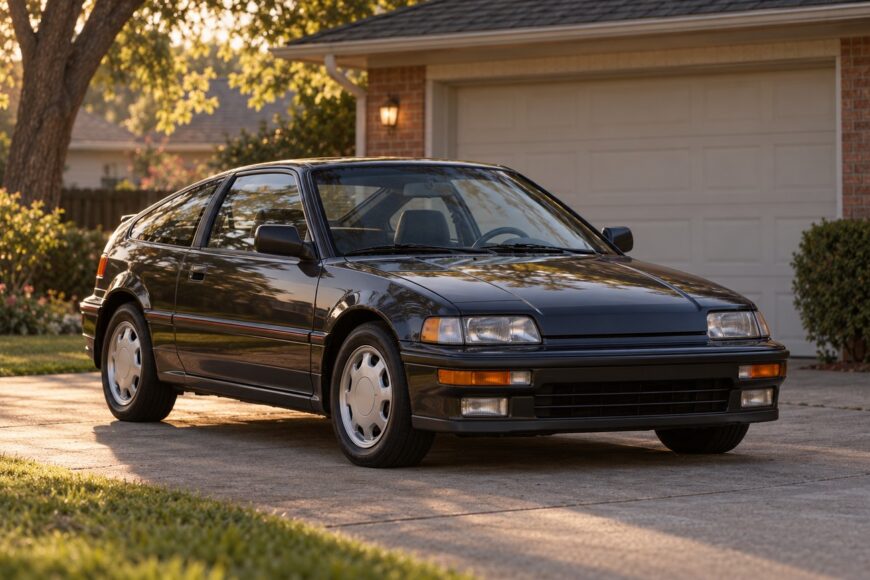
The Honda CR-X Si looks like a contradiction: a sporty, lightweight coupe that can return respectable fuel economy without being the ultra-economical version of the range. That distinction matters. The Si was built to balance usable performance with low running costs, while the CR-X HF pursued fuel savings more aggressively.
The real buying question is therefore less about a badge or an impressive advertisement and more about the condition of a decades-old shell. A sound second-generation US-market CR-X Si can combine low mass, direct controls, and modest fuel use in a way few newer cars replicate. A rusty shell with tired suspension, improvised wiring, and a smoky engine can turn the same specification into an expensive restoration.
You also need to accept compromises that modern buyers may find difficult: limited passive safety, substantial highway noise, no rear seats in US-market cars, scarce body parts, and air-conditioning systems that are often difficult to restore. The Si remains appealing because its compromises support a clear purpose, although age has made condition more important than the original trim level.
- What the Honda CR-X Si Actually Was
- Lightweight, but Not an 800-Kilogram Car
- Fuel Economy: The Si Is Efficient, Not an HF
- Why the CR-X Si Still Feels Special to Drive
- The Ownership Traps That Matter More Than the Badge
- Si Myths, Safety, and the Modern Buying Decision
- Frequently asked questions
- How can you tell if a CR-X is an Si?
- What is the best year for a Honda CR-X?
- What is the weight of a Honda CR-X Si?
What the Honda CR-X Si Actually Was
The second-generation US-market Honda CR-X Si was produced from approximately 1988 to 1991. It was a two-door, front-wheel-drive hatchback coupe aimed at drivers who wanted more involvement than the economy-focused versions could provide. Its small footprint and useful rear cargo area made it practical in a narrow sense, while its engine, gearing, and suspension gave it a sporting identity.
US-market Si cars used the D16A6, a 1.6-liter SOHC engine with multi-point fuel injection. Output is commonly listed at approximately 108–112 hp, depending on market and specification. Claims of 120-plus hp for a stock D16A6 Si are not supported by the cited factory-style specifications, so an advertised car with that figure should be treated as modified, misidentified, or inaccurately described.
Power reached the front wheels through a manual drivetrain, and the chassis used independent double-wishbone front suspension. The arrangement allowed Honda to control wheel movement effectively within the small car’s front-end packaging. Si equipment commonly included sport seats, a tachometer, firmer suspension tuning, and often a sunroof, although equipment varied with market, year, and options.
Market identity matters because “CR-X Si” does not describe one universal specification. The Japanese SiR, for example, used the B16A engine and generally carried more equipment and weight than a USDM Si. Parts catalogs, online listings, and enthusiast discussions often mix these versions, so a seller’s trim label should be checked against the VIN, engine, documentation, and factory equipment.
Lightweight, but Not an 800-Kilogram Car
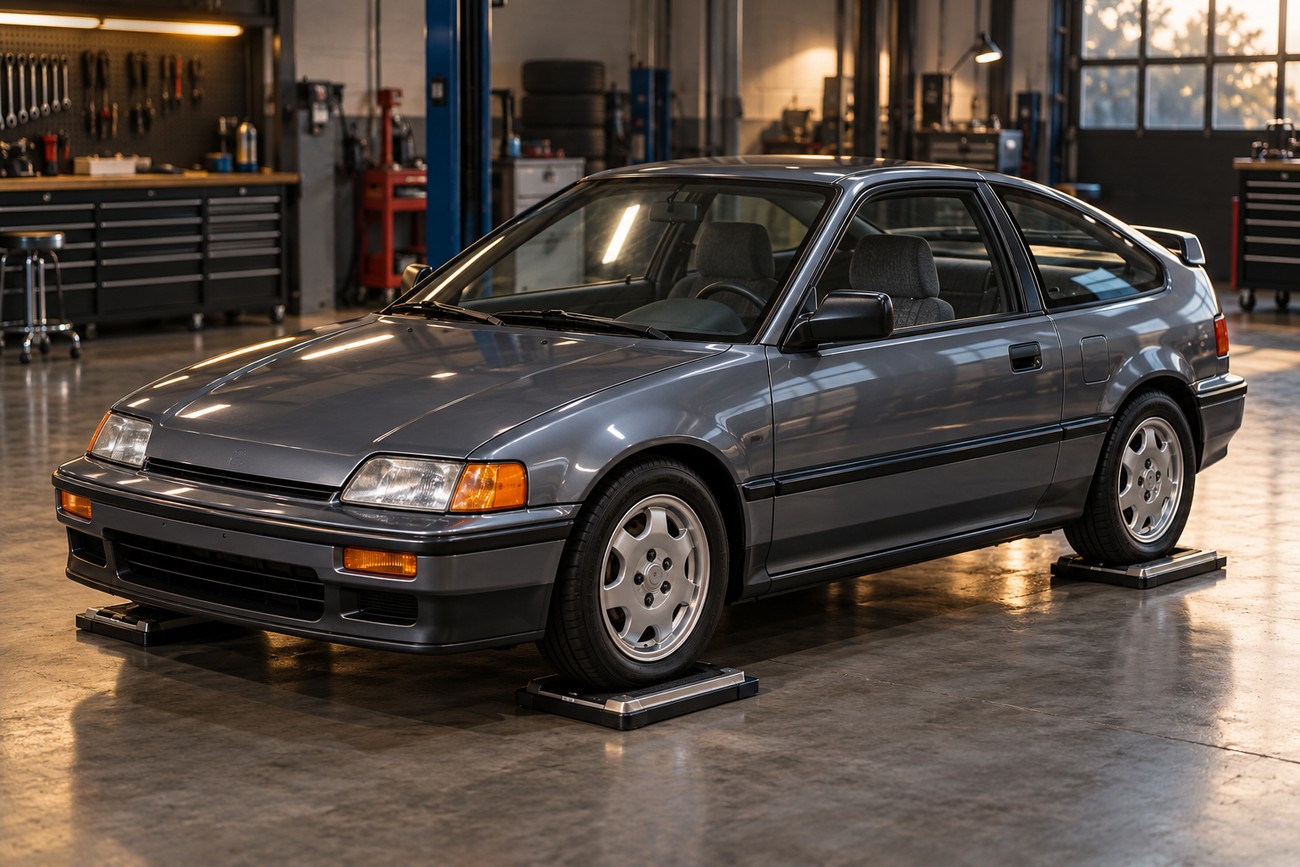
The USDM CR-X Si had an approximate curb weight of 965–990 kg. That is genuinely light by current standards, especially for a car with a four-cylinder engine, a usable hatch area, and ordinary road equipment. It is also substantially different from the often-repeated claim that every CR-X weighed around 800 kg.
The 800 kg figure generally reflects a different lightweight market specification or an inaccurate claim. Some lighter CR-X versions omitted equipment or used different engines and trim, while online listings frequently repeat an old number without identifying the exact market. A surviving car may also gain weight through options, replacement parts, sound deadening, wheels, and safety or comfort modifications, so factory curb weight should be treated as a reference rather than a promise about every example.
For comparison, a Japanese-market SiR with the B16A engine was approximately 1010–1040 kg. That extra mass does not make the SiR uninteresting, yet it reinforces the point that engine swaps and higher equipment levels change the character of the car. The lightness of the USDM Si contributes to lively acceleration despite modest power, leaves less mass for the brakes to manage, and helps the car change direction without feeling burdened.
A drag coefficient of approximately 0.33–0.35 also helps at highway speed. Aerodynamics alone cannot make an old coupe exceptionally economical, since frontal area, gearing, engine condition, and speed still matter. The useful combination is the small body, low mass, and relatively efficient shape, provided the car remains mechanically healthy.
Fuel Economy: The Si Is Efficient, Not an HF
Late-1980s EPA ratings for the CR-X Si were approximately 26–28 mpg city and 30–33 mpg highway. Those figures describe a performance-oriented economy coupe rather than the maximum-efficiency version. The CR-X HF was significantly more economical than the Si because its engine, gearing, equipment, and calibration prioritized fuel saving more strongly.
Low mass helps most during urban acceleration and repeated braking. The Si’s stock fifth-gear ratio also contributes meaningfully to relaxed highway running and fuel economy. At a steady speed, the engine can avoid the frantic feel associated with a short-geared small car, although high speeds, hills, headwinds, and worn mechanical components can quickly erase that advantage.
Owner reports sometimes describe fuel economy above the official ratings when the car is healthy and driven gently. Such results are plausible, but they are not guaranteed. Vacuum leaks, incorrect fuel pressure, weak sensors, poor wheel alignment, dragging brakes, low tire pressure, or an engine consuming oil can all make a supposedly economical CR-X use more fuel than expected.
The fuel tank held approximately 45–48 liters, and reported moderate-driving range is roughly 500–700 km per tank. Treat that range as a planning guide rather than a specification. An old fuel gauge may be inaccurate, and repeatedly running an aged fuel system close to empty can expose problems that a careful pre-purchase inspection should already have found.
The most misleading economy comparison is a modified Si described as “better than an HF” because one gentle highway trip produced an impressive number. The HF’s purpose was different from the Si’s. An original Si in good tune can be economical while still rewarding enthusiastic driving, which is the more useful description of its character.
Why the CR-X Si Still Feels Special to Drive
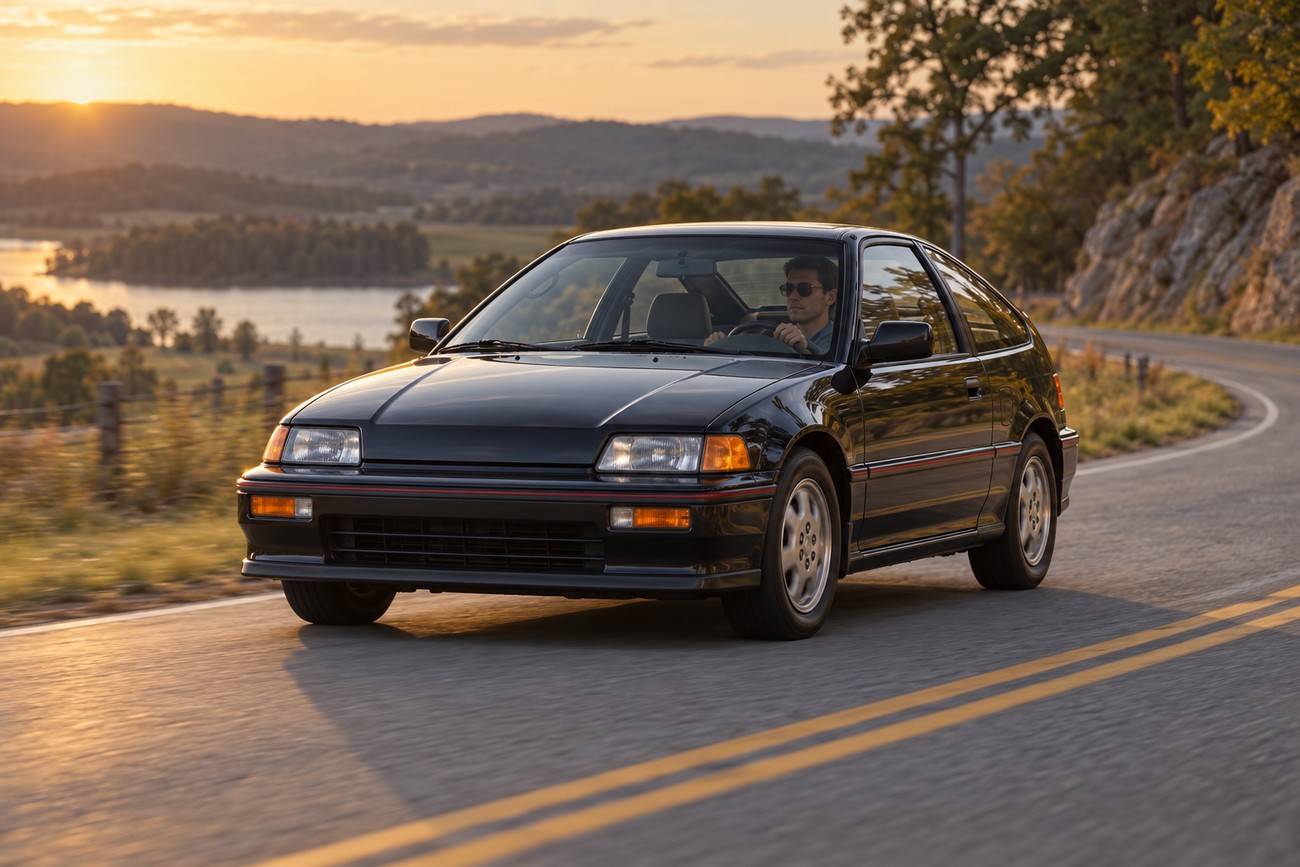
The CR-X Si’s appeal comes from the way its parts work together. A light body, front-wheel drive, a responsive manual gearbox, and independent double-wishbone front suspension create a car that communicates road texture and weight transfer clearly. It does not need a large engine to feel lively on an ordinary road.
Most US-market Si cars used front disc brakes and rear drum brakes. That arrangement is adequate for normal road use when the system is correctly maintained, although age, neglected brake fluid, seized hardware, and poor replacement parts can change the result. Braking feel should be consistent, with no pull, vibration, or excessive pedal travel during an inspection.
Tires and alignment have an unusually pronounced effect on a light car. Correct toe, camber, tire condition, and sensible wheel sizes can make a healthy CR-X feel almost kart-like. A car with mismatched tires or a careless alignment may wander, tramlines, or appear nervous, leading a buyer to blame the basic chassis for a repairable setup problem.
On a lightweight chassis, tire quality and alignment can change the perceived suspension tune more than an owner expects. Verify those basics before assuming the car needs expensive springs or coilovers.
Worn dampers reveal the opposite side of the design. The car can bounce over rough pavement, lose composure in repeated undulations, and transmit rattles through the thinly insulated cabin. Cut springs, overly stiff aftermarket springs, and cheap coilovers often make this worse: the ride becomes harsh while the tires lose contact on imperfect roads, reducing both comfort and control.
The Ownership Traps That Matter More Than the Badge
Rust should be the first serious inspection priority. Common corrosion areas include the rocker panels, rear frame rails, and rear body or tail structure. Fresh undercoating can conceal repairs, so the inspection needs access to seams, drain areas, suspension mounting points, and the underside of the rear structure. Attractive paint and a clean engine bay provide little reassurance if the shell has already weakened.
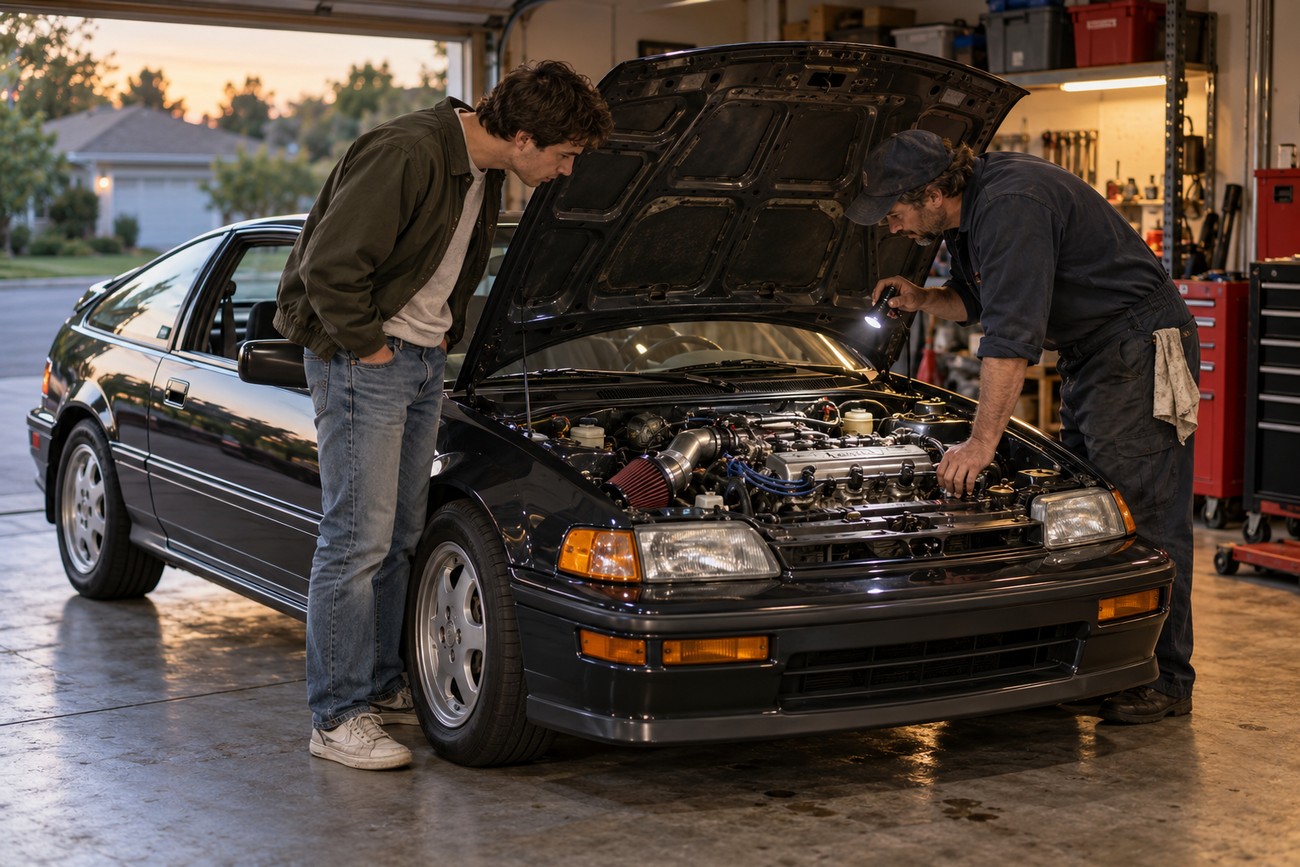
The engine deserves a cold-start inspection and a drive under load. Tired D-series engines may consume oil and smoke during hard driving, while leaks around the engine and transmission can indicate neglected seals or prolonged maintenance gaps. A compression or leak-down test can add useful evidence, although it should be considered alongside oil pressure, smoke behavior, service records, and the condition of the cooling system.
A stable idle is also a diagnostic clue. Aged vacuum hoses and fuel-system components can cause unstable idle, hesitation, and increased fuel use. Poorly installed intake systems, disconnected emissions equipment, and unidentified electrical additions may create symptoms that owners have attempted to hide through repeated parts replacement.
Interior condition is partly cosmetic and partly practical. Dashboard and luggage-area plastics can crack or fade, while thin insulation allows tire noise, wind noise, and rattles into the cabin. Original body panels, glass, lighting, and quality suspension or steering parts can be difficult to source, and low-quality replacement panels may fit poorly or feel noticeably less substantial.
Inspect the chassis and factory wiring before judging an engine bay. A clean shell and an uncut harness often save more money than a fresh-looking engine with undocumented modifications.
Old alarm, audio, and other aftermarket wiring can disrupt ECU operation and create difficult electrical faults. Preserved factory wiring, original sensors, and correctly repaired connectors are valuable because intermittent electronic problems consume time even when the eventual failed component is inexpensive. Restoring factory-quality air conditioning can also be complicated and expensive, particularly when the original system has been neglected or incompletely removed.
Si Myths, Safety, and the Modern Buying Decision
The CR-X Si is lightweight, although the typical USDM car is approximately 965–990 kg rather than 800 kg. It is economical, although the HF was significantly more economical. These distinctions do not weaken the Si’s appeal; they define it more accurately as a balance of fuel economy and performance.
More power does not automatically improve the car. Low-cost intake and exhaust modifications may produce more noise than useful performance, while aggressive camshafts, poor tuning, and improvised engine management can increase fuel use and reduce reliability. A stock D16A6 advertised with 120-plus hp should prompt verification of the engine, ECU, and modifications rather than immediate enthusiasm.
Lightness also says little about modern crash protection. Passive safety is poor by modern standards, with airbags limited or absent depending on market and year. The short body, limited structural protection by current expectations, and lack of contemporary driver-assistance systems make the Si a poor substitute for a newer daily driver if crash protection is a primary requirement.
The two-door US-market body limits family practicality because it has no rear seats. Long commutes expose the noisy cabin, firm ride, limited climate-control reliability, and age-related electrical problems. Theft risk may also matter in regions where classic Honda performance models attract unwanted attention, so secure parking and insurance terms deserve attention before purchase.
The right buyer values a mostly original, well-documented chassis and accepts ongoing maintenance. The wrong buyer wants modern safety, silent highway travel, reliable air conditioning, and appliance-like ownership from a car that has already spent decades on the road. Between two similar listings, choose the shell with less corrosion and the wiring with fewer alterations, even if the paint or engine bay is less impressive.
Frequently asked questions
How can you tell if a CR-X is an Si?
Start with the VIN, title, original sales documentation, and any factory build information available for the car’s market. Then compare the documented trim with corroborating equipment such as the D16A6 engine, multi-point fuel injection, tachometer, sport seats, firmer suspension, and commonly fitted sunroof. These features support an identification, although individual equipment can vary and parts may have been replaced.
Inspect the engine number, ECU identification, transmission details, wiring, and stamped body information where accessible. Badges and seats can be changed easily, and an engine swap can make a genuine car appear different. If the seller claims a rare market specification, ask for import papers or period documentation rather than relying on horsepower figures or cosmetic trim.
What is the best year for a Honda CR-X?
There is no universally best year among second-generation US-market CR-X Si cars. Condition, originality, rust repair quality, and maintenance history usually matter more than a small year-to-year equipment difference. A later car with severe corrosion and improvised wiring is a worse purchase than an earlier car with a sound shell and complete records.
Compare candidates using the same inspection process: examine the rockers and rear structure, verify the drivetrain, test the electrical systems, check the suspension, and confirm that replacement parts are available in your region. Choose the car with the strongest evidence of careful ownership, then verify any year-specific equipment through the VIN and factory documentation.
What is the weight of a Honda CR-X Si?
A typical USDM CR-X Si has an approximate curb weight of 965–990 kg. The exact figure varies with market specification, options, equipment, and replacement parts. The frequently quoted 800 kg figure generally refers to a different lightweight specification or an inaccurate claim.
For context, a JDM SiR with the B16A engine was approximately 1010–1040 kg. Check the exact market, trim, engine, and factory equipment before comparing figures between listings. Weighing an individual modified car can establish its actual weight, but it does not change the original specification recorded for its trim.







