
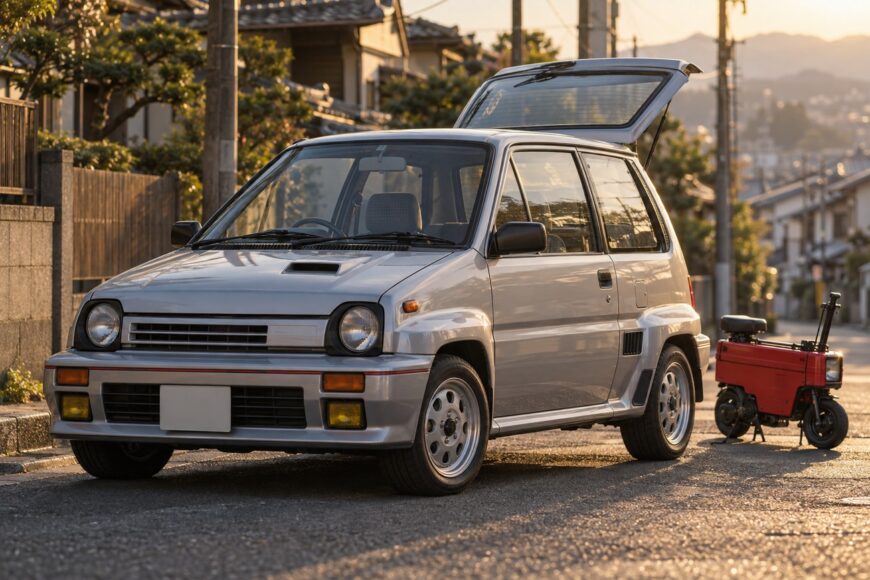
The Honda City Turbo II put 110 PS, turbocharging, and five seats into a hatchback small enough to carry a foldable scooter in its luggage area. That combination gave the car its Bulldog identity. It also creates a difficult buying choice: a sound, complete example is an unusual collector car, while a tired one can become an expensive search for metalwork, mechanical parts, and brittle trim.
Condition matters more than the badge alone. A healthy turbo system, an original interior, and an honest body are worth examining before any promise of extra power. The Honda Motocompo adds to the story and can add substantially to desirability, but it deserves its own inspection rather than being treated as a free accessory.
- Why the City Turbo II Became the Bulldog
- Honda City Turbo II Specifications at a Glance
- What 110 PS Feels Like in a 735 kg Hatchback
- Motocompo: The Scooter That Changes the Car’s Practicality
- Buying One: Rust, Parts, and the Cost of Completeness
- Keeping the ER Turbo-CVCC Engine Healthy
- The Bulldog’s Hidden Compromises on Modern Roads
- Turbo II Myths That Make Ownership More Expensive
- Frequently asked questions
- How much does a Honda City Turbo II cost?
- What was the top speed of the 1985 Honda City Turbo II?
- Which Honda model came with a moped?
- How much does a Honda City Turbo 2 cost?
- What was the top speed of a 1985 Honda City Turbo 2?
Why the City Turbo II Became the Bulldog
Sold in Japan from approximately October 1983 to 1986, the Honda City Turbo II, chassis E-FA, took the City’s tall-bodied urban layout in a more aggressive direction. Its five-seat cabin sat within a body measuring approximately 3420 × 1625 × 1470 mm, with a 2220 mm wheelbase. The upright shape made sense on tight streets; the widened, purposeful Turbo II styling gave it the Bulldog nickname.
The engineering supported the visual joke. Front-wheel drive, a five-speed manual transmission, and a mass of approximately 735 kg made the car feel alert without requiring a large engine. Its compact footprint also made narrow roads and parking spaces part of its natural territory.
Honda’s Tall Boy image extended beyond the car through the foldable Motocompo mini-scooter, which could be carried in the luggage area. Advertising linked the two as a playful answer to urban mobility, although a scooter should not be assumed to come with every surviving Turbo II. The campaign explains the car’s appeal; it says little about how safely, quietly, or reliably a four-decade-old example will travel now.
Honda City Turbo II Specifications at a Glance
These are factory-oriented ratings and approximate published specifications, rather than performance guarantees for a surviving car. Condition and setup can change what you experience from the driver’s seat.
| Item | Specification |
|---|---|
| Model | Honda City Turbo II, chassis E-FA |
| Layout | Front-wheel drive; five-speed manual transmission; five seats |
| Engine | ER, 1231 cc, inline four-cylinder, eight-valve CVCC |
| Turbocharger | RHB51; approximately 0.82–0.85 bar maximum boost |
| Rated power | 110 PS at 5500 rpm, approximately 108 hp |
| Rated torque | 160 Nm at 3000 rpm |
| Mass | Approximately 735 kg; approximately 745 kg with sunroof |
| Dimensions | Approximately 3420 × 1625 × 1470 mm |
| Wheelbase | 2220 mm |
| Ground clearance | 160 mm |
| Turning radius | 4.6 m |
| Fuel tank | 41 liters |
| Published fuel figure | Approximately 5.7 L/100 km on the Japanese 10/15 cycle |
What 110 PS Feels Like in a 735 kg Hatchback
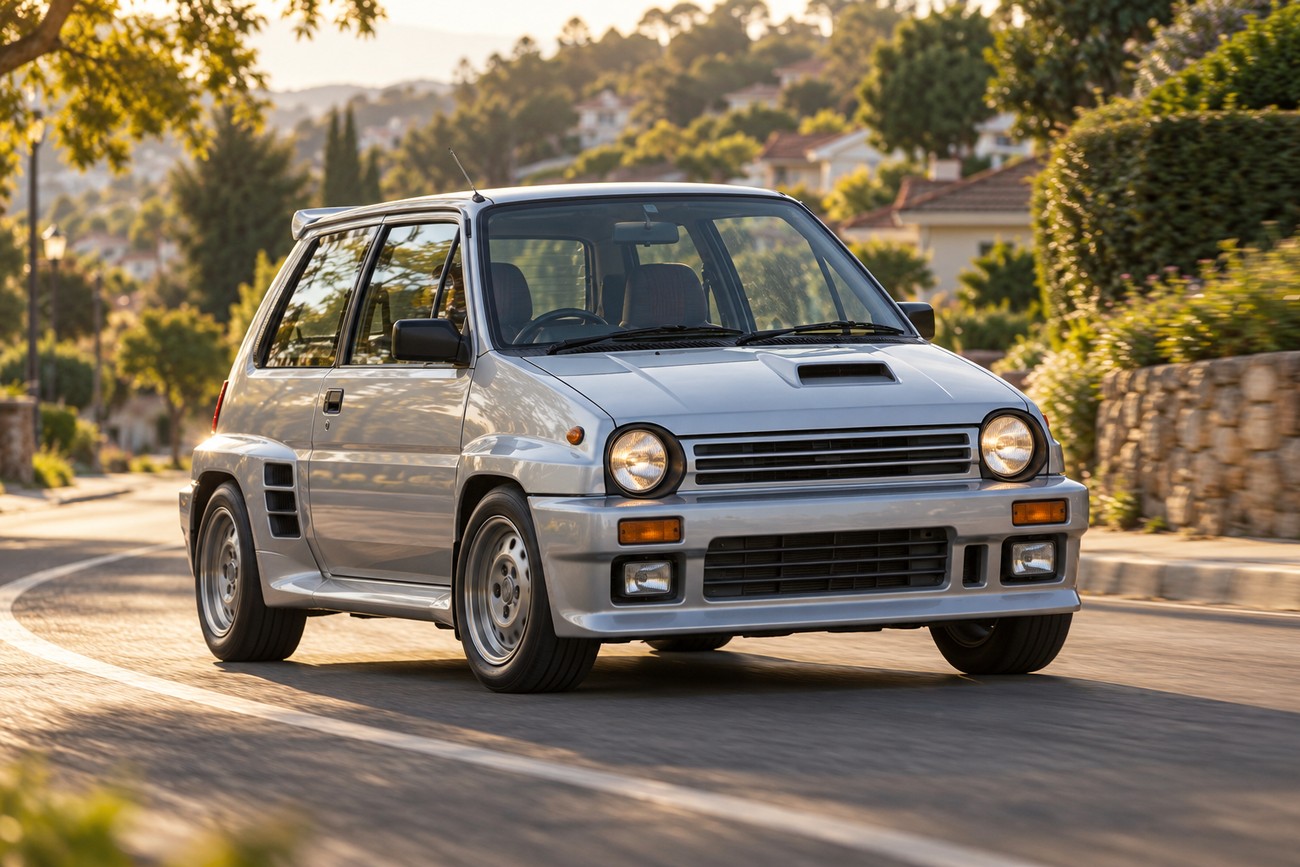
At approximately 6.7 kg per PS, the Turbo II has enough power for its weight to feel eager when the engine is working properly. The rated 160 Nm arrives at 3000 rpm, while peak power is 110 PS at 5500 rpm. On the road, the appeal is the way a light car gathers pace as boost builds, then responds quickly to a change of direction.
That character depends heavily on condition. Owners report substantial differences between cars with healthy turbochargers and correctly adjusted ignition and cars that have lost performance through wear or poor setup. A modified example may sound more promising on paper yet feel weaker than a well-sorted standard car.
There is no need to attach an unverified acceleration time or top speed to make the point. A test drive should reveal smooth boost delivery, clean running, and consistent response once the engine is warm. Hesitation, abnormal heat, or evidence of detonation deserves investigation, rather than an explanation that these engines simply behave that way.
The published consumption figure of approximately 5.7 L/100 km comes from the Japanese 10/15 cycle. It is a test result, not a promise for traffic-heavy commuting. Owners report substantially higher consumption when using boost regularly or sitting in congestion, so budget for the car you intend to drive.
Motocompo: The Scooter That Changes the Car’s Practicality
The Honda Motocompo was a foldable mini-scooter that could be carried in the City’s luggage area. It made the small hatchback’s urban theme tangible: park the car, then continue on two wheels. Its association with the City and Turbo II remains a major part of the Bulldog’s identity.
The packaging trick has a cost. With the scooter aboard, much of the usable luggage space disappears. A five-seat hatchback may look versatile in photographs, yet the combination leaves little room for the ordinary cargo a weekend trip demands.
For a collector, an original Motocompo can materially increase interest in a car. In some cases, the scooter itself may be worth as much as, or more than, the car, though that is no substitute for assessing the condition of both. Check whether an advertised “complete” pairing includes the actual scooter and its relevant parts, and distinguish an original association from a scooter added later.
Buying One: Rust, Parts, and the Cost of Completeness

Start beneath the paint. Inspect the sills, wheel arches, lower door edges, and rear body section for corrosion, then look closely at how earlier repairs were made. Fresh coating can conceal improvised welding; a tidy exterior cannot establish that the underlying structure is sound.
Next, inventory the parts unique to the Turbo II. Original turbochargers, intercooler components, body panels, and interior plastics can be difficult to source. A missing small piece may stall an otherwise straightforward restoration because the ordinary City, and later Hondas, cannot be assumed to supply it.
The cabin warrants the same attention as the engine bay. The distinctive two-level dashboard helps give the car its character, but fragile, scarce plastic can make an interior harder to put right than expected. Check fittings and trim before treating cracks or missing pieces as minor bargaining points.
Mugen equipment, rare wheels, and period body kits can add appeal when genuine and intact. Replacing incomplete equipment can also be disproportionately expensive. Confirm what is fitted, what has been altered, and what spare parts accompany the car; an old photograph is no substitute for what is present now.
A cheap project can cost more to finish than a sound, complete example. Examine repair quality, parts availability, and the cost of returning modifications to a usable road specification before committing. Import and registration paperwork also needs to identify the Turbo II accurately, rather than relying on a generic Honda City description.
Keeping the ER Turbo-CVCC Engine Healthy
The ER 1231 cc turbo-CVCC engine asks for more specific knowledge than a familiar later Honda unit. CVCC is Honda’s combustion system, and here it must work correctly alongside the turbocharger, fuel delivery, and ignition. Fault-finding by substitution is a poor plan when specific ER Turbo and CVCC components are scarce and not broadly interchangeable with later engines.
Heat and detonation are serious risks when boost or fueling has been changed without adequate checks. Detonation involves abnormal combustion caused by autoignition of the unburned mixture and can damage pistons; a car can feel lively while running dangerously close to it. Verify the state of the cooling system and the engine’s tune before accepting claims that increased boost is harmless.
Leave factory boost and the fuel system alone until cooling, ignition timing, mixture control, and turbocharger condition have been verified. Extra power cannot compensate for a fault already putting the engine at risk.
Basic operating habits matter too. Use suitable oil and coolant, allow the engine to warm before asking for full boost, and avoid shutting it down immediately after hard use. Poor lubrication or cooling can encourage deposits, leaks, turbo wear, and shortened engine life.
For most owners, money spent on sound cooling, reliable ignition and mixture control, effective brakes, and rust prevention will make the car more enjoyable than a higher boost setting. If a seller advertises tuning, ask how it was checked. An unsupported power claim is a maintenance question, not a bonus.
The Bulldog’s Hidden Compromises on Modern Roads
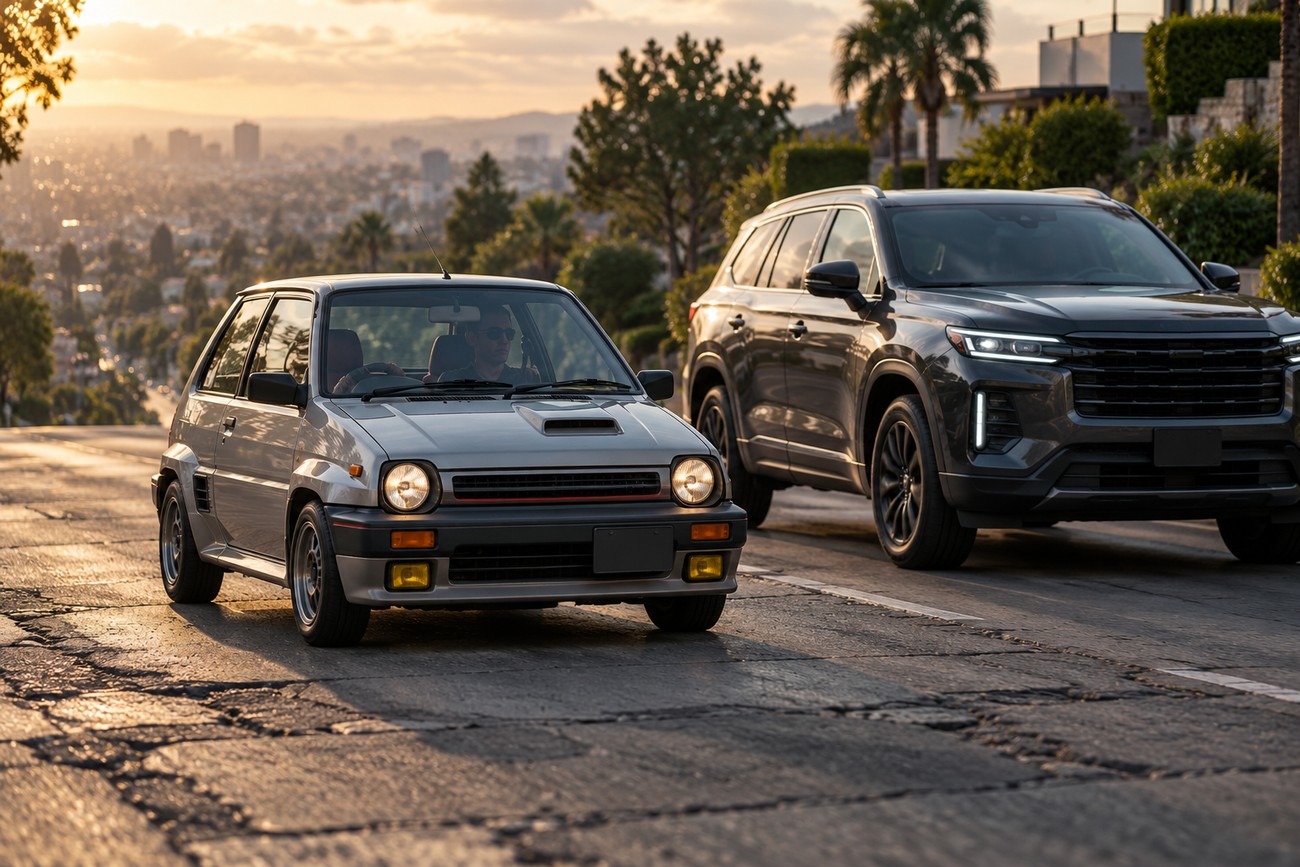
Light weight and compact dimensions make the Turbo II entertaining at ordinary road speeds. They do not give it modern crash protection. Passive safety is minimal by current standards, a material consideration if the car will share daily traffic with much larger vehicles.
Owners commonly describe a firm ride, notable cabin noise, and vibration. On a smooth road, those sensations can make the car feel connected; over potholes and speed bumps, they become tiring. Judge comfort on the roads you actually use, rather than through the lens of its cheerful advertising.
The standard brakes also deserve a measured assessment. They can feel inadequate under repeated hard use, especially if engine output has been increased. Check their condition and consistency before assuming the car’s lively acceleration is matched by equally strong stopping performance.
This is a five-seat, front-wheel-drive city car with a keen mechanical edge, not a modern hot hatch in miniature. Its directness is the reward. Refinement and safety are compromises you have to accept knowingly.
Turbo II Myths That Make Ownership More Expensive
“It made 120–130 PS from the factory” is a tempting reading of the Turbo II’s reputation. The supported rating is 110 PS at 5500 rpm, approximately 108 hp. Higher figures require evidence of modifications and proper tuning, rather than faith in a seller’s description.
“It uses 5–6 L/100 km in the city” turns a published cycle result into a road-use guarantee. The approximately 5.7 L/100 km figure belongs to the Japanese 10/15 cycle. Owner reports describe substantially greater fuel use in traffic and during active driving, although any individual car’s result will vary.
“It is an old Honda, so parts will be easy” overlooks how specific the turbo engine, bodywork, and interior are. Turbo II and Mugen pieces can be rare and expensive. Availability should be checked for the missing part on the car in front of you, rather than inferred from the number of other Hondas still on the road.
“It is a comfortable everyday city car” reflects its marketing more than typical owner experience. Reports consistently emphasize a hard ride, noise, and a driver-focused feel. That can be exactly what a buyer wants, provided it is chosen deliberately and not discovered after purchase.
Frequently asked questions
Prices and performance claims for the Turbo II need more context than a model name supplies. These answers focus on what can be checked before a purchase.
How much does a Honda City Turbo II cost?
There is no dependable single price to apply to every Honda City Turbo II. Compare cars by structural rust, originality, interior completeness, and the presence and condition of scarce turbo-specific parts. A Motocompo can substantially affect desirability, so confirm whether it is included before comparing asking prices.
What was the top speed of the 1985 Honda City Turbo II?
The available evidence here does not establish a dependable factory top-speed figure for the 1985 Honda City Turbo II. Its 110 PS rating cannot be converted into a trustworthy top speed without assumptions about gearing, aerodynamic drag, and vehicle condition. Treat an united number as a claim to verify, not a specification.
Which Honda model came with a moped?
The Honda City is the model associated with the foldable Honda Motocompo mini-scooter, which fits in its luggage area. The scooter was also prominent in the City Turbo II story, but its association with the model does not mean every surviving car was supplied with one or still includes it.
How much does a Honda City Turbo 2 cost?
“City Turbo 2” is another way sellers describe the City Turbo II; the shorter name does not identify a cheaper variant. Ask for photographs of corrosion-prone areas, an inventory of missing trim and mechanical parts, and clear documentation of any Motocompo before judging an asking price. Restoration scope can outweigh a low purchase price.
What was the top speed of a 1985 Honda City Turbo 2?
No dependable top-speed figure is established by the supplied technical information for the 1985 City Turbo II. If a listing quotes one, ask for its source and whether it refers to a standard car. Engine health, modifications, and even the method of measurement can make an isolated claim misleading.







