
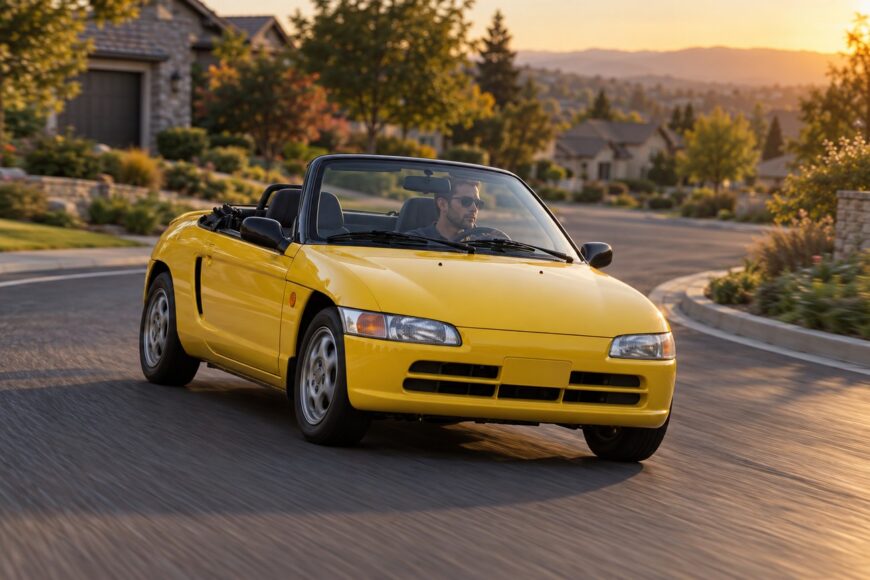
The Honda Beat is a contradiction in mechanical form: a 760 kg kei roadster making only 64 PS, with its factory power peak at 8,100 rpm before its character fully arrives. Its 656 cc engine has little low-rpm authority, but the car becomes increasingly vivid above 6,000 rpm, where the light body, manual gearbox, and compact mid-engine layout work together.
That combination makes the Beat a uniquely engaging driver’s car, provided your expectations are narrow enough. The cabin is exceptionally tight, corrosion can matter more than mileage, parts support is uneven outside Japan, and highway use brings sustained noise and high engine speed. Buying one means accepting those compromises as part of the design rather than treating them as minor inconveniences.
- Why the Honda Beat Feels Faster Than Its Numbers
- The E07A and MTREC: Built for Response, Not Torque
- A Kei Roadster That Was Never Meant to Be a Highway GT
- The Parts of a Honda Beat That Can Ruin the Purchase
- Ownership Reality: Small Car, Specialized Maintenance
- The 63-PS, 9,000-RPM, and 150-km/h Myths
- Frequently asked questions
- What is the highest-revving Honda car engine?
- What is the fastest Honda Beat?
- What should a pre-purchase engine check include on a Honda Beat?
Why the Honda Beat Feels Faster Than Its Numbers
The Honda Beat, chassis code PP1, is a two-seat kei roadster with a mid-engine, rear-wheel-drive layout. Its 760 kg stock mass gives 64 PS a meaningful job: the engine does not need to move much car, and the driver feels changes in speed and direction directly. The five-speed manual gearbox keeps the engine involved, while the short body makes ordinary roads feel more immediate than the specifications suggest.
The engine’s strongest personality appears above 6,000 rpm. At lower speeds and in taller gears, the Beat can feel surprisingly modest, especially in city traffic where the engine has not reached the part of its rev range that makes it special. You must use the gearbox and allow the E07A to work hard; gentle, low-rpm driving can leave the car feeling weaker than its reputation.
Its mid-engine layout helps create a balanced, compact package, although the experience is shaped just as much by scale as by weight distribution. The Beat sits close to the ground, exposes you to the road, and responds to small throttle and steering inputs without the insulation of a modern sports car. That sense of involvement is the point, but it also means worn tires, tired bushings, or poor suspension modifications are immediately apparent.
The result is a car that feels entertaining at legal road speeds without needing dramatic acceleration figures. You work for momentum through gear selection, corner entry, and throttle precision. A driver expecting effortless torque will find the Beat frustrating; someone who enjoys keeping a small naturally aspirated engine in its working range will understand the appeal quickly.
The E07A and MTREC: Built for Response, Not Torque
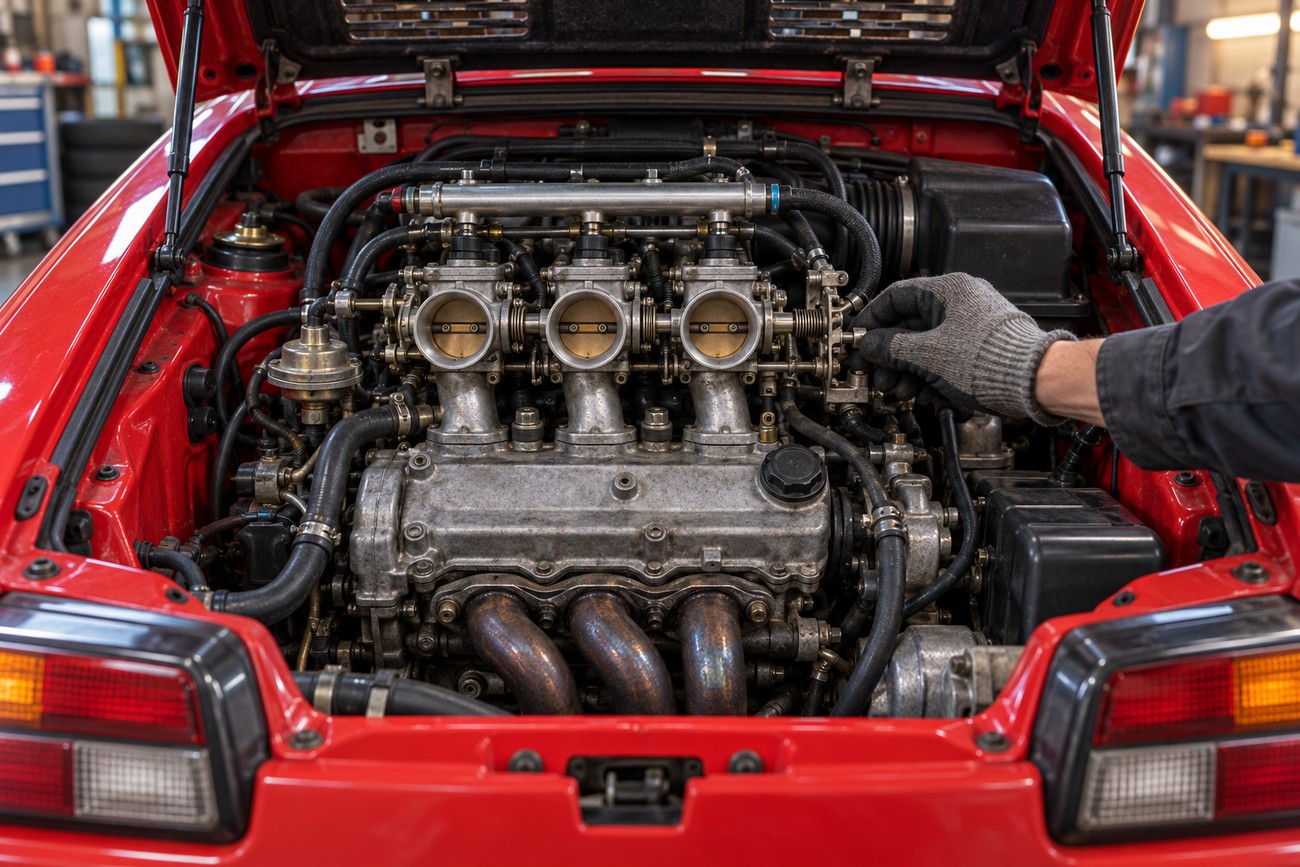
The E07A is a 656 cc, SOHC, 12-valve, naturally aspirated three-cylinder engine. Factory output is 64 PS at 8,100 rpm, with approximately 60 N·m at 7,000 rpm. Those figures explain the driving technique: the engine’s power and torque arrive high in the rev range, so the Beat rewards accurate shifts and sustained use of the upper revs.
Honda’s MTREC system uses individual throttle bodies with two fuel maps, designed for throttle response and high-rpm operation. Individual throttles give the accelerator a direct mechanical feel, while the fuel-control strategy matches fueling to the engine’s high-speed operation. This is a carefully tuned small engine, rather than a large engine made to feel small.
Maintenance therefore matters more than cheap electronic tuning. Dirty intake components, vacuum problems, poorly adjusted throttle cables, or neglected sensors can produce unstable idle and a flat response. A replacement chip may change a symptom or add a claim to the specification sheet, but it cannot correct a mechanical system that is out of adjustment.
Valve adjustment and throttle-cable alignment can restore more of the Beat’s character than speculative engine electronics. The response depends on the mechanical relationship between the pedal, individual throttles, and engine management.
The 8,100-rpm figure is the factory power peak, not the engine’s stock cutoff. The commonly reported stock rev limit is approximately 8,300–8,500 rpm. Some owners report higher readings, including 9,000 rpm, but that is not a reliable stock specification and may reflect tachometer error, modification, or risky operation.
A Kei Roadster That Was Never Meant to Be a Highway GT
The Beat measures 3,295 mm long, 1,395 mm wide, and 1,175 mm tall, with a 2,280 mm wheelbase. Those dimensions make it easy to place on narrow roads and simple to park, while the low roof and short body reinforce its go-kart-like character. They also leave little room for luggage, leg movement, or protection from road noise.
Every factory Beat had a five-speed manual transmission; Honda offered no factory automatic or CVT. That gearbox is central to the car’s personality because the engine has limited low-rpm torque and needs frequent gear selection. On a flowing road, this involvement is rewarding. In slow traffic, the constant shifting can feel more like work than entertainment.
The low ground clearance creates practical risks. Bumpers, the exhaust, and underbody reinforcements can contact steep ramps, speed humps, and sharp road transitions. A car that has been lowered with cheap springs or poorly chosen coilovers can become especially difficult to use and may lose the stable, progressive behavior expected from a sound standard chassis.
The factory electronic top-speed limit is approximately 135 km/h. Limited owner GPS reports commonly indicate approximately 130–140 km/h in stock form, while 150+ km/h stories generally involve tuning, limiter removal, or unreliable measurement. More important than the final number is the workload: open-cabin noise, aerodynamic buffeting, and cruising at 7,000–8,000 rpm can make sustained highway travel tiring.
The Parts of a Honda Beat That Can Ruin the Purchase
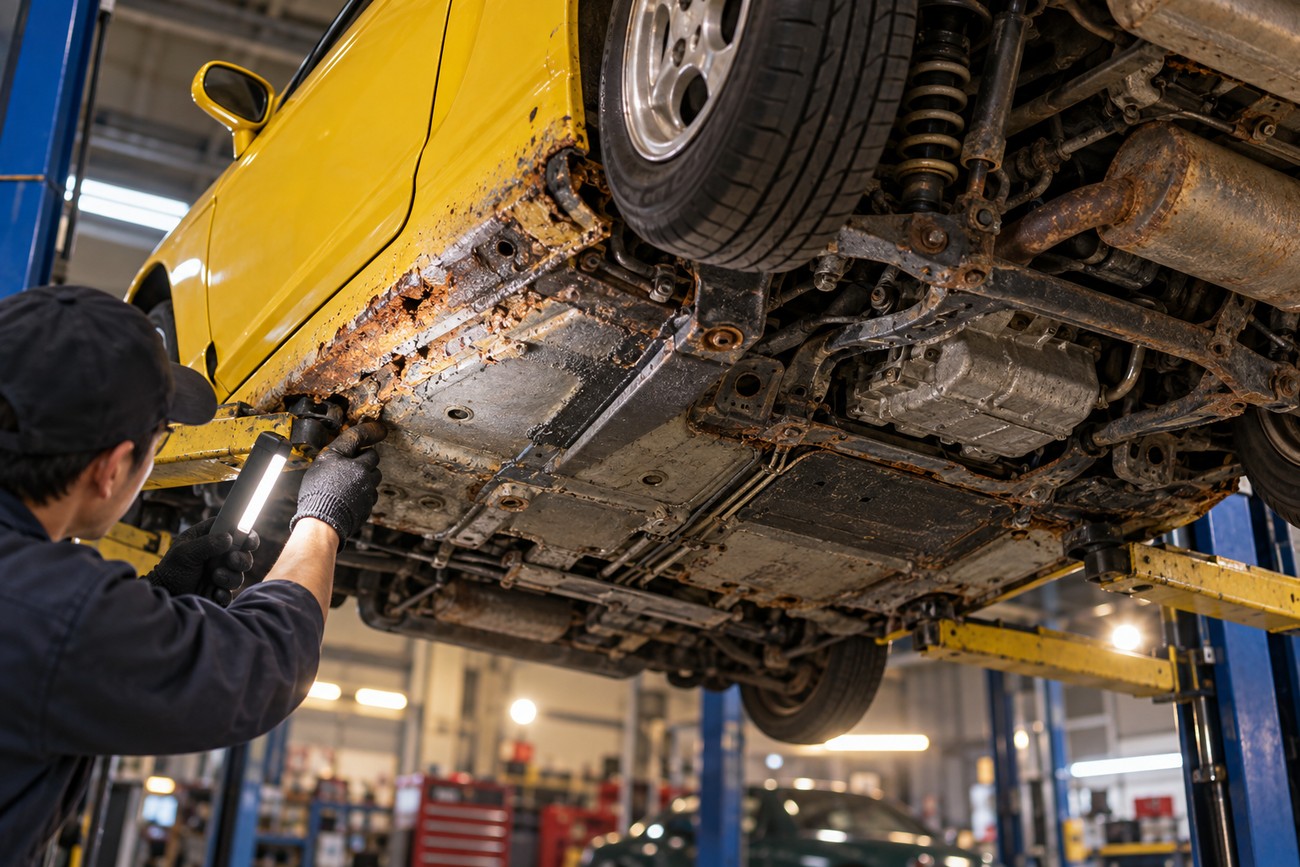
Inspect the underside before judging the car by its paint or odometer. The main corrosion risks are the sills, floor, underside, and suspension mounting points, where rust can affect both structural integrity and repair cost. A low-mileage Japanese-market import may still have spent decades exposed to moisture, road salt, or storage conditions that the mileage does not reveal.
Look for corrosion that travels inward from the outer sill into the floor and suspension attachment areas. Check seams, drain points, repairs, lifting damage, and the condition of the metal around mounting hardware. Also inspect the front and rear underbody for impact marks from the Beat’s limited ground clearance; a scraped exhaust is visible, while distorted reinforcement or mounting metal may require more careful examination.
An underside inspection should trace rust from the visible sill into the floor and suspension mounting points. Stopping at clean outer panels can miss the structural area that determines whether a restoration remains sensible.
The soft top deserves its own inspection. Tears, hardened material, damaged seals, poor folding, or improvised repairs reduce weather protection and can affect the car’s value because good original roof components are difficult to replace. Dashboard plastics, roof parts, body panels, the hood, and original wheels may also depend on used or dismantled supply, especially outside Japan.
During a road test, listen for drivetrain and suspension noise, check that the car tracks straight, and pay attention to steering corrections over uneven surfaces. Fresh tires and sound factory-style bushings can make a Beat feel substantially more stable than one fitted with worn rubber or cheap suspension parts. A stiff, nervous ride is not proof that the car is sportier.
Service history should cover more than oil changes. Look for evidence of regular high-rpm maintenance, cooling-system attention, valve adjustment, and work on the MTREC intake and throttle system. A Japanese-market import can have limited service documentation after leaving Japan, so a clean auction photograph or low odometer reading should support an inspection, not replace it.
Ownership Reality: Small Car, Specialized Maintenance
The Beat is small, but its maintenance is specialized. The E07A and MTREC system are less familiar to general repair shops than a mass-market Civic drivetrain, and diagnosis can become expensive when technicians replace parts by trial and error. in the assessment of practicing specialists. knowledge may be harder to obtain than the car’s size suggests.
Keep the intake clean and investigate any unstable idle, hesitation, or loss of power before modifying the engine. Fuel quality and general intake condition matter to a system designed around individual throttles and precise control. Correct valve adjustment and throttle-cable setup also affect response, so these basic mechanical checks deserve attention before chasing more power.
Frequent high-rpm use increases the importance of oil and filter quality. The engine is designed to operate high in the rev range, yet that does not make neglected lubrication harmless. Cooling condition matters as well, particularly during long high-speed runs that hold the engine near 7,000–8,000 rpm for extended periods.
Three common ownership mistakes are easy to avoid. Treating the car like an ordinary Civic leads to incorrect assumptions about parts and service expertise; using a cheap chip to cure MTREC problems masks the real fault; and fitting low-quality springs or coilovers can make the chassis nervous and unsafe. The best modifications begin with a healthy standard car and preserve predictable suspension behavior.
Corrosion protection is basic by early-1990s standards, so climate matters. An imported Beat used on salted roads benefits from careful underside inspection and sensible corrosion prevention. Parts such as specific E07A components, body panels, dashboard plastics, roof parts, and original wheels may be expensive or dependent on used supply, making preventive maintenance more valuable than aggressive modification.
The 63-PS, 9,000-RPM, and 150-km/h Myths
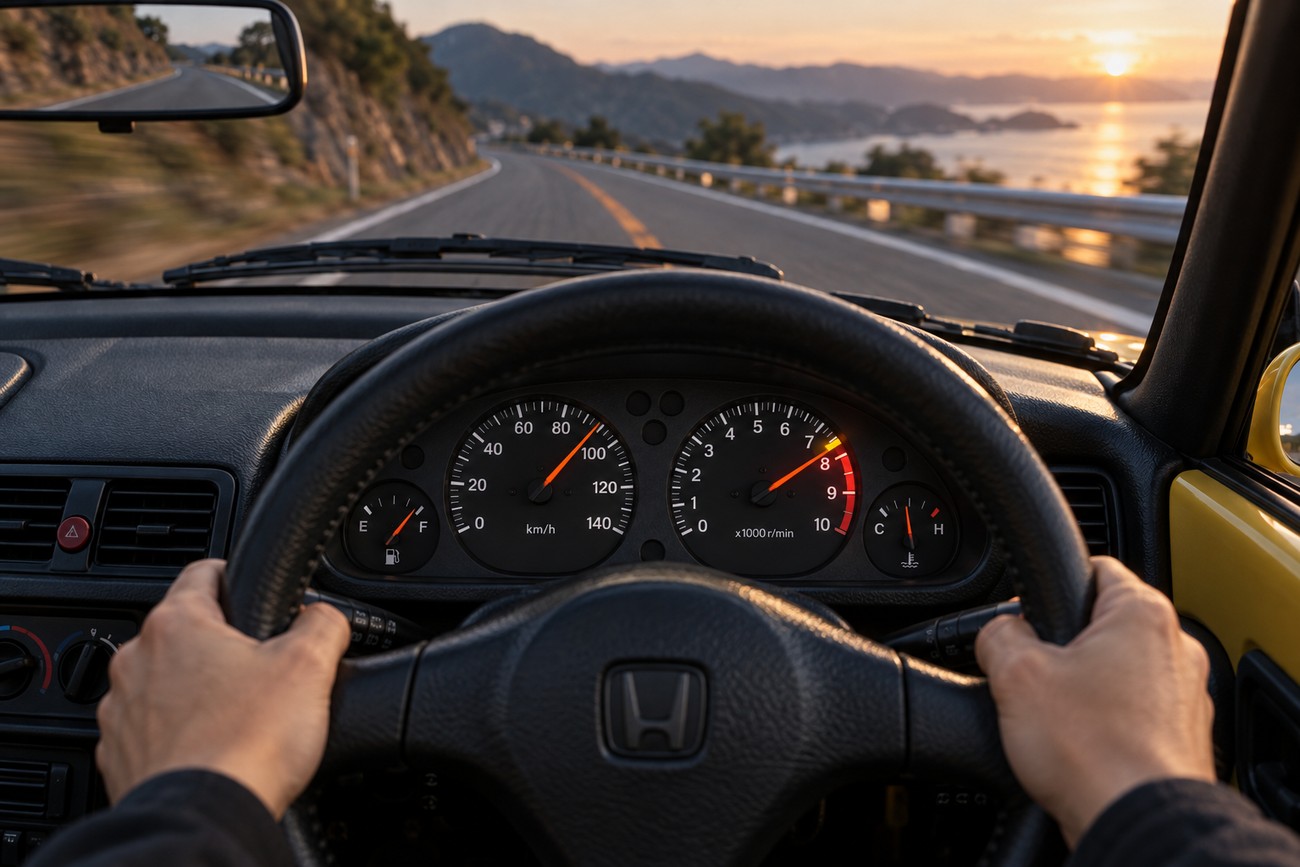
The canonical factory output is 64 PS at 8,100 rpm. A 63-PS figure appears in some secondary writing, but it is not the factory figure used for the PP1 specification. The difference usually reflects inconsistent publication or conversion practices rather than a meaningful mechanical distinction between cars.
The 8,100-rpm number describes the engine’s power peak. It does not establish a stock 9,000-rpm limit. A credible stock cutoff is typically reported at approximately 8,300–8,500 rpm, while claims of routine 9,000-rpm operation should be treated cautiously unless the engine and instrumentation are known.
The same discipline applies to top-speed claims. The factory electronic limit is approximately 135 km/h, and limited owner GPS reports commonly place stock cars around 130–140 km/h. Reports above 150 km/h generally point to tuning, limiter removal, or measurement that cannot be compared directly with a stock car.
These disputes matter because they can distort a purchase decision. The Beat’s appeal lies in how it uses a small amount of power, not in an exceptional terminal-speed figure. A healthy, correctly maintained car that reaches its intended operating range is more valuable than a tired example advertised with dramatic numbers.
Frequently asked questions
The Beat’s specifications are easy to simplify incorrectly because peak power, redline, rev limiter, and top speed describe different parts of the car. These answers separate those terms and keep the factory PP1 specification distinct from modified examples.
What is the highest-revving Honda car engine?
There is no single answer without defining “highest-revving.” Peak-power rpm, redline, and rev limiter are separate measurements, and the Honda Beat’s 8,100 rpm is its factory power-peak specification rather than proof that it has the highest rev limit among Honda car engines.
The Beat is remarkable because a 656 cc naturally aspirated engine produces its rated 64 PS at such a high speed in a lightweight roadster. That makes it a memorable high-revving Honda, but a reliable ranking would require comparing the exact production engines and the specific definition of engine speed being used.
What is the fastest Honda Beat?
There is no separate factory high-speed Beat variant established by the PP1 specification. The production car was a Japan domestic-market model sold from May 1991 through late 1995/1996, and its factory electronic top-speed limit was approximately 135 km/h.
A modified or limiter-removed car may show a higher figure, but internet claims are difficult to compare because gearing, engine condition, tire size, measurement method, and wind all matter. A stock PP1 and a tuned car should therefore be discussed as different vehicles rather than ranked by an unverified top-speed story.
What should a pre-purchase engine check include on a Honda Beat?
Start with a genuinely cold engine. Confirm that it starts cleanly, settles into a stable idle, and responds to gradual and brisk throttle input without hesitation. Check for smoke, oil or coolant leaks, unusual mechanical noise, and signs that the cooling system is struggling as the engine reaches operating temperature.
Review service records for oil and filter care, valve adjustment, and work on the MTREC intake, throttles, sensors, and vacuum lines. A qualified compression or leak-down assessment adds useful information when the engine’s condition is uncertain. The inspection should also include a road test across the rev range, because a car that idles acceptably may still lose power or develop instability under high-rpm load.







