
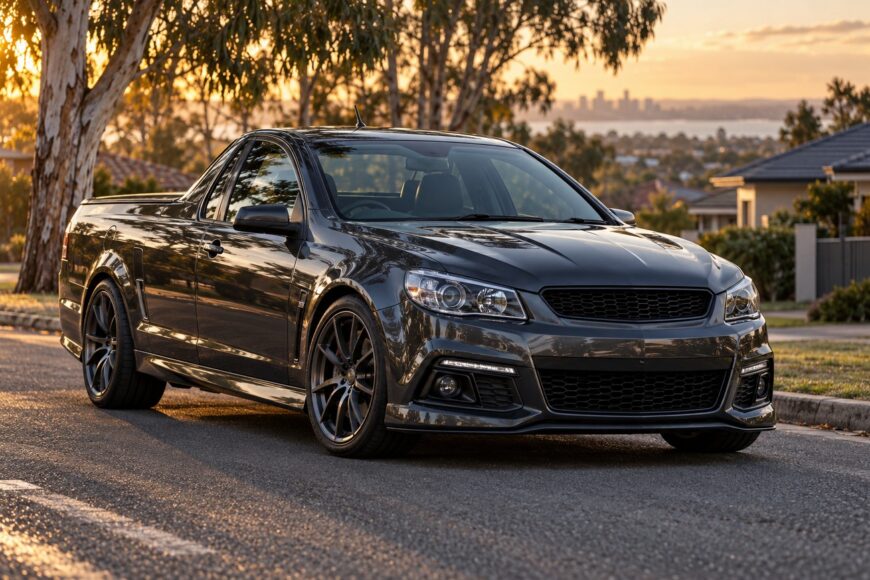
The Holden Ute SS combines the ingredients Americans associate with a muscle car—front-mounted V8 power, rear-wheel drive, and a six-speed manual—with an open cargo tray behind the cabin. That contradiction explains its appeal. It looks ready for a weekend haul, yet its low stance and passenger-car proportions give it the character of a sports sedan with a shortened rear body.
American interest is therefore about the complete coupe-ute formula rather than horsepower alone. The practical risks begin with the details sellers often compress into a single claim: generation, factory build date, emissions status, import route, and state registration. Shared parts with Pontiac, Chevrolet, or other GM products can help with repairs, but they do not automatically make an imported Holden compliant or easy to register.
- Why the Holden Ute SS Feels Like the Car America Never Built
- SS Generations: The Badge Does Not Mean One Engine
- VU, VE, and VF SS Ute: What Actually Changes
- The American Import Trap: 25 Years Is Not a Magic Word
- Ownership Reality: Right-Hand Drive, Parts, and Pickup Compromises
- How to Buy One Without Buying a Paperwork Problem
- Frequently asked questions
- What do Americans call Holden Commodores?
- What paperwork best proves a Holden Ute is eligible under the 25-year rule?
- What is Australia’s favorite ute?
Why the Holden Ute SS Feels Like the Car America Never Built
The Holden Ute is based on the Commodore passenger-car platform, using a car-derived unibody structure instead of the body-on-frame architecture common to American pickups. Its engine sits longitudinally at the front, power goes to the rear wheels, and the driver sits relatively low. A cargo tray occupies the space behind the cabin, producing a silhouette closer to a long coupe than a conventional truck.
That layout changes the driving experience. The Ute feels tied to the road, with proportions and chassis priorities drawn from a performance-oriented passenger car. Steering response, seating position, and rear-drive balance matter more to its identity than the ability to carry a tall stack of building materials.
The tray remains useful for light luggage, outdoor gear, and everyday equipment. Its low body and limited volume, however, do not provide the bed height, enclosed storage options, or towing versatility of a typical American pickup. A buyer who needs a work truck may find the Ute frustrating, while someone who wants an unusual performance car with occasional cargo space may find the compromise ideal.
The long rear section also affects ownership in less obvious ways. Low clearance can become inconvenient on rough roads, and bulky or dirty loads are harder to manage than the visual concept suggests. The Holden’s appeal comes from this tension: it offers a genuinely different driving format, with utility included as part of the design rather than serving as the vehicle’s main purpose.
SS Generations: The Badge Does Not Mean One Engine
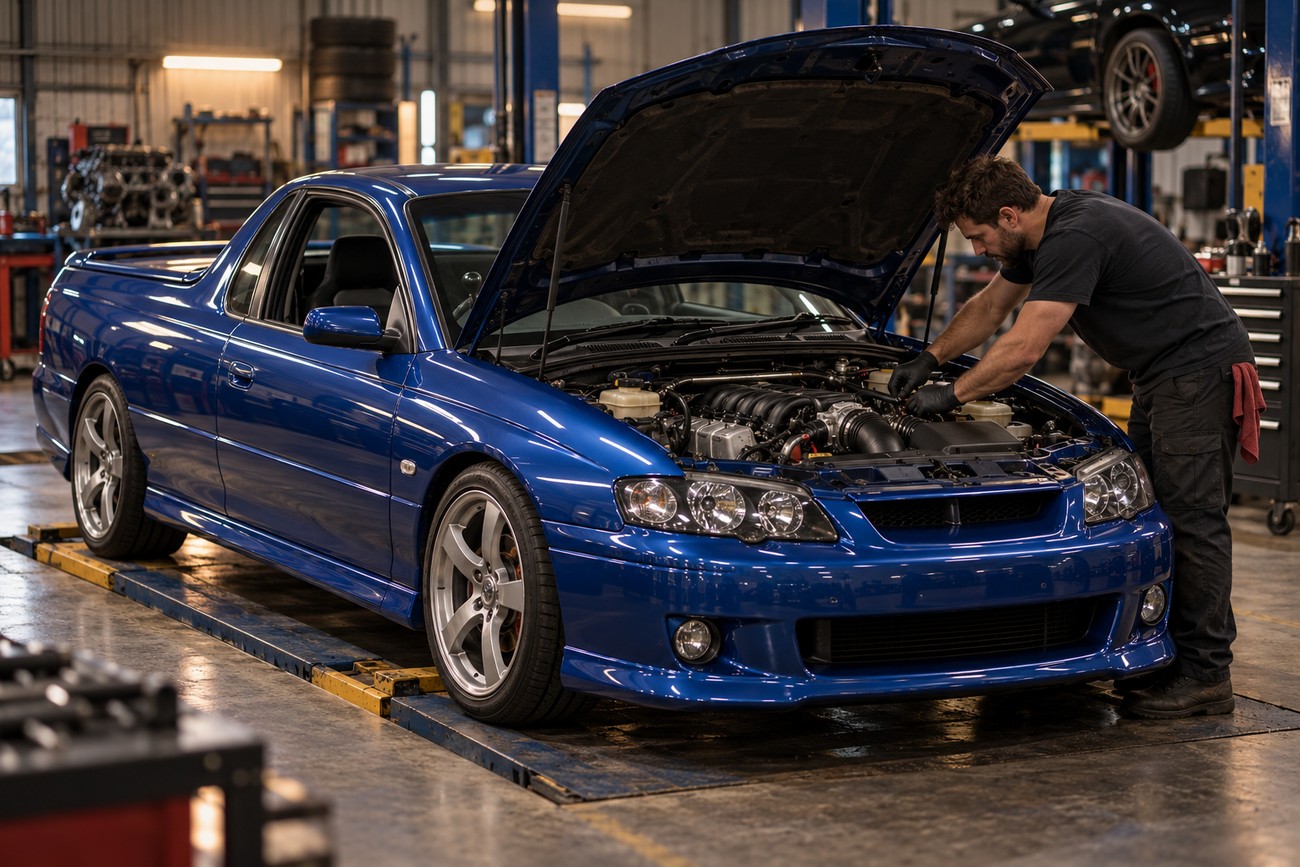
“SS” identifies a performance version, not one fixed mechanical specification. Relevant SS configurations use rear-wheel drive, a front longitudinal V8, and a six-speed manual transmission, yet the engine and output change substantially between generations. Treating every SS Ute as the same vehicle is a quick route to a mistaken valuation or an unsuitable parts order.
The early VU SS used a 5.7-liter V8 rated at approximately 302 hp. That figure establishes the character of an early generation commonly discussed by importers, although the exact equipment and advertised data still require a VIN-level check. A VU that is old enough for an age-based import pathway may also be easier to consider legally than a later car, depending on its actual production date and the buyer’s location.
The VE SS Ute moved to a naturally aspirated 6.0-liter L98 V8. Commonly quoted figures are 270 kW and 529 N·m, subject to market and measurement differences. Those numbers describe the relevant VE specification; they should not be transferred automatically to a sedan, another transmission, or a different market version.
The VF family used a 6.2-liter LS3 V8. Figures of 304 kW and 569 N·m are associated with the related VF SS specification, yet they cannot automatically be assigned to every VF SS Ute. Engine, transmission, market equipment, and calibration all matter when comparing advertisements.
Claims of 0–60 mph in roughly five seconds appear in some listings and catalogs. Results depend on tires, road surface, fuel, transmission, and the condition of the individual vehicle, so the number is a conditional estimate rather than a universal factory guarantee. Independent confirmation for specific SS Ute versions is uneven, making a thorough inspection more valuable than an impressive headline figure.
VU, VE, and VF SS Ute: What Actually Changes
This comparison keeps the published figures cautious. Each generation needs verification against its VIN, transmission, market specification, and factory documentation.
| Generation | Engine and quoted output | Drivetrain concept | Main buyer caveat |
|---|---|---|---|
| VU SS | 5.7-liter V8; approximately 302 hp | Rear-wheel drive, front longitudinal engine, relevant six-speed manual configuration | Confirm build date, equipment, and the exact engine specification before assuming age-based import eligibility. |
| VE SS Ute | Naturally aspirated 6.0-liter L98 V8; commonly quoted at 270 kW and 529 N·m | Rear-wheel drive, front longitudinal engine, relevant six-speed manual configuration | Power figures vary by market and measurement method; check the VIN and emissions documentation. |
| VF-family SS | 6.2-liter LS3 V8; 304 kW and 569 N·m are related VF SS figures | Rear-wheel drive, front longitudinal engine, relevant six-speed manual configuration | Related-sedan output must not be assigned automatically to every Ute; verify the specific car. |
The table also explains why comparing a Holden with an American badge can become misleading. A Pontiac GTO, Pontiac G8, or Chevrolet SS may share an engine family or mechanical idea, but the Ute’s body, wiring, lighting, interior, and market calibration remain specific to the Holden product.
For a buyer, generation is more useful than the SS badge alone. It determines the likely engine, the age calculation, parts compatibility, and the amount of documentation needed before the car can be driven legally. A low-priced later VF can carry more paperwork risk than an older VU, even when both look like familiar GM performance products.
The American Import Trap: 25 Years Is Not a Magic Word
NHTSA may allow a vehicle more than 25 years old by its actual date of manufacture to avoid compliance with all Federal Motor Vehicle Safety Standards. The threshold is calculated from the production date, not simply the model year or the date of first registration. A car advertised as a certain model year can therefore remain short of the threshold if its factory build date is too recent.
Use the factory identification plate or reliable production documentation to support the age claim. This is especially important for early VU cars that may be approaching or passing the relevant threshold while later VZ, VE, and VF vehicles still require a separate timing and compliance review. The date on an auction listing is evidence of the seller’s description, not proof of manufacture.
The federal age exemption concerns NHTSA safety rules. It does not automatically remove EPA emissions obligations or satisfy the registration rules of the destination state. Customs entry, federal import eligibility, emissions compliance, and local registration are separate questions, and approval at one stage does not guarantee approval at the next.
Shared engines, platforms, or components with the Pontiac GTO, Pontiac G8, or Chevrolet SS do not make a Holden Ute an American-market vehicle for compliance purposes. NHTSA treats the imported Holden as a separate vehicle. A customs broker or importer can help identify the correct process, but the buyer should obtain state-specific confirmation before committing funds.
Ownership Reality: Right-Hand Drive, Parts, and Pickup Compromises
Right-hand drive is manageable, yet it changes ordinary American driving tasks. Overtaking on a two-way road requires more care because the driver sits away from the center line, and parking machines or drive-through payment points may be positioned for left-hand-drive vehicles. Multilane road positioning also takes adjustment, particularly during the first weeks of ownership.
The performance hardware brings recurring costs. Large wheels and low suspension can make tires, brakes, and suspension components more expensive than equivalent parts for an ordinary Commodore. A powerful V8 also raises fuel consumption, while low clearance increases the chance of scraping on damaged pavement, steep driveways, or loading ramps.
Parts support is strongest when the repair involves a shared GM mechanical component. Some Pontiac GTO-related parts may assist with powertrain or other mechanical work, but compatibility must be checked by VIN and generation. Holden-specific panels, lamps, glass, wiring, and interior pieces can be difficult to source after production ended, and a visually minor collision may become a lengthy parts search.
The tray’s limits are easy to underestimate in photographs. It suits light luggage and gear, while tall, muddy, or bulky cargo exposes the low body and restricted volume. The Ute works best for an owner who values its sporting format and accepts occasional utility; it is a poor substitute for a full-size pickup used regularly for construction materials, heavy towing, or high-sided loads.
How to Buy One Without Buying a Paperwork Problem
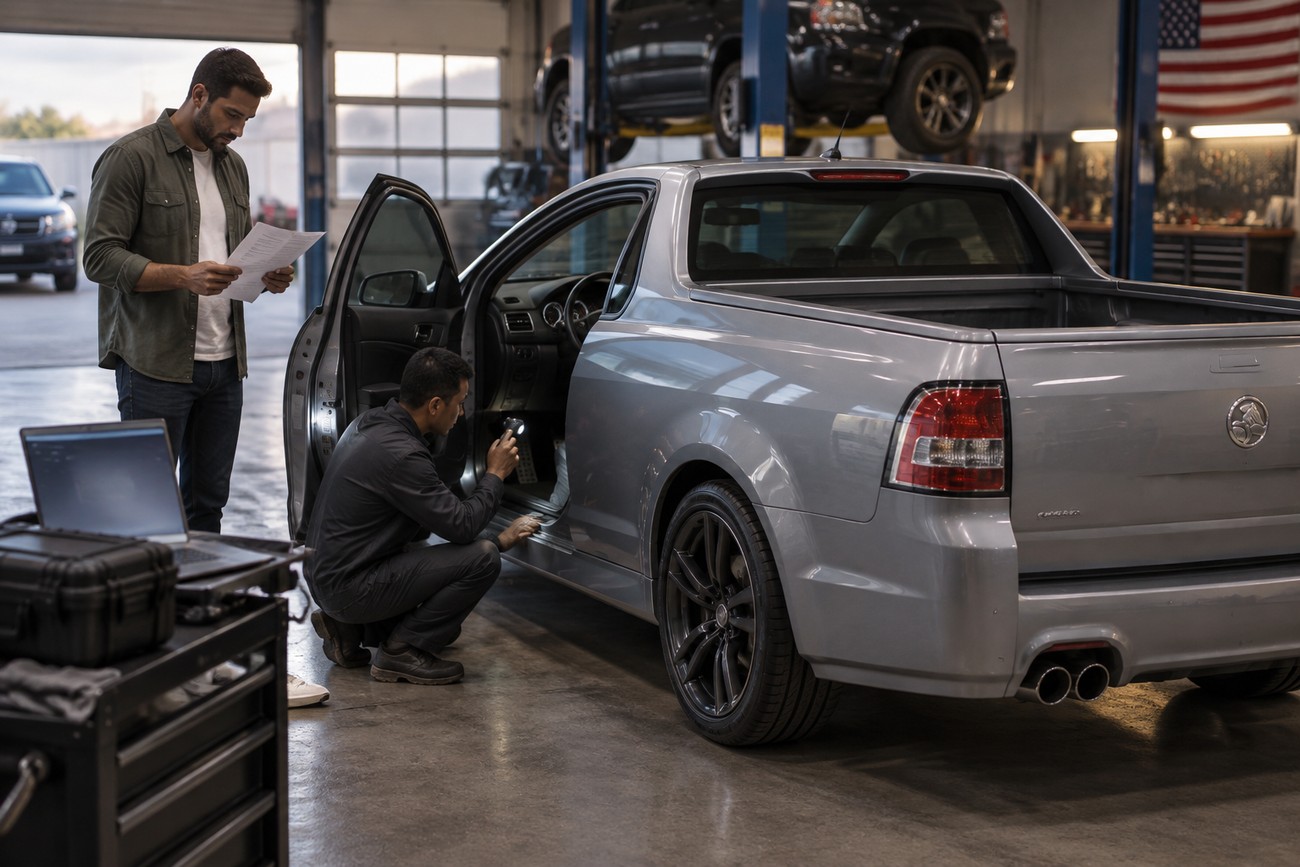
Start with the identity of the exact vehicle. Obtain the VIN, confirm the VU, VE, or VF generation, inspect the factory identification plate, and verify the engine and transmission rather than relying on the seller’s title or advertisement. Confirm right-hand drive, accident history, corrosion, and evidence of structural repair before discussing shipping.
Next, establish the legal route in writing. Check the actual production date, emissions documentation, import requirements, and the rules of the state where the vehicle will be registered. A car that appears to be 25 years old may still fall short when the factory date is checked, while a federal import path may leave state registration unresolved.
Three common assumptions should be rejected:
- A Pontiac GTO, Pontiac G8, or Chevrolet SS is not a donor certificate that automatically legalizes the Holden Ute.
- A model-year label does not replace proof of the actual production date.
- Customs clearance does not guarantee registration in the buyer’s state.
Finally, price the ownership rather than the purchase alone. Confirm the availability of body, lighting, glass, wiring, and interior parts, then budget for tires, brakes, suspension work, fuel, transport, and possible compliance modifications. The strongest candidate is the car with verifiable provenance, a clean condition history, and realistic parts support—not necessarily the one carrying the highest advertised output.
Frequently asked questions
What do Americans call Holden Commodores?
There is no single American name that makes every Holden Commodore identical to a Pontiac or Chevrolet. Related products included the Pontiac G8, Pontiac GTO, and Chevrolet SS, but those names refer to specific market versions and body styles. A Holden Ute remains a separate imported vehicle even when it shares an engine family or platform relationship with one of them.
That naming distinction matters legally and practically. An American-market badge can help identify compatible mechanical components, yet it does not establish Federal Motor Vehicle Safety Standards compliance, emissions eligibility, or state registration for the Holden Ute.
What paperwork best proves a Holden Ute is eligible under the 25-year rule?
The most useful evidence is the factory identification plate supported by reliable production records showing the actual date of manufacture. A model-year listing, auction description, or first-registration date is weaker because the threshold is based on production, not simply the year attached to the vehicle.
Keep the age evidence with the VIN and import file, then address EPA requirements and state registration separately. The age document supports one part of the process; it does not by itself prove universal road legality.
What is Australia’s favorite ute?
There is no single official answer. Work-oriented popularity, mainstream family use, performance appeal, and enthusiast prestige produce different favorites, so the result depends on the definition being used.
The Holden Ute occupies a distinctive cultural position because it combines a passenger-car driving experience with an open tray. That status explains its appeal to collectors and American enthusiasts, even though it is less capable than a conventional pickup for heavy hauling.







