
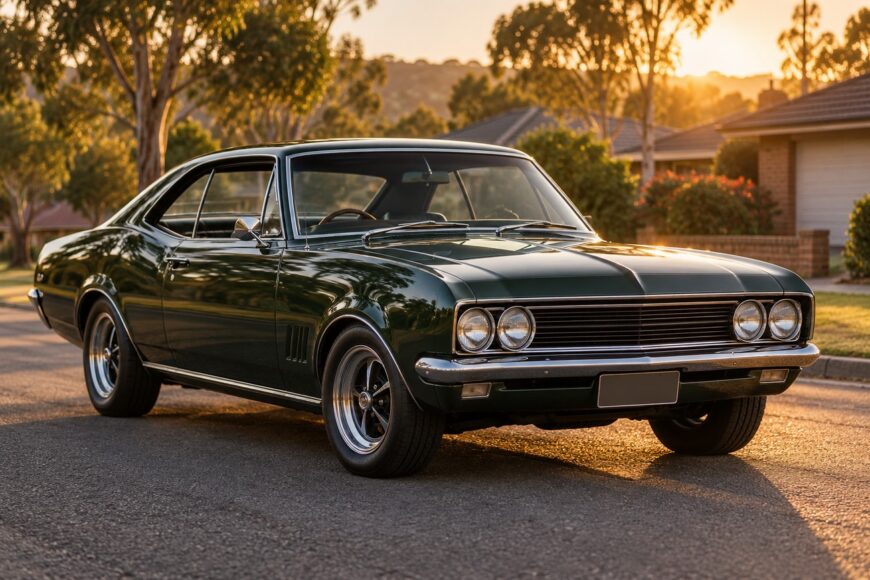
The HK Holden Monaro had the shape to draw a crowd and, within months of its August 1968 debut, a Bathurst victory to give that shape substance. A GTS 327 won the Hardie-Ferodo 500 outright, tying the new coupe to Australian racing history almost immediately.
That success invites a harder question: what does “Australia’s first true muscle car” mean when quick V8 sedans already existed? The answer depends on whether the label describes a mechanical first or a production coupe that helped build a performance culture. For a buyer today, there is a second tension behind the legend. A convincing badge and glossy paint can belong to a rusty shell or a car whose identity and components no longer match its story.
- How the HK Monaro became more than a two-door Holden
- Was it really Australia’s first muscle car?
- Sixes, Chevrolet V8s and the GTS 327 on the road
- Bathurst 1968: the win behind the legend
- What to check before buying an HK Monaro
- Restoration choices that protect—or erase—its value
- Frequently asked questions
- What was the Holden Monaro sold as in America?
- What is the rarest HK Monaro?
- What is the holy grail of muscle cars?
- What is the crappiest car in Australia?
- What is the rarest Holden Monaro?
How the HK Monaro became more than a two-door Holden
The HK Monaro debuted in August 1968 on the HK Holden platform. Its shared foundations made it part of a familiar family-car range, but Holden gave the coupe a distinct sporting role. Buyers could choose an ordinary six-cylinder car or move toward the V8-powered GTS 327 that became the range’s best-known version.
A long bonnet, low roofline, and sweeping rear quarters made the Monaro recognizable without needing a race livery. The appeal was practical as well as visual: this was a production car with everyday Holden underpinnings, sold alongside less overtly sporting models. That combination put coupe style and V8 performance within the same showroom.
Historians sometimes describe the HK as an Australian answer to the Pontiac GTO. The comparison helps explain its place in the wider muscle-car era, though it should be treated as an analogy rather than a documented statement of Holden management’s intent. The Monaro’s place in Australian history rests on what Holden built and how people used it, without requiring an American origin story.
Was it really Australia’s first muscle car?
“Muscle car” has no single factory definition. For the HK Monaro, a useful one is a series-production coupe that could pair a powerful V8 with rear-wheel drive and an accessible, familiar platform. Straight-line performance mattered, as did the ease with which owners could change gearing, carburetion, and engine specifications.
On those terms, the HK Monaro is often called Australia’s first mass-market muscle coupe. It also became a focus for the modification and drag-racing culture associated with American muscle cars. Its standing comes from the complete package: body style, available engines, competition reputation, and the interest it sustained after sale.
Absolute first-place claims are less secure. Supporters of earlier fast V8 sedans reasonably point out that Australian performance driving did not begin with this coupe, and the HK was not the first Australian car offered with a V8. Calling it an influential early mass-market Australian muscle coupe preserves its achievement without erasing the cars that preceded it.
Sixes, Chevrolet V8s and the GTS 327 on the road
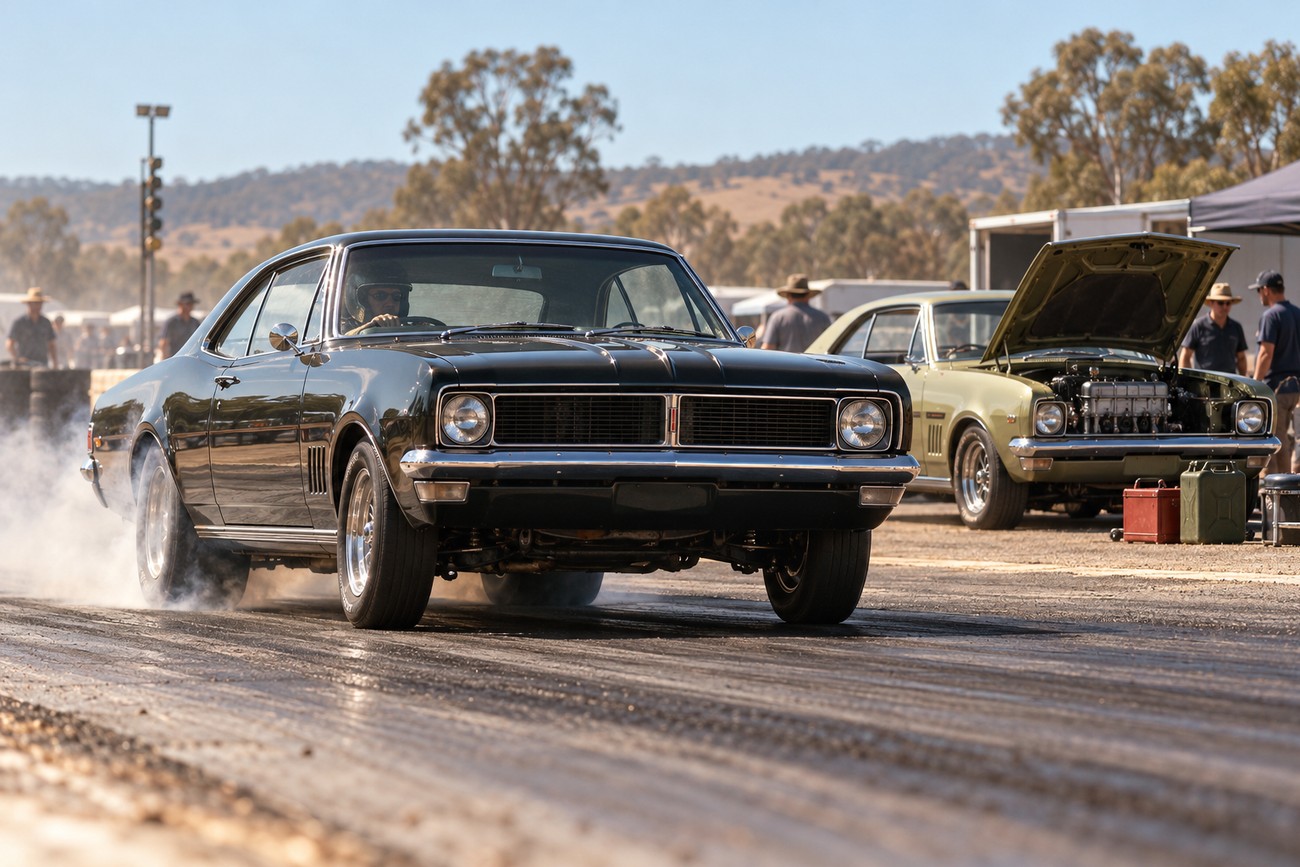
The factory HK Monaro range included 161 and 186 six-cylinder engines and Chevrolet 307 and 327 V8s. The GTS 327 sat at the performance end of that range; a six-cylinder Monaro offered the same basic coupe form with a different driving character. One common listing error deserves particular attention: Holden’s 308 V8 belongs to the subsequent HT series, not the factory HK engine lineup.
Enthusiast estimates for a standard GTS 327 put 0–100 km/h at roughly 7–8 seconds and the quarter-mile at around 15 seconds. Those are guides, not universal factory results: condition, setup, and measurement method can change the outcome. They do explain why a roadgoing GTS 327 made such an impression in the late 1960s.
Its strongest sensations remain the V8’s pull and sound. The standard suspension, steering, and brakes set different expectations from modern performance machinery, with more body roll, less precise response, and less reassuring stopping performance. Rear-axle noise and body resonance can also be part of a drive in an older example; a short, smooth test route will reveal little about how it feels over distance.
Bathurst 1968: the win behind the legend
An HK Monaro GTS 327 won the 1968 Hardie-Ferodo 500 outright at Bathurst. Bruce McPhee and Barry Mulholland were the winning crew, and their entry should not be described as an official Holden factory team. The result nevertheless gave the new coupe a powerful public demonstration in the competition that mattered most to many Australian performance-car followers.
Bathurst strengthened the road car’s reputation because spectators could connect the winning model with a Monaro in a showroom. That connection was real, though it had limits. The race car received competition preparation; a standard GTS 327 did not leave the production line ready to reproduce its Bathurst result.
That distinction matters when assessing a car advertised as “Bathurst spec.” A GTS 327 badge establishes neither a particular competition history nor the details of a period racing setup. Evidence for its original specification and any later preparation must come from the individual car, its documents, and the work carried out on it.
What to check before buying an HK Monaro
Start with the metal, before discussing engine numbers or trim. Inspect the sills, lower door edges, rear wheel arches, and areas beneath window seals, then look into accessible cavities and underneath the car. Corrosion in these places can turn an apparently tidy coupe into a substantial structural repair project.
A fresh finish deserves close examination rather than automatic suspicion or trust. Welded-in patches and thick filler can conceal the extent of old rust, while repairs near structural areas call for a careful inspection of the surrounding metal. Check panel fit and body geometry as well; an attractive exterior cannot establish that a shell has escaped serious damage.
Next, compare the body identifiers, documents, engine, and claimed specification as one record. Some HKs have received replacement drivetrains; others have been assembled using parts from multiple cars. A seller’s use of “GTS” or “matching numbers” is a claim to verify, rather than proof supplied by the badge or the engine bay alone.
Finally, examine the pieces that will be difficult to put right. Interior panels, body moldings, and GTS trim can be hard to source, so missing or incorrect details affect both the scope of a restoration and the strength of an originality claim. A structurally sound, honestly described modified Monaro may be a better purchase than a more glamorous car with unresolved rust or identity questions.
Restoration choices that protect—or erase—its value
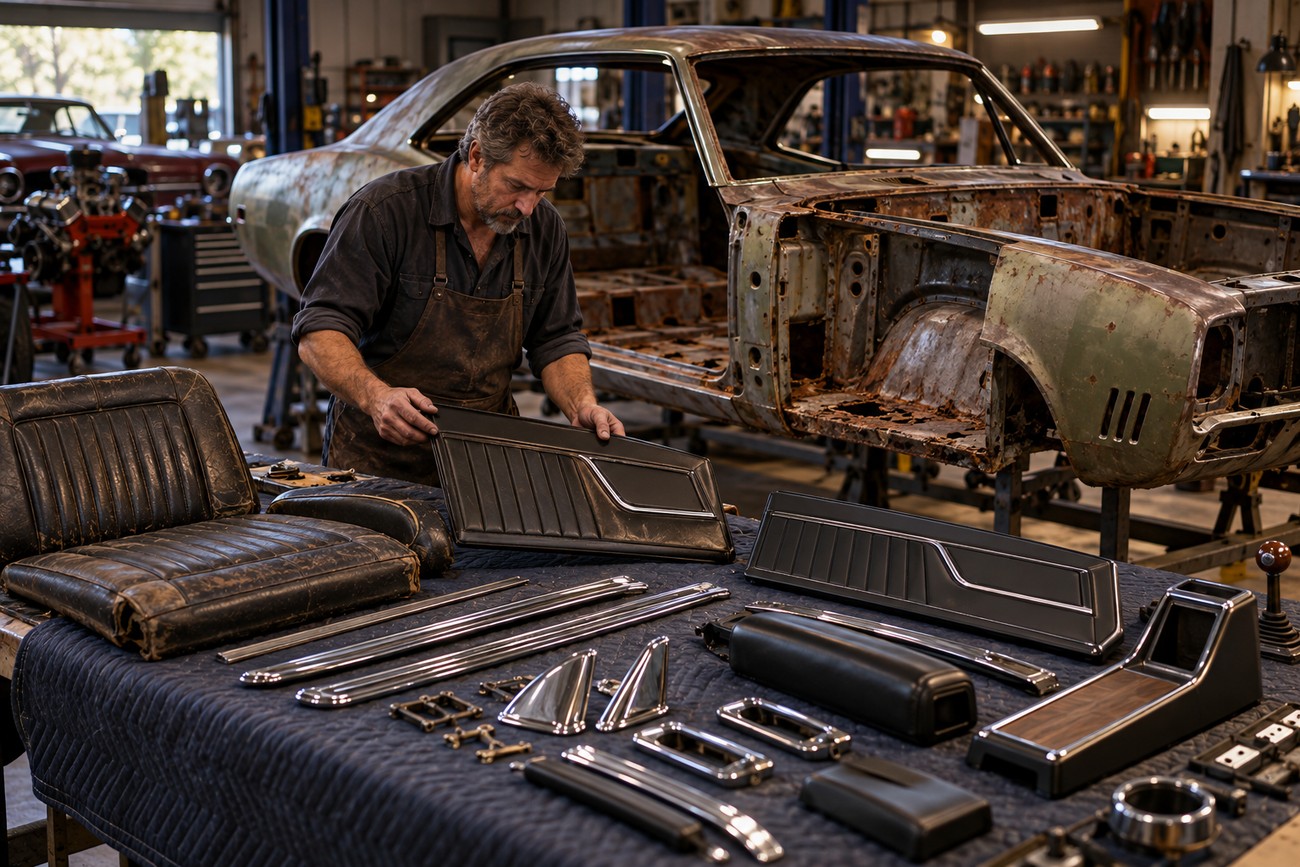
An HK Monaro can be restored toward documented factory specification or kept as a clearly described modified car. Both are coherent paths. Problems arise when a modified example is presented as an untouched GTS, or when an owner discards original components without first checking their significance to the car’s history.
Accuracy takes research as well as parts. Interior panels, moldings, badges, and GTS finishes can be difficult to replace correctly; period catalogs and factory material help settle details that a photograph may not. A documented dealer or period modification also deserves assessment on its own history. Departure from factory specification does not automatically make it worthless.
Mechanical work should begin with the car’s actual condition. An aging V8 may run hot if its cooling system is neglected, while wear can bring oil consumption and poor carburetor or ignition tuning can cause detonation or overheating. Even when it runs well, fuel use, noise, and vibration make the HK a more demanding road companion than its polished image suggests. Its passive safety is also far below modern expectations.
Extra power needs matching attention to brakes, suspension, tires, and the integrity of the body structure. Modifications may affect insurance, registration, or roadworthiness, depending on the jurisdiction. Collector value is no more automatic: documented identity and sound metal usually offer a firmer basis for judgment than the Monaro name alone.
Frequently asked questions
The answers below distinguish the HK from later Monaros and separate verifiable details from broad collector labels. For a particular car, its records and condition remain more useful than a general claim about the model.
What was the Holden Monaro sold as in America?
A much later Monaro was sold in the United States as the Pontiac GTO. The HK Monaro introduced in 1968 was not sold there under that name. References to the GTO can therefore mean a historical comparison with the HK or the actual name of a later car; they are different claims.
What is the rarest HK Monaro?
There is no defensible single answer without comparable, verified production records for the specific factory combinations being compared. A seller may call a color, engine, or trim combination rare, but the claim needs documentation. Rarity also says little about the condition or authenticity of the surviving car.
What is the holy grail of muscle cars?
There is no universally agreed “holy grail.” Collectors use the phrase for different combinations of provenance, specification, competition history, and preservation. Within the HK Monaro world, a well-documented GTS 327 with sound original structure has a strong claim to special interest, though the phrase cannot establish a car’s authenticity.
What is the crappiest car in Australia?
No single model can be named objectively: the judgment depends on what is being measured and the condition of the individual car. An HK Monaro with extensive hidden rust and unsafe repairs can be a poor purchase despite its reputation. A sound six-cylinder example may be less celebrated, yet far more usable.
What is the rarest Holden Monaro?
Across every Monaro generation, that question needs a defined category and reliable production evidence before it can have a firm answer. Factory specification, special editions, and the number of documented survivors are different measures. For an Australian buyer, historic registration is a separate issue: eligibility and permitted modifications depend on the state and the particular program.







