
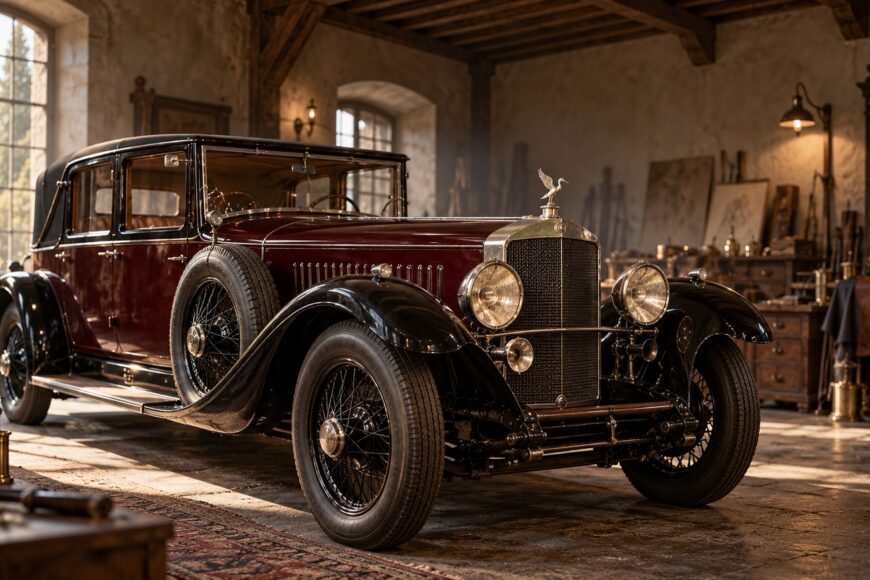
The Hispano-Suiza H6 wears one of mooring’s most elegant symbols: a stork associated with aviation, French prewar society, and the marque’s cultivated public image. Beneath that mascot sits a large, technically ambitious machine whose appeal depends as much on engineering and identity as on polished aluminum, leather, and coachbuilt paint.
That distinction matters to anyone considering ownership. The H6 is a celebrated prewar luxury car, yet an individual example may also be a long-term restoration responsibility. Its chassis number, body history, coachbuilder, surviving components, and documentary provenance can matter as much as the Hispano-Suiza badge itself.
- Why the Hispano-Suiza H6 Became a Legend
- The Engineering Behind the Stork Mascot
- One H6 Was Rarely Like Another
- Buying an H6: Provenance Before Polish
- Restoring and Living with a Hispano-Suiza H6
- The H6 Collector’s Market: Museum Piece, Concours Car or Project
- Frequently asked questions
- What is a famous Spanish luxury car brand?
- Who owns Hispano-Suiza?
- How many Hispano-Suiza cars were made?
Why the Hispano-Suiza H6 Became a Legend
Produced from 1919 to 1933, the H6 became one of Hispano-Suiza’s best-known prewar luxury automobiles. It occupied the expensive end of the market, where buyers commissioned a chassis and specified a body rather than selecting a standardized vehicle from a conventional showroom range. The result was a model line with a recognizable engineering identity but considerable variation from car to car.
Calling the H6 a mass-produced flagship gives the wrong impression. It was a low-volume, highly expensive chassis with individualized bodies, built for customers who expected mechanical distinction and personal specification. Production within a defined model family did not make every car identical in equipment, trim, proportions, or intended use.
The stork mascot reinforced that distinction. Its meaning is associated with the marque’s aviation heritage and elite prewar identity, rather than with decoration alone. The symbol connected Hispano-Suiza’s automobile business with the prestige of aviation engineering and with a social world in which technical achievement, military associations, and luxury branding overlapped.
That cultural context helps explain the H6’s continuing appeal. A surviving car is rarely judged only as transportation; it is also a document of a particular customer, atelier, period, and design taste. The badge establishes the family, while the individual chassis tells the more valuable story.
The Engineering Behind the Stork Mascot
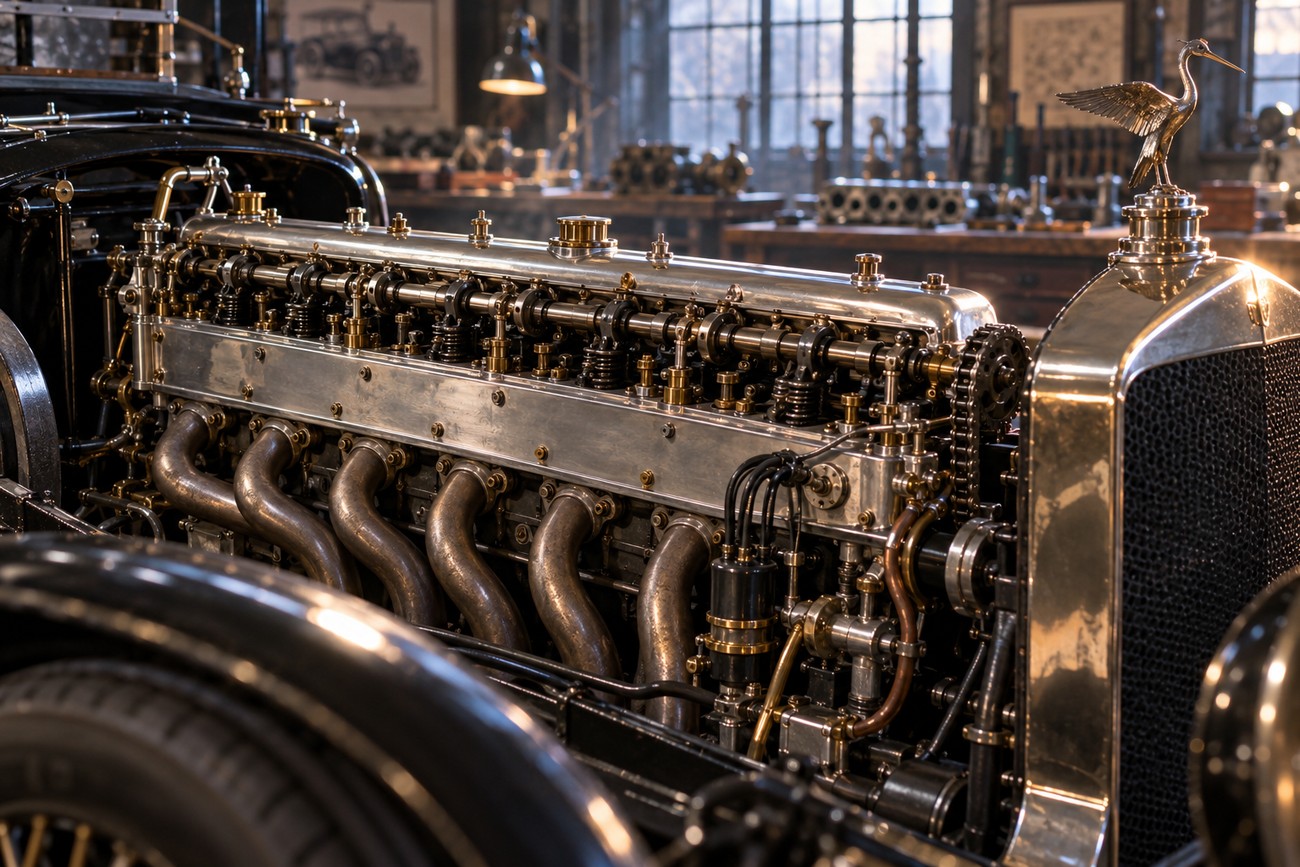
The usual H6 engine was a 6.6-liter inline six-cylinder, fitted with an overhead camshaft. That layout reflected Hispano-Suiza’s willingness to spend heavily on engineering in pursuit of refinement and high-speed capability. Aluminum elements were used within the complex design, adding another layer of specialist work for restorers dealing with corrosion, repairs, and period-correct replacement parts.
Later versions and evolution of the line reached approximately 8.0 liters. This does not mean that every H6 should be treated as an interchangeable example of one specification. Engine evolution, chassis details, bodywork, and equipment all influence how a particular car should be identified and evaluated.
Descriptions of the H6 as exceptionally quiet or smooth appear in museum and club accounts. They are useful indications of period reputation, especially when compared with the rougher large cars familiar to many drivers of the era, but they remain evaluations rather than a universal measured standard.
The engineering also explains why ordinary classic-car assumptions can fail. A large prewar engine with sophisticated construction may run beautifully after correct work, yet demand careful inspection of lubrication, cooling, bearings, valve gear, and ancillary systems. A clean start at a viewing is evidence of condition on that day, not proof of a complete mechanical history.
One H6 Was Rarely Like Another
H6 cars commonly received custom bodies from specialist coachbuilding ateliers. Hispano-Suiza supplied the mechanical foundation, while the finished automobile could emerge as a formal sedan, open touring car, sporting body, or another individualized design. Two cars carrying the H6 name may therefore differ substantially in silhouette, interior treatment, luggage arrangements, and driving character.
The bodybuilder can be central to an example’s identity. A documented body by a respected atelier, retained in period-correct form, may attract greater interest than a generic replacement body with fresher paint. Changes made during the car’s life can be legitimate parts of its story, but they should be recorded rather than quietly presented as original factory specification.
This is why an H6 cannot be valued through the model designation alone. Chassis specification, engine evolution, body style, coachbuilder, and the quality of later alterations all affect collector appeal. A rare body with incomplete mechanical history may occupy a different market category from a mechanically sound car wearing an unverified replacement body.
The most revealing evidence is often found in the relationship between components. Identification plates, stamped numbers, fasteners, dashboard details, and body construction can either support a coherent history or expose a later combination of parts. A handsome car may still be historically confused, while a less polished example may retain the more important original structure.
Buying an H6: Provenance Before Polish
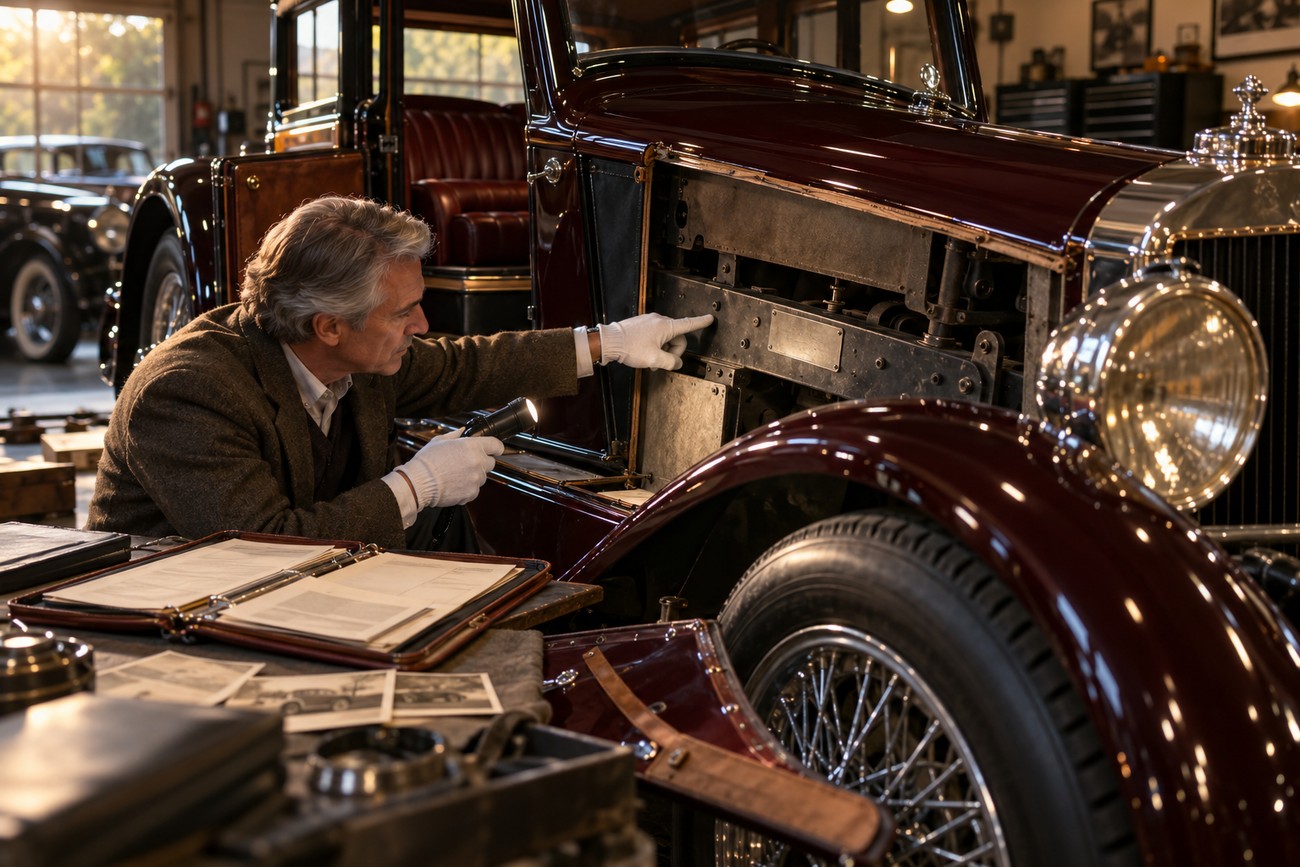
Inspection should begin with identity, not upholstery. Chassis and body numbers, identification plates, ownership records, restoration files, and markings on major components should be compared with one another and with the seller’s description. Errors in this chain can materially reduce collector value, even when the car looks convincing in photographs.
Body history deserves particular attention. An elegant replacement body can conceal a fundamentally different car, especially if its proportions and mounting points have been adapted over time. The question is not simply whether the body is attractive; it is whether its origin, period, coachbuilder, and changes are documented well enough to establish what the car actually is.
Major mechanical components should be assessed in the same way. Unoriginal parts may be visually discreet yet damaging to authenticity, and a replacement engine or gearbox can change both the car’s value and the practical cost of returning it to a coherent specification. Matching identification is not a guarantee of quality, but unexplained mismatches require a clear explanation.
Restoration documentation can be more informative than a glossy presentation. Look for invoices, photographs, machining records, based on the experience of specialists with practical expertise A presentable H6 may still have incomplete mechanical restoration, an unresolved body history, or a drivetrain assembled from components that were never meant to remain together.
A sensible purchase inspection should include a cold start where possible, a careful examination of the frame and body structure, and an appraisal by someone familiar with prewar luxury cars. A general classic-car inspector may identify obvious defects while missing the historical detail that determines whether the car is a valuable original, an altered survivor, or an expensive reconstruction.
Restoring and Living with a Hispano-Suiza H6
Restoration is demanding because the supply chain is narrow. Original replacement parts can be scarce and may cost as much as a separate automobile. Even when a substitute can be made, correct materials, dimensions, finishes, and period construction methods may require considerable manual fitting rather than simple installation.
The work therefore calls for specialist knowledge of prewar luxury cars. An experienced general restorer may be excellent with paint or conventional postwar mechanics and still lack the references needed for an H6. The wrong repair can create a functional car that is harder to authenticate later, particularly when original castings, fasteners, instrument details, or body interfaces have been altered.
Hidden costs often sit below an acceptable exterior. Engine wear, gearbox condition, structural corrosion, body timber, cooling performance, and electrical alterations may remain invisible until disassembly. Club discussions sometimes describe lubrication or cooling as troublesome on certain cars, but that is not a universal standardized diagnosis; the condition and specification of the individual H6 must decide the assessment.
Driving one also requires realistic expectations. Large dimensions, period braking, heat management, limited visibility, and old-fashioned ergonomics make regular modern traffic a poor environment. The car is better suited to carefully planned touring, exhibitions, and events where its pace, space, and mechanical limits can be respected.
That restricted usability is part of the ownership calculation. An H6 may spend more time being maintained, displayed, or prepared for an event than commuting. Buyers who want frequent casual use may be disappointed, while collectors who value preservation and occasional, sympathetic operation may find the limitations acceptable.
The H6 Collector’s Market: Museum Piece, Concours Car or Project
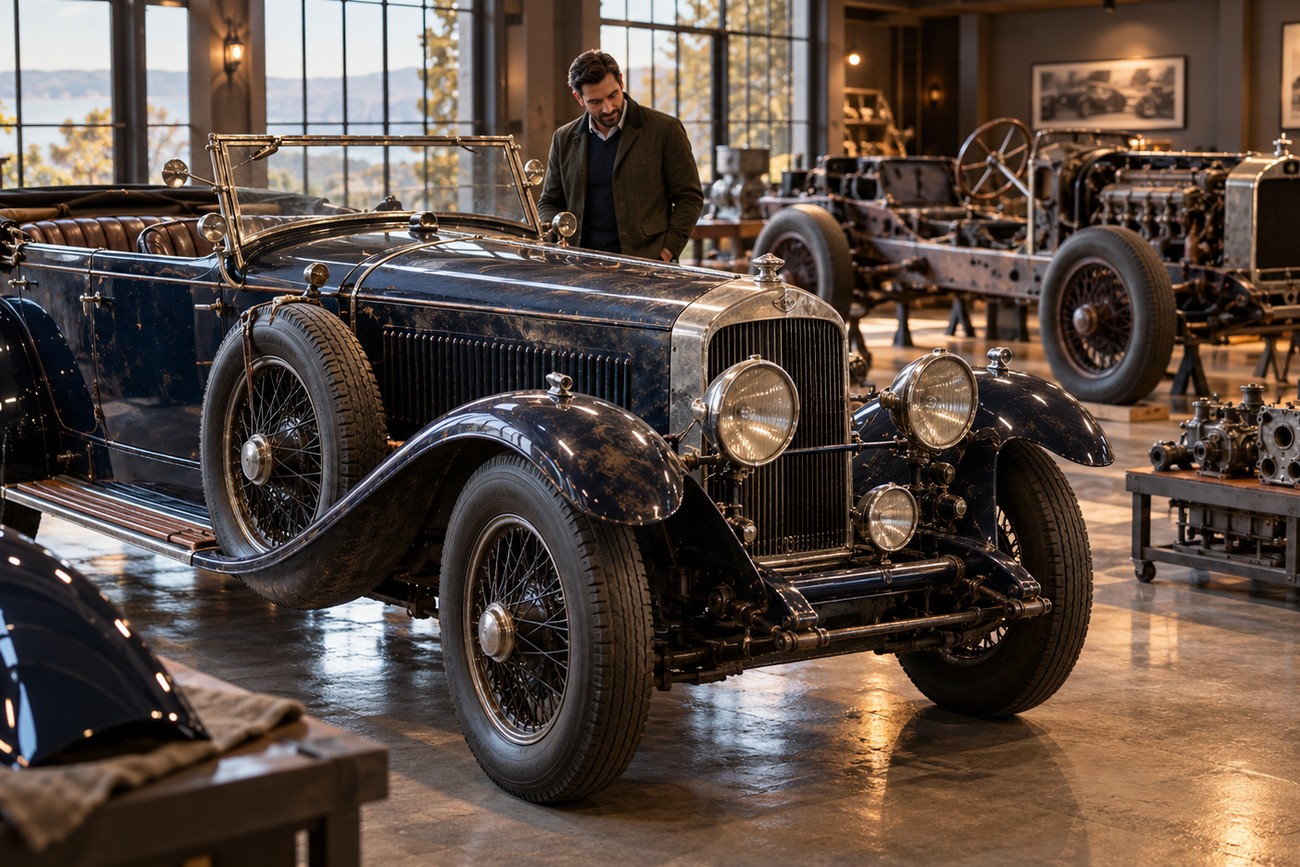
The same H6 can occupy several market categories. Depending on completeness and originality, it may be a museum object, a concours automobile, a restoration project, or a donor of rare parts. These descriptions are practical classifications, not mere marketing language: they indicate how much of the car’s identity survives and what work remains.
Originality generally matters more than surface gloss to serious collectors. A fresh repaint and new upholstery can make an altered car photograph well, while an unrestored but coherent example may preserve the evidence needed for an accurate future restoration. Cosmetic perfection is valuable only when it does not erase the car’s documented history.
Concours participation can strengthen an H6’s status beyond ordinary cosmetic restoration, particularly when the car is presented in an authentic specification and supported by a coherent story. Recognition at such events does not automatically prove originality, but careful judging and public documentation can make the example more legible to the specialist market.
Catalog rarity alone is an unreliable guide. A buyer must distinguish the H6 model designation from the history of a particular chassis, bodybuilder, engine, and restoration. The best examples combine convincing provenance, an important or appropriate body, substantial original content, and work that respects the car rather than merely making it shine.
Frequently asked questions
The H6 is often discussed through simplified labels: Spanish luxury car, French style icon, aviation mascot, or rare prewar classic. Each label contains part of the truth, but none replaces the identity of the individual chassis. These answers separate the marque’s history from the model and from later interpretations of the name.
What is a famous Spanish luxury car brand?
Hispano-Suiza is the Spanish-origin luxury marque most closely associated with the H6. Its automobiles were also deeply connected with French design, coachbuilding, customers, and cultural life, which is why the brand is often discussed through both Spanish and French lenses.
The H6 belongs to that international identity. Its engineering came from the Hispano-Suiza tradition, while its finished appearance could reflect the work of a specialist atelier and the taste of a particular prewar client.
Who owns Hispano-Suiza?
The historical Hispano-Suiza company and modern uses of the Hispano-Suiza name should be treated as separate matters. A contemporary owner or license holder of the brand does not automatically establish the provenance of a prewar H6.
For a collector, ownership of the name is less important than the surviving car’s documentation. Chassis identity, body history, original components, and restoration records determine whether a specific H6 has a credible connection to its historical configuration.
How many Hispano-Suiza cars were made?
A reliable answer must distinguish total production by the Hispano-Suiza marque from production of the H6. The H6 ran from 1919 to 1933, but it formed one model family within the wider marque, and surviving examples may have been rebodied, altered, or assembled with replacement components.
For that reason, a production total should never be used as a substitute for examining an individual car. A documented original chassis with a coherent body history can be far more significant than a superficially complete example whose configuration cannot be verified.







