
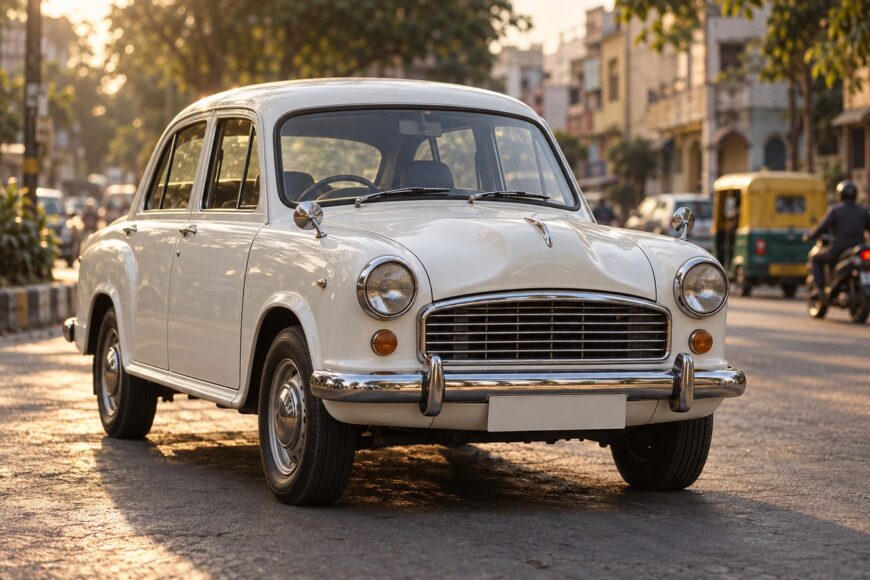
The Hindustan Ambassador carries the unmistakable outline of a in hands-on work this tends to recur story is far less frozen in time. Beneath the familiar four-door body, Indian production brought changing engines, gearboxes, steering systems, brakes, and manufacturing standards. The result is a car whose appearance suggests one continuous model while its driving experience can vary substantially from one example to another.
That creates the central choice for buyers and historians: do you want the strongest connection to the early Oxford-derived design, or a later specification that is easier to use in modern traffic? Production dates also require care. Sources cite 1957, 1958, or 1959 as the beginning, with 1957 commonly linked to the launch and 1959 to the BMC overhead-valve update and fuller production.
Ambassador production continued approximately from 1957 to 2014. Across that span, the same name covered early 1.5-litre petrol cars, diesel versions, and later 1.8-litre Isuzu-powered models, along with major changes to transmission and steering. Judging one from another owner’s description can therefore be misleading.
- A Morris Oxford Foundation, Not a Frozen Copy
- The Mechanical Timeline Behind the Familiar Shape
- What an Ambassador Feels Like on the Road
- Buying an Ambassador: Condition Beats the Badge
- The Ambassador’s Hidden Limits
- Myths, Misleading Numbers, and the End of Production
- Frequently asked questions
- What happened to the Hindustan Ambassador?
- Why do sources give different starting years for Ambassador production?
- Which specification is the least demanding for regular driving?
A Morris Oxford Foundation, Not a Frozen Copy
Hindustan Motors acquired the rights and tooling for a car derived from the Morris Oxford Series III. That arrangement gave the Ambassador its fundamental proportions, chassis ancestry, and much of its visual identity. It also established the model as an Indian production car with a British donor design, rather than as a Morris Oxford simply wearing a different badge.
The distinction matters because local production continued for decades after the original Oxford had disappeared from most markets. Hindustan Motors adapted engines, interiors, mechanical components, and production details for Indian conditions and demand. Over time, the Ambassador developed its own engineering history, even while its body remained recognisably tied to the earlier Morris.
The start date is therefore best described with a qualification. Sources cite 1957, 1958, or 1959; 1957 commonly denotes the Ambassador’s launch, while 1959 is associated with the BMC overhead-valve update and fuller production. Treating one of these dates as unquestionably correct hides the difference between introduction, revised specification, and established series production.
That long production span is the model’s defining historical fact. Approximately 1957–2014 covers a car that preserved a post-war silhouette while absorbing changes that affected performance and ownership. A buyer assessing an early car and a buyer assessing a late car are dealing with related versions, not identical mechanical products.
The Mechanical Timeline Behind the Familiar Shape
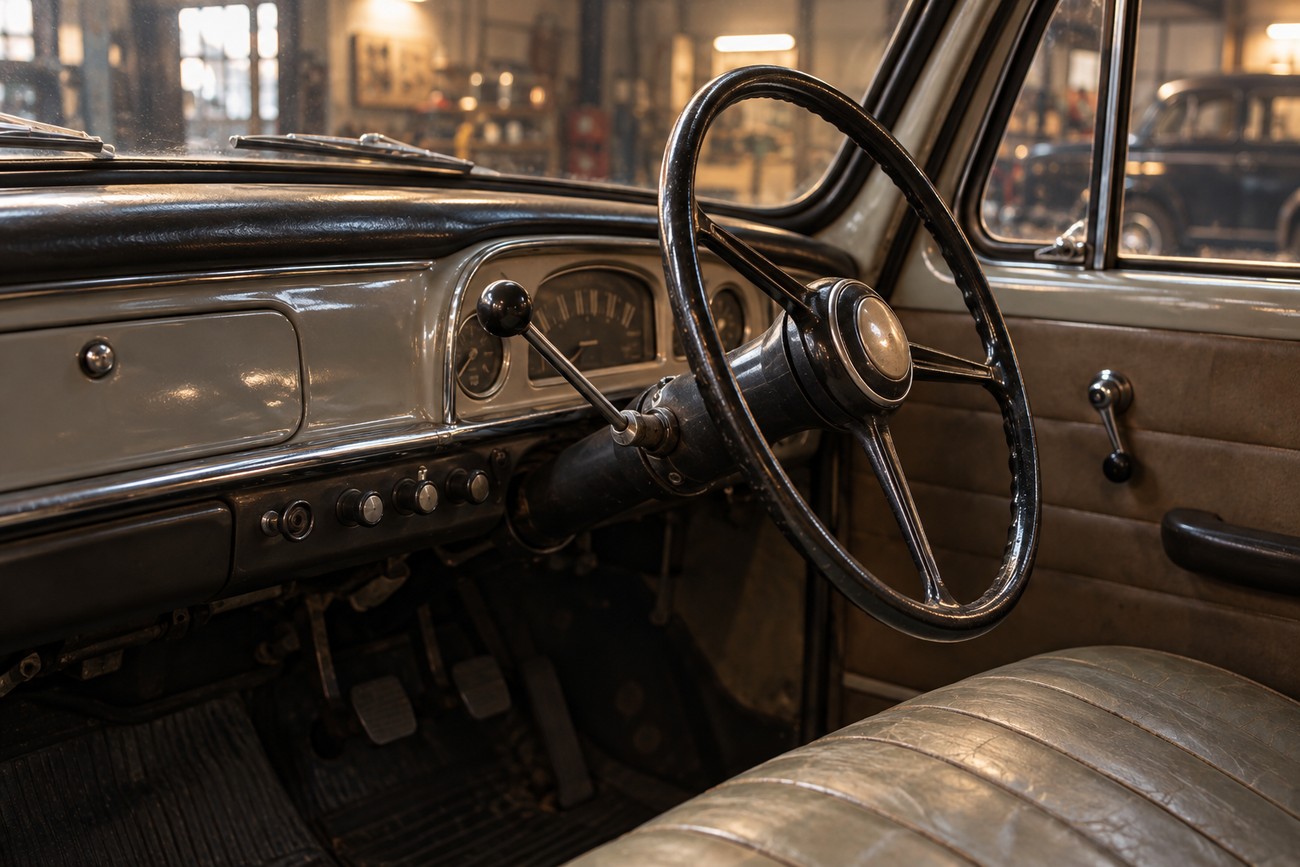
Early Ambassadors used a 1.5-litre BMC inline-four. From 1959, an overhead-valve BMC B-series engine producing about 55 hp became the important early mechanical reference point. This change helps explain why the 1959 date appears so often in accounts of the model’s beginnings.
The early transmission was a four-speed manual gearbox with a column-mounted shift lever. That layout is historically distinctive, but it also gives the car a different operating rhythm from later examples. A driver familiar with modern floor-mounted controls may need time to adapt, particularly when the linkage is worn or poorly adjusted.
A 1.5-litre BMC diesel producing about 37 hp appeared in 1980. It broadened the Ambassador’s role and made the model relevant to buyers seeking economy or durability, yet it also changed the performance character substantially. Engine choice is therefore more useful than a Mark designation when estimating how an individual car will behave and what kind of maintenance it may require.
Later versions moved to a 1.8-litre Isuzu petrol engine. They also received a five-speed manual gearbox with a floor-mounted shift lever, a major usability change from the early column-shift arrangement. The extra ratio and newer engine made these cars better suited to sustained road use, although they retained the basic architecture and limitations of the older design.
Cosmetic continuity can obscure this mechanical timeline. Two Ambassadors may look almost interchangeable in photographs while differing in engine parts, gearbox components, steering assistance, braking hardware, and workshop requirements. For a prospective owner, identifying the actual powertrain and controls should come before interpreting badges or model-year claims.
What an Ambassador Feels Like on the Road
An unassisted Ambassador can have very heavy steering, especially during low-speed maneuvering. That weight is not a universal feature of the model, because power assistance materially changes usability. Steering type should be checked in person rather than assumed from the car’s appearance or general reputation.
Gear selection is another common source of frustration. Owners commonly report difficult shifting, particularly during the change from second to third gear. Wear in the linkage, adjustment problems, and the condition of the gearbox can make one car feel substantially worse than another with the same nominal specification.
The early 1.5-litre petrol cars combine a heavy body with modest output. Cited figures for 1.5-litre versions are about 55 hp and approximately 95 km/h, depending on version and source, which translates into slow acceleration and limited reserve in modern traffic. These figures describe a period-oriented driving experience rather than effortless everyday performance.
Late 1.8-litre versions are often cited at approximately 140 km/h, depending on version and source. That does not make every late Ambassador equally capable, because condition, gearing, tires, brakes, and engine health remain decisive. Published performance figures should be read as specification references, not guarantees for every production year or surviving car.
Buying an Ambassador: Condition Beats the Badge
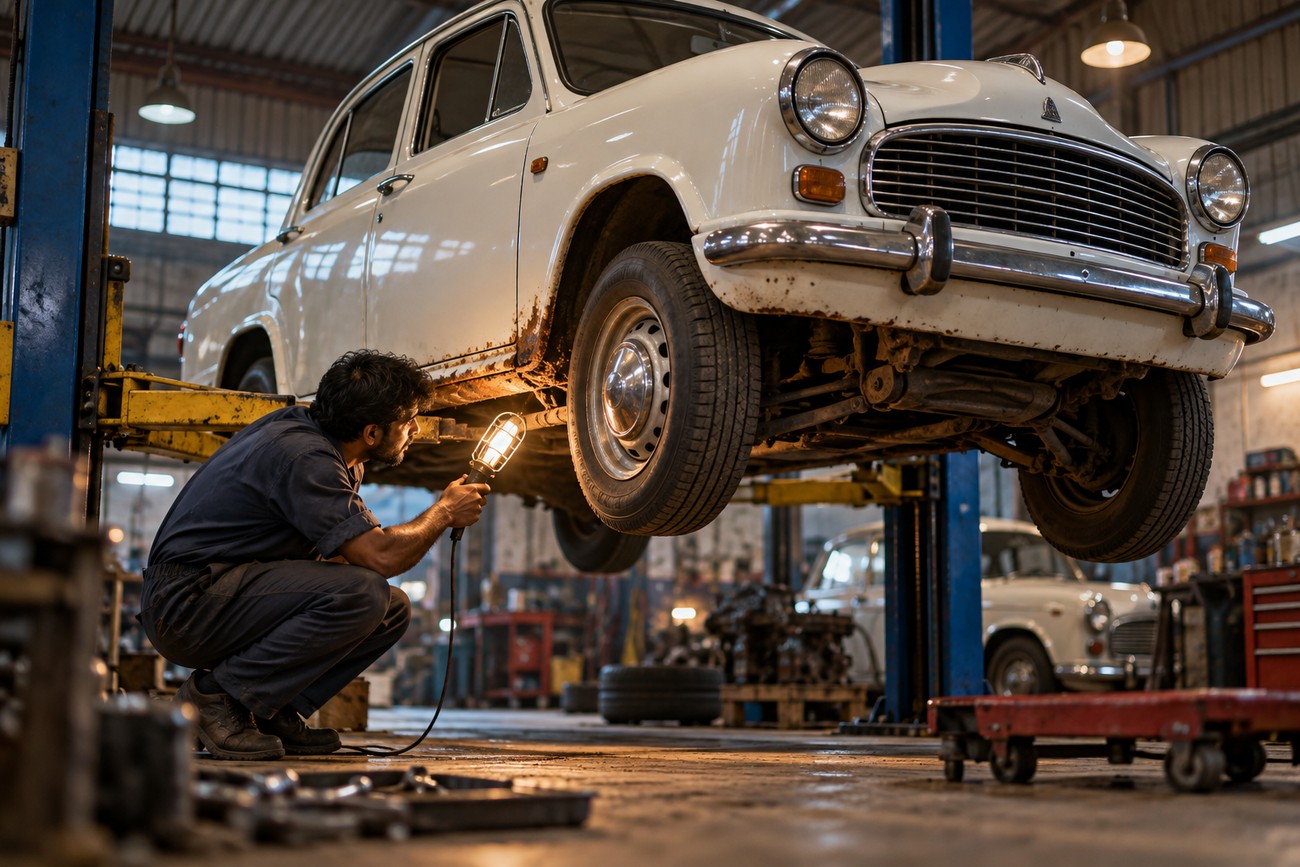
The first inspection should begin below the car. Examine the floors, sills, chassis rails, and suspension mounting points for structural rust, poor repairs, and distortion. Shiny paint can conceal serious corrosion, while a less polished body may belong to a car with sounder underlying metal.
Then establish what the car actually is. Confirm the engine type, steering assistance, gearbox layout, documentation, and the relationship between the body and engine numbers where applicable. Originality can add historical value, but a complete, correctly documented car with sound repairs is more useful than an older example assembled from mismatched parts.
Start underneath the car before judging its paint, trim, claimed Mark, or engine combination. Structural rust and damaged suspension mounting points can determine whether an apparently inexpensive Ambassador becomes a major reconstruction project.
Road-test the drivetrain with the car fully warm. Check clutch take-up, gear changes, steering effort, braking behavior, and signs of overheating or neglected maintenance. A specialist mechanic familiar with Ambassador components is valuable because a general workshop may misunderstand older linkages, unusual assemblies, or previous improvised repairs.
Parts availability needs the same level of caution. Replacement components exist, but substitutes vary in quality, fit, and durability; availability does not guarantee original-quality parts. For regular use, a late, mechanically original, structurally sound example with assisted steering and the later five-speed layout is generally the more rational choice, although condition still overrides specification.
The Ambassador’s Hidden Limits
The Ambassador’s familiar body rests on basic architecture rooted in the post-war period. That foundation per the evaluation of working professionals in the fields a modern driver can reasonably bring to the car.
Passive safety is limited by the age of the underlying platform. The classic appearance can make the car seem substantial, yet visual mass is not a substitute for contemporary occupant protection. A driver should treat the Ambassador as an old car with old safety assumptions, regardless of its paintwork or later engine.
Noise insulation and ergonomics also remain modest. A late 1.8-litre engine and five-speed gearbox improve cruising and control, but they do not make the cabin contemporary. Seating position, controls, ventilation, road noise, and general refinement still reflect a design whose basic identity was established many decades earlier.
There is no single Ambassador driving standard. Different versions can have different engines, gearboxes, brakes, steering systems, and build quality. That variation is historically interesting, but it makes condition reports, component identification, and an actual test drive more important than broad claims about the model.
Myths, Misleading Numbers, and the End of Production
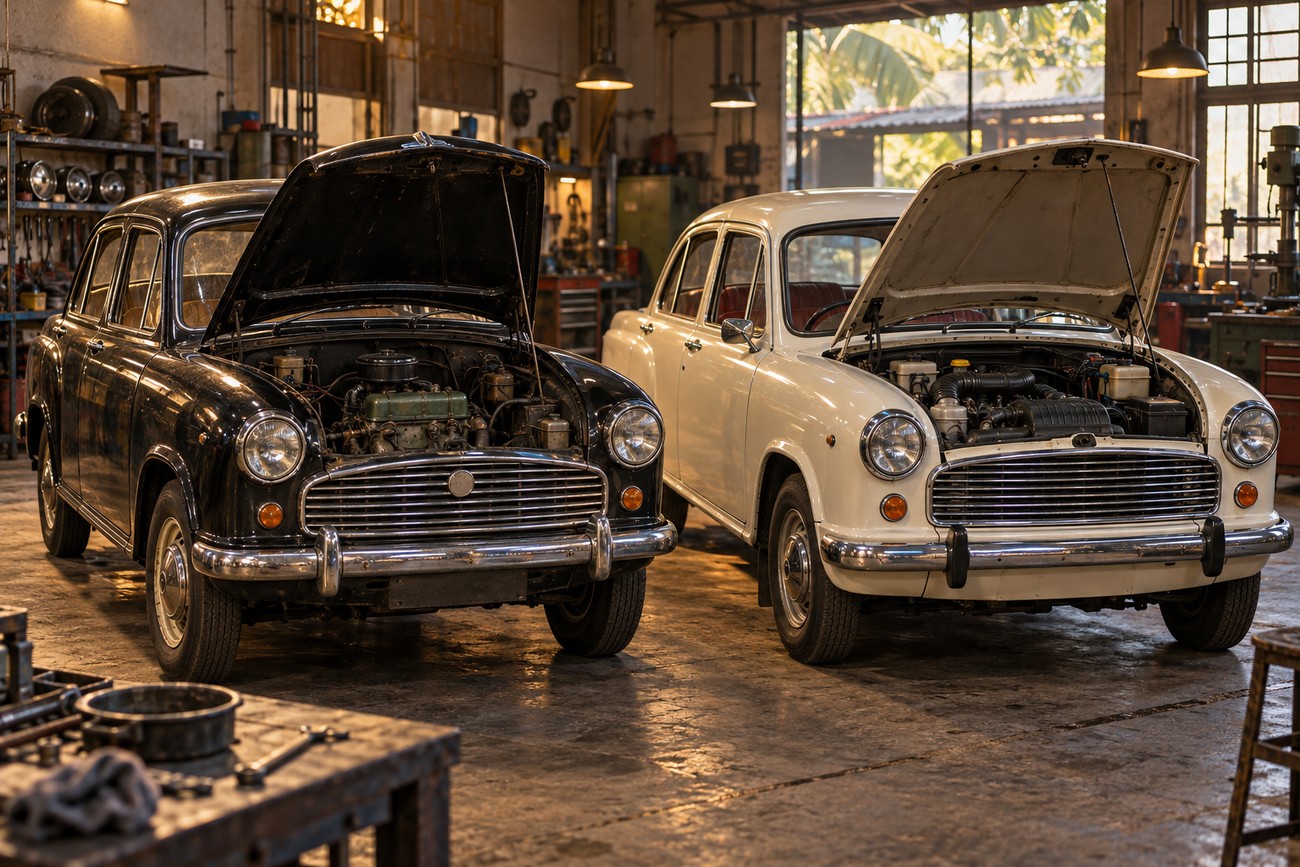
The Ambassador was not mechanically unchanged from its launch to 2014. Its body retained a recognisable Oxford-derived identity, while its engines and controls evolved from the early 1.5-litre petrol arrangement to the 1.5-litre diesel and later 1.8-litre Isuzu petrol configuration.
It is also inaccurate to call every Ambassador simply an original Morris Oxford. The correct description is a licensed Oxford-derived Indian production car, not an unchanged original Morris. Its starting point was the Morris Oxford Series III, but decades of Indian manufacture created a separate production and engineering history.
Performance numbers need similar restraint. About 55 hp and approximately 95 km/h are cited for some 1.5-litre versions, while approximately 140 km/h is cited for some 1.8-litre cars; neither set of figures applies universally to every year or modification. Engine, gearbox, condition, and source specification all affect the result.
Production ended approximately in 2014. Nearly four million cars is a commonly repeated estimate, but it is not confirmed by official production statistics in the available material. The documented conclusion is narrower and safer: the Ambassador remained in production for an unusually long period, evolving in specification while preserving its distinctive identity.
Frequently asked questions
The Ambassador’s history is easiest to understand by separating its name, its design ancestry, and its actual specification. The following answers focus on the points most likely to cause confusion when researching or buying one.
What happened to the Hindustan Ambassador?
Production ended approximately in 2014. The model’s recognisable identity survived through evolving specifications rather than uninterrupted mechanical sameness: engines, gearboxes, steering systems, brakes, and other details changed during its long Indian production life.
The available material does not establish a single exact commercial reason for discontinuation. What can be stated securely is that the Ambassador remained tied to an old platform while later examples gained more useful mechanical equipment.
Why do sources give different starting years for Ambassador production?
Sources cite 1957, 1958, or 1959 because they may be referring to different milestones. 1957 is commonly linked to the launch, 1958 appears in some production accounts, and 1959 is associated with the BMC overhead-valve update and fuller production.
For historical writing, “approximately 1957–2014” is the most responsible summary. It preserves the established chronology without pretending that launch, revised specification, and full series production were necessarily the same event.
Which specification is the least demanding for regular driving?
Prioritise the latest sound, structurally solid, technically original example with assisted steering and the later five-speed manual layout. This combination generally reduces the heaviest low-speed steering effort and offers more usable gearing than an early column-shift car.
Condition still overrides specification. A rust-free, correctly repaired car with a healthy drivetrain is preferable to a later example with structural corrosion, poor replacement parts, or improvised mechanical work.







