
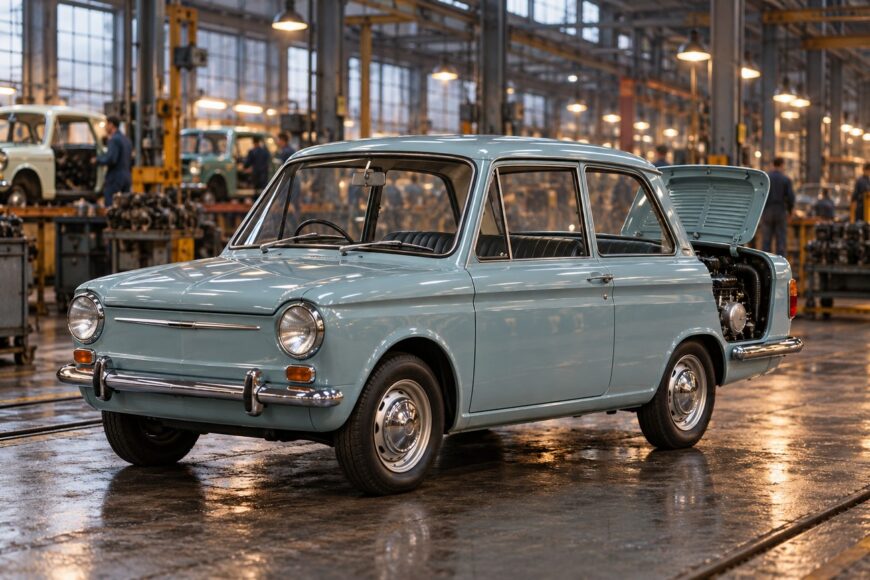
The Hillman Imp was Rootes’ Scottish answer to the BMC Mini, yet it pursued the same small-car market with a very different set of engineering decisions. Its 875 cc water-cooled inline four sat longitudinally behind the rear axle, used an overhead camshaft, and carried both an aluminum block and aluminum cylinder head. Independent suspension on all four wheels and a light body gave the Imp a distinctive handling character.
That cleverness comes with obligations. A neglected cooling system can overheat and distort the aluminum head, while a tired transaxle may hide expensive problems behind a short, apparently successful test drive. The Imp can be nimble, practical, and technically interesting, but a shiny example with an unknown mechanical history can become a demanding project quickly.
- Why Rootes Built the Hillman Imp in Scotland
- The Engineering That Made the Imp Different
- Performance, Handling and the Mini Comparison
- The Problems Owners Actually Need to Manage
- How to Inspect and Buy a Hillman Imp
- Which Hillman Imp Makes Sense Today?
- Frequently asked questions
- How much is a Hillman Imp worth today?
- Was the Hillman Imp a good car?
- What should make a buyer walk away from an Imp?
Why Rootes Built the Hillman Imp in Scotland
Hillman launched the Imp in 1963 as a response to the BMC Mini and the growing demand for economical small cars. The comparison is useful because both cars challenged conventional ideas about packaging, yet the Imp was conceived around a rear-engine, rear-wheel-drive layout rather than the Mini’s front-engine arrangement. That gave Rootes a separate technical identity from the beginning.
Production took place at the purpose-built Linwood factory in Scotland. The location became part of the car’s identity, and the Imp was intended to support a substantial manufacturing operation. Rootes planned production of 150,000 cars per year, a target that was not achieved.
Hillman Imp production ran from 1963 to 1976, with about 440,000 cars built, including Singer Chamois and Sunbeam Stiletto derivatives. That total describes a significant production run, though it never turned the Imp into a mass-market victory on the scale its original plan suggested. Today, the wider family matters to buyers because badges, trim, engine specifications, and body details can vary across related cars.
The Scottish setting and unusual layout also explain why the Imp remains more than a footnote in Mini history. It was designed as a direct rival, yet its rear-mounted engine, aluminum construction, and fully independent suspension made it a distinct engineering project. Treating it as a Mini copy obscures the very features that make inspection and ownership different.
The Engineering That Made the Imp Different
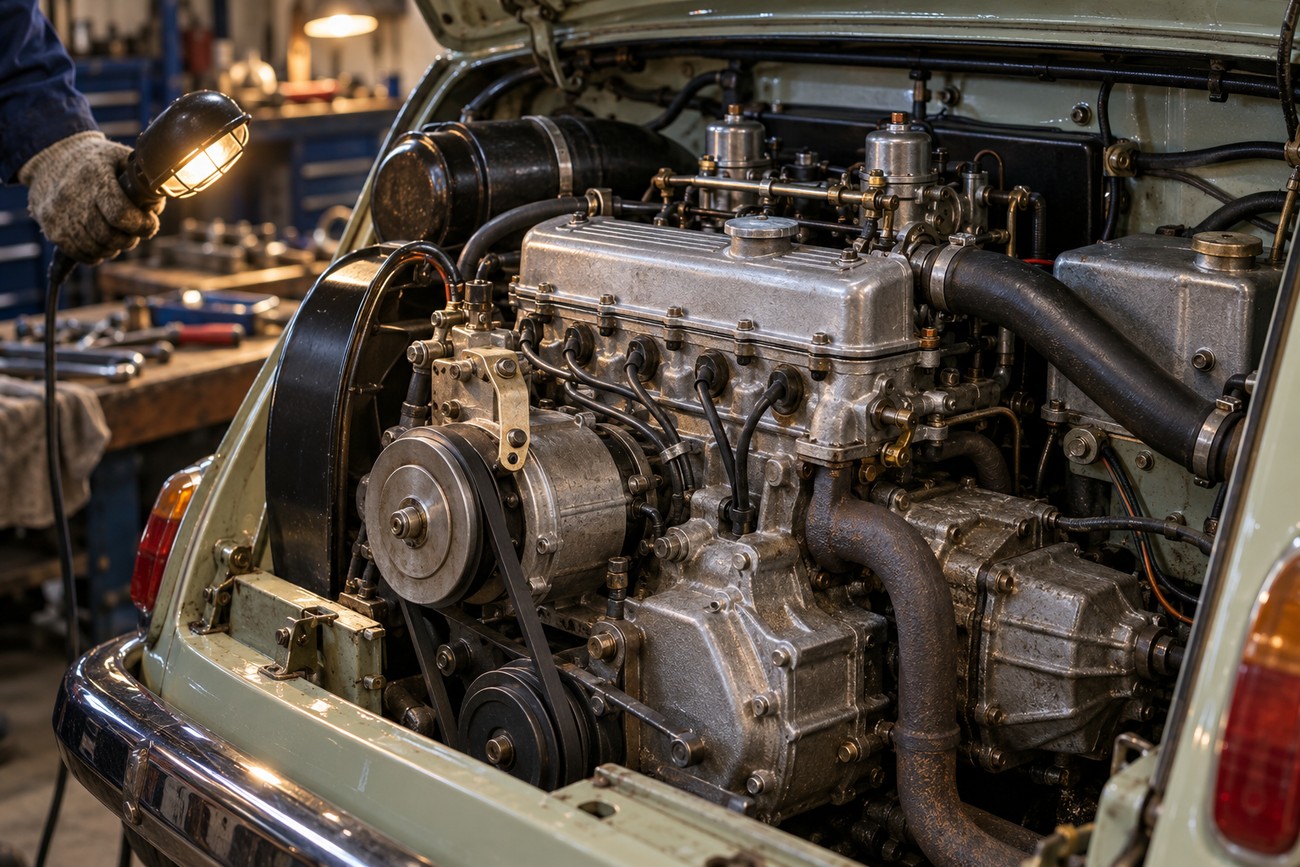
The standard Imp engine was an 875 cc water-cooled inline four with an overhead camshaft. Its aluminum block and aluminum cylinder head reduced weight, while the compact engine suited the rear of the car. Rootes based the design on the Coventry Climax FWMA, but substantially modified it for production use.
Calling the engine simply a Coventry Climax fire-pump engine is therefore misleading. The production unit had a different displacement and many changed components, so generic Coventry Climax parts cannot be assumed to fit. Correct identification matters whenever an engine is rebuilt or a replacement component is sourced.
The engine was mounted longitudinally at the rear, driving the rear wheels through a four-speed fully synchromesh transaxle. A long rear-engine layout influenced the installation and helped make the front of the car available for luggage space. It also placed important service work in a less convenient area, with access and cooling-system maintenance demanding more care than the simple exterior may suggest.
The same arrangement gave the Imp a coherent mechanical package. The transaxle combined gearbox and final drive, keeping the drivetrain compact, while the independent suspension on all four wheels allowed the chassis to respond without relying solely on low mass. Aluminum construction was valuable for weight reduction, yet it made corrosion, incorrect assembly, and incorrect tightening torque more consequential.
There is a subtle ownership penalty in the Imp’s cleverness. A compact rear power unit can leave the front of the cabin feeling unusually open, but routine work depends on knowing where the system’s vulnerable points are and how the engine was originally specified. A car with undocumented modifications may be harder to support than a standard example, even if it performs well.
Performance, Handling and the Mini Comparison
The Imp’s handling cannot be explained by its light weight alone. Independent suspension on all four wheels was central to its road manners, and a test car weighed about 711 kg. The rear-engine balance gave the car its own response to steering and throttle inputs, while the suspension helped it remain more composed than a simple economy-car specification might suggest.
Performance was modest by modern standards. The National Motor Museum gives approximately 24 seconds from 0–60 mph, while a period test recorded 22.7 seconds and about 80 mph maximum speed. Those figures place the Imp firmly in its period context: brisk enough for ordinary roads when maintained correctly, yet never a car whose appeal rests on outright acceleration.
Early factory data lists 39 bhp at 5,000 rpm and 52 lb-ft at 2,800 rpm. The often-quoted 42 gross bhp figure was measured under a different standard, so it should not be treated as a contradictory specification. Buyers comparing cars or reading old advertisements need to distinguish measurement methods before drawing conclusions about engine condition.
Compared with the Mini, the Imp offers a different balance of packaging, drivetrain behavior, and mechanical access. Neither the layout nor the driving character makes one universally superior. The Mini has the stronger cultural association, while the Imp rewards drivers who value its rear-engine balance, four-wheel independent suspension, and unusual aluminum engine.
The Problems Owners Actually Need to Manage
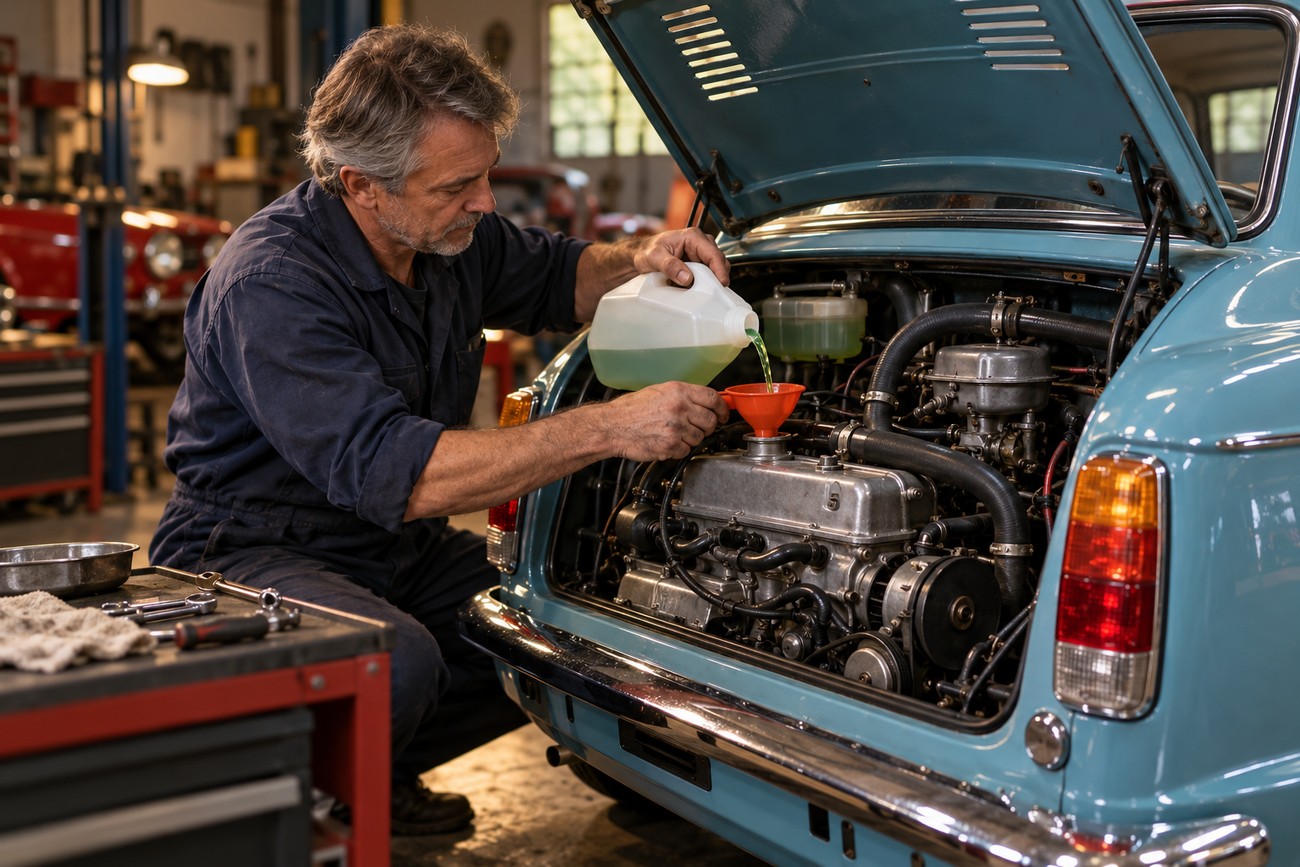
Cooling is the issue that deserves the most attention. Poor cooling maintenance can overheat and distort the aluminum cylinder head, turning a manageable fault into an expensive engine repair. The risk becomes greater when the car has an uncertain service history, trapped air in the system, unsuitable coolant, corrosion, or evidence that previous work was assembled without the correct procedures.
Cooling-system servicing therefore requires more than filling the radiator and checking for an obvious leak. Suitable coolant, careful bleeding, and correct tightening procedures matter because aluminum components are sensitive to corrosion and uneven clamping. Owners have described the cooling system as poorly designed, while historical and museum sources describe it neutrally and do not establish that criticism as a universal engineering verdict.
Cold-weather use can expose another weakness: inadequate cabin heating. A car may drive normally in mild conditions while providing disappointing warmth on a winter journey. Early cars also used a pneumatic throttle arrangement that was regarded as unreliable and could complicate servicing, so the exact system fitted should be checked rather than assumed from the model name.
The transaxle deserves a longer test than a quick circuit around the seller’s street. Problems can appear during prolonged steady running, including oil moving away from a differential bearing. A four-speed fully synchromesh transaxle makes gear selection easier when healthy, but synchromesh does not guarantee permanent reliability or protect neglected bearings and lubrication.
These faults are connected by one ownership lesson: the Imp rewards disciplined maintenance. Aluminum saves weight, yet it does not forgive overheating or careless assembly. A small cooling fault can become a cylinder-head problem, and a transmission that feels acceptable for a few minutes may still need specialist investigation.
How to Inspect and Buy a Hillman Imp
Begin with the engine rather than the paint. Check the cylinder-head geometry, cooling-system condition, signs of emulsified oil, and evidence of previous overheating. A clean idle and a dry-looking engine bay provide useful clues, but they do not establish that the head is flat or that the cooling system has been correctly filled and bled.
Ask for the engine number and confirm the specification. The standard engine was 875 cc, but 998 cc versions also existed, and modified or sporting cars may carry other specifications. Capacity should be verified from the engine number, particularly when an advertisement uses a vague description such as “upgraded” or “competition” without supporting documentation.
Inspect the transaxle during a properly extended drive. Listen for abnormal noise, pay attention to changes during steady cruising, and assess how the differential behaves after the unit has warmed up. A short drive that proves every gear selects can miss bearing or lubrication problems that only become apparent after sustained running.
Look beyond the engine bay for evidence of an incomplete restoration. An attractive body can hide mechanical neglect, while a less polished car with invoices, correct cooling work, and a documented transaxle may be the safer purchase. Check the heating performance, throttle arrangement, fluid condition, and any signs of repeated overheating before agreeing that cosmetic quality reflects overall condition.
Parts compatibility deserves the same caution. The production Imp engine was based on the Coventry Climax FWMA but was substantially adapted by Rootes, so a catalogue listing for a similar aluminum engine is not enough. Model-specific knowledge and a supplier familiar with Imp variations can save considerable time and prevent an incorrect repair.
Which Hillman Imp Makes Sense Today?
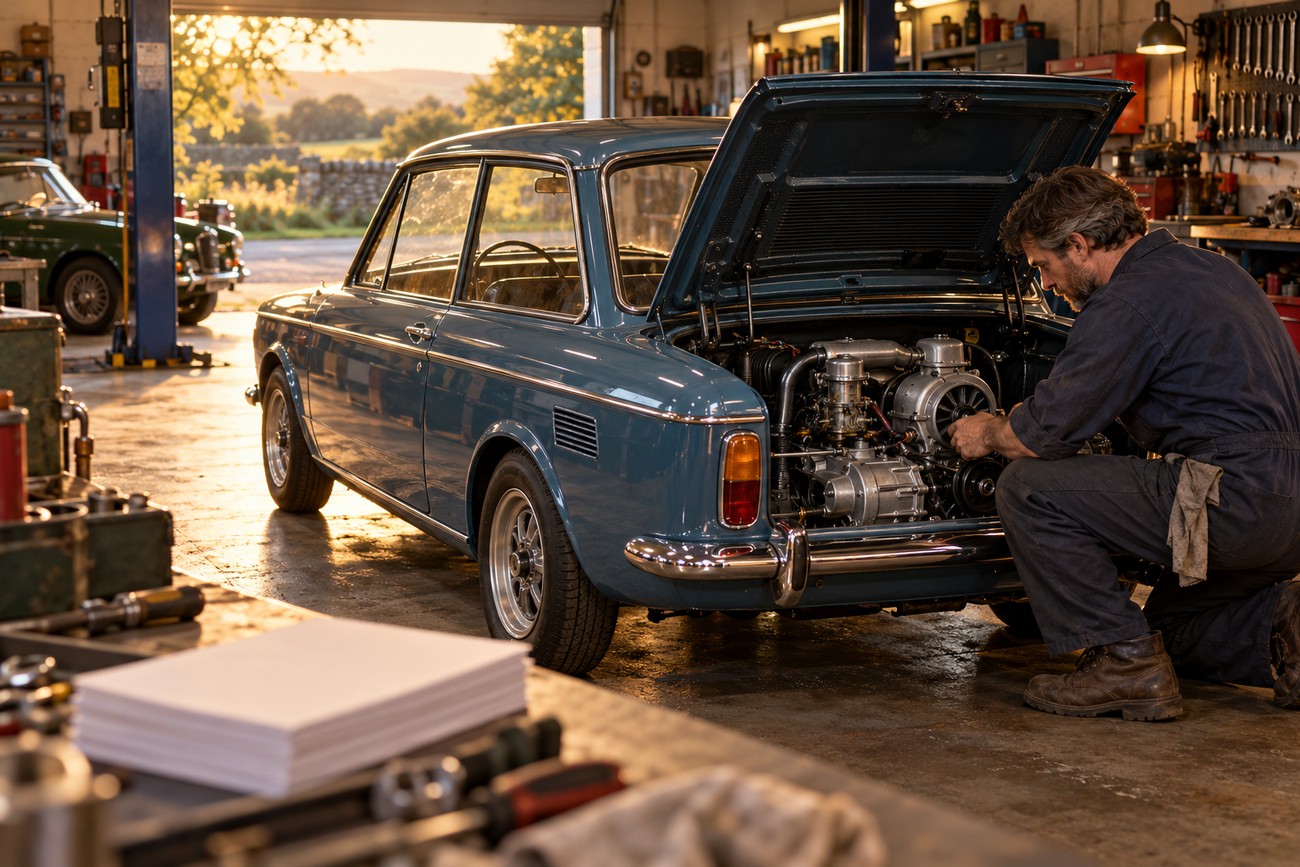
The strongest purchase is the soundest, best-documented example with access to specialist parts and knowledge. Quoted horsepower matters less than a verified engine specification, a stable cooling system, a healthy head, and a transaxle that remains quiet and consistent after proper running. Originality is valuable when it preserves known factory details, while thoughtful modifications need clear documentation.
The Imp’s engineering interest remains genuine. Its aluminum engine reduces weight, its rear-engine balance gives it a distinctive road character, and independent suspension on all four wheels contributes to its handling. Those strengths are meaningful in use, provided the car is maintained as a precision mechanical system rather than treated as a basic economy car that can tolerate indefinite neglect.
Usability depends on temperature control, transaxle condition, and access to suitable parts. A carefully maintained Imp can be an engaging small classic with more technical individuality than its modest performance figures suggest. A car with unexplained overheating, poor heating, uncertain engine identity, or transmission noise may require more patience and money than its appearance indicates.
Was it a good car? Yes, as a design with ambitious packaging and clever engineering; its maintenance requirements simply need to be included in that judgment. The Imp was neither a flawless Mini alternative nor a failed experiment. It was a distinctive response to the same market, and its condition today matters more than any simple ranking against the BMC car.
Frequently asked questions
The Imp’s value depends heavily on condition, documentation, and mechanical health. Its unusual engineering also makes correct specification and specialist knowledge important when assessing a car.
The following questions focus on valuation, overall quality, and the warning signs that should affect a buying decision.
A careful inspection should cover the cooling system, cylinder head, engine specification, heating, and transaxle before purchase.
How much is a Hillman Imp worth today?
A Hillman Imp’s value depends primarily on condition, originality, documentation, and mechanical health, so there is no single meaningful price for every car. A sound, well-documented example with a verified engine and healthy transaxle deserves a stronger valuation than a freshly painted car with an unknown overheating history.
Specialist support also affects practical value. An original or carefully modified car with evidence of correct cooling work may cost more to acquire yet require less immediate expenditure. Buyers should assess the whole mechanical package, including parts availability and the quality of previous repairs, rather than paying a premium for appearance alone.
Was the Hillman Imp a good car?
The Hillman Imp was a good design with demanding maintenance requirements. Its rear-mounted aluminum engine, independent suspension, light construction, and fully synchromesh transaxle gave it a clear technical identity and an engaging character.
Cooling faults, weak cabin heating, early pneumatic throttle arrangements, and possible transaxle problems limited its tolerance of neglect. In present-day use, the car can be enjoyable when its temperature control and drivetrain are sound. Subjective claims about being the prettiest small car or having the best Mini engine do not provide useful technical measures.
What should make a buyer walk away from an Imp?
Walk away, or make the purchase conditional on specialist inspection, when there is serious evidence of repeated overheating, a distorted cylinder head, unexplained emulsified oil, or an unresolved cooling problem. These symptoms can turn a modest fault into major aluminum-engine work.
Unresolved transaxle noise during sustained running and an unverified engine specification should also be treated as decision thresholds. A seller who cannot explain whether the car has an 875 cc, 998 cc, or modified engine makes it harder for the buyer to source parts or judge performance accurately.







