
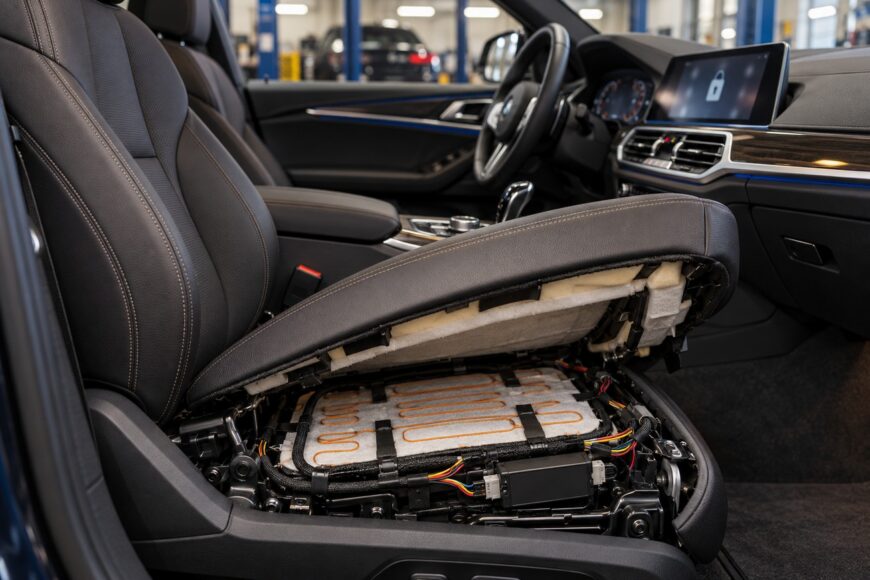
Few software decisions feel as absurd as finding heated-seat controls in a BMW, seeing that the physical system may be installed, and then being asked to pay before it works. The irritation is sharper in cold weather, when a basic comfort feature feels less like an upgrade and more like a locked part of the car you already bought.
BMW has promoted software-enabled options: BMW functions that may be tied to a VIN, account, or digital entitlement and activated after the vehicle is sold. The company presents this as buying access to a function. Many owners see it as paying again for hardware and controls that were included in the vehicle. Availability varies by model, market, configuration, account, and software policy.
- What a BMW heated-seat paywall actually means
- Why BMW tried subscriptions—and why owners pushed back
- How to check a BMW before you buy or subscribe
- The ownership and resale costs hidden behind the paywall
- BMW heated seats: included option, activation, or subscription?
- The mistakes and myths that create the biggest surprises
- A sensible buying decision: what matters more than the badge
- Frequently asked questions
- How can I bypass a BMW heated-seat subscription?
- Which BMWs should buyers stay away from?
What a BMW heated-seat paywall actually means
A heated seat is generally a physical system built from heating mats, wiring, and a control module. That means a BMW can sometimes contain the relevant hardware even when the function is unavailable in the menu. Hardware presence remains model- and configuration-dependent, so this cannot be assumed from the badge or the shape of the seat.
BMW software-enabled options can connect a function to the vehicle identification number, an owner account, a regional policy, or a post-sale activation. In that arrangement, the vehicle may recognize the feature while the digital entitlement determines whether you can use it. A payment may therefore change authorization rather than add a new heating element.
An iDrive icon or a disabled button is useful evidence that the software knows about a function, but it is not proof that the heating hardware is installed. The same screen may appear because of a common software interface, a market-specific configuration, or a feature that requires additional equipment. A VIN-specific equipment record remains more reliable than the menu alone.
Why BMW tried subscriptions—and why owners pushed back
BMW’s subscription rationale is straightforward: software-enabled options can allow a vehicle to gain or retain functions after delivery, while the manufacturer receives recurring revenue. The model can also appear flexible for owners who want access only for a limited period or who prefer to activate equipment later.
In 2022, BMW reported offering heated seats through a subscription model in selected markets and models. This was never a single worldwide rule covering every BMW. The exact treatment depended on the country, vehicle, configuration, and sales policy in effect at the time.
Negative public reaction contributed to reversals for some markets or configurations, which returned to including heated seats in the vehicle price. BMW frames the transaction as buying access to a function. Many owners frame it as paying again for hardware already installed, and the disagreement is especially strong because heated seats are widely perceived as a basic or must-have comfort feature.
The controversy also exposed a communication problem. A buyer can understand an optional performance package more easily than a recurring charge for warmth from a seat already fitted to the car. Clear documentation matters because the same BMW nameplate may have different rules in different markets.
How to check a BMW before you buy or subscribe

Start with the exact vehicle, rather than a general model brochure. Compare the market-specific equipment list, window sticker, sales contract, and VIN-linked build information. Confirm whether heated seats are included in the vehicle price, available as a formal activation, or offered through a subscription.
Next, inspect the vehicle’s drive status and ask the seller or dealer to show the current entitlement. Check which account controls access, whether the function is tied to the VIN, and whether the offer applies in the vehicle’s region. Ask for the answer in writing where possible, especially for a used car.
Read the subscription terms before paying. Confirm the duration, renewal method, regional limits, cancellation rules, software requirements, and transfer rules. A locked menu is insufficient evidence, while an active function is not necessarily proof that access will remain after the present owner’s account is removed.
The ownership and resale costs hidden behind the paywall
The financial comparison depends on the actual subscription terms, but the ownership horizon is easy to define. Over a 3–5-year period, recurring payments may cost more than a one-time purchase of the option. A seasonal payment can appear attractive for a short period and become less attractive if you keep the vehicle through several winters.
Resale creates a second uncertainty. A used-car buyer may value confirmed, permanent access differently from hardware that requires a new activation or an account transfer. A subscription-dependent comfort feature may reduce buyer appeal because access and transferability are less certain.
Account changes can add administrative friction. Some owner discussions report that functions may require reactivation after an account change or ownership transfer; this is not universal and may vary by region and software version. The new owner should therefore treat the subscription status as a separate item to verify, even when the seller says the equipment is present.
The practical risk is less about the heating element failing and more about entitlement becoming unclear. A buyer who assumes that a paid function automatically follows the vehicle may discover that the previous account, subscription term, or regional policy controls access. That uncertainty can affect both convenience and the price a future buyer is willing to offer.
BMW heated seats: included option, activation, or subscription?
These three situations can look similar from the driver’s seat. Their payment structure and resale implications are different.
| Ownership situation | Payment structure | What to verify | Transfer and resale concern |
|---|---|---|---|
| Heated seats included in the vehicle price | Covered by the original vehicle purchase, subject to the documented specification | Market-specific equipment list, window sticker, sales contract, and VIN record | Usually clearer, because the buyer can document the feature as part of the vehicle specification |
| Hardware present but software activation required | Possible one-time activation or other market-specific entitlement | Physical equipment record, current drive status, VIN eligibility, and activation terms | Access may need confirmation after an account change or software update |
| Access provided through a subscription | Recurring payment for a stated term, with renewal and regional conditions | Subscription duration, price, region, VIN link, account ownership, and transfer rules | A future buyer may need reactivation or may discount the car if continued access is unclear |
Some BMW markets and configurations include heated seats in the vehicle price, while others may control access through software. Subscription terms and transfer behavior are not necessarily identical across markets and models.
The buyer should value confirmed access separately from the presence of physical hardware. A technically equipped seat can still be commercially unavailable if the required entitlement has expired or cannot be transferred.
The mistakes and myths that create the biggest surprises
The claim that BMW never installs heated-seat hardware without a subscription is too broad. In many cases, the dispute concerns activation rather than physical equipment, although hardware presence remains dependent on the specific model and configuration. The opposite assumption is also unsafe: a blocked function does not prove that the mats and control module are installed.
A vehicle subscription is perceived differently from buying a phone app. It controls a basic comfort function in a physical product, and owners usually regard the car, seat, and controls as one purchased system. That difference explains why heated seats produce stronger resentment than a restriction on a specialized digital feature.
Paying only in winter is not automatically cheaper. Short-term access may suit an owner who plans to sell soon, while recurring payments can exceed a one-time option cost over a 3–5-year ownership horizon. The right comparison uses the expected ownership period and renewal terms, rather than the first payment alone.
BMW’s policy has varied by country, model, and configuration. Some owner reports also describe differences by software version, but those reports should be treated as market-dependent observations rather than a universal BMW rule. A forum explanation cannot replace the current terms for the specific VIN.
A sensible buying decision: what matters more than the badge
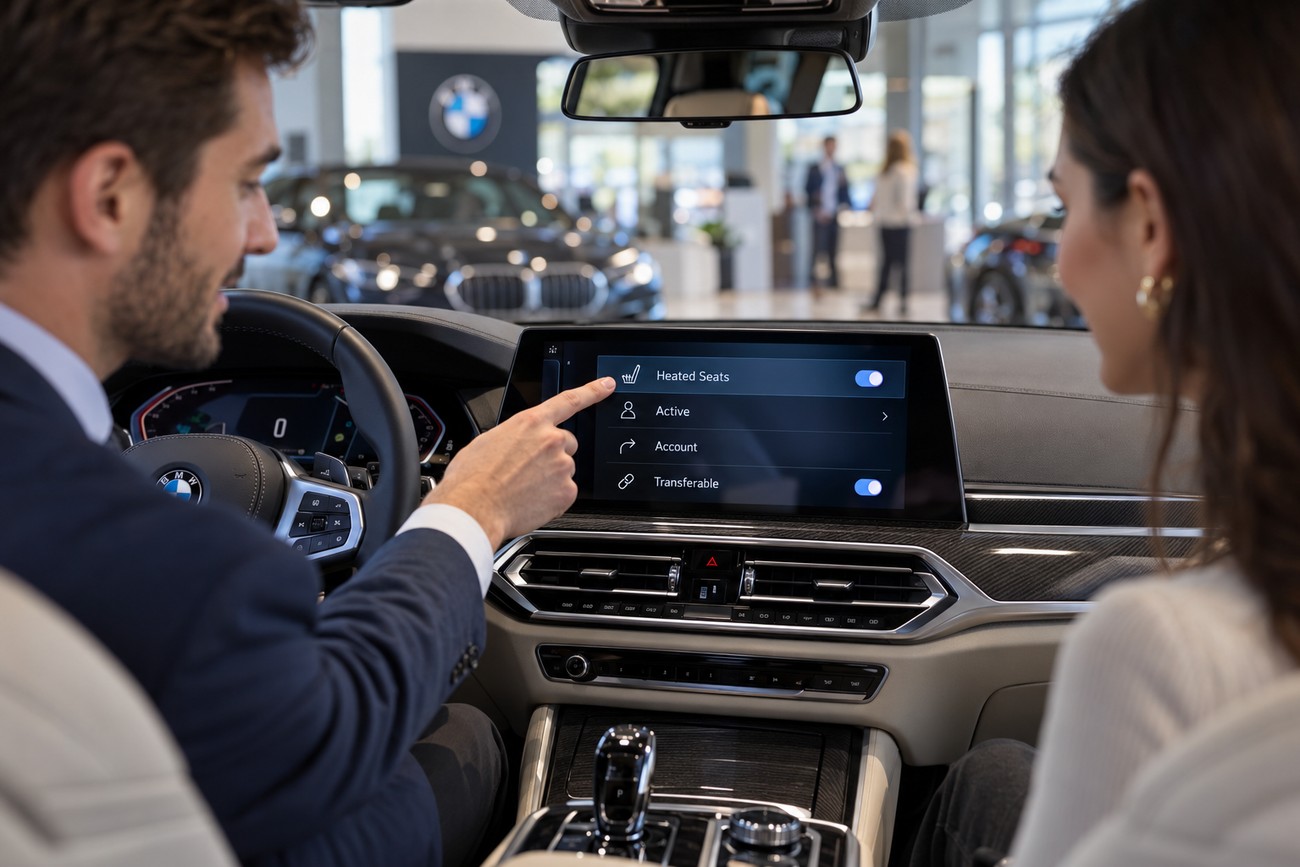
The decisive issue is the documented status of the feature on the specific VIN, not the BMW badge alone. Before buying, confirm the equipment, the current activation, the account controlling it, and the conditions under which access continues. If the seller cannot document those points, price the car as though the feature is uncertain.
Do not automatically reject every BMW with software-enabled features. A clearly documented activation, reasonable payment structure, and transferable entitlement may be acceptable to some owners. The decision becomes risky when the seller describes the function vaguely or treats a visible menu icon as complete proof.
Heated seats are widely perceived as a must-have comfort feature, so a paywall can damage trust more than a charge for an unusual accessory. For a used buyer, confirmed access and transfer terms deserve their own value assessment, separate from the presence of the physical hardware.
A simple rule works across markets: buy the documented entitlement, not the promise that the car is “prepared” for it. If equipment records, activation rights, renewal terms, and transferability are unclear, choose a different configuration or negotiate on the basis of that uncertainty.
Frequently asked questions
How can I bypass a BMW heated-seat subscription?
There is no universal, manufacturer-approved bypass. The legitimate route is to ask BMW or an authorized dealer to check the VIN, hardware eligibility, account status, and available activation terms. A dealer-supported entitlement check may reveal that the feature is included, expired, or available under a different market rule.
Unauthorized coding or hardware changes may affect reliability, warranty treatment, compliance, or other vehicle systems, and they are not a guaranteed solution. They also do not necessarily create a transferable digital entitlement for the next owner.
Which BMWs should buyers stay away from?
There is no evidence-based reason to avoid an entire BMW model range solely because some vehicles use software-enabled options. Screen out cars with undocumented equipment, unclear subscription terms, uncertain account ownership, or no written confirmation of transferability.
A specific VIN with clear records may be a safer purchase than a supposedly better-equipped car whose heated-seat access depends on an unknown previous account or regional policy.







