
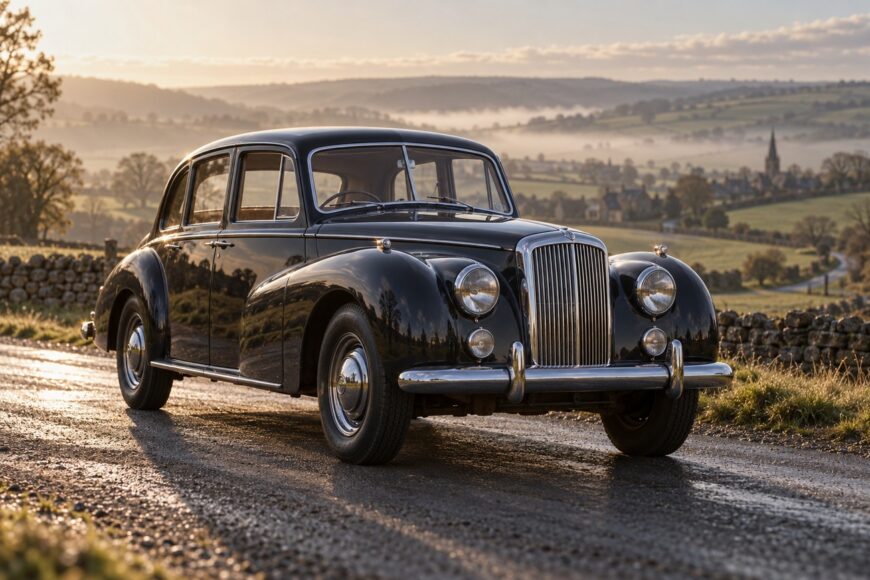
A four-door family car with a reputation for speed was an unusual prospect in postwar Britain. Produced from 1946 to 1950, the Healey Elliott offered a steel sedan body and space for passengers while promising performance associated more readily with a sporting car. That combination made its 1948 reputation memorable.
The phrase “fastest production sedan of 1948” needs care, however. Historical accounts differ on power, weight, production totals, and even the speed the car could reach. The Elliott was among the fastest production sedans of its period; the surviving figures do not establish an all-car record or guarantee that any Elliott on the road today can match them.
- What “fastest production sedan of 1948” really means
- The postwar Healey Elliott and its Riley connection
- Healey Elliott specifications: reported figures and their limits
- Why it was quick—and what period performance figures miss
- Driving realities: brakes, handling, and comfort
- Buying or restoring an Elliott: what to verify first
- Frequently asked questions
- What was the fastest production car in 1948?
- Where can conflicting Healey Elliott production figures be checked?
- How should a 1940s 0–60 mph result be compared with a modern test?
What “fastest production sedan of 1948” really means
The claim belongs to a particular year and a particular body category. It describes the Elliott’s standing among production sedans, rather than identifying the fastest production car of any kind. Nor does a period title remain an absolute claim as later sedans appear.
Reported top speed is generally around 90–95 mph (145–153 km/h), although some publications give higher estimates. For a four-door car in the immediate postwar years, those figures explain why the Elliott attracted attention. They should be read as reported performance, not as a precisely established result for every car built.
A definitive ranking would require comparable evidence: cars in equivalent specification, tested under sufficiently similar conditions, with a clear definition of “production sedan.” A quoted maximum from one source cannot safely be ranked against an independent road test from another without knowing how each figure was obtained.
The distinction matters because the claim is still historically meaningful when qualified. Healey combined family-body practicality with pace unusual for the period. Calling the Elliott one of the fastest production sedans of its time preserves that achievement without turning a disputed historical comparison into an all-time record.
The postwar Healey Elliott and its Riley connection
The Healey Elliott was a British four-door sedan produced from 1946 to 1950, when buyers were encountering a new generation of postwar cars. Its steel body sat on a separate chassis, an arrangement familiar to the period. What made the Elliott distinctive was the speed associated with that family-bodied layout.
Power came from a 2.4-litre Riley-derived six-cylinder engine, driving the rear wheels through a four-speed manual gearbox. The Riley connection is useful for understanding the car’s character and tracing its mechanical parts. It does not mean that every later car bearing the Healey name shared the Elliott’s construction or components.
The body provided four-door access and room for passengers, while the engine and gearing gave the car its sporting reputation. That pairing mattered in 1948: buyers did not have to choose a two-seat body to obtain a car capable of sustained, relatively rapid travel. The separate chassis and steel body also help explain why condition must be assessed across the whole car, rather than through the engine alone.
Production amounted to a few hundred Elliott sedans, though published exact totals disagree. Rarity makes identification and surviving documentation especially important. It also means that an incomplete car cannot be assumed to have an easy supply of correct replacement parts.
Healey Elliott specifications: reported figures and their limits
These are commonly reported historical figures, with ranges where sources differ; they are not a single certified specification for every Elliott.
| Item | Reported figure | How to read it |
|---|---|---|
| Engine | 2.4-litre Riley-derived six-cylinder | Identify the engine fitted to a surviving car before treating its specification as original. |
| Quoted power | Around 104–104.5 hp | The quoted output varies by source and is not a measurement of an individual car today. |
| Gearbox and drive | Four-speed manual; rear-wheel drive | Check the fitted components and their condition during an inspection. |
| Top speed | Generally around 90–95 mph (145–153 km/h) | Some publications give higher estimates; quoted maxima are not directly comparable test results. |
| 0–60 mph | Around 15–16 seconds in historical accounts | Timing method and vehicle condition affect the result. |
| Weight | Approximately 1,300–1,450 kg | Reported weight varies by specification and source. |
| Production | A few hundred Elliott sedans | Published exact totals disagree. |
The range of reported weights is a reminder that seemingly straightforward figures can describe different specifications or use different conventions. Combining the lightest published weight with the highest published speed would create a specification that may never have belonged to one particular car.
For an owner, the table is a reference point rather than a performance target. A surviving Elliott’s braking, steering, cooling, and structural condition are more useful guides to how it can be driven than a maximum recorded in a period account.
Why it was quick—and what period performance figures miss
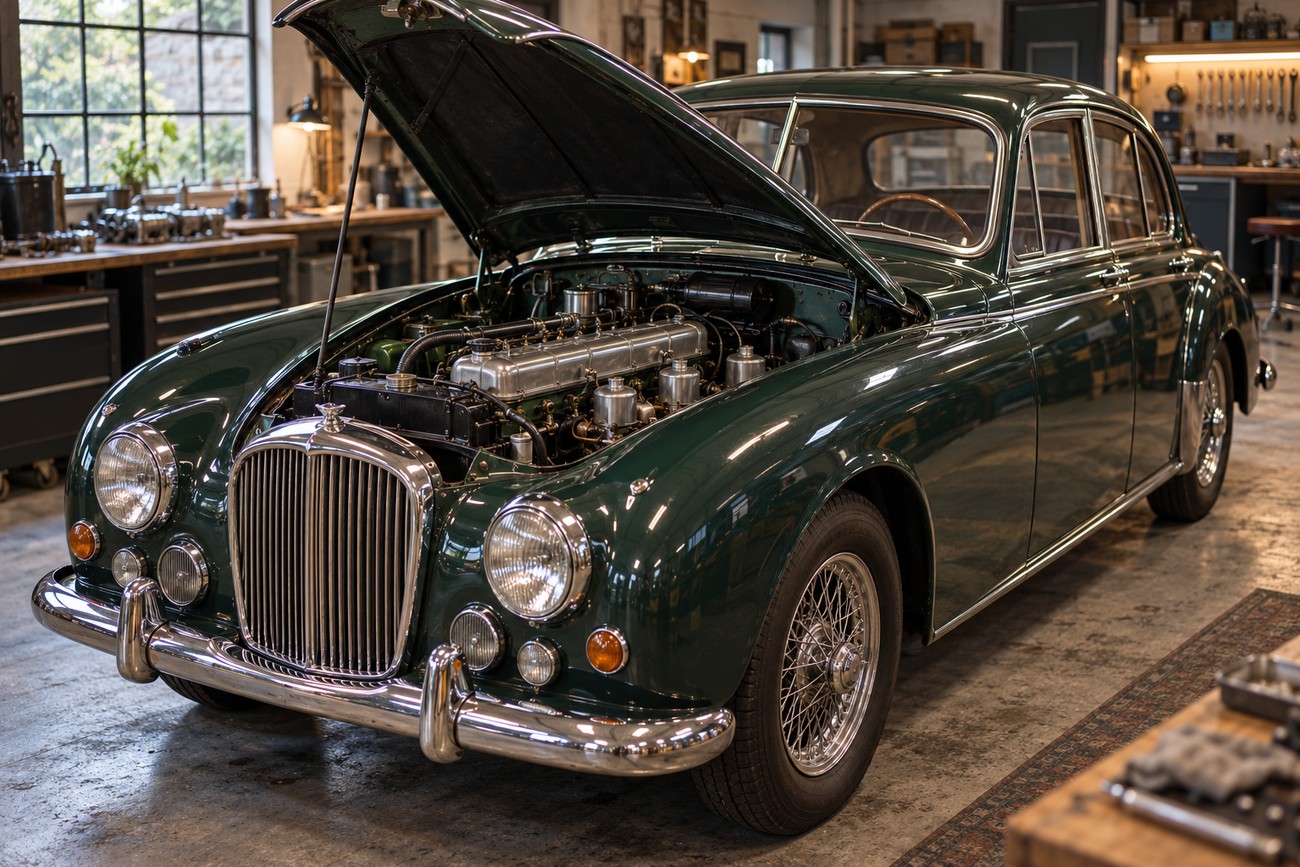
The 2.4-litre Riley-derived six-cylinder, with quoted output around 104–104.5 hp, gave the Elliott the power behind its reputation. A four-speed manual gearbox allowed the driver to make use of that engine on the open road. In a four-door postwar car, the resulting pace was sufficiently notable to outlive the model’s short production run.
Reported top speed is generally around 90–95 mph (145–153 km/h), while historical 0–60 mph figures are around 15–16 seconds. Those numbers describe different tasks: one concerns maximum speed, and the other acceleration from rest. Neither, on its own, tells a driver how easily the car will cover a long journey or respond when traffic slows.
Period publications and later reference works do not always agree, and a quoted engine output is not the same thing as a measured road-test result. Acceleration depends on the timing procedure and the condition of the test car; a maximum-speed report has its own uncertainties. Treating such figures as if they came from one consistent modern test method makes comparisons appear firmer than the evidence allows.
A surviving Elliott adds another variable: decades of wear and repairs. Engine tune, gearbox operation, and cooling can all differ from the condition assumed in a historical figure. Its reported speed is best understood as evidence of what made the design remarkable in its day, rather than a promise about the next car offered for sale.
Driving realities: brakes, handling, and comfort
Period speed did not bring modern braking standards with it. Owners and retrospective accounts commonly question the early drum brakes relative to the Elliott’s pace. Before using an example regularly, a driver needs confidence in the brakes, tyres, and steering, rather than relying on its historical top-speed claim.
Steering effort and high-speed stability also belong to a late-1940s design. Wear, tyre choice, and previous repairs can change the way an individual car tracks and responds. A sensible assessment builds speed gradually only after the chassis and controls have been checked; a published maximum is no test of safety.
Noise, vibration, cabin heat, and limited ventilation can make a long drive tiring even when the engine is running well. The four doors make the Elliott a sedan, but they do not give it the space, insulation, or ease of control expected of a modern family car. Its comfort is better judged in the context of postwar travel than against a current highway cruiser.
Cooling problems or uneven running after a long journey deserve investigation, though overheating should not be treated as an inevitable Elliott trait. Maintenance and the quality of earlier repairs have a substantial bearing on reliability. A car that performs acceptably on a short outing may still reveal faults once thoroughly warm.
Buying or restoring an Elliott: what to verify first
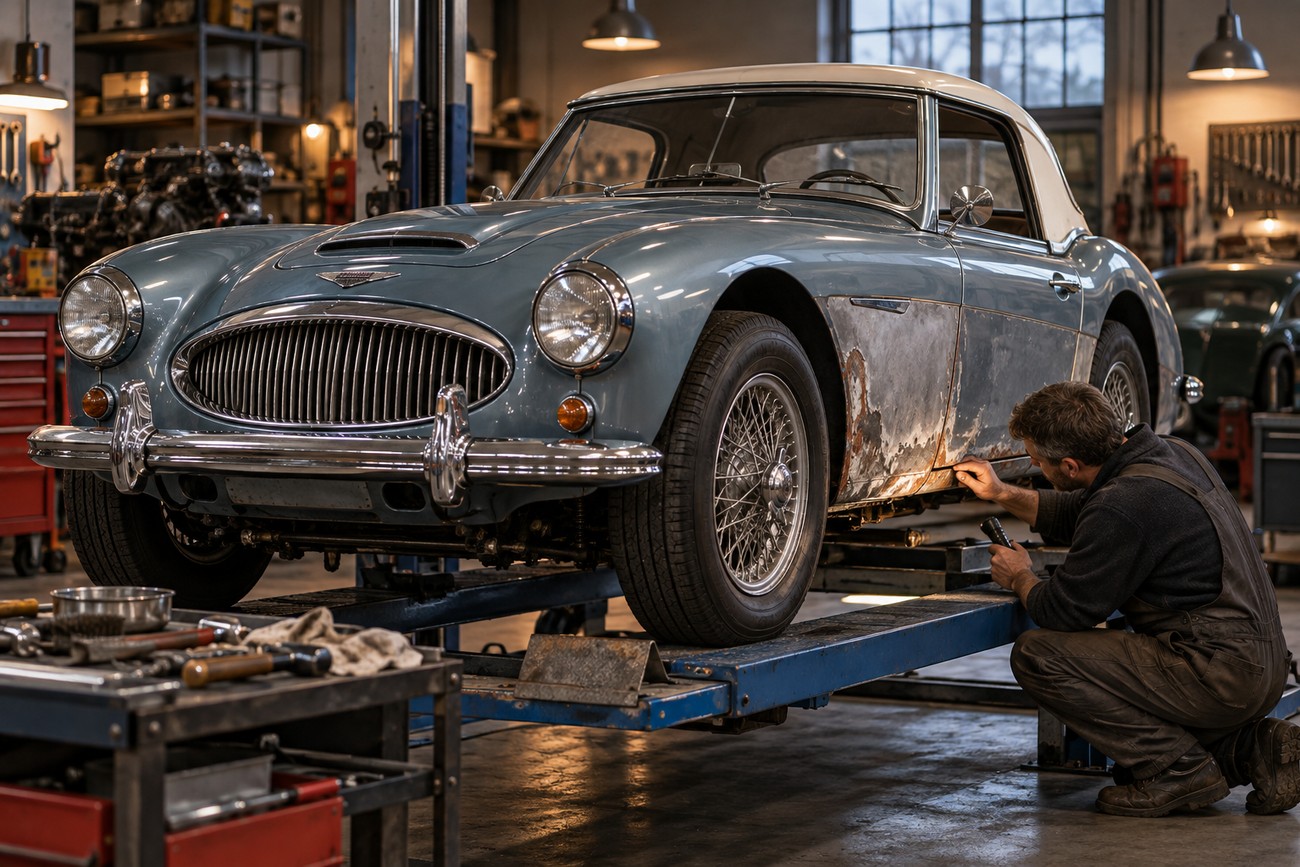
Begin with identity and provenance. Because only a few hundred Elliott sedans were built and published totals differ, a documented chassis history is more useful than a seller’s precise production claim. Check that the car’s identity, its papers, and its major components tell a consistent story, especially if originality is part of the asking price.
Next, examine the restoration beneath the finish. Structural members, floors, and lower door areas warrant close scrutiny for corrosion and earlier repairs. Paint can show that work was completed, but it cannot establish how soundly hidden metal was repaired.
Reconcile chassis identity and repair records with the physical car before accepting a polished finish as proof of a sound restoration. Gaps between the paperwork and visible construction deserve explanation before purchase.
Then assess the systems that determine whether the car is usable: brakes, steering, tyres, engine operation, and cooling. A test drive alone may not expose deterioration or problems that emerge after sustained running. Inspection findings should take precedence over an advertised maximum speed or a claim that the car has been “fully restored.”
Original body and interior parts, along with model-specific mechanical components, can be difficult to source. A project missing distinctive pieces may depend on a suitable donor or careful fabrication, while old repairs can complicate even a complete example. Rarity is part of the Elliott’s appeal, but the quality of the car in front of you is the firmer basis for a buying decision.
Frequently asked questions
The Elliott’s speed title, production history, and period test figures are easier to interpret when the question being asked is precise. These distinctions are particularly useful when checking a sales description or comparing historical references.
What was the fastest production car in 1948?
The Healey Elliott’s sedan-specific reputation does not identify the fastest production car overall in 1948. Establishing that broader title would require a defined category and comparable contemporary evidence for the eligible cars; a reported Elliott sedan speed cannot settle it.
Where can conflicting Healey Elliott production figures be checked?
Surviving factory records, marque registers, and documented chassis histories are useful places to check a published total. They may record different stages of production or count cars on different terms, so disagreement does not necessarily mean one source is careless. For an individual Elliott, matching its documented identity to the physical car is more useful than relying on a single aggregate figure.
How should a 1940s 0–60 mph result be compared with a modern test?
First check how each run was timed, the condition and specification of the cars, and the measurement conventions used. If those details are missing or materially different, the Elliott’s reported 15–16 seconds is best treated as period context rather than a directly comparable modern result. The figure still conveys the car’s contemporary pace without pretending that the tests used identical methods.







