
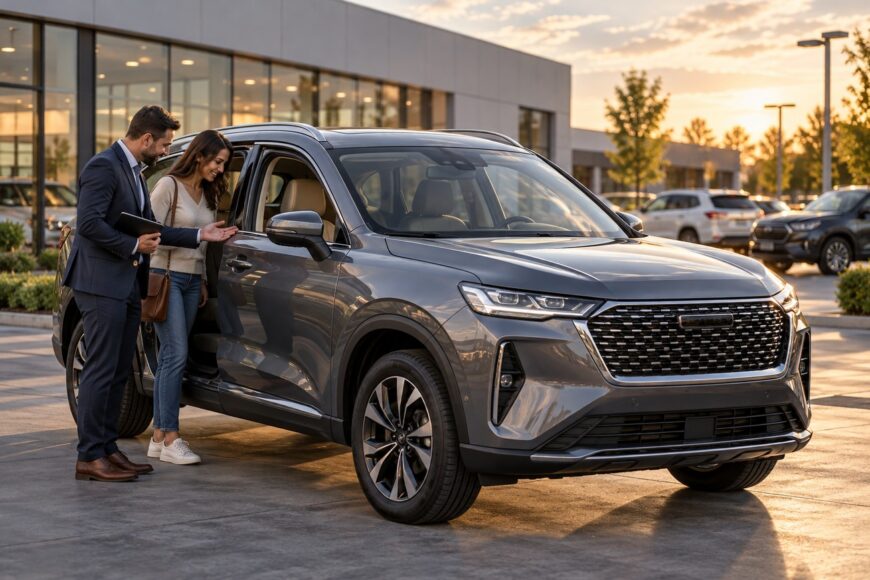
The Haval H6 is a well-equipped Chinese SUV that has moved beyond the budget-only conversation. Its appeal comes from practical space, a broad equipment list, and petrol, hybrid, or PHEV powertrains in some markets. Strong safety credentials add substance to its value proposition.
The buying decision still depends on details that a brochure cannot settle. The relevant H6 version, local dealer support, warranty wording, software calibration, and long-term service access may matter more than the headline equipment list. A five-star result in one market does not automatically validate every H6 sold elsewhere.
- Why the Haval H6 Has Become a Serious Market Contender
- Safety: Five ANCAP Stars, with an Important Qualification
- How the H6 Drives: Comfort, Assistance, and Everyday Usability
- Haval H6 Service, Warranty, and 4WD Ownership Costs
- The Ownership Risks Buyers Should Not Ignore
- Should You Choose the H6 Over an Established Rival?
- Frequently asked questions
- What should a used Haval H6 buyer ask the previous owner for?
- Which three Chinese car brands are most relevant when cross-shopping the H6?
- What are the top three Chinese car brands?
- Which is better, the Ford Territory or the Haval H6?
Why the Haval H6 Has Become a Serious Market Contender
The H6 fits the role expected of a modern family SUV: a raised driving position, useful cabin space, everyday road manners, and equipment aimed at reducing the need for expensive options. Haval has used this combination to challenge established brands whose advantage traditionally came from reputation and dealer networks.
Powertrain choice broadens its appeal. Petrol, hybrid, and PHEV versions are offered in some markets, although the exact engines, drive systems, trims, and warranties vary by country. That makes a local specification sheet more useful than an international review based on a different version.
Much of the H6’s value is visible before the test drive: driver-assistance systems, infotainment functions, cameras, comfort features, and safety equipment may be included at a competitive level. The less visible question is how consistently those systems operate after delivery and whether the local dealer can diagnose faults quickly.
Safety: Five ANCAP Stars, with an Important Qualification
The Haval H6 received five stars under the 2022 ANCAP protocol. The published scores are 88% for adult occupant protection, 88% for child occupant protection, 73% for vulnerable road-user protection, and 81% for safety assist. These results provide meaningful evidence from standardized testing.
Assessed versions include front, side, and curtain airbags, a front-seat center airbag, autonomous emergency braking, and lane-keeping assistance. ANCAP also assessed petrol, hybrid, and PHEV versions for the Australian and New Zealand markets, including additional consideration of hybrid and high-voltage-system safety where relevant.
The qualification is important for buyers importing or comparing a different regional car. The rating applies to the assessed Australian and New Zealand versions and does not automatically cover every country or specification. Equipment, software calibration, and the operation of assistance systems should therefore be confirmed by VIN, trim, and local documentation.
Owner reports of false adaptive-cruise interventions, emergency braking on a straight road, or inconsistent parking assistance do not cancel the crash-test result. ANCAP evaluates defined scenarios, while public roads present a wider range of markings, traffic behavior, weather, and sensor conditions. A strong safety rating and a need to supervise electronic aids can both be true.
How the H6 Drives: Comfort, Assistance, and Everyday Usability

The H6’s format suits routine family use. Its SUV seating position can make urban traffic easier to monitor, while the available cameras and parking functions are intended to reduce effort in tight spaces. The useful question on a test drive is whether these features behave predictably in the conditions you regularly face.
Some owners report a delayed response when moving away after the start-stop system activates. Other reviews describe jerky or unpredictable turbo-engine response during acceleration. These reports are not proof of a universal mechanical defect, but they justify testing low-speed take-off, stop-and-go traffic, and moderate acceleration rather than judging the car from a short, smooth-road drive.
Assistance behavior deserves the same scrutiny. Owner reports include false adaptive-cruise interventions, emergency braking on a straight road, inconsistent automatic parking, and seat ventilation that did not always operate as expected. Treat these as individual reports requiring verification, then check each relevant function before purchase.
Haval H6 Service, Warranty, and 4WD Ownership Costs
Maintenance requirements depend on the market and drivetrain. One published official program gives the following reference points, but the service booklet for the exact vehicle should take priority.
| Item | Published reference | What to confirm locally |
|---|---|---|
| First scheduled service | 12 months or 10,000 km, whichever comes first | Applicable market, engine, and dealer schedule |
| 4WD transfer-case and rear-differential oil | Replacement at 36 months or 40,000 km | Whether the operation is included in the quoted service price |
| Automatic transmission fluid | Replacement at 48 months or 70,000 km | Required fluid, labor cost, and record-keeping requirements |
| H6 HEV battery warranty | 8 years or 160,000 km in some markets | Local terms, exclusions, mileage limits, and authorized servicing rules |
| Warranty exclusions | May include oils, tyres, brake pads, spark plugs, and other consumables | Written coverage and claim conditions for the exact country |
The first service interval is only the beginning of the ownership record. For a 4WD H6, transfer-case and rear-differential oil replacement is separate from routine engine servicing, and the automatic transmission has its own ATF interval. Missing these operations can complicate warranty discussions and make a used vehicle harder to evaluate.
On a 4WD H6, an engine-oil receipt does not prove that the transfer case, rear differential, and torque-transfer system were maintained. Those components need their own inspection and service evidence.
Hybrid ownership adds a documentation issue rather than an automatic reliability conclusion. In some markets, the H6 HEV battery warranty is stated as 8 years or 160,000 km, subject to local conditions and authorized servicing. Confirm whether the warranty follows the vehicle, which inspections are required, and what happens if maintenance was completed outside the approved network.
Warranty language should be obtained in writing before signing. Coverage, exclusions, servicing obligations, and battery terms vary by market, while dealer capacity can affect how quickly a claim is assessed. A low advertised service cost has limited value if the relevant fluid, software update, or diagnostic procedure is unavailable locally.
The Ownership Risks Buyers Should Not Ignore
Some owners report multimedia faults soon after delivery and mirrors folding unexpectedly while driving. These complaints may arise from software, wiring, sensors, or a particular vehicle, and the available reports do not establish a single systematic failure. They do show why a delivery inspection should include every screen, camera, switch, mirror, and warning message.
Dealer access is another practical risk. Some owners report waiting two to three weeks for a service appointment. That delay matters more when the vehicle has an electronic fault, a warning light, or a warranty issue that requires a specific diagnostic tool rather than a routine oil change.
A single owner reported battery failure after approximately one year; this is anecdotal and does not prove a systemic defect. It is still sensible to ask how the local dealer tests the 12-volt and high-voltage systems, which battery coverage applies, and whether replacement parts are held locally.
Rare regional versions deserve extra caution. Before buying one, check parts availability, diagnostic equipment, software support, and typical repair lead times. A 4WD version also carries additional transfer-case and rear-differential maintenance, while consumables such as oils, tyres, brake pads, and spark plugs may be excluded from warranty coverage.
Should You Choose the H6 Over an Established Rival?
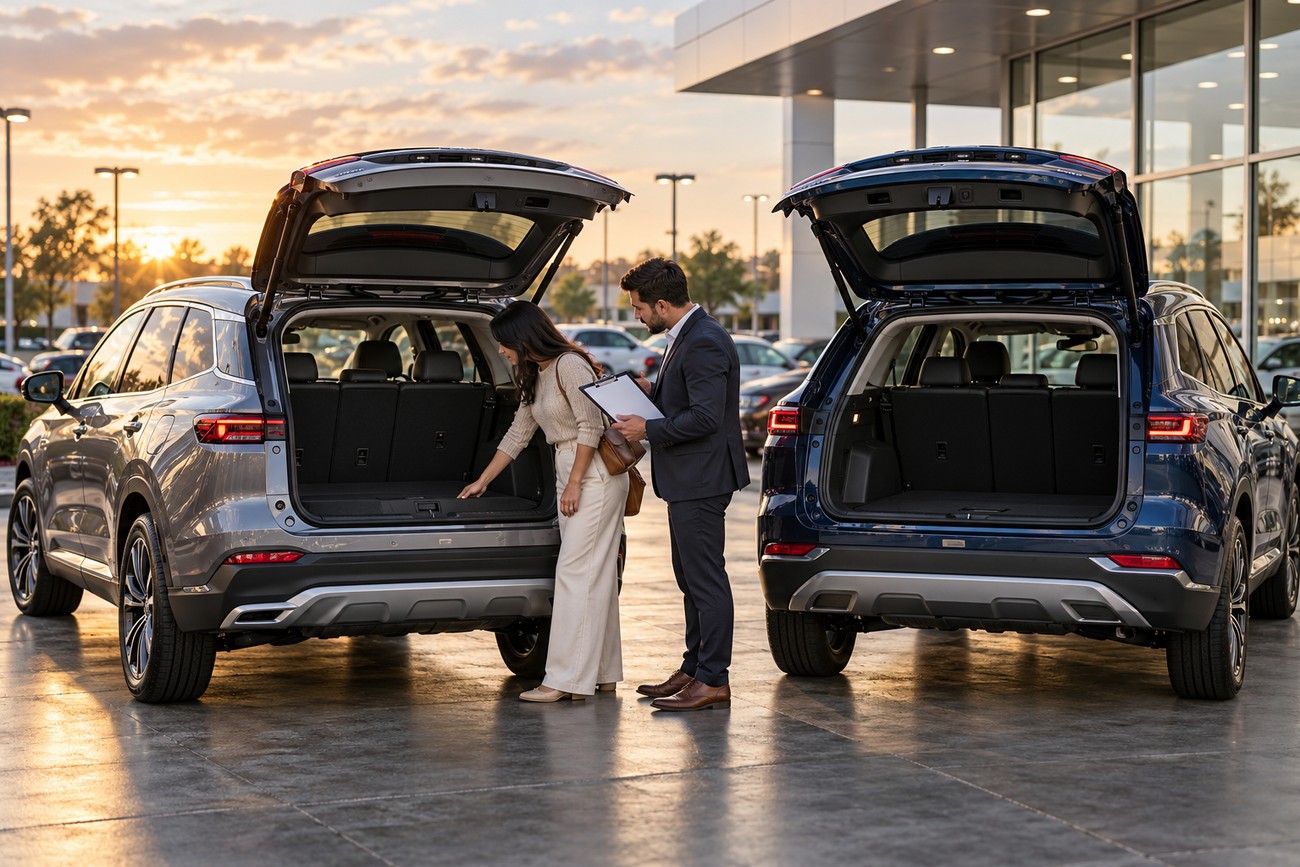
There is no universal winner between the H6 and an established rival such as the Ford Territory without the buyer’s country and exact versions. Compare the tested safety specification, drivetrain, cabin equipment, warranty wording, and dealer coverage available in your area. A cheaper purchase price can lose its advantage if parts or diagnostics are difficult to obtain.
Use the test drive as a technical check rather than a brief comfort demonstration. Try a start-stop take-off, adaptive cruise, lane keeping, automatic emergency braking, parking assistance, infotainment, cameras, and ventilation functions. If a system intervenes unexpectedly, record the conditions and ask the dealer for a clear explanation before proceeding.
Buyers choosing 4WD should inspect more than the engine and gearbox. The transfer case, rear differential, and torque-transfer system need attention, especially on a used car with incomplete records. For a hybrid, verify the battery warranty and authorized-service history; for any rare regional version, confirm local parts and diagnostic support.
A practical pre-purchase checklist is:
- Match the VIN, market, trim, and safety equipment to the relevant ANCAP or local assessment.
- Obtain the service schedule and warranty terms in writing.
- Test start-stop, assistance systems, parking functions, and infotainment.
- Check 4WD components and fluid records where applicable.
- Ask the dealer about parts availability, diagnostic capability, and repair lead times.
Frequently asked questions
These questions focus on service records, competing brands, and the choice between the H6 and the Ford Territory. The answers depend on the exact market, trim, drivetrain, and dealer support. Written documentation and a thorough test drive remain essential before purchase.
What should a used Haval H6 buyer ask the previous owner for?
Ask for service invoices, the completed service booklet, and evidence that the first service was performed at 12 months or 10,000 km, whichever came first, where that schedule applies. A 4WD should have records for transfer-case and rear-differential oil replacement, while automatic versions should show the required ATF service at the applicable interval.
Also request invoices for software updates, multimedia repairs, sensor work, or other electronic faults. If warranty coverage depends on authorized maintenance, verify that the work was completed within the approved network and ask for the written warranty terms rather than relying on the previous owner’s summary.
Which three Chinese car brands are most relevant when cross-shopping the H6?
The relevant shortlist depends on the country, where brands such as Haval, Chery, and MG may compete in overlapping SUV segments. A universal ranking would be misleading because dealer coverage, available drivetrains, parts supply, warranty wording, and tested specifications differ substantially between markets.
Compare the exact vehicles sold locally. The strongest alternative is usually the one with a documented safety assessment for that version, accessible service support, clear warranty conditions, and a powertrain that matches your annual mileage and driving conditions.
What are the top three Chinese car brands?
There is no reliable worldwide top three for every buyer. Brand strength varies by sales market and vehicle class, so the practical comparison should include Haval, Chery, MG, Geely, BYD, or other brands actually supported by dealers in your country.
For an H6 buyer, local repair capacity and parts access are more useful measures than a global reputation list. Check the exact model’s safety test, warranty, service intervals, and resale demand in the market where you will own it.
Which is better, the Ford Territory or the Haval H6?
The better choice depends on the local version, price, drivetrain, warranty, and dealer network. The H6 has a five-star ANCAP result under the 2022 protocol for assessed Australian and New Zealand versions, while that result should not be used to judge a different market or trim automatically.
Drive both vehicles on the same route and test low-speed response, assistance systems, parking functions, infotainment, and cabin comfort. Then compare written warranty coverage, scheduled maintenance, parts access, and likely repair times; those ownership factors can outweigh a small equipment difference.







