
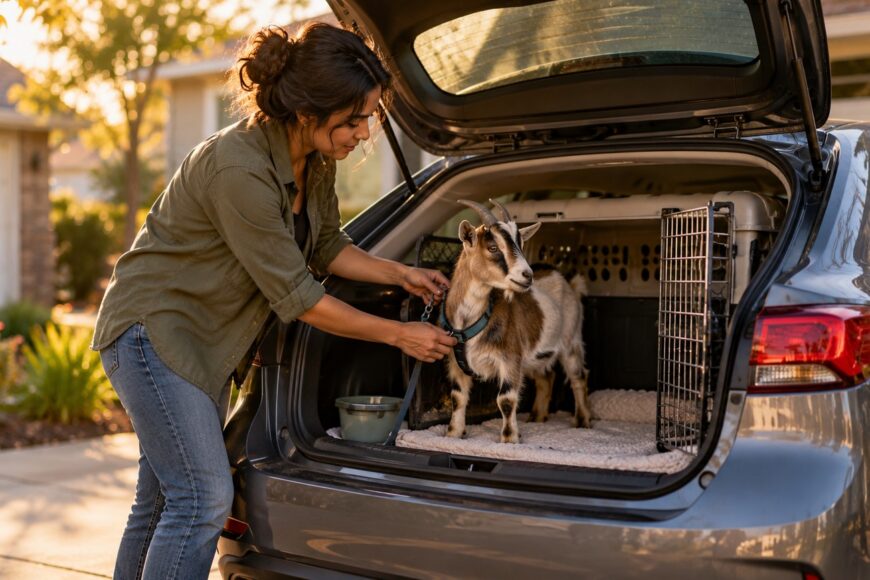
Putting a goat into a Toyota Corolla may look simple until ventilation, restraint, payload, and interior protection are considered together. A goat that fits through the door can still lack enough floor area, move dangerously during braking, or be exposed to heat, humidity, ammonia, carbon dioxide, or exhaust gases.
The decision should therefore be go or no-go, rather than a casual carrying tip. A Corolla may be usable for a carefully controlled, short journey in suitable conditions, but only if the specific vehicle, goat, carrier, route, and weather all support safe transport.
- Can a Toyota Corolla Safely Carry a Goat?
- Check Payload, Floor Area, and Airflow Before Loading
- Build a Contained, Non-Slip Transport Setup
- Load and Drive Without Creating a Second Emergency
- Common Corolla-Goat Mistakes and Misleading Claims
- When a Specialized Livestock Vehicle Is the Better Choice
- Frequently asked questions
- What should you do if the goat becomes distressed during the trip?
- How should you clean a Corolla after transporting a goat?
- How are Toyota cars transported to dealerships?
Can a Toyota Corolla Safely Carry a Goat?
There is no universal yes for every Corolla, goat, route, or weather condition. Start with the vehicle’s actual load information, then assess the goat’s mass, the carrier or flooring, the available floor area, airflow, and the animal’s temperament. Trunk volume describes space; it does not establish a livestock-safety rating.
For a goat weighing 35–55 kg, the approximate floor area is 0.3–0.4 m². Above 55 kg, the approximate floor area is 0.4–0.75 m². The usable area must remain available after the carrier is installed and must allow the goat to stand securely without being forced against doors, glass, or other parts of the cabin.
Goat mass plus carrier or flooring, occupants, and luggage must not exceed the total permitted load shown for that specific vehicle. A Corolla may meet the mass requirement while still failing the floor-area, airflow, containment, or welfare test.
A large, horned, pregnant, sick, or highly nervous goat makes a Corolla especially unsuitable. Geometric fit does not prove adequate ventilation, restraint, or crash safety, and the cabin is not designed as a livestock compartment.
Check Payload, Floor Area, and Airflow Before Loading
Read the load placard or other vehicle-specific information before preparing the car. Do not rely on a generic Corolla specification, because the allowable load varies with the particular vehicle and its existing occupants. Include the goat, carrier or flooring, passengers, and luggage in the same calculation.
Measure the proposed carrier footprint and compare it with the goat’s size and the approximate floor-area guidance. Check that the doors can close without pressing against the carrier and that the carrier does not block essential controls, seat belts, or access needed during an emergency.
Ventilation must operate during loading, driving, stops, and parking, and must remove heat, humidity, ammonia, and carbon dioxide. Openings must remain unobstructed by side panels, blankets, luggage, or the vehicle interior. The arrangement must also prevent exposure to exhaust gases.
Air conditioning does not replace fresh-air exchange when the carrier blocks airflow or the system only recirculates cabin air. A closed car can become unsuitable quickly, especially during a delay, loading process, or stop in warm conditions.
Build a Contained, Non-Slip Transport Setup
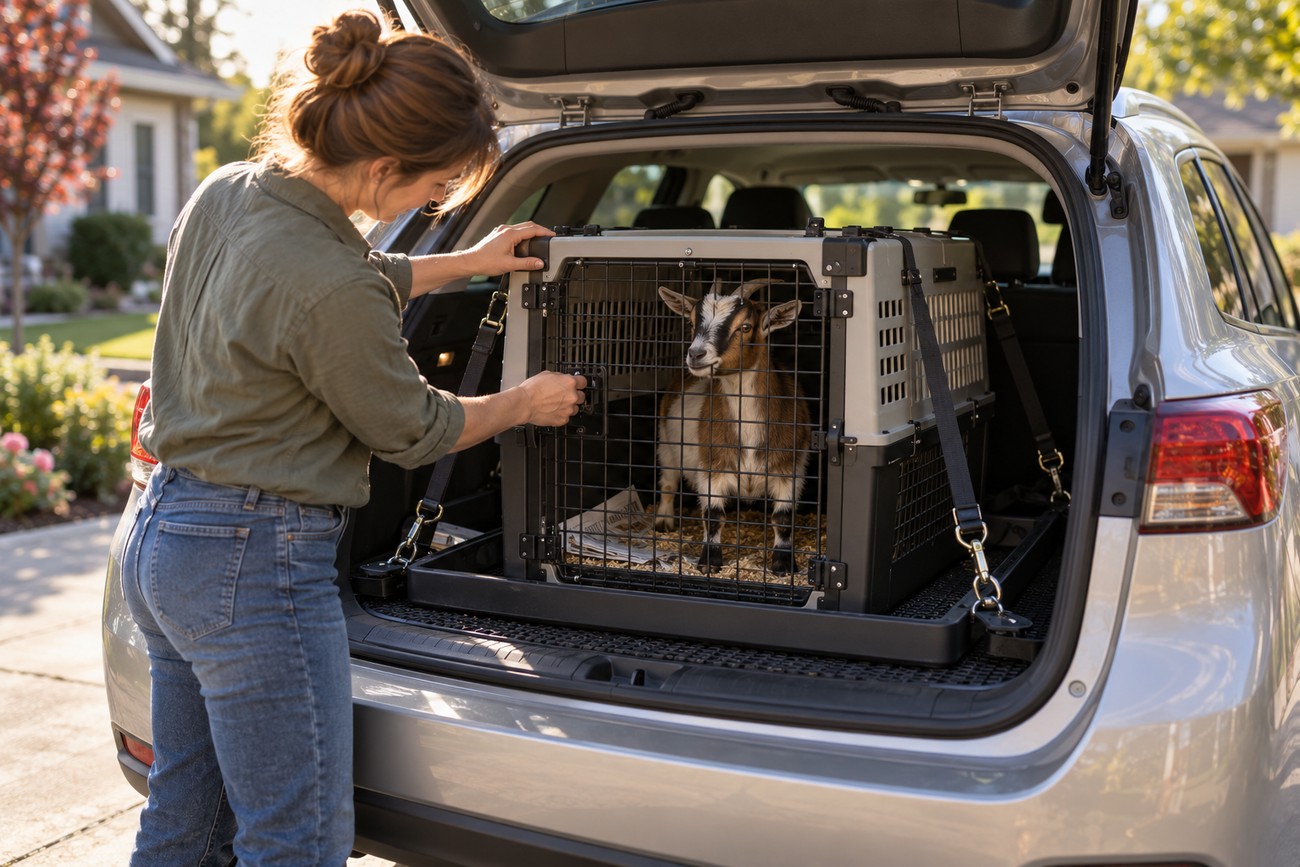
Use a rigid, well-ventilated carrier or containment system that fits securely in the Corolla. Its floor should be a rigid, waterproof tray with a non-slip surface. Newspapers or other absorbent material can sit above the waterproof protection, but they should not be the only barrier against urine and manure.
The goat must be prevented from jumping, falling, or being thrown around during braking and turns. A loose goat in the cabin or an unmodified trunk cannot provide that protection. Cardboard boxes, soft crates, and smooth plastic floors can collapse, shift, or allow the animal’s feet to slide.
Inspect every surface within reach. Cover or remove handles, hinges, bolts, sharp edges, glass, belts, locks, and electrical components that could cause impact, snagging, chewing, or moisture damage. The setup must protect both the goat and the Corolla while keeping the animal away from exhaust gases.
Ventilation panels can become useless during loading when bedding, blankets, or luggage cover them. Check the openings again after the carrier is positioned and at every stop.
A neck-only restraint should not be treated as a universal solution. A tether around the neck can create choking or injury risks, while a makeshift partition may fail under the forces of sudden braking. Containment should keep the goat stable without creating a pressure point or allowing entanglement.
Load and Drive Without Creating a Second Emergency
Loading a goat into a low passenger car can cause resistance, escape attempts, or impact against the opening. Keep the loading area controlled, remove obstacles, and use calm, deliberate handling. Avoid forcing the animal through a narrow opening where its horns or body can strike the door frame.
Once loaded, use smooth acceleration, braking, and cornering. Sudden vehicle movements can make a goat lose its footing or collide with the carrier. Travel in cooler conditions and avoid traffic congestion where possible, since delays increase the demand on ventilation and raise the chance of heat and moisture buildup.
Ventilation must continue during every stop, including loading, parking, and traffic delays. Never treat a closed car as safe simply because the journey has paused. A cracked window is not a universal substitute for continuous, effective ventilation.
Remove feed, water containers, and loose objects that could cause choking or entanglement. Plan water around the journey rather than leaving unsecured containers in the carrier. Protect the Corolla with a sealed lower layer and washable coverings, while keeping those coverings clear of the carrier’s air openings.
Common Corolla-Goat Mistakes and Misleading Claims
Fitting a goat into the trunk does not make transport safe. The animal still needs adequate floor area, a non-slip floor, effective ventilation, protection from sharp or snagging parts, and containment that prevents falls and uncontrolled movement.
A cracked window may provide some air movement, but it does not reliably remove heat, humidity, ammonia, and carbon dioxide in every condition. Air conditioning also has limits when air is trapped or the system merely recirculates cabin air.
“Any Corolla can carry a goat” is an unsupported generalization. The allowable load varies by vehicle configuration and existing occupants, while the goat’s mass, age, journey length, weather, and carrier design affect welfare and safety.
Specialized livestock-transport guidance addresses ventilation, floor area, non-slip flooring, protection, and restraint. Owner discussions may show that a particular trip was practically possible, but they do not establish universal dimensions, restraint safety, or legal compliance. Marketing claims usually omit the conditions that determine whether the arrangement was suitable.
When a Specialized Livestock Vehicle Is the Better Choice
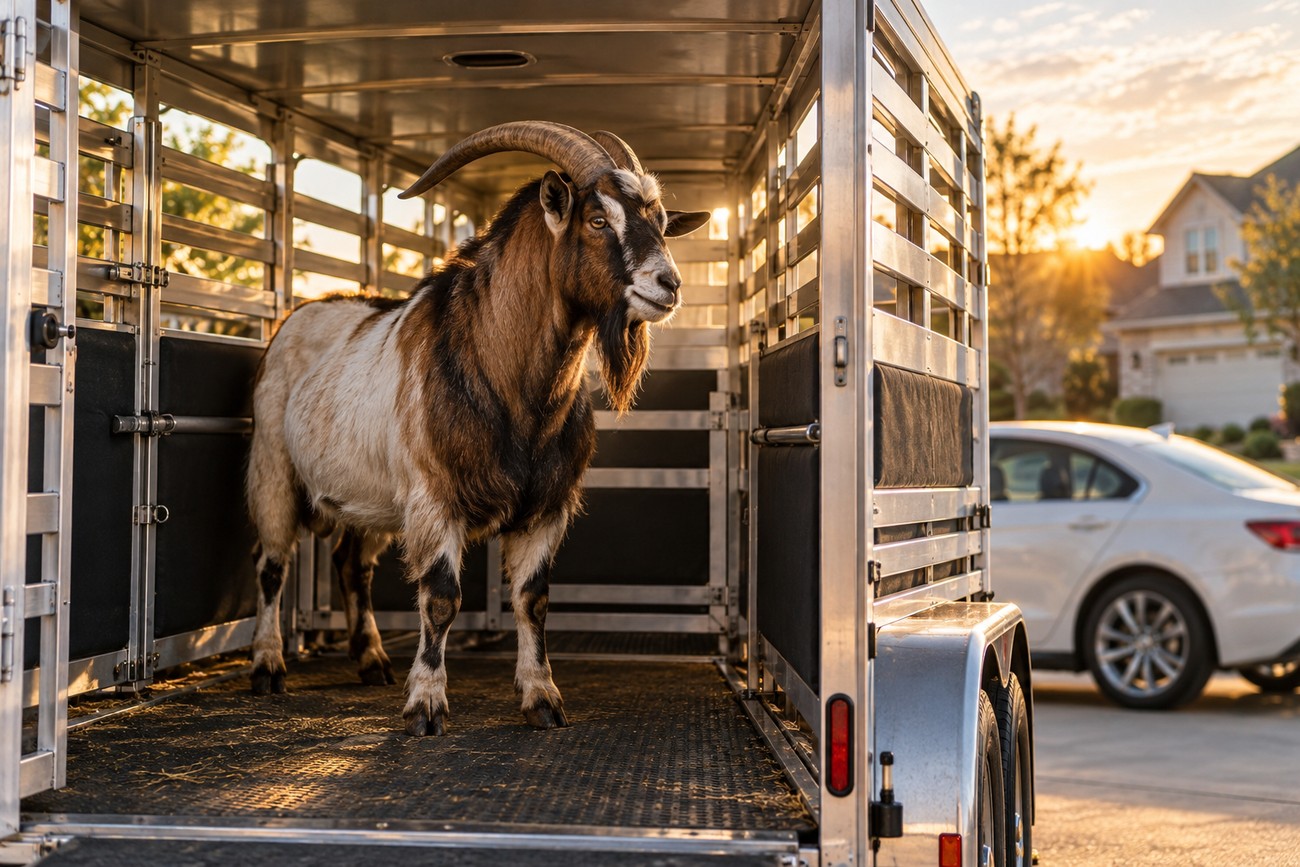
Choose specialized livestock transport when the goat is large, horned, pregnant, sick, highly nervous, or cannot be securely contained with adequate airflow. These conditions increase the likelihood of escape attempts, injury, instability, or heat stress inside a passenger car.
A Corolla’s cabin is not designed as a livestock compartment. Even when total mass is acceptable, the cabin may not provide the required floor area, airflow, dynamic restraint, or protection from vehicle damage.
Purpose-built transport better addresses animal movement, ventilation, washable surfaces, loading access, and separation from exhaust gases. It also reduces the need for improvised partitions and restraints that may fail during emergency braking.
A Corolla should be considered only as a limited short-trip option when every load, containment, ventilation, and welfare condition is met. If one of those conditions cannot be verified before loading, postpone the trip or arrange suitable livestock transport.
Frequently asked questions
Safe goat transport depends on the vehicle, carrier, animal, route, and conditions together. A suitable setup must provide adequate space, airflow, containment, and protection. If any of these cannot be verified, specialized livestock transport is the safer option.
What should you do if the goat becomes distressed during the trip?
Stop safely as soon as practical, keep the carrier contained, and preserve airflow. Observe the goat through the carrier without opening an unsafe door or releasing the animal beside traffic. Check for signs of collapse, overheating, breathing difficulty, entanglement, or injury.
If the goat does not settle promptly, or if its condition appears serious, contact a veterinarian or livestock-transport service. Do not continue simply because the destination is close; an agitated animal can worsen the restraint and ventilation problem.
How should you clean a Corolla after transporting a goat?
Remove the carrier and loose bedding promptly, then collect manure and hair before applying cleaning products. Clean urine and moisture from mats, seams, door edges, and seat surfaces, paying special attention to seat-belt webbing and buckles.
Use a suitable cleaner for the affected materials and keep liquid away from electrical areas, switches, locks, and seat mechanisms. Dry the cabin fully, inspect under mats and around trim, and address odor only after the contamination and moisture have been removed.
How are Toyota cars transported to dealerships?
Toyota cars are generally moved through factory logistics using methods such as vehicle carriers and rail transport. Those systems are designed for secured vehicles, loading equipment, route planning, and fleet handling.
That process has no direct safety comparison with carrying a live goat inside a passenger Corolla. A dealership transport system does not provide a model for animal containment, ventilation, floor area, or welfare during a journey.







