
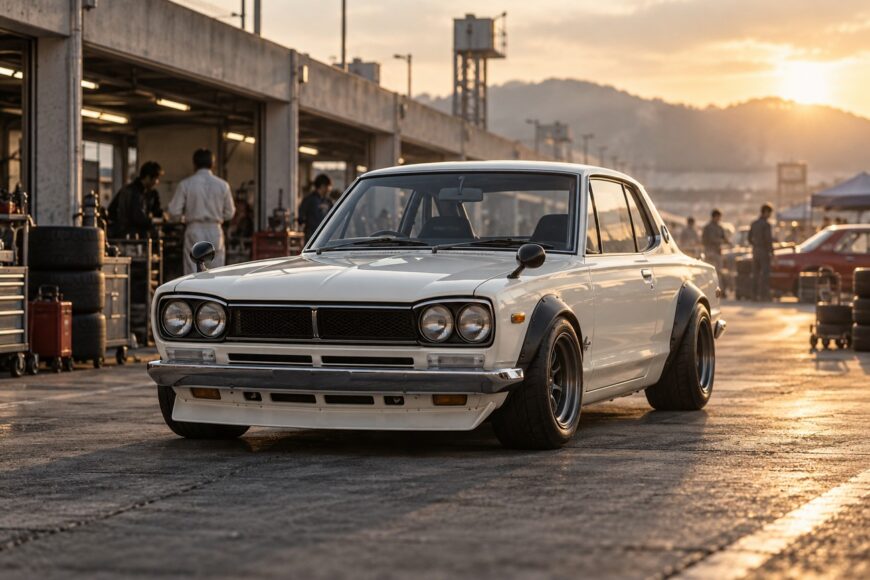
The Hakosuka Skyline looks almost austere: a squared-off body, thin pillars, modest trim, and little of the visual drama associated with later supercars. Yet this lightly equipped sedan and coupe built one of Japan’s most durable racing reputations, taking more than 50 wins in Japanese championships between 1969 and 1972.
That record makes the car a landmark performance machine, while its age, scarcity, and specialist maintenance make it a demanding collector vehicle. The useful way to understand a Hakosuka GT-R is to separate verified factory facts from racing shorthand, then examine authenticity, ownership costs, and the limits of using a half-century-old race-bred car on modern roads.
- Why the Boxy Skyline Became a Racing Legend
- S20 Engineering: More Race-Bred Than Road-Friendly
- What the Numbers Really Say on the Road
- Buying a Genuine Hakosuka GT-R, Not a Convincing Clone
- The Ownership Costs the Legend Leaves Out
- Modern Track Use, Tuning and the Myths That Persist
- Frequently asked questions
- How much is a Hakosuka GT-R worth?
- How many Hakosuka GT-Rs were made?
- What is the rarest Skyline GT-R?
- How is the 50th Anniversary GT-R different from a Hakosuka?
Why the Boxy Skyline Became a Racing Legend
The first production Skyline GT-R was the PGC10 four-door sedan, produced from 1969 to 1970. The KPGC10 two-door coupe followed from 1970 to 1972, giving the car the compact, purposeful shape now associated with the Japanese nickname Hakosuka. Both versions combined a relatively light body with a high-revving inline-six and rear-wheel drive.
More than 50 victories in Japanese championships established the GT-R as a serious competition tool rather than a showroom badge exercise. Its results in events linked to the JAF Grand Prix and Japanese touring-car racing turned Nissan’s family-car silhouette into a symbol of national motorsport ambition. The car’s success also helped define the Skyline GT-R name before later generations made it internationally famous.
The often-repeated figure of 52 consecutive wins needs more careful wording. It refers to a particular class or series context, rather than an undefeated run against every class, prototype, and competitor in every race. The GT-R did lose when judged across the full range of competition, but that qualification does little to diminish the scale of its period record.
Hakosuka was the first production Skyline GT-R, although earlier racing prototypes and pre-production designs existed around Nissan’s competition programs. That distinction matters to collectors because racing mythology often compresses several stages of development into one heroic story. The production car earned its reputation on circuits, yet the road version still required preparation, condition, and a capable driver to reproduce the performance associated with works racers.
S20 Engineering: More Race-Bred Than Road-Friendly
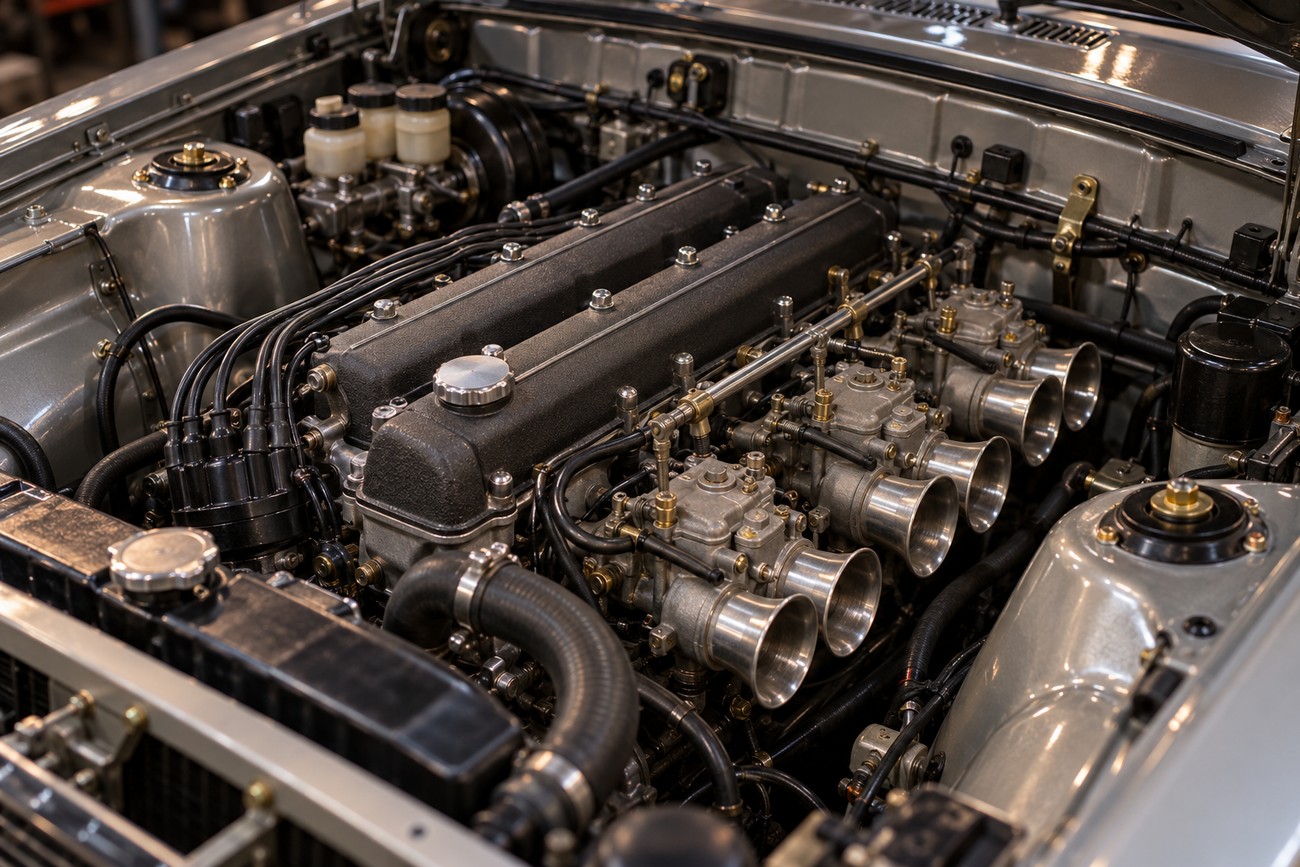
At the center of the car is Nissan’s S20, a 1,989 cc DOHC 24-valve inline-six. Commonly cited Japanese catalog specifications list approximately 160 hp at 7,000 rpm and approximately 180 N·m at 5,600 rpm. Those figures sound modest beside current turbocharged engines, but the S20 delivers them through revs, mechanical response, and a narrow operating character rather than abundant low-speed torque.
The standard drivetrain is a five-speed manual transmission with rear-wheel drive. Original Mikuni Solex-style triple carburetors feed the engine and give the throttle a direct, distinctly mechanical response. They also demand regular synchronization and adjustment as climate, altitude, fuel quality, and engine condition change.
Nissan brochures presented the S20 as based on the racing R380 engine, a useful piece of period marketing that connected the road car to Nissan’s prototype program. Engineering accounts describe the relationship more cautiously: the S20 was a related development, rather than a direct transplant of the R380 engine. That distinction is important when judging claims that every internal component is effectively a racing part.
The engine rewards proper warm-up and clean, deliberate use of its upper rev range. It is poorly suited to repeated cold starts, low-load short trips, or being forced to pull hard at low rpm. A modern technician who treats the triple-carburetor system and valve train like an ordinary older L-series engine can create drivability problems or accelerate wear before the owner realizes the setup is wrong.
What the Numbers Really Say on the Road
Factory specifications commonly place the KPGC10 coupe at approximately 1,100–1,120 kg. Owner reports and Japanese period-test accounts describe weight distribution as close to 50:50, which helps explain the car’s balanced responses. The suspension is independent front and rear, with McPherson struts at the front; period descriptions of the rear layout vary in terminology, so broad claims about a single definitive race suspension should be treated cautiously.
Japanese tests of factory-configuration cars commonly recorded approximately 15–16 seconds for 0–400 m and a top speed close to 200 km/h. Those are meaningful figures for the period, but they do not make the Hakosuka a modern straight-line supercar. The appeal lies in the way the car communicates load, revs, and traction through a relatively simple mechanical package.
Condition changes the experience more than a brochure comparison suggests. Worn carburetors, tired dampers, incorrect alignment, tired bushings, or an engine with poor compression can make a genuine GT-R feel slow and vague. A healthy car on modern tires can feel substantially more composed, although that improvement should not be confused with the much more aggressive chassis and suspension settings used by race-prepared cars.
Modern tires and discreet brake upgrades are sensible for spirited road or track use. Preserving the original suspension geometry usually gives the most convincing result because it retains the car’s balance and steering character. The goal is usable confidence, not a collection of modifications that makes the chassis faster in one narrow situation while erasing what makes the KPGC10 distinctive.
Buying a Genuine Hakosuka GT-R, Not a Convincing Clone
The largest buying risk is confusing a genuine GT-R with an ordinary Skyline converted with GT-R-style bodywork, badges, instruments, or mechanical parts. Visual details can be reproduced, and a high-quality restomod may be an excellent car in its own right. It should still be described and priced as a conversion unless its factory identity is independently established.
Authentication should compare chassis identity, engine number, factory specifications, documentation, and repair history. A seller’s photographs of fender badges or a familiar grille prove very little. Japanese GT-R clubs and registries may help verify chassis and engine numbers when overseas paperwork is incomplete, although a registry check should support a wider inspection rather than replace it.
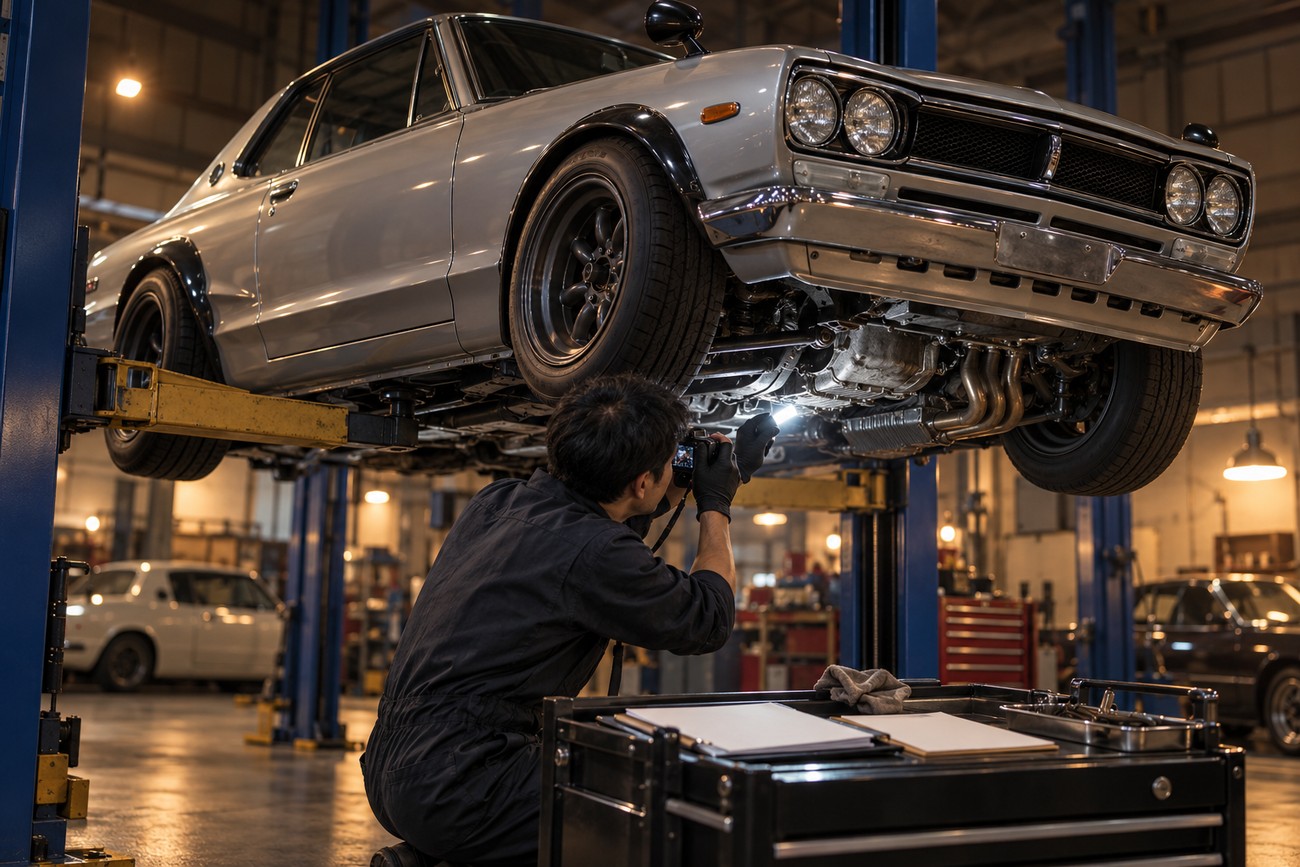
Rust deserves the same attention as provenance. Inspect the sills, chassis rails, floor structure, and suspension-tower areas, including repairs hidden beneath underseal or thick paint. Structural corrosion can turn an apparently complete car into a long restoration project, and a beautifully rebuilt engine does not compensate for a compromised shell.
A documented competition or tuner history can materially affect collector value, but the story needs independent support. Period photographs, invoices, race records, and consistent chassis details are more useful than a verbal claim that the car once belonged to a famous team. Originality, quality of restoration, and the correctness of small components often matter more than dramatic presentation.
Before purchase, commission an inspection by someone familiar with the S20 and early Skylines. Check cold-start behavior, oil pressure, compression, carburetor synchronization, gearbox operation, steering play, braking stability, and evidence of structural repairs. The inspection cost is small compared with the expense of correcting a false identity or rebuilding an incomplete car.
The Ownership Costs the Legend Leaves Out
Good S20 parts are difficult to source. Original cylinder heads, camshafts, and carburetors can be scarce and expensive, especially when a buyer needs an undamaged, correct component rather than a rebuildable core. Rebuilding the engine, setting valve clearances, selecting camshafts, and tuning triple carburetors require specialist knowledge and appropriate measuring equipment.
Maintenance choices therefore affect both reliability and originality. The engine needs suitable oil, correct spark plugs, careful valve adjustment, and a proper warm-up routine. Lugging it at low speed and repeating short cold journeys can accelerate wear and deposits, while an improvised carburetor adjustment may mask ignition or compression problems.
Daily use exposes the car’s age quickly. Owners commonly report substantial engine noise at high rpm, a firm ride, and fatigue on long trips. Weather protection, cabin refinement, braking reserves, and traffic behavior are far removed from those of a modern performance car, even when the Hakosuka is mechanically healthy.
Registration and certification can also be difficult outside Japan because emissions and safety requirements differ by market. Classic-car insurance may require a specialized policy, agreed-value documentation, mileage restrictions, or secure storage, and some insurers may decline the risk. These running costs complicate the popular idea that every genuine GT-R is automatically a straightforward investment.
Originality, usability, and investment appeal often pull in different directions. A preserved car may be valuable but too delicate for frequent use; a carefully upgraded example may be safer and more enjoyable while losing some collector appeal. Decide which role matters before modifying the car, because reversing a thoughtful period-correct restoration is rarely cheap.
Modern Track Use, Tuning and the Myths That Persist
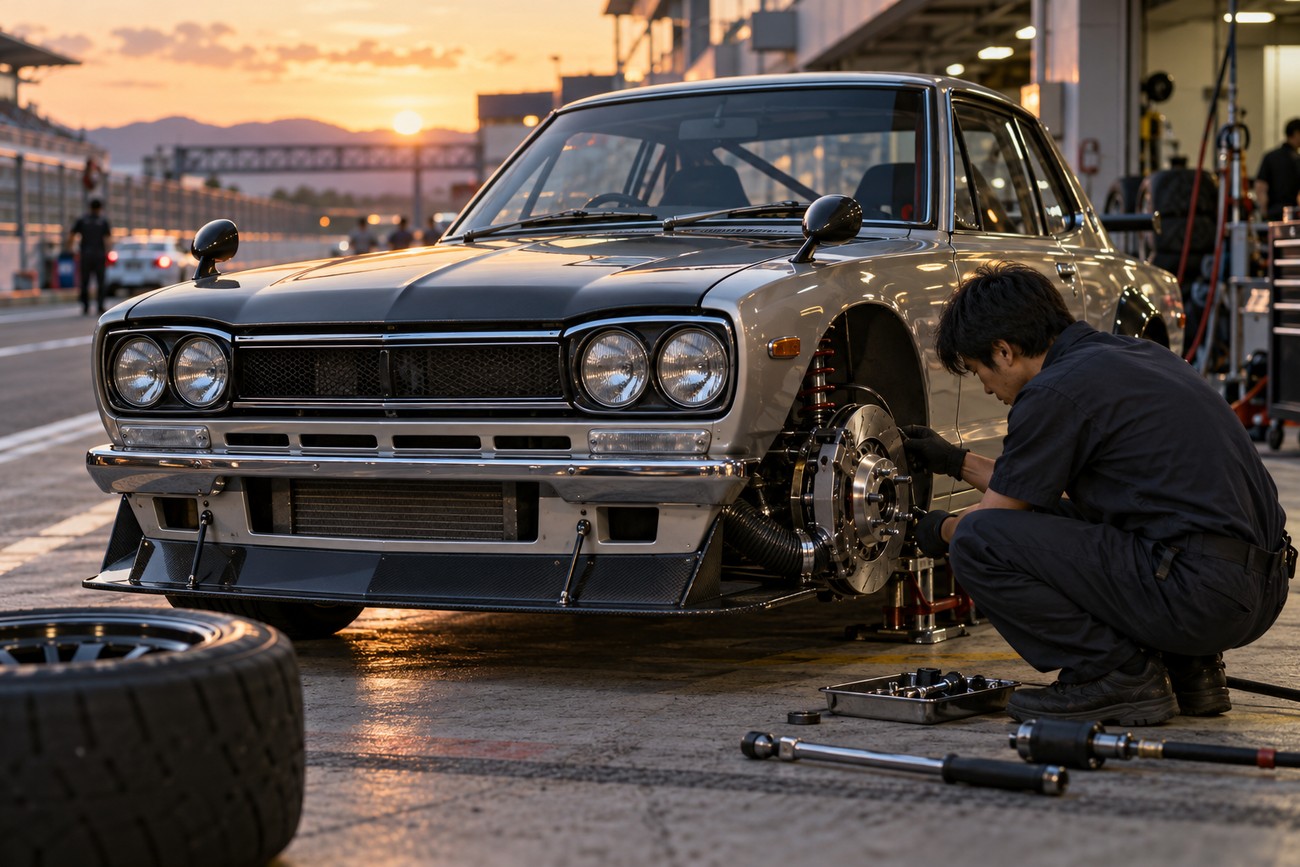
Standard brakes can be inadequate for repeated modern high-speed use, particularly with contemporary grip and faster track sessions. Discreet brake and cooling upgrades are practical safety measures, provided they are engineered as a system and documented for future owners. Old fluid, aged hoses, and unknown pad compounds deserve attention before chasing more engine power.
Race-prepared suspension and chassis settings differed substantially from ordinary road-car specification. The dramatic behavior seen in historic competition footage cannot be used as a direct description of every road-going KPGC10. Some restorers also report fatigue cracks or weakness in structural areas after intensive track use, making inspection of the shell essential before regular circuit driving.
Many owners choose modern tires and brakes while preserving the original suspension geometry and the car’s mechanical character. Forced-induction conversions, aggressive engine machining, and modern turbo components can produce more performance, but they also alter the S20’s response and may reduce originality and value. A carefully maintained naturally aspirated car usually offers the clearest connection to the factory concept.
The Hakosuka was neither literally undefeated nor uselessly slow by modern standards. Its more-than-50-win record belongs to its class and championship context, while a healthy, correctly set-up car can remain quick and predictable on track. It demands an experienced driver because its performance depends on momentum, braking judgment, and mechanical sympathy more than electronic assistance.
Frequently asked questions
The name is often used loosely, especially in listings that mix early Skyline versions, later GT-R generations, and commemorative models. These answers separate production figures, market value, and identity so that a famous badge does not do the work of proper research.
How much is a Hakosuka GT-R worth?
There is no responsible single price without auction context and a detailed inspection. Verified factory identity, original parts, restoration quality, documented provenance, and running condition can move two visually similar cars into very different valuation categories.
A genuine, well-documented car with a strong shell and correct S20 usually commands a different market from a conversion, incomplete restoration, or heavily modified example. Auction location, export costs, taxes, certification, insurance, and the quality of the inspection also affect the amount a buyer can realistically spend.
How many Hakosuka GT-Rs were made?
Commonly cited estimates put production at approximately 832 KPGC10 coupes and approximately 832 PGC10 sedans. Published totals vary by archive and club source, so these figures should be treated as an approximate order of production rather than an immutable factory count.
Coupe and sedan numbers should be kept separate. Combining both body styles into one online figure can make the car appear more common than it is, while ignoring surviving cars, replicas, and undocumented conversions can make rarity claims equally misleading.
What is the rarest Skyline GT-R?
Rarity is not determined only by body style or production count. A surviving original example with verified chassis identity, correct components, documented competition history, and credible factory provenance may be more significant to collectors than a car that is technically scarcer but heavily altered or poorly documented.
The answer also changes depending on whether the comparison concerns production road cars, special competition versions, or historically important survivors. A careful buyer should evaluate the specific car’s identity and history rather than rely on a universal ranking.
How is the 50th Anniversary GT-R different from a Hakosuka?
The 50th Anniversary GT-R is a later commemorative model, not the first-generation Skyline GT-R. The Hakosuka refers to the PGC10 sedan and KPGC10 coupe era, with its S20 inline-six, five-speed manual transmission, and early-1970s competition heritage.
They belong to different engineering eras and serve different collector purposes. Similar naming reflects Skyline GT-R continuity, while the chassis, powertrain, safety equipment, driving environment, and market expectations are fundamentally different.







