
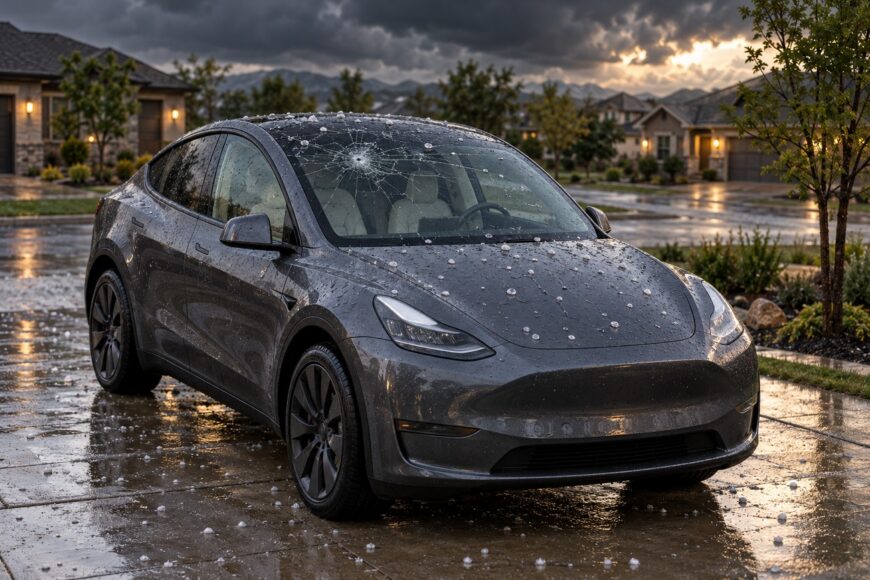
A Tesla Model Y glass roof can look intact after a hailstorm while still having a developing crack, damaged laminate, a compromised seal, or impact damage that is difficult to see from the ground. A small chip may affect only the visible surface, while the second glass layer or polymer interlayer may also need assessment.
The roof is laminated, so its polymer interlayer helps hold fragments together if the glass fails. That safety feature does not make the panel unbreakable or hail-proof. The immediate priorities are a safe inspection, clear photographs, accurate policy wording, and a repair decision based on the full damage rather than the first visible mark.
- How Hail Damages a Tesla Model Y Glass Roof
- What to Inspect After a Hailstorm
- Cracked Roof or Intact Panel: What to Do Next
- Insurance Coverage for Model Y Hail Damage
- Model Y Glass Roof Replacement Cost and Repair Scope
- Common Myths and Hidden Risks
- Frequently asked questions
- How much does it cost to replace the glass roof on a Tesla Model Y?
- What should I do if my insurer says glass coverage excludes the Model Y roof?
How Hail Damages a Tesla Model Y Glass Roof
The Model Y glass roof is a multiplayer laminated component. A polymer interlayer sits between glass layers and helps retain fragments after breakage. This can reduce the danger of loose shards entering the cabin while leaving the roof exposed to chips, cracks, loss of watertightness, or complete glass failure under a sufficiently energetic impact.
Glass also responds differently from a steel roof panel. Hail may dent steel progressively, whereas a hard strike on glass concentrates stress around a point and can produce a chip or crack. The result depends on the hail’s energy, angle, location, and the condition of the panel. A roof that withstands ordinary impacts can still be damaged by larger or well-directed hail.
Some owners describe the glass roof as more resistant to ordinary hail than metal. That is an owner perception, not an official performance guarantee. No confirmed official Tesla hail-size rating or hail-proof guarantee is available in the supplied information, so the absence of visible damage after a storm should not be treated as proof of a safe impact threshold.
A crack can begin at an edge or corner and travel toward a pillar. Residual stress and vehicle vibration may contribute to that growth, especially while the vehicle is waiting for an inspection. A crack near the edge deserves prompt attention even if the rest of the roof appears clear.
What to Inspect After a Hailstorm
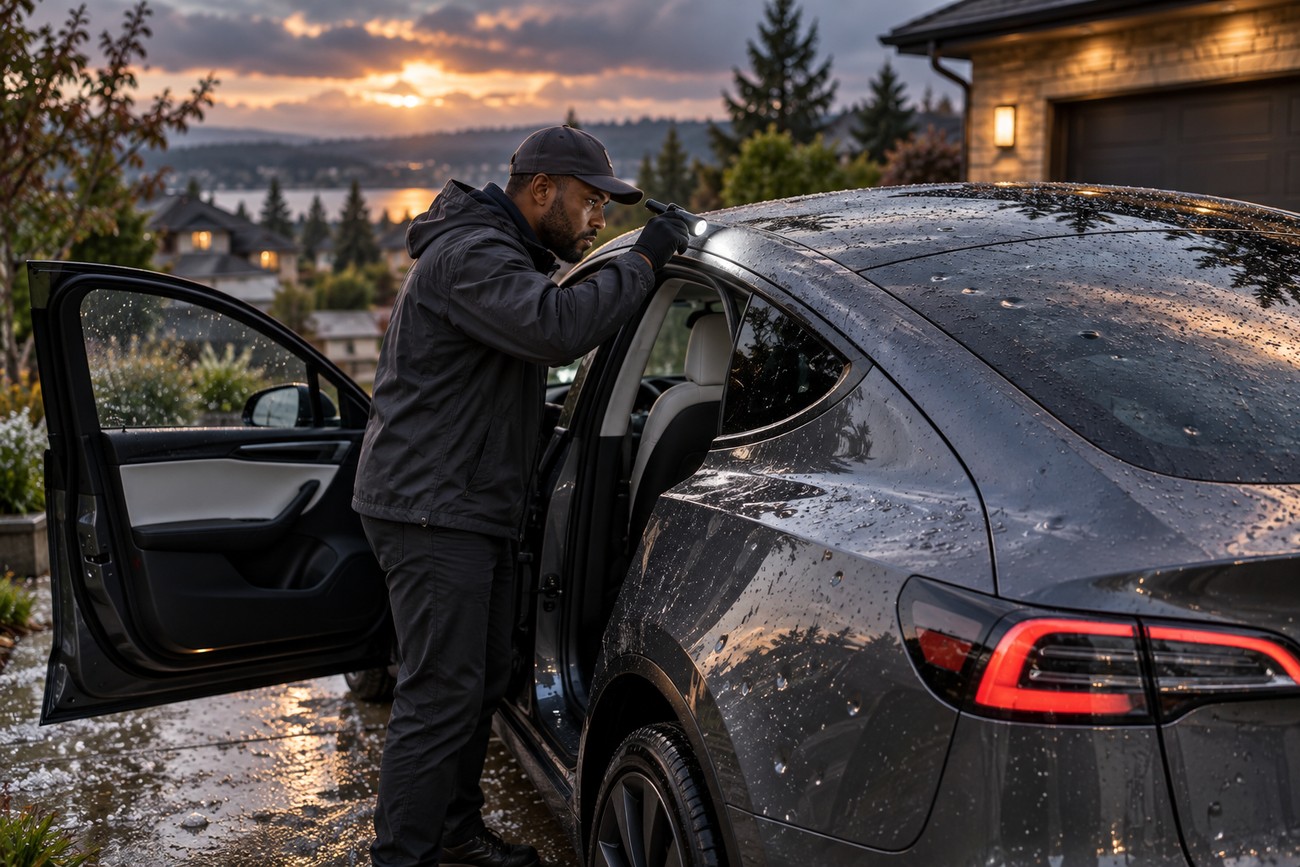
Inspect the entire vehicle before washing it or arranging cosmetic repairs. Start with the glass roof, then check the rear glass and windshield for chips, star breaks, or cracks. Examine the pillars, roof edges, seals, aluminum panels, and paint for impact marks that may indicate the storm affected more than one component.
Look inside the vehicle for damp trim, water marks, unusual moisture, or a new draft after the storm. Seal damage can create a leak risk even when the roof has no large opening. Avoid pressing on a damaged area or testing it with a hose, since additional pressure or water may worsen a hidden seal problem.
Take wide photographs that show the vehicle’s position, followed by close images of each mark. Record the roof, rear glass, windshield, panels, paint, and any interior water evidence. A short video can document the overall condition and the location of cracks, while the storm timing and inspection date help connect the damage to the event.
A small visible chip does not prove that the second glass layer or polymer interlayer is undamaged. A professional inspection may identify damage that cannot be confirmed from a photograph. Keep the vehicle as dry as practical, and use tape or a temporary covering over a crack only to limit water entry and loose fragments; it is not a repair.
Cracked Roof or Intact Panel: What to Do Next
Separate temporary protection from the final repair decision. If the roof is cracked, cover the affected area carefully and arrange an assessment with Tesla or a qualified glass service. Keep adhesive away from sensors, trim, and surfaces that may need inspection, and avoid cleaning methods that can pull loose fragments from the laminate.
An edge crack should not be ignored while the vehicle is waiting for service. Residual stress and vibration can help it spread toward a pillar or across the panel. Continued driving also exposes the damaged area to weather, temperature changes, and road movement, so the service provider should advise whether the vehicle can be driven and under what conditions.
Driving should stop when visibility is affected, fragments are loose, the crack is expanding, water is entering the cabin, or the roof appears unstable. The same caution applies when the damage is close to an edge, pillar, or seal. A temporary covering can reduce immediate exposure, yet it cannot restore the roof’s original strength or watertightness.
Repair may be possible for a limited chip in some glass components, depending on its location and extent. Damage limited to the outer layer may still require replacement of the complete glass roof component. The correct scope depends on the inspected damage and the service provider’s assessment, so a small surface mark does not automatically establish either repair or full replacement.
Insurance Coverage for Model Y Hail Damage
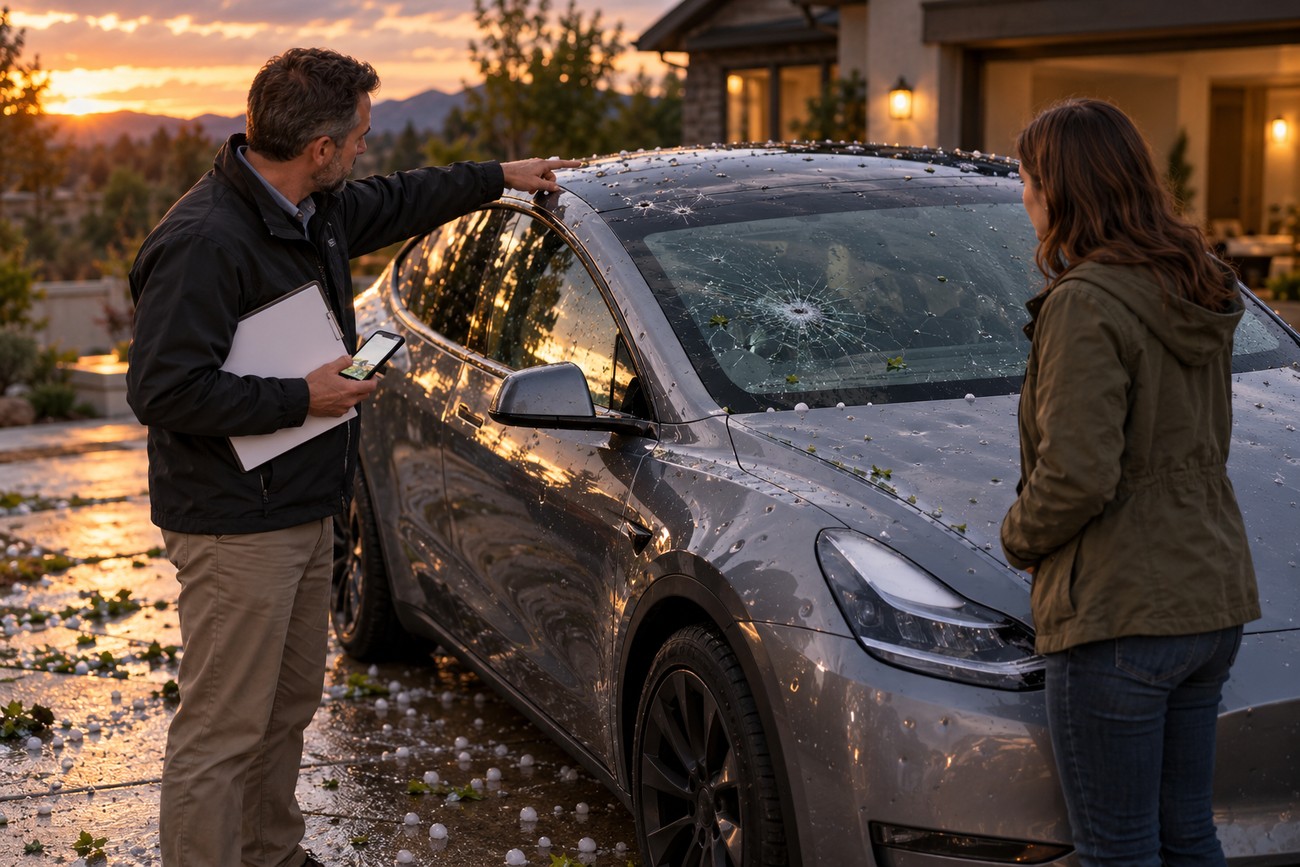
Coverage depends on the specific policy and its definitions. A policy labeled “glass coverage” may define covered glass narrowly, including the windshield, side glass, and rear glass while excluding the panoramic roof. The word “glass” alone does not establish that the Model Y roof qualifies for the same deductible or claim process.
Hail can also create separate damage categories. The claim may involve the roof, rear glass, windshield, aluminum panels, paint, and seals, with different estimating rules or deductibles applying to each category. A lower or zero glass deductible does not automatically prove that the panoramic roof is covered under that deductible.
Before authorizing work, ask the insurer to identify the relevant policy section and confirm whether the panoramic roof is covered under glass, comprehensive hail damage, or another provision. Ask how the insurer classifies damage to the seals, paint, and aluminum panels. Request the answer in writing when the wording is unclear or an adjuster says the roof is excluded.
Preserve storm timing, photographs, inspection notes, repair estimates, and correspondence. These records support the claim, although they do not guarantee approval. If the insurer’s estimate omits a visibly damaged area, ask for an itemized explanation and compare it with the service provider’s inspection rather than relying on a single total.
Model Y Glass Roof Replacement Cost and Repair Scope
Online estimates commonly cite approximately $1,500–$3,500 for Model Y glass roof replacement. That range is a rough market reference, not a confirmed Tesla price or a promise of the final bill. A repair estimate becomes useful only when it identifies the exact component, labor, related parts, and damage included.
One third-party estimate places the roof part at approximately $2,200–$3,000. This is not a confirmed official Tesla price. It may describe the component alone, leaving labor, seals, trim, shipping, taxes, and other work outside the figure.
The final cost can depend on regional labor rates, parts availability, the required trim and seals, and the insurer’s approved scope. A roof-only estimate may exclude the rear glass, windshield, aluminum panels, paint, or water-related work. Hail damage discovered during disassembly can also change the scope after the initial inspection.
Ask for an itemized estimate that separates the roof component from labor and associated materials. Check whether the estimate assumes repair or replacement, lists seal replacement, and states how related hail damage will be handled. Compare estimates by scope, calibration or inspection requirements, and warranty terms rather than comparing headline totals alone.
Insurance approval and a service estimate answer different questions. The service provider describes the work believed necessary; the insurer determines the amount it will recognize under the policy. Confirm any difference before authorizing customer-paid work, especially if the approved scope covers only ordinary glass or excludes the panoramic roof.
Common Myths and Hidden Risks
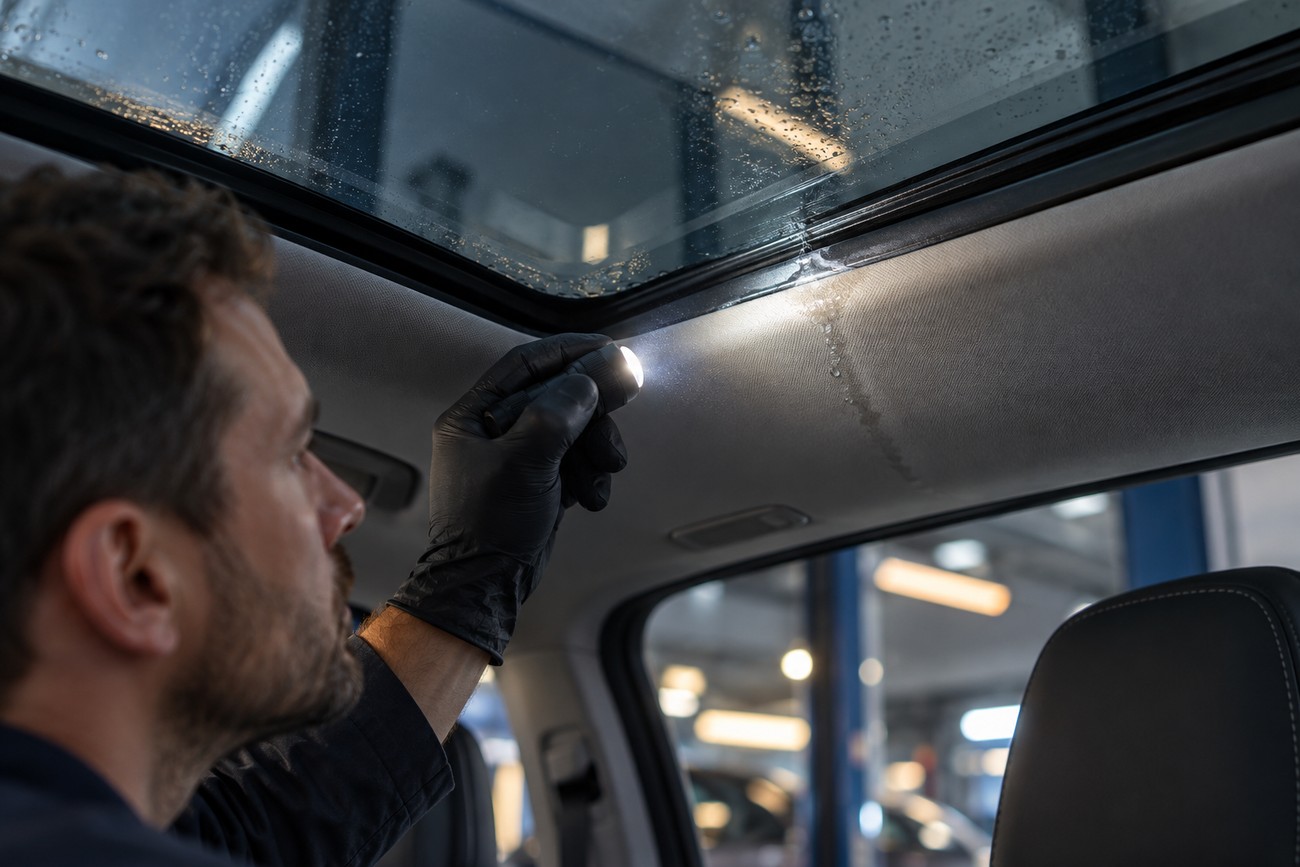
Laminated glass can break. Its polymer interlayer helps retain fragments and may reduce scattering, while the glass itself can still chip, crack, or fail under a sufficiently energetic hail impact. A roof that remains in one piece may still have a damaged layer or weakened seal.
The belief that glass is always more hail-resistant than metal also needs qualification. Some owners perceive the Model Y roof as more resistant to ordinary hail than metal, yet larger or well-directed impacts can damage it. There is no confirmed official Tesla hail-size rating that supports a hail-proof assumption.
A minor-looking surface mark can coexist with hidden damage in another layer or the interlayer. Seal damage may also allow water intrusion without complete glass failure. Those possibilities explain why a visual check and claim photographs are useful evidence, while neither replaces a professional assessment.
Insurance wording creates another hidden risk. A reduced or zero glass deductible may apply to the windshield, side glass, and rear glass while excluding the panoramic roof. A requirement for ADAS calibration specifically after roof replacement is not confirmed by the available official documentation, so any calibration request should be tied to the actual repair procedure, vehicle systems affected, and written service or insurer guidance.
Frequently asked questions
How much does it cost to replace the glass roof on a Tesla Model Y?
Online replacement estimates commonly cite approximately $1,500–$3,500, while one third-party estimate places the roof part at approximately $2,200–$3,000. The parts estimate is not a confirmed official Tesla price, and neither figure should be treated as a final bill.
Read the estimate by separating the roof component from labor, seals, trim, regional rates, parts availability, related glass or body damage, and the insurer’s approved scope. Confirm whether the price includes inspection, removal and installation, water-sealing work, and any damage found around the roof. An estimate that lists only the panel may be materially lower than the completed repair.
What should I do if my insurer says glass coverage excludes the Model Y roof?
Ask the insurer to provide the exclusion in writing and identify whether comprehensive or another hail-damage provision may apply. Request an itemized inspection that separately records the roof, rear glass, windshield, seals, aluminum panels, and paint. Then compare those damage categories with the policy’s definitions and deductibles.
Keep photographs, storm timing, inspection notes, estimates, and all claim correspondence. If the explanation remains unclear, request a review by a supervisor or the insurer’s formal complaint channel, according to the policy and local rules. Do not assume that an approved repair to ordinary glass resolves the separate question of panoramic-roof coverage.







