
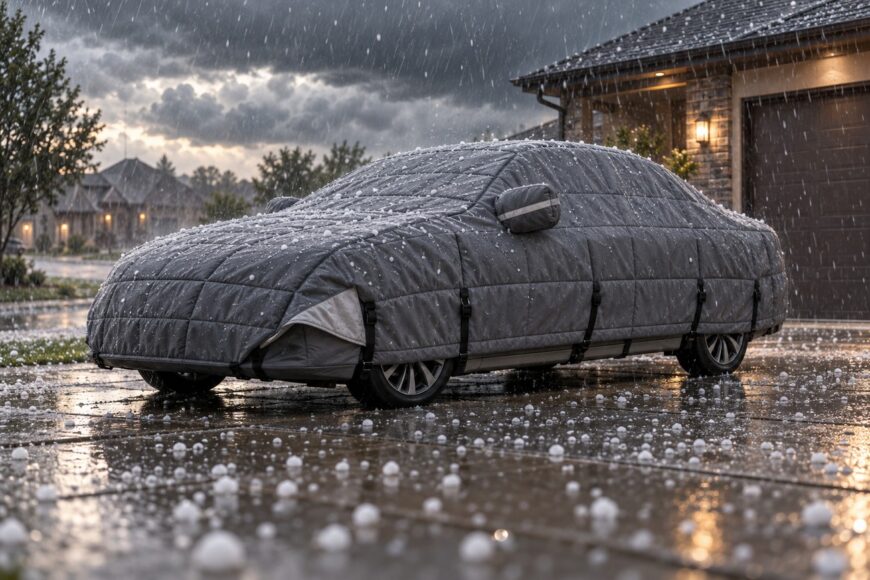
For a Toyota Camry owner, a hail blanket is a risk-reduction tool with real limitations. It may absorb part of the impact from falling hail, yet a poor fit, wind movement, trapped moisture, or dirt under the material can create a different kind of damage. The useful question is whether a particular blanket fits and stays stable on your Camry, rather than whether it carries the largest thickness claim.
Hail blankets commonly use layered foam, air chambers, or cushioning panels. Their advertised thickness does not establish how well they absorb energy from hail of a particular size and speed. Protection also changes with impact angle, wind, and storm duration, so no blanket should be treated as a guarantee against dents, cracked glass, paint damage, or damage to exposed parts.
The buying decision therefore starts with measured dimensions and coverage. You also need a practical installation routine, secure fastening, enough space to deploy the blanket, and a way to dry and store it after use. The sections below focus on those points without naming an unsupported universal winner.
- What a Hail Blanket Can—and Cannot—Protect on a Camry
- Choose the Right Size and Coverage for Your Toyota Camry
- Materials, Layers, and Hail-Protection Claims
- How to Install and Secure a Hail Blanket Without Creating Damage
- The Common Failures Owners Notice After a Storm
- A Practical Buying and Use Decision for Camry Owners
- Frequently asked questions
- What is the best car cover to protect a Camry from hail?
- How should I handle the blanket immediately after a hail storm?
- What is the best car cover to protect against hail?
- What is the best hail protection cover for an SUV?
- How do I cover my car for a hail storm?
What a Hail Blanket Can—and Cannot—Protect on a Camry
A hail blanket is designed for a parked vehicle. It should be removed before driving because it can obstruct vision, shift in the wind, detach, or contact the body and wheels. The cover is meant to sit over the vehicle during a storm while the Camry remains stationary in a suitable parking position.
Its performance depends on the energy reaching the car. Hail size, speed, impact angle, wind, and storm duration all affect the result. A blanket that reduces the force of smaller impacts may provide less protection during severe weather, especially when wind drives hail sideways or causes the material to lift from the panels.
Coverage matters as much as cushioning. The roof, hood, trunk, pillars, glass, and upper door sections should be covered, with minimal exposed edges. Mirrors, antennas, handles, panel edges, lower door areas, and uncovered glass may remain vulnerable because they project beyond the main protective layer.
No universal mandatory standard confirming hail protection for every blanket was identified. Some sellers claim protection from large hail or even 100% damage prevention, but those claims are not universally verified. A sensible purchase treats such language as marketing until the seller provides a reproducible test description and clear limits.
Choose the Right Size and Coverage for Your Toyota Camry
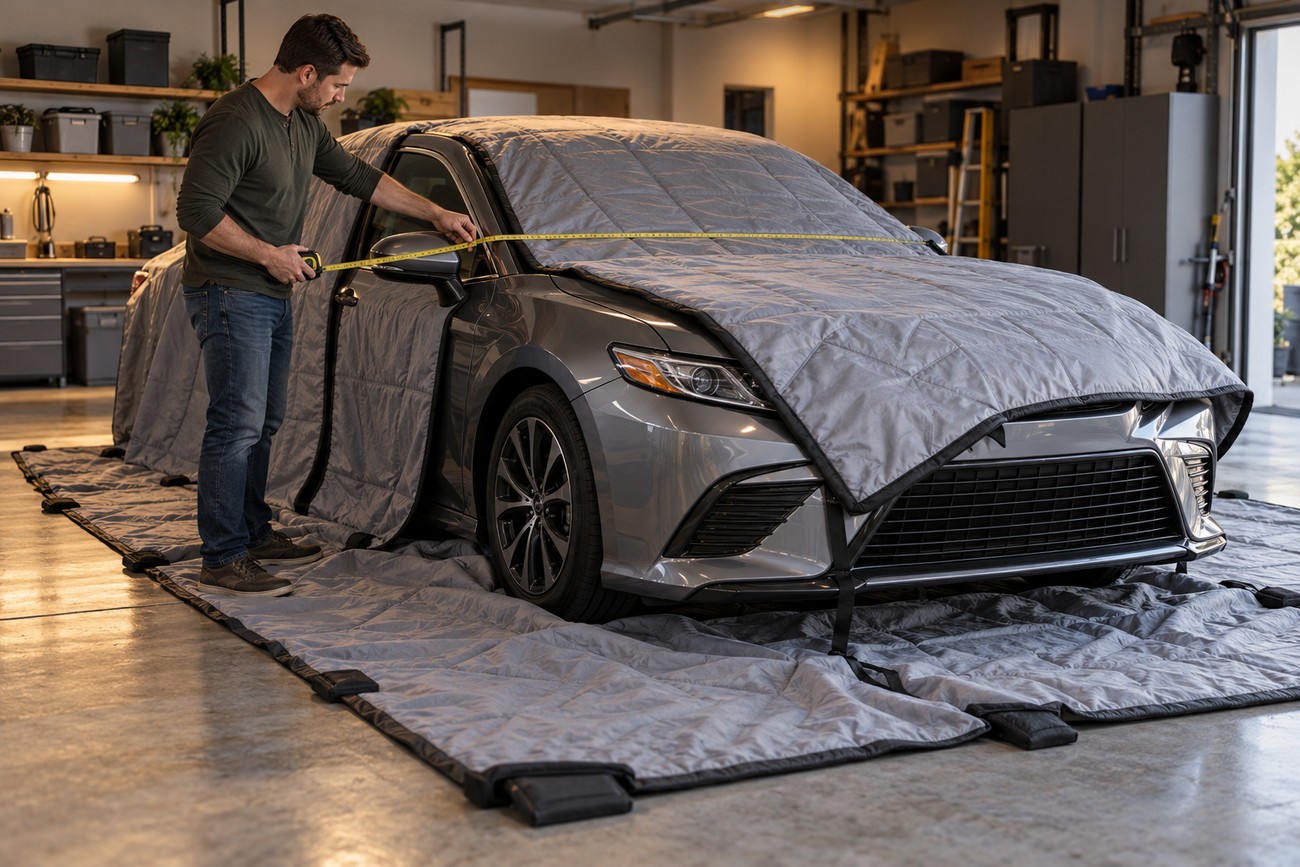
The word “Camry” does not define one uniform body size. A modern Toyota Camry is approximately 4,920 mm long and 1,840 mm wide, while some earlier Camry versions are approximately 4,520 mm long and 1,690 mm wide. Body contours, mirror placement, window shape, and panel proportions also vary between generations.
For that reason, a universal XL label does not guarantee a correct fit. Check the product’s actual length and width, then compare them with your Camry’s body dimensions and the manufacturer’s coverage diagram. A blanket that is too short may expose the hood corners or trunk edge; one that is too loose may balloon and rub against the paint.
Map the blanket over the car before buying where possible. It should reach across the roof, hood, trunk, pillars, glass, and upper door areas without leaving large gaps. Pay particular attention to the mirrors and front and rear corners, since a generic sedan pattern may leave those areas uncovered even when the main panels appear protected.
Excess material creates its own handling problem. It can drag on the ground, catch wind, or leave straps too short to tension properly. The right fit is the one that covers the important surfaces while remaining manageable in the parking space, garage, and storage area available to you.
Materials, Layers, and Hail-Protection Claims
Most hail blankets use one of several cushioning approaches: multiplayer foam, air chambers, or separate impact-absorbing panels. The construction may combine a weather-resistant outer fabric with a softer interior layer. These designs aim to spread or absorb impact energy before it reaches the body panel.
Greater thickness or a higher layer count does not automatically mean better protection. Material density, how the layers move under impact, seam placement, compression behavior, and rigid points can matter more than the advertised measurement. A thick blanket with weak seams or hard buckle areas may perform poorly once wind pulls it out of position.
Ask the seller how the product was tested. Useful details include the hail or projectile size, impact speed, impact angle, number of impacts, weather conditions, test panel, and definition of damage. A vague reference to “large hail protection” gives you little basis for comparing one product with another.
Independent, like-for-like comparisons of specific brands under identical hail conditions were not identified in the supplied research. That makes careful reading more important. Look for complete construction information, clear dimensions, replacement or warranty terms, and photographs showing how the straps and edge coverage work on a sedan.
How to Install and Secure a Hail Blanket Without Creating Damage
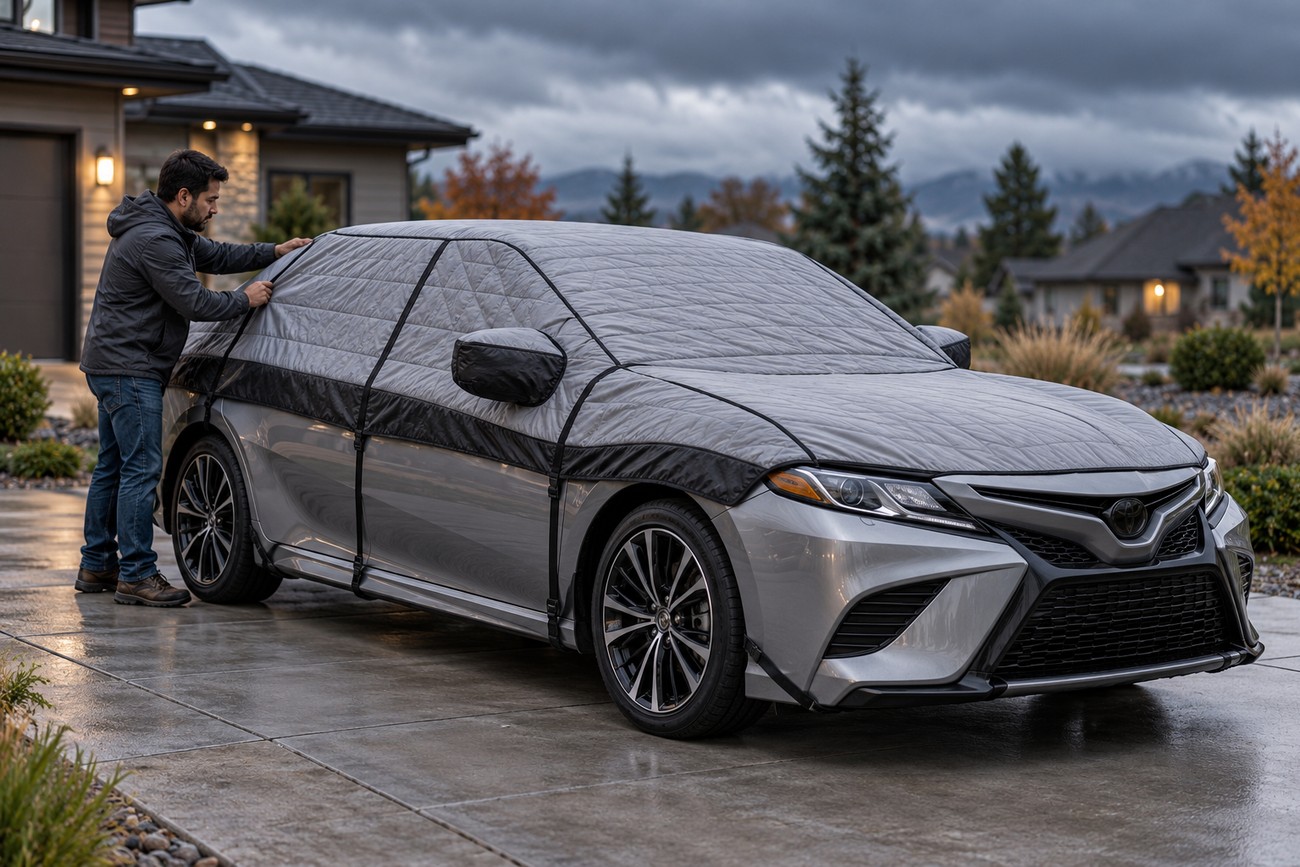
Prepare a clean, dry, cool Camry before deployment. Dust, grit, or dried mud beneath the blanket can act as an abrasive layer when the fabric moves. Moisture trapped against the paint can also remain there throughout the storm, increasing the risk of marks, odor, and later storage problems.
Unfold the blanket beside the car and identify the front, rear, straps, and elastic sections before placing it. Center it over the roof, then pull it evenly toward the hood and trunk. Confirm that the glass, pillars, upper doors, and major panel edges are covered before tensioning anything.
Use all suitable straps or elastic elements and remove slack without forcing the material against sharp body edges. Keep straps away from sharp edges, exhaust components, and hot parts. The vehicle and its underside components should be cool before you route anything beneath it.
Strap paths deserve the same inspection as the blanket’s top surface. A secure cover can still mark paint when a buckle rests on a hard contact point or a strap crosses a heated component.
Wind can turn a loose blanket into an abrasive surface. It may also make the cover balloon, causing buckles to strike the body and placing stress on seams and attachment points. Practice the complete setup in dry weather, including removal and folding, so a real storm does not become the first time you discover that a strap is too short or awkward to reach.
The Common Failures Owners Notice After a Storm
Heavy multiplayer blankets can be difficult to deploy and remove alone. Weight becomes more difficult to manage when the material is wet, folded tightly, or spread between neighboring vehicles. A design that offers substantial cushioning may still be impractical if you cannot position it evenly before the storm arrives.
Wind movement is another recurring weakness. Short straps, awkward buckle positions, and too much loose fabric can leave the blanket shifting or ballooning. Universal designs may also expose mirrors, lower door edges, hood corners, or other areas that a product photograph does not make obvious.
Small hardware deserves inspection after each serious storm. Zippers, plastic buckles, elastic sections, and seams can suffer from repeated tension or impact. If a fastener breaks, the cover may move across the paint during the rest of the storm, turning a protection device into a source of rubbing.
Storage creates a separate set of problems. A wet blanket folded into its bag can develop odor, mold, and filler degradation. Dry it completely before folding, and check whether the storage bag fits the dry product without forcing it. A large blanket may also be unsuitable for a tight garage, narrow parking space, or Camry trunk with limited spare room.
A Practical Buying and Use Decision for Camry Owners
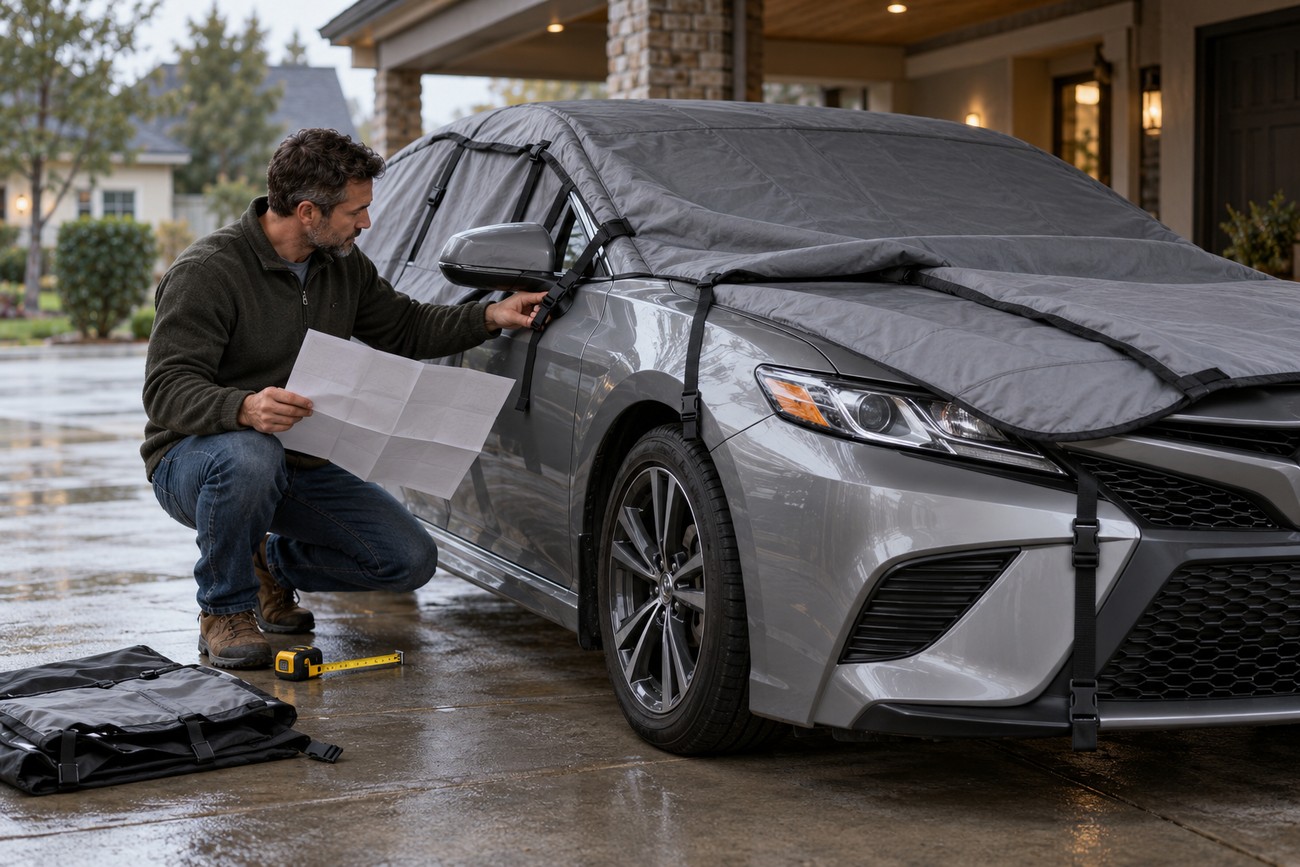
Start with measured product dimensions and a coverage map rather than S, M, L, or XL labels. Confirm that the design matches your Camry generation and body shape, then check how it handles mirrors, glass, pillars, hood corners, trunk corners, and upper doors. A product can fit the car’s overall length while still leaving important areas exposed.
Next, assess the fastening system. Straps and elastic elements should reach usable contact points without passing over sharp or hot components. They should hold the blanket close enough to limit movement while remaining practical to attach in poor weather. A cover that is too difficult to secure is unlikely to perform consistently when a storm is already developing.
Handling and storage should influence the decision as much as cushioning. Consider whether one person can deploy and remove it, where it will dry, how much space it occupies when folded, and whether your garage or parking bay allows enough room to work. A manageable design with transparent test information is more useful than a thicker product that stays in storage because it is difficult to use.
A hail blanket can reduce impact risk, yet exposed parts, uncovered edges, and wind-related rubbing remain possible. Before using one, photograph existing paint and body damage for your records. The blanket does not replace insurance documentation, and it cannot erase pre-existing damage or guarantee a claim outcome.
Frequently asked questions
These answers address buying, use, and post-storm handling without treating thickness or marketing language as proof of universal performance.
What is the best car cover to protect a Camry from hail?
There is no universally proven best brand or model for every Camry. Choose the product with measured dimensions that match your generation, complete coverage of the roof, hood, trunk, pillars, glass, and upper doors, and a fastening system that you can use correctly.
Give preference to sellers that explain their construction and testing in reproducible terms. A large-hail or 100% protection claim should not decide the purchase by itself, because no universal mandatory standard confirms hail protection for every blanket and independent like-for-like brand comparisons were not identified.
How should I handle the blanket immediately after a hail storm?
Remove the blanket carefully after the vehicle and surrounding components are safe to handle. Release the straps, lift the material rather than dragging it across the paint, and inspect the Camry for trapped grit, leaves, water, and new damage before putting the blanket away.
Spread the blanket out fully and let it dry before folding. Check the seams, buckles, elastic sections, and inner surface for damage or contamination. Folding it while wet can cause odor, mold, and filler degradation, while trapped dirt can scratch the car during the next installation.
What is the best car cover to protect against hail?
The best choice is a correctly fitted, securely fastened hail blanket with documented construction and realistic performance information. Look for a design that covers the main upper surfaces and limits exposed edges while remaining manageable enough for regular use.
A conventional weather cover may help with rain, dust, or sun, but it should not be assumed to provide impact cushioning. For hail protection, evaluate the padding method, attachment points, drying requirements, and evidence behind the claim rather than relying on a generic “all-weather” description.
What is the best hail protection cover for an SUV?
For an SUV, select a cover designed for the vehicle’s actual length, width, height, roof shape, mirrors, and external equipment. A Camry sedan blanket is not an appropriate reference because SUV rooflines and side surfaces require a different coverage pattern.
Check whether the product accommodates roof rails, antennas, spoilers, and large mirrors without leaving loose fabric around them. The same limitations apply: thickness alone does not prove protection, and the cover must be secured against wind without placing straps over sharp or hot contact points.
How do I cover my car for a hail storm?
Park in a safe location, allow the vehicle to cool, and use a clean, dry surface before installation. Unfold the blanket, center it, confirm coverage over the roof, hood, trunk, pillars, glass, and upper doors, then attach every suitable strap or elastic section.
Keep the material smooth and avoid loose areas that can balloon in wind. Do not drive with the blanket installed. After the storm, remove it without dragging, inspect the car and cover, and dry the blanket completely before folding and storing it.







