
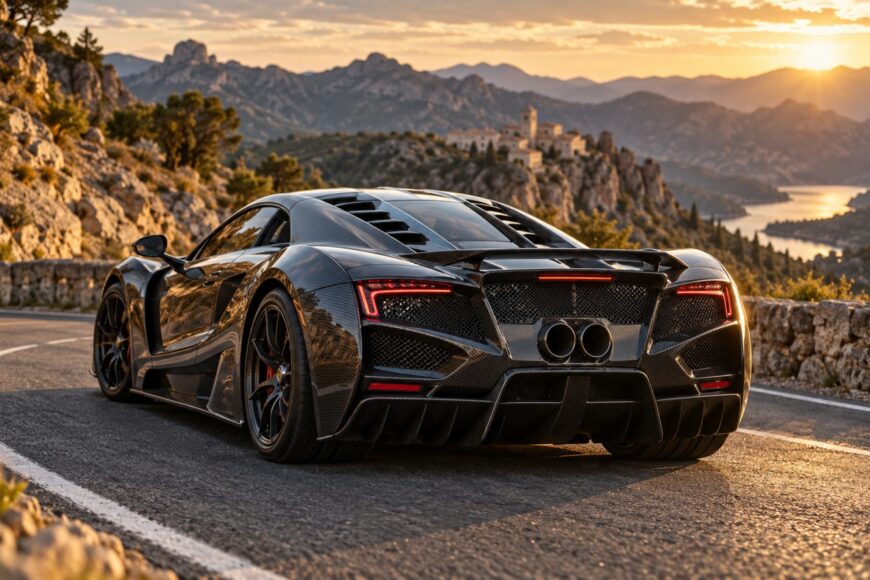
The GTA Spano is an exceptionally rare Spanish, mid-engined, two-seat V10 supercar built by Spania GTA. Its appeal comes from the combination of a dramatic carbon-bodied design, a heavily reworked Viper-based engine concept, and production numbers that appear to be far below the original plan.
The badge alone, however, does not identify one fixed specification. Published figures vary for power, displacement, torque, top speed, transmission, and even production volume. An early 780-hp car, a 2013 car announced with 900 hp, and a 2015 car often described with 925 hp are materially different machines.
For that reason, the specific chassis matters more than the model name. A credible description should include the year, engine configuration, gearbox, homologation history, and supporting documentation rather than treating every GTA Spano as the same supercar.
- What the GTA Spano was designed to be
- GTA Spano versions: 780, 900, and 925 hp
- The V10, gearbox, and architecture behind the numbers
- Why GTA Spano specifications are so difficult to verify
- Buying and owning a GTA Spano: what to verify first
- GTA Spano myths: Viper derivative, 99 cars, and collector status
- Frequently asked questions
- How much does a GTA Spano cost?
- How much does a V10 Viper cost compared with a GTA Spano?
- How can you tell which GTA Spano version an advertisement is showing?
What the GTA Spano was designed to be
Spania GTA developed the GTA Spano as a Spanish, mid-engined, two-seat supercar rather than as a conventional series-production sports car. The layout placed the V10 behind the occupants, with the project aimed at extreme performance and a highly exclusive ownership experience. Its proportions and engineering concept were intended to compete in the specialist supercar market, where low volume can justify bespoke solutions that mainstream manufacturers would avoid.
The project was initially associated with a planned production run of 99 cars. That figure describes an announced target, not a confirmed completed production total. Available accounts instead describe a much smaller fleet, with one commonly cited source reporting 12 completed examples. Production totals are not consistently documented, so even the car’s rarity should be expressed as a range supported by available evidence rather than as a settled factory statistic.
That uncertainty changes how the Spano should be researched. A planned allocation of 99 cars may describe commercial intent, while a surviving fleet of only a handful of cars would describe the practical market available to collectors. Those are different facts, and confusing them can distort assumptions about parts supply, resale demand, and the number of comparable cars.
The GTA Spano should also be separated from the idea of a rebodied Dodge Viper. Its early engine was based on the Dodge Viper V10, but Spania GTA substantially modified the powertrain and developed a distinct mid-engine supercar around it. The Viper connection explains part of the car’s technical lineage; it does not provide a complete description of the finished vehicle.
GTA Spano versions: 780, 900, and 925 hp
The figures below separate the main descriptions commonly attached to the early car, the 2013 update, and the 2015 specification. Where sources disagree or omit a value, the table identifies that uncertainty instead of combining figures into a false single specification.
| Version | Engine description | Power | Torque | 0–100 km/h | Top speed | Transmission |
|---|---|---|---|---|---|---|
| Early version | 8.3–8.4-liter V10 based on the Dodge Viper engine and deeply modified by Spania GTA; commonly associated with supercharging | 780 hp | Not consistently documented in the supplied references | 2.9 seconds | Reported figures include 350 and 352 km/h | Sources mention manual and sequential configurations across early descriptions |
| 2013 update | Different V10 description from the early car; the published material treats it as an updated powertrain | 900 hp | 1,000 N·m | Not consistently documented | Source-dependent; published figures for the model include 350, 352, and 370 km/h | Seven-speed automated transmission reported for this generation |
| 2015 specification | Often described as an 8.0-liter twin-turbo V10 | 925 hp | 1,220 N·m | Not consistently documented | Source-dependent; 370 km/h appears in some descriptions, while other references cite 350 or 352 km/h | Transmission details require confirmation from the individual car’s documentation |
The V10, gearbox, and architecture behind the numbers
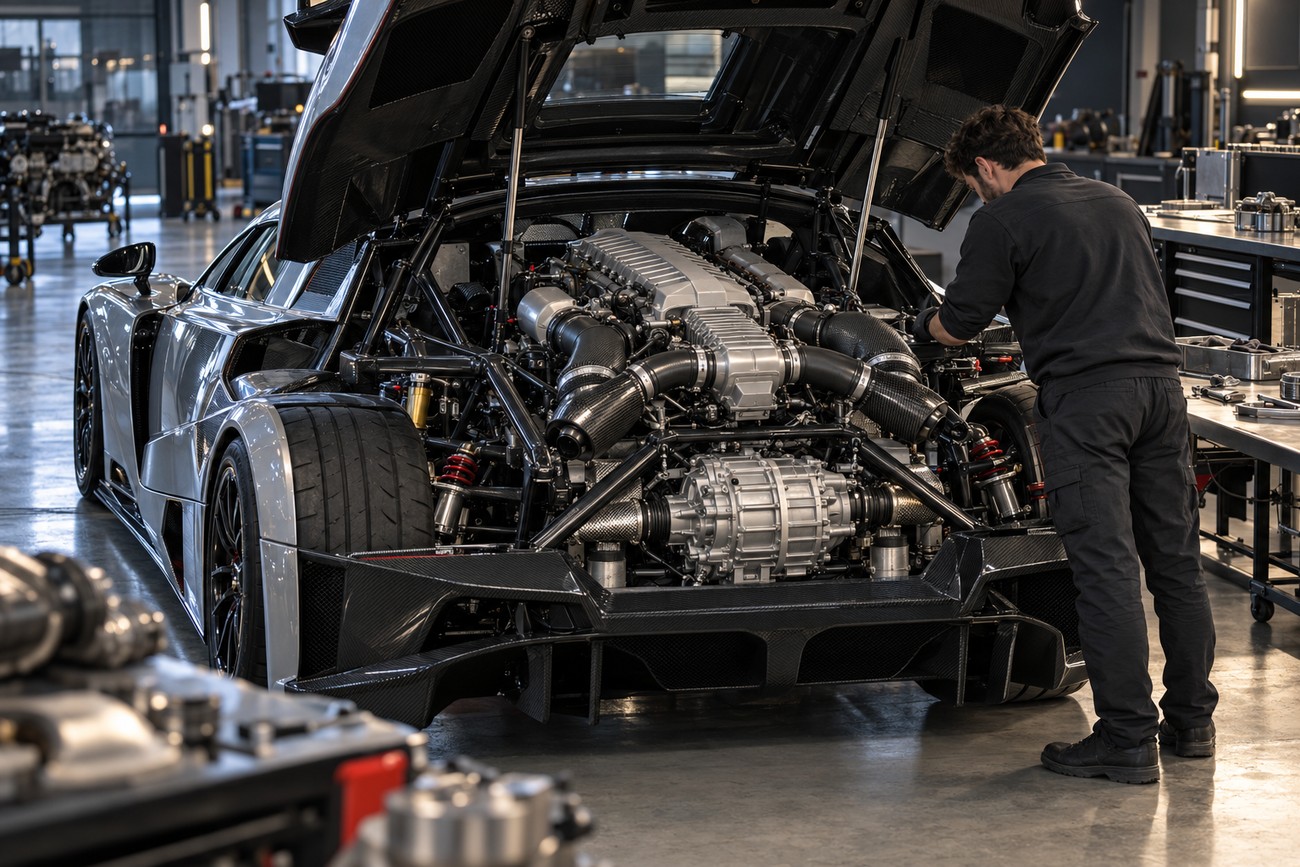
Engine displacement is an unreliable identifier for the GTA Spano. References attach 8.3, 8.4, 8.0, and 7.9-liter figures to the model, but those numbers appear across different versions and source traditions. A displacement figure without a year, engine description, and powertrain history cannot establish which car is being discussed.
The early powertrain is commonly described as an 8.3–8.4-liter V10 based on the Dodge Viper engine and deeply modified by Spania GTA. Early descriptions also associate the car with a supercharged V10. The later 2015 description commonly uses an 8.0-liter twin-turbo V10, with 925 hp and 1,220 N·m often quoted. Those induction systems imply substantially different engineering priorities, response characteristics, thermal demands, and service requirements.
Transmission descriptions are equally important. Sources mention manual, sequential, and seven-speed automated configurations across the model’s versions. That is more than a catalog detail: the gearbox affects how the engine’s torque is delivered, how the car behaves at low speed, and which specialist knowledge is required for diagnosis and repair.
The Viper origin therefore needs careful wording. The Spano did not simply receive a standard Viper engine under a different body. The available descriptions point to extensive powertrain re-engineering, integrated into a separate mid-engine architecture. At the same time, the limited documentation means that individual cars should be checked rather than assumed to follow every published generalization.
One source claims an 80 kg carbon-kevlar-titanium monocoque. That is a notable specification, but it lacks independent technical confirmation and should remain labeled as a claim. The same discipline applies to other headline figures: a brochure value may describe a development target, a prototype, or a particular test configuration rather than every delivered car.
Why GTA Spano specifications are so difficult to verify
The main problem is version mixing. A listing may use the name “GTA Spano” while borrowing the 780-hp figure from the early car, the 900-hp figure from the 2013 update, and the 925-hp figure from the 2015 specification. This creates a composite specification that may never have existed on one chassis.
Displacement references show the same pattern. The 8.3, 8.4, 8.0, and 7.9-liter figures should not be treated as interchangeable rounding differences without checking the source and model year. They may reflect different engines, revised descriptions, or prototype and production terminology.
Top speed is also source-dependent. Published figures include 350, 352, and 370 km/h, and the available information does not establish one universally correct number for every version. A responsible description should attribute the figure to a source or configuration instead of presenting the highest number as the definitive performance of the entire model.
Production history adds another layer of uncertainty. One source reports that the second generation effectively remained represented by one surviving example after a test car was destroyed during homologation. That account should be treated cautiously, but it illustrates why a GTA Spano description without a year or version is technically incomplete.
Buying and owning a GTA Spano: what to verify first
A prospective buyer should begin with the chassis identity, not the advertised horsepower. The essential records include the vehicle identification number, model year, engine specification, gearbox type, homologation status, registration history, and evidence of completed work. Photographs can help identify a car, but they cannot establish its exact powertrain or legal status.
The engine should be matched to documentary evidence. Confirm whether the car is described as an early supercharged V10, a 2013 updated configuration, or the later 8.0-liter twin-turbo V10. The quoted power and torque should then be checked against the engine, induction system, ECU calibration, and transmission actually fitted to that chassis.
Visually similar cars can require different powertrain, transmission, and homologation solutions, so specialists verify chassis and gearbox documentation before ordering parts.
Homologation deserves the same attention as mechanical specification. Registration and road use depend on the jurisdiction and the individual car’s documents, and a rare prototype or development vehicle may not have the same status as a properly documented road car. A buyer should establish this before committing to transport, insurance, or a purchase contract.
Parts access and specialist servicing are poorly documented for such a tiny fleet. Detailed costs for maintenance, insurance, storage, and operation are not established in the available information, so a buyer should avoid treating a Viper parts catalog or a normal supercar service schedule as a complete ownership plan. Support may depend on a narrow specialist network and on the exact solutions used in the individual car.
Rarity also needs a commercial reality check. A very small production base can make a car historically significant, yet it can reduce the number of informed buyers and comparable transactions. Low production does not automatically guarantee stable secondary-market liquidity or a predictable investment outcome.
GTA Spano myths: Viper derivative, 99 cars, and collector status
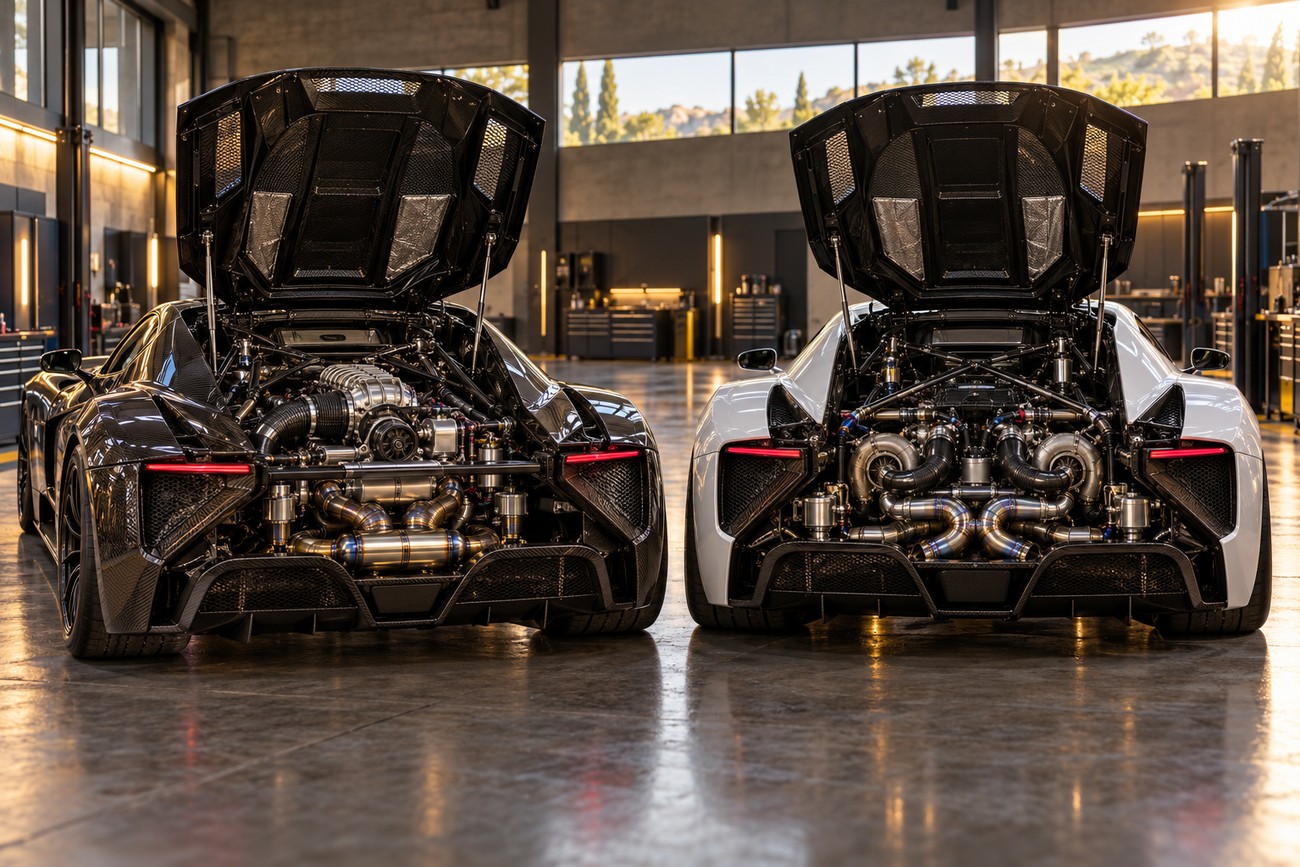
Myth: every GTA Spano had one engine and one specification. Reality: the model is associated with materially different powertrain descriptions, including an early supercharged V10, a 2013 configuration announced with 900 hp and 1,000 N·m, and a 2015 specification often described as an 8.0-liter twin-turbo V10 producing 925 hp and 1,220 N·m.
Myth: 99 cars were built. Reality: 99 cars was the announced plan, not a confirmed completed production total. One commonly cited source reports 12 examples, but the overall total is not consistently documented.
Myth: all sources agree on the top speed. Reality: reported figures include 350, 352, and 370 km/h. The discrepancy may reflect different versions, test conditions, development targets, or source errors, so the number should be tied to a specific reference whenever possible.
Myth: the GTA Spano is simply a Dodge Viper in another body. Reality: the early engine was Viper-based, but the powertrain was deeply modified by Spania GTA and installed in a distinct mid-engine supercar architecture. Its rarity also does not automatically establish collector-market value; provenance, documentation, condition, and buyer demand still determine what a particular car is worth.
Frequently asked questions
How much does a GTA Spano cost?
There is no dependable universal list price for every GTA Spano configuration. A credible valuation must be tied to a specific chassis, version, documentation, and condition, because an early 780-hp car and a later 925-hp specification are not equivalent products.
The tiny number of documented cars also limits comparable sales. A seller’s asking price may reflect rarity or ambition rather than an established market value, while incomplete homologation or unclear provenance can materially change the car’s practical worth.
How much does a V10 Viper cost compared with a GTA Spano?
A Dodge Viper listing is not a reliable direct price benchmark for a GTA Spano. The Spano’s value, if supported by the market, would reflect its much lower production base, Spania GTA’s re-engineering, its mid-engine architecture, and the provenance of the individual chassis.
The Viper connection remains useful for understanding engine lineage and some technical context. It does not mean that a Viper’s market price can be transferred to a Spano, especially where the cars use different induction systems, transmissions, documentation, and homologation histories.
How can you tell which GTA Spano version an advertisement is showing?
Start with the year and request the engine and gearbox documentation. Then compare the advertised power, torque, induction system, and displacement: the early car is commonly associated with 780 hp and an 8.3–8.4-liter V10, the 2013 update with 900 hp and 1,000 N·m, and the 2015 description with an 8.0-liter twin-turbo V10 producing 925 hp and 1,220 N·m.
Photos alone are insufficient because body details and promotional images can be reused. Ask for the chassis number, homologation records, engine description, transmission type, and service history, then check whether the claimed top speed and performance figures belong to that version rather than to the GTA Spano name generally.







