
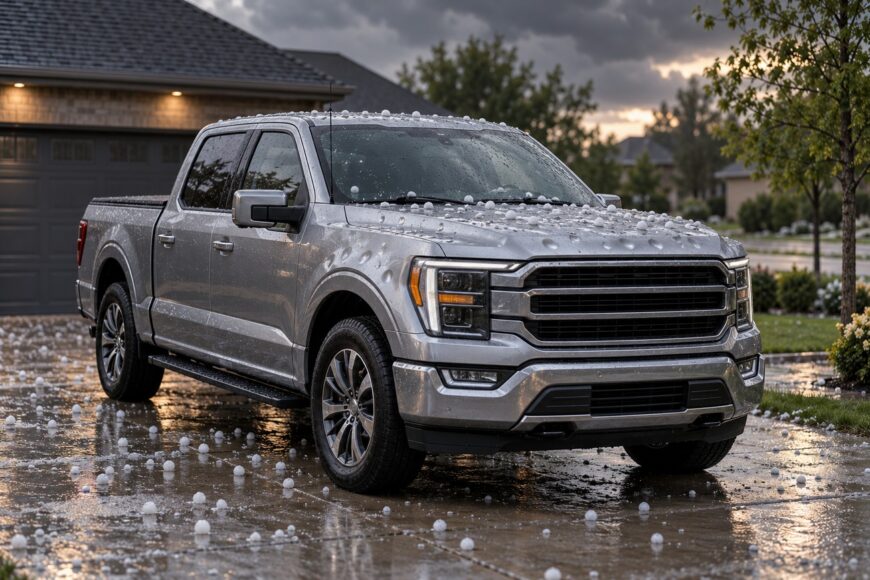
An aluminum-bodied Ford F-150 is lighter than a comparable steel truck, yet golf-ball hail can still leave extensive dents, broken glass, and a major repair bill. The apparent contradiction disappears once material weight is separated from impact resistance: aluminum reduces vehicle mass, but it does not make exterior panels immune to concentrated blows.
Golf-ball hail is approximately 1.75 inches (4.4 cm) in diameter. That measurement describes size, not a guaranteed impact energy. Damage also depends on the hailstone’s mass, density, shape, speed, angle of impact, and the number of strikes hitting each panel. A truck may remain fully drivable while its roof, hood, glass, seals, and paint require substantial work.
The useful decisions come after the storm: whether the dents are suitable for paintless dent repair, whether an aluminum panel has stretched, whether replacement is justified, and whether the insurer’s estimate reflects the complete damage. A careful inspection matters because a first visual impression can miss water entry, roof damage, or dozens of shallow dents that become obvious only in reflected light.
- What Golf-Ball Hail Really Means
- Why an Aluminum F-150 Is Not Hailproof
- Where Golf-Ball Hail Usually Does the Most Damage
- Aluminum vs. Steel: Which F-150 Body Is Better for Hail?
- When PDR Works—and When an Aluminum Panel Must Be Replaced
- Inspection, Estimates, and the Risk of a Total Loss
- Common Mistakes After a Hailstorm
- Frequently asked questions
- How should I document golf-ball hail damage before filing an F-150 claim?
- How can I tell whether a hail dent is shallow enough for PDR?
- What should I ask a shop that claims to repair aluminum F-150 panels?
What Golf-Ball Hail Really Means
Golf-ball hail measures approximately 1.75 inches (4.4 cm) across. The size is a practical weather description rather than a complete description of the object’s destructive force. Two hailstones with a similar diameter can produce different results if their mass, density, shape, or internal structure differs.
NOAA estimates that an approximately 64 mph (103 km/h) updraft is needed to support hail of golf-ball size. That figure describes the upward air movement associated with forming or suspending hail of that size; it is not the vehicle-impact speed. The stone can accelerate, decelerate, rotate, or strike at a different angle before reaching the truck.
Impact energy changes with the stone’s mass and speed, while the way that energy enters the panel depends on shape and angle. A rounded stone may spread force differently from an irregular, dense piece of ice. Repeated impacts also matter: a single dent in the hood is a different repair problem from dozens of strikes distributed across the hood, roof, pillars, and bed.
This is why “golf-ball hail” cannot predict a fixed repair result. A storm with that description may leave one F-150 with scattered shallow dents and another with damaged glass and widespread panel deformation. The truck’s position, the direction of the storm, panel orientation, and nearby shelter can all change the outcome.
Why an Aluminum F-150 Is Not Hailproof
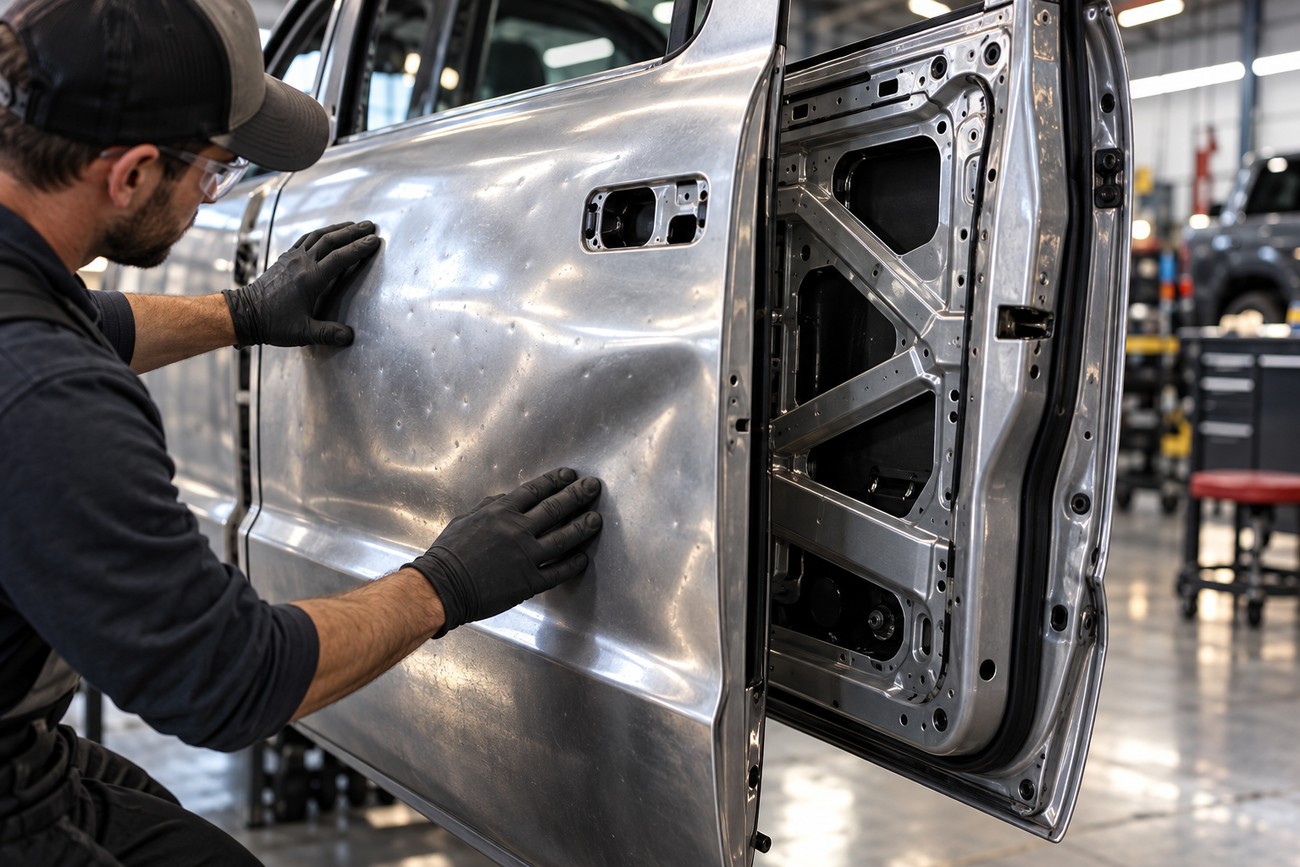
The F-150 uses aluminum exterior body panels, and aluminum makes the truck lighter than an equivalent steel-bodied design. Lower weight is useful for vehicle efficiency and design goals, but it is not the same as resistance to hail. A concentrated ice impact can still deform an aluminum panel.
Dent severity depends on more than the material label. Panel thickness, curvature, reinforcement ribs, the location of the impact, and the panel’s ability to distribute load all influence the result. A ribbed or strongly curved area may respond differently from a broad, relatively flat section, even when both are made from aluminum.
Aluminum and steel also respond differently during repair. Aluminum can require different force, heating limits, tools, and working procedures, and it may respond less predictably if the panel has been stretched. That does not make every aluminum dent worse or impossible to repair; it means the repair decision must be made at panel level.
So, is an aluminum F-150 better for hail than a steel truck? There is no universal material advantage that guarantees survival. The specific panel design, impact energy, and strike pattern usually tell you more than the fact that the truck is aluminum-bodied. Reports of one F-150 escaping a storm with little visible damage cannot reliably predict what another truck will suffer in the same area.
Where Golf-Ball Hail Usually Does the Most Damage
The hood and roof are especially vulnerable because they present broad exposed surfaces to falling hail. Their size creates more opportunities for direct strikes, and relatively flat sections can show dents clearly even when the metal remains structurally sound. A cluster of small depressions may cover a panel without creating one dramatic crease.
Other broad panels, including doors, fenders, and the upper surfaces of the bed, can also collect damage. Ribs, edges, and curves alter how the panel carries the load, so a strike near reinforcement may leave a different mark from one in the middle of a flat section. The number and spacing of impacts can matter as much as the appearance of any single dent.
Golf-ball-size hail generally does not penetrate a vehicle’s hard roof, but it can substantially dent the body and damage glass. Windshields, side glass, and rear glass should be checked for cracks, chips, loosened edges, and signs of leakage. A cracked or leaking windshield can turn a cosmetic claim into a water-entry and safety-related repair issue.
Seals and roof interfaces deserve attention even when the cabin looks dry immediately after the storm. Water may appear later around trim, headliners, pillars, or floor coverings. Small shallow dents can also be easy to miss by touch; a moving reflection across the paint often reveals a distorted panel more clearly than a hand inspection.
Aluminum vs. Steel: Which F-150 Body Is Better for Hail?
Neither material guarantees survival. The practical difference is how the particular panel deforms and how a qualified repairer can restore it after the storm.
| Factor | Aluminum exterior panels | Steel exterior panels |
|---|---|---|
| Vehicle weight | Lighter than an equivalent steel-bodied design, but weight reduction does not provide hail protection. | Generally heavier for an equivalent body design. |
| Hail resistance | Can dent under golf-ball hail; resistance depends on thickness, shape, reinforcement, and impact energy. | Can also dent under golf-ball hail; the material label alone does not predict the result. |
| Dent behavior | Repair response can differ from steel, especially if the metal has stretched or torn. | Response varies by panel and damage; severe stretching can also limit repair. |
| PDR suitability | Possible for selected shallow dents with intact paint and suitable access, subject to technician assessment. | Often considered under the same basic conditions, though access and geometry remain decisive. |
| Replacement risk | Stretched or torn metal, severe geometry damage, critical paint failure, or poor access may require replacement. | Severe deformation, damaged paint, or impractical access may also require replacement. |
| Repair requirements | Requires appropriate aluminum training, tools, procedures, and a facility able to handle the panels correctly. | Still requires proper equipment and procedures, with requirements depending on the vehicle and repair method. |
| Ownership consequence | A comparable storm can create a substantial repair bill even while the truck remains drivable. | Repair cost also depends on panel count, glass, labor, and the full damage assessment. |
When PDR Works—and When an Aluminum Panel Must Be Replaced
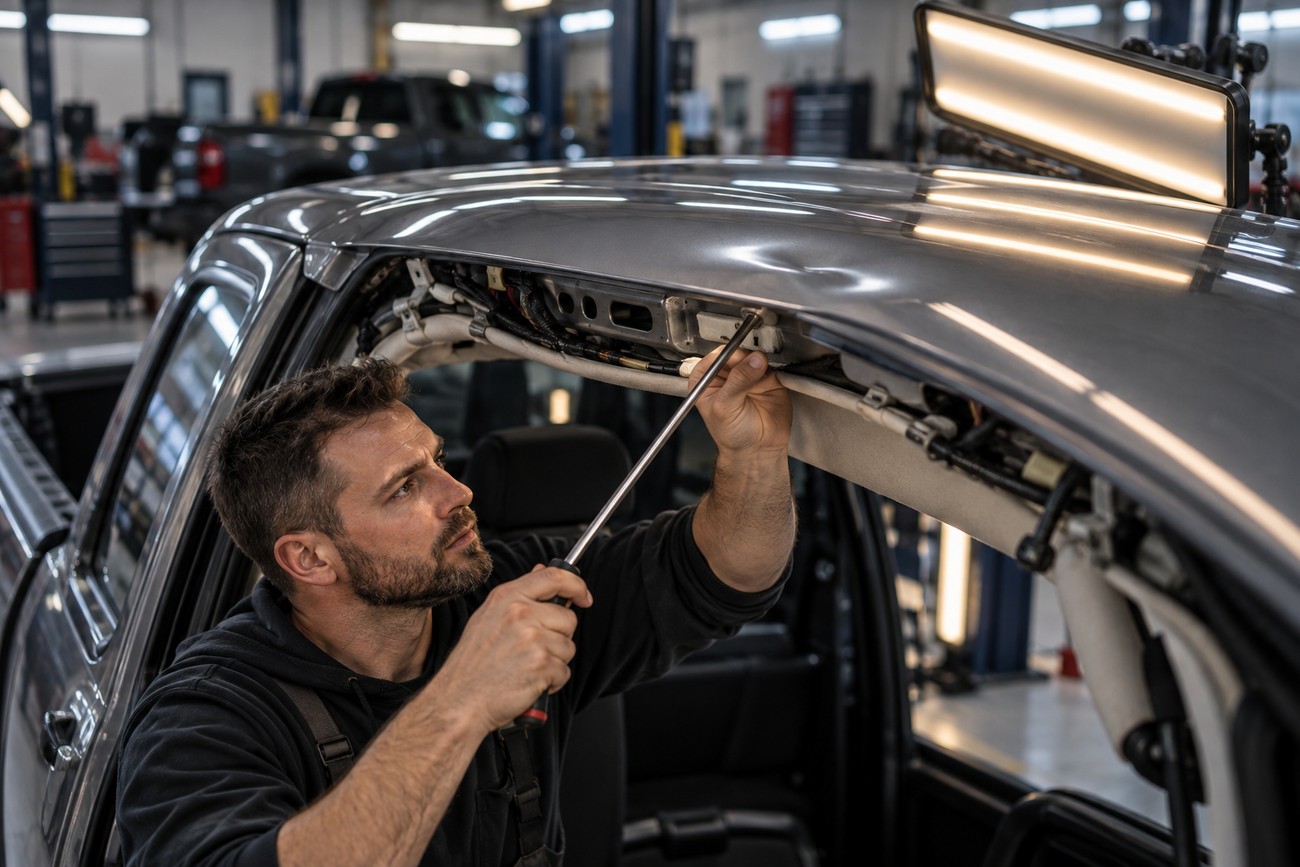
Paintless dent repair, or PDR, is generally considered for shallow dents when the paint remains intact and the technician can reach the panel with suitable tools. The method preserves the factory finish when the coating and metal have not suffered critical damage. It is often evaluated before cutting, repainting, or replacing a panel.
Aluminum does not make PDR impossible, but its repair force and panel response can differ from steel. Backside access may be restricted by bracing, trim, insulation, wiring, or the way the roof is attached. Roof adhesives and mechanical connections can complicate a repair that appears simple from outside.
Paint tension, crown damage, and access help distinguish a repairable shallow aluminum dent from a stretched panel. If the metal cannot return to its original shape without creating a visible high spot, continued pressure may worsen the panel rather than restore it.
Stretched or torn aluminum may require panel replacement rather than reliable reshaping. Severe geometry damage, critical paint failure, or access that prevents controlled work can lead to the same conclusion. A technician should assess the actual panel before a replacement is approved, especially when the damage is shallow and the finish is intact.
Large hail losses create a further complication: the number of dents. An individual dent may qualify for PDR, while dozens of dents across the hood and roof can make the total labor substantial. An owner-reported estimate of approximately $200–$400 for one dent is anecdotal, not a standard industry price, and it cannot be applied directly to a complete truck repair.
Repair practitioners do not apply one universal rule to aluminum. Some technicians successfully repair selected aluminum dents with PDR, while others report that stretched or torn aluminum more often requires replacement. The final decision should follow an inspection of paint tension, panel shape, access, and the likelihood of returning the metal to its original geometry.
Inspection, Estimates, and the Risk of a Total Loss
Begin with a full exterior inspection rather than checking only the hood and roof. Examine every panel, the glass, roof edges, pillars, seals, trim, and the interior for dampness or signs of water entry. Photograph the truck before cleaning away evidence, and use reflected light to record shallow dents that are difficult to see straight on.
A drivable truck can still have extensive cosmetic, glass, and water-intrusion damage. The engine, transmission, and suspension may operate normally while the roof, hood, multiple panels, windshield, and seals require repair. Owner-reported hail repairs range from several thousand to tens of thousands of dollars in severe cases, but those reports are examples of variation rather than a prediction for a particular F-150.
The first insurance estimate may differ substantially from a later assessment. Initial inspections can miss small dents, roof complications, broken glass, hidden leaks, or additional labor associated with aluminum procedures. Ask how the estimate accounts for every affected panel, the chosen repair method, calibration or trim requirements where applicable, and any supplements discovered during disassembly.
An insurer may declare an economic total loss when repair cost is not justified relative to the vehicle’s value, even if the truck remains drivable. The decision depends on the repair estimate, the vehicle’s pre-loss value, local insurance rules, and the insurer’s process. Drivability alone does not prevent a total-loss decision.
Choose a facility with confirmed experience in aluminum Ford repairs, appropriate training, tools, and procedures. A shop’s ability to manage a high volume of hail claims also matters, as does its repair warranty, documentation, and access to replacement panels. If the proposed work is extensive, obtain a complete assessment before authorizing a repair path that cannot easily be reversed.
Common Mistakes After a Hailstorm
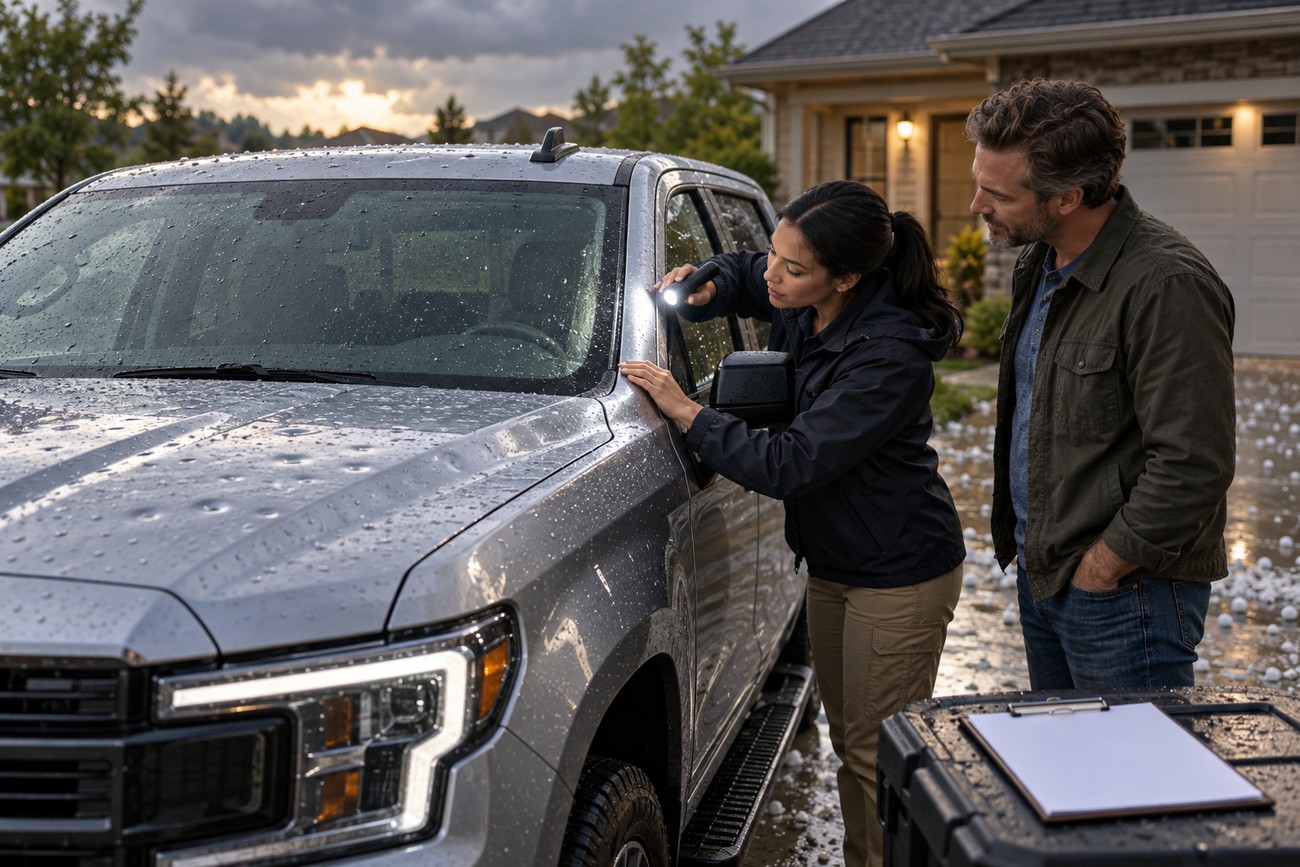
The first mistake is treating aluminum as automatic hail protection. That assumption can delay inspection of the roof, glass, seals, and hidden water entry. It can also lead an owner to dismiss numerous shallow dents that become more visible under changing light and reduce the truck’s resale appeal.
Another mistake is accepting the first estimate as final. A preliminary inspection may not include every panel or account for access limits and aluminum-specific procedures. Review the estimate against a panel-by-panel inspection, and ask how supplements will be handled if disassembly reveals additional damage.
Do not approve panel replacement before a qualified PDR technician has assessed suitable dents and access. The opposite error is also costly: assuming that a no-paint repair must be cheap. Labor can rise substantially with difficult roof access, a large dent count, restricted backing, or a panel that needs careful testing for stretching.
Shop selection becomes harder after a major storm because repair queues can last for months. Compare aluminum capability, warranty terms, scheduling, panel availability, and the shop’s process for documenting hidden damage. A lower initial quote may provide less practical value if the facility lacks the tools, procedures, or capacity to complete the repair correctly.
Frequently asked questions
How should I document golf-ball hail damage before filing an F-150 claim?
Take wide photographs showing the truck’s position, then photograph each panel from several angles. Use reflected light to show shallow dents, and include close images of cracked glass, damaged seals, roof edges, trim, and any interior evidence of leakage. Keep the original files and record the date, location, and approximate storm conditions.
Weather records, storm alerts, or local hail reports can help establish when the event occurred, although they do not replace vehicle photographs. Avoid repairing or washing away evidence before documenting it unless necessary for safety. A panel-by-panel record makes it easier to compare the first estimate with a later complete inspection.
How can I tell whether a hail dent is shallow enough for PDR?
Owner-level clues include intact paint, a rounded depression without a sharp crease, no obvious stretched crown around the dent, and reasonable access to the panel backing. A dent that looks small from one angle may still have distorted metal or restricted access that changes the repair decision.
Only a qualified technician can confirm PDR suitability. The final assessment should consider paint tension, dent geometry, panel attachments, access, and whether controlled pressure can restore the original surface without creating a visible high spot.
What should I ask a shop that claims to repair aluminum F-150 panels?
Ask whether the technicians have aluminum-specific training, tools, and repair procedures, and whether the facility regularly handles aluminum Ford panels. Confirm who will inspect the truck, how the shop decides between PDR and replacement, and what happens if a panel is found to be stretched after work begins.
Also ask for written warranty terms, the expected schedule, panel availability, and the shop’s experience managing high-volume hail repairs. A clear answer about documentation, supplements, and replacement policy is more useful than a general promise that every dent can be repaired.







