
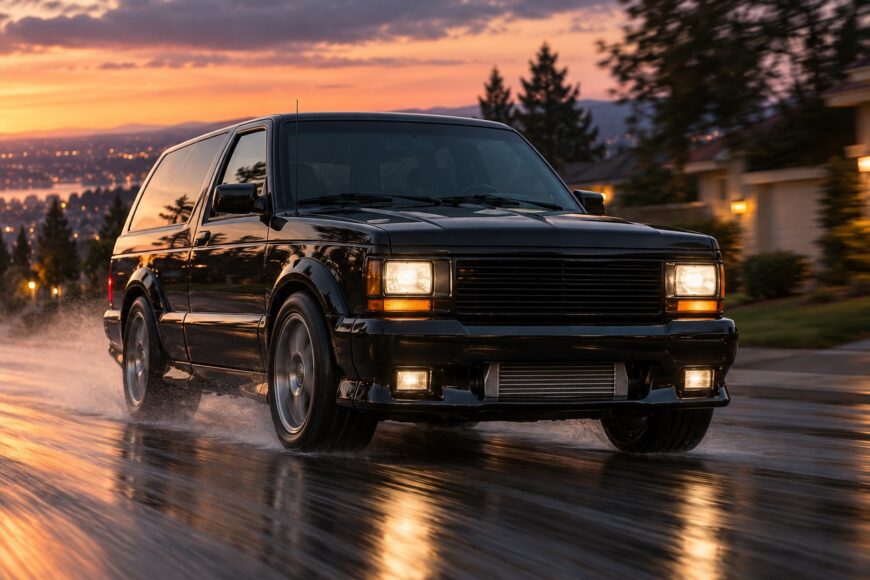
A compact GMC SUV with sports-car-level acceleration sounds like a contradiction, yet that was the GMC Typhoon’s defining achievement. Built on the short-wheelbase GMC Jimmy/S-10 Blazer platform, it paired four-wheel drive with a turbocharged and intercooled 4.3-liter LB4 V6 and performance that embarrassed many larger, heavier vehicles.
The legend remains justified, although ownership is considerably less simple than the reputation suggests. Age, drivetrain limits, scarce model-specific parts, electrical faults, and uneven surviving condition can turn a thrilling road machine into an expensive diagnostic project. The Typhoon deserves respect as a landmark performance SUV, while every individual car deserves skepticism.
- Why the GMC Typhoon Was So Special
- A Road Rocket, Not a Mud Truck
- The Performance Numbers—and Why They Vary
- Where the Typhoon’s Powertrain Starts to Show Its Age
- The Hidden Cost of Buying a Famous Survivor
- How to Inspect a GMC Typhoon Before Buying
- Four Typhoon Myths That Make Ownership Worse
- Frequently asked questions
- How rare is the GMC Typhoon today?
- Was the GMC Typhoon faster than a Ferrari?
- What was the 0–60 time of a 1992 GMC Typhoon?
- What should be done before driving a Typhoon that has been stored for years?
Why the GMC Typhoon Was So Special
GMC produced the Typhoon during 1992–1993, building 4,697 vehicles. That limited run gives the model genuine historical importance, especially because it arrived before the performance SUV became a mainstream category. Its formula was straightforward: take a compact GMC Jimmy/S-10 Blazer with a short wheelbase and four-wheel drive, then give it serious forced-induction performance.
The engine was a turbocharged and intercooled 4.3-liter LB4 V6. Factory figures are commonly stated as approximately 280 hp and 475 N·m, figures that placed the Typhoon in sports-car territory for acceleration while preserving the upright seating and practical shape of a small SUV.
Period performance figures commonly put 0–60 mph acceleration at approximately 5.3–5.5 seconds. That was the crucial message. The Typhoon did not need a low roof or two-seat body to deliver a launch that could challenge cars designed around speed.
Its importance lies in the change of expectation it represented. An SUV could be compact, useful, and four-wheel drive while being engineered primarily for rapid road driving. The concept later became familiar, but the Typhoon was an early and unusually direct expression of it.
A Road Rocket, Not a Mud Truck
The Typhoon’s suspension and tires were tuned primarily for asphalt. GMC marketed it as a fast road SUV, and its chassis specification makes more sense in that role than on a trail. Four-wheel drive improves the launch and helps the vehicle put down torque, yet it does not transform the suspension, tires, clearance, or underbody into dedicated off-road equipment.
Its strongest sensation comes from low-end turbo torque. The short wheelbase and compact body make the initial surge feel especially forceful, sometimes more dramatic than the formal performance figures suggest. The vehicle can feel eager and aggressive before the speedometer has had time to make the result look exceptional.
That character also demands discipline. Rear-drive-biased behavior and substantial torque can make wet or cold-road traction demanding, particularly with old, unsuitable, or mismatched tires. Four-wheel drive helps distribute power; it cannot compensate for poor tire condition, abrupt throttle use, or a road surface with little grip.
Owners who treat the Typhoon as a fast all-weather road vehicle generally understand its design better than those who buy it expecting a classic trail truck. It can handle poor surfaces with care, but repeated heavy off-road use places stress on components that were selected around speed, weight, and pavement response.
The Performance Numbers—and Why They Vary
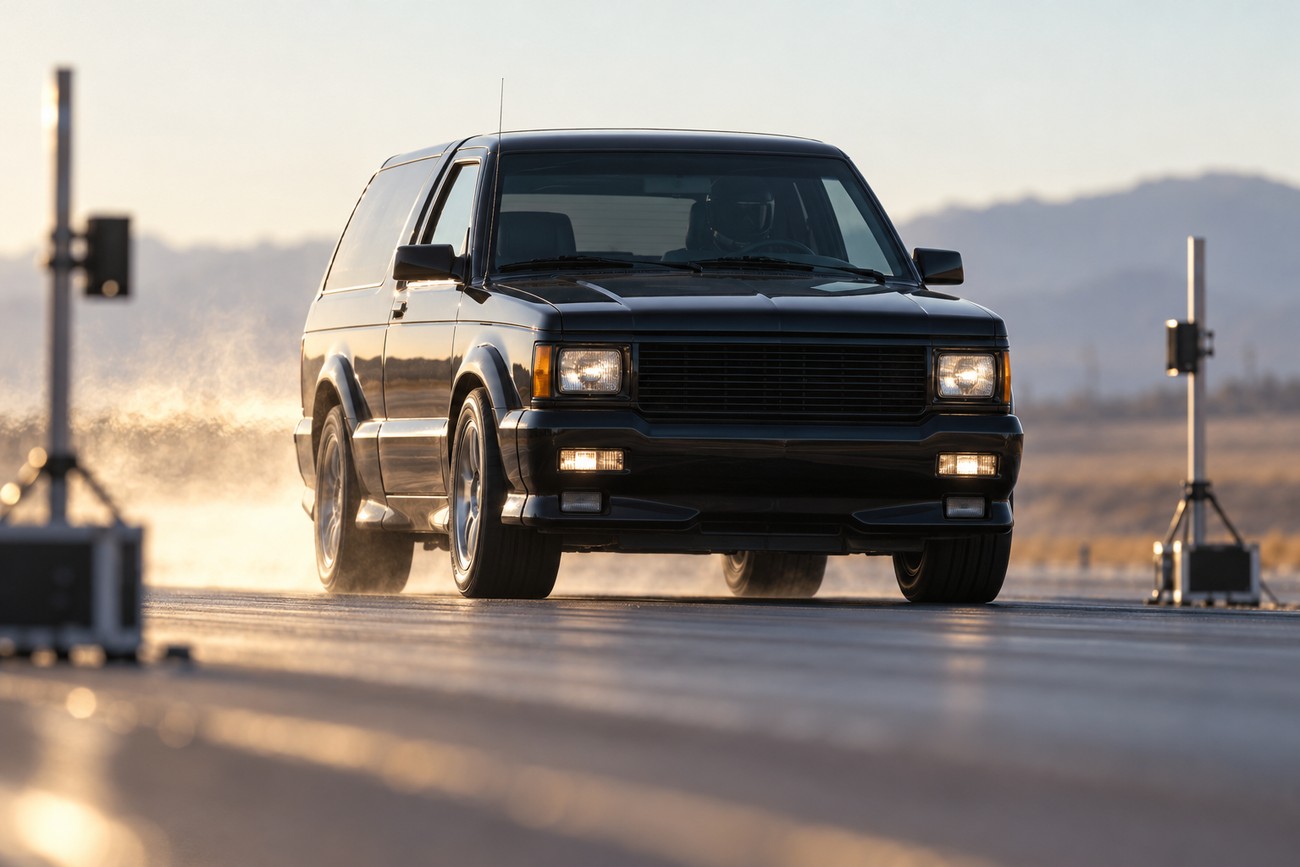
The commonly quoted 0–60 mph range is approximately 5.3–5.5 seconds, while top speed is often reported near 124 mph, or about 200 km/h. The top-speed figure varies modestly among sources and test conditions, as do acceleration results. Tire condition, surface grip, temperature, measurement method, and the mechanical health of the vehicle all matter.
Approximately 280 hp and 475 N·m are the familiar factory-output claims. They are useful reference points, though they should not be treated as a guarantee for every surviving Typhoon. A vehicle built decades ago may have a tired turbocharger, restricted fuel delivery, leaking hoses, weak sensors, or a calibration that no longer produces the intended behavior.
Actual output and behavior vary with turbocharger condition, fuel system health, fuel quality, temperature, age, and calibration. These factors affect more than a dyno number. They can change how quickly boost arrives, whether the engine holds power under load, and whether the transmission receives smooth or punishing torque delivery.
This is why a healthy, carefully maintained example can feel remarkably quick, while a cosmetically attractive car can feel flat or inconsistent. Comparing a test result from a well-sorted Typhoon with an aged, modified example produces a misleading judgment about the model itself.
Where the Typhoon’s Powertrain Starts to Show Its Age
The Typhoon uses a four-speed automatic transmission identified as the 700R4/4L60. It is often considered vulnerable when torque is increased, particularly when modifications raise boost without addressing transmission condition, cooling, calibration, and hydraulic control. A stock-looking vehicle can still have a transmission with a long history of hard launches or unsuitable modifications.
Aging turbo plumbing and vacuum hoses create another common source of confusion. Leaks can cause unstable boost and inconsistent power delivery, while cracked or disconnected vacuum lines can make an engine problem appear where the real fault lies in the control system. Intercooler plumbing deserves the same attention because a loose connection can produce a sudden loss of performance.
Vacuum integrity, fuel delivery, intercooler plumbing, and transmission behavior should be verified before increasing boost or blaming the turbocharger. These checks often separate a genuine hardware failure from a small leak or control fault that has distorted the entire driving experience.
Cooling is equally important. The factory layout and age of the cooling system are poor partners for prolonged high-load overheating, especially in a vehicle that has accumulated unknown repairs or modifications. A Typhoon may tolerate a short burst of performance while still having a cooling problem that appears during sustained highway speed or repeated acceleration.
Age-related GM electrical faults can involve sensors, wiring, contacts, and false warnings. The diagnostic order should therefore begin with basic mechanical condition and data quality: inspect vacuum integrity and intercooler plumbing, verify fuel pressure, test compression, assess turbo operation, and then evaluate transmission behavior and cooling under controlled conditions.
The Hidden Cost of Buying a Famous Survivor
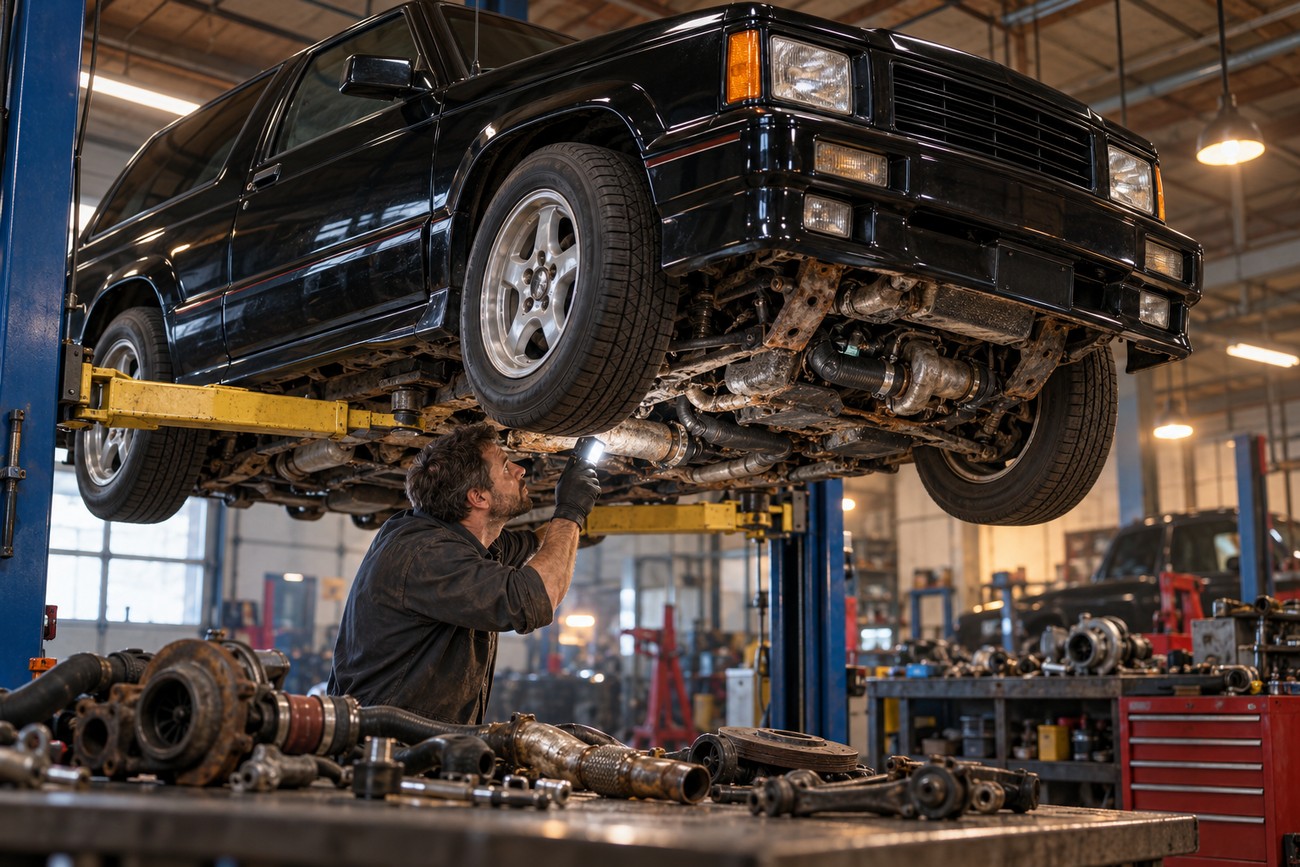
A Typhoon should be assessed as a rare performance vehicle rather than an ordinary used GM SUV. Many examples have been modified, worn out, poorly restored, or cosmetically refreshed after years of hard use. A clean exterior may conceal corrosion, body fatigue, suspension wear, or repairs that were performed to make the vehicle presentable for sale.
Shared GM ancestry helps with some basic components, yet it does not make every repair inexpensive or easy. Specific Typhoon parts can be rare and expensive, and some repairs depend on donor vehicles, specialist knowledge, or enthusiast networks. The distinction matters when a problem involves a model-specific trim piece, turbo-related component, or hard-to-source drivetrain part.
Collectible status can also raise an asking price beyond what the mechanical condition justifies. A famous name, original-looking paint, and a low odometer reading do not prove that the engine, transmission, transfer case, or electrical system has been maintained correctly. Cosmetic preservation and mechanical preservation are separate achievements.
The best ownership prospects often come through careful communities that preserve technical information, exchange donor parts, and recognize correct repairs. That support can materially improve the long-term outlook, although it does not eliminate the cost of finding a sound starting point.
How to Inspect a GMC Typhoon Before Buying
A pre-purchase inspection should begin with history rather than the test drive. Investigate ownership records, accident damage, restoration work, tuning changes, and claims about originality. Odometer readings and exterior appearance are useful clues, but neither can establish the condition of a turbocharged vehicle that may have spent years being modified or stored incorrectly.
The engine inspection should include compression, fuel pressure, vacuum integrity, intercooler plumbing, and turbo operation. Look for unstable boost, inconsistent throttle response, evidence of overheating, and warning signs that the fuel system cannot support the intended load. A quiet idle alone is weak evidence because many faults appear only under boost or sustained demand.
The automatic transmission requires its own assessment. Check engagement, shift quality, slipping, delayed response, and behavior under load without abusing the vehicle. Also inspect the transfer case, driveshaft, differentials, and tires; the Typhoon’s performance is transmitted through all of these components, and a healthy engine cannot compensate for neglected driveline parts.
Corrosion, suspension fatigue, and repaired accident damage should be examined beneath fresh cosmetic work. Inspect mounting areas, underbody surfaces, steering and suspension components, and tire age and condition. An attractive shell with tired chassis components can require more work than a less polished vehicle with a documented mechanical history.
Increasing boost before addressing the automatic transmission, cooling system, and fuel system is a common failure path. Establish baseline health first, repair leaks and faults, and only then decide whether any modification is appropriate. On a rare vehicle, conservative diagnosis usually costs less than replacing several damaged systems at once.
Four Typhoon Myths That Make Ownership Worse
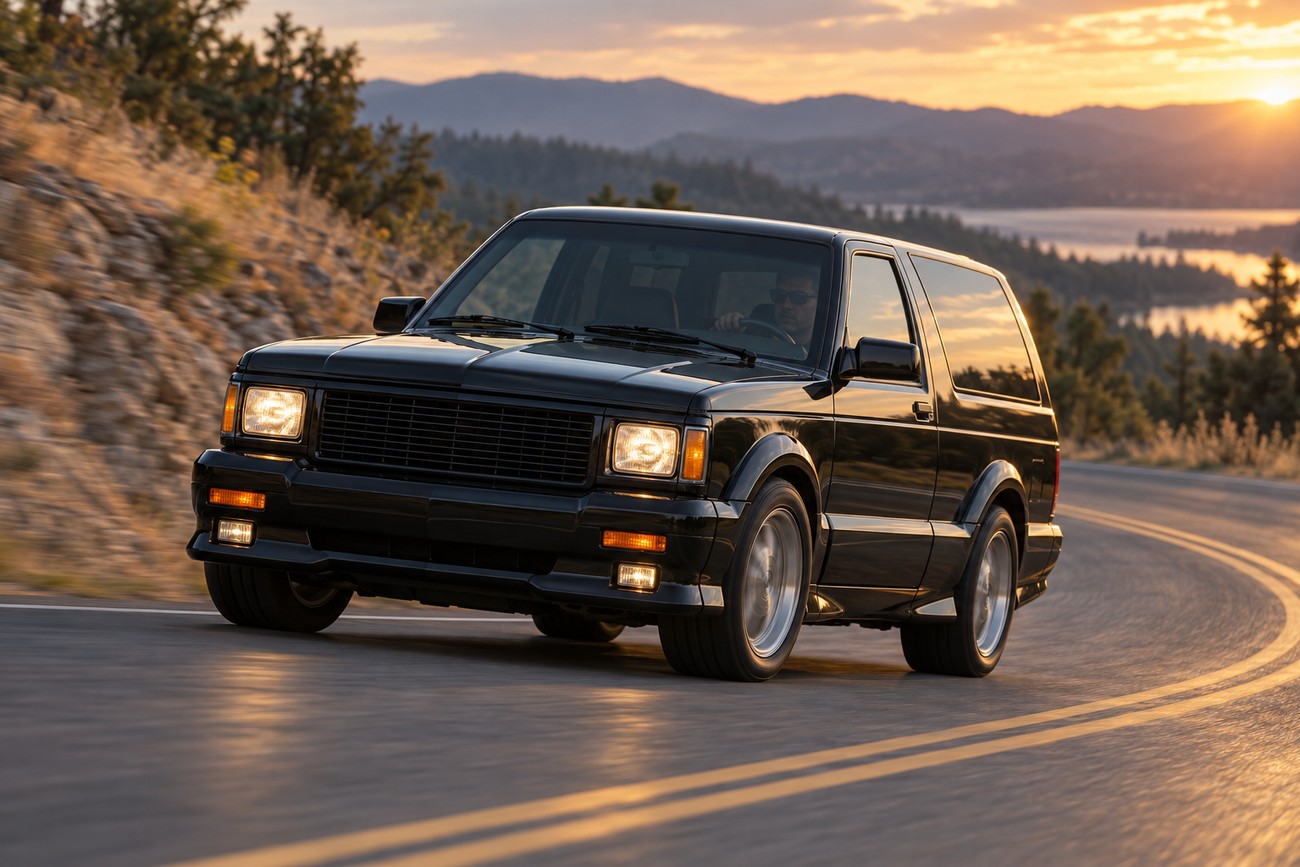
The first myth is that the Typhoon is primarily an off-road SUV. Its four-wheel drive and short-wheelbase body can suggest that role, yet the suspension and tires were tuned primarily for asphalt. Treating it as a fast road SUV protects the chassis and sets more realistic expectations for traction, clearance, and durability.
The second myth is that every example delivers a guaranteed 280 hp. Approximately 280 hp and 475 N·m are commonly cited factory figures, while actual output depends on turbocharger condition, fuel system health, fuel quality, temperature, age, and calibration. A buyer who assumes the number is automatic may overlook a tired or poorly tuned car.
The third myth is that all GM parts are cheap and easy to find. Basic GM components may be available, but Typhoon-specific parts can be scarce and costly. That difference affects restoration planning, repair times, and the value of a complete, correctly equipped vehicle.
The final myth is that the engine is the only major risk. The automatic transmission, transfer case, driveshaft, differentials, cooling system, vacuum plumbing, sensors, wiring, and contacts can all shape reliability. A sound purchase therefore depends on evaluating the entire powertrain and its peripheral systems, rather than admiring the turbocharged V6 in isolation.
Frequently asked questions
The GMC Typhoon’s rarity, performance, and age make condition more important than headline specifications alone. The answers below clarify the model’s production numbers, acceleration claims, and key inspection priorities.
How rare is the GMC Typhoon today?
GMC built 4,697 Typhoons during 1992–1993. That production total makes the model rare enough that surviving examples cannot be treated as interchangeable used GM SUVs.
Condition varies widely because many cars have been modified, heavily used, poorly restored, or stored without proper maintenance. Parts support from enthusiast communities and donor vehicles can help, but the history and mechanical state of each individual Typhoon remain decisive.
Was the GMC Typhoon faster than a Ferrari?
The Typhoon’s approximately 5.3–5.5-second 0–60 mph performance could challenge some period sports cars in a short acceleration test. That comparison depends on test conditions, traction, and the condition of both vehicles.
No SUV can reasonably be described as faster than Ferrari models as a group. The meaningful historical point is that a compact GMC SUV could deliver acceleration close to some sports cars, especially in an era when performance SUVs were unusual.
What was the 0–60 time of a 1992 GMC Typhoon?
The commonly quoted figure is approximately 5.3–5.5 seconds. It describes period-style testing and a properly functioning vehicle rather than a guaranteed result from every 1992 example.
An aged, modified, or poorly maintained Typhoon may be slower because of turbocharger wear, fuel-system problems, boost leaks, poor calibration, unsuitable tires, or transmission issues. A test drive should therefore be interpreted alongside a mechanical inspection.
What should be done before driving a Typhoon that has been stored for years?
Begin with fluids, hoses, belts, fuel-system condition, cooling-system integrity, brakes, and tires. Inspect for leaks, deteriorated vacuum plumbing, contaminated fuel, seized components, and electrical faults before attempting a performance drive.
Once the basic systems are safe, verify fuel pressure, compression, intercooler plumbing, turbo operation, and transmission behavior. Initial testing should be cautious and progressive, with close attention to temperature, warning lights, boost stability, and brake performance.







