
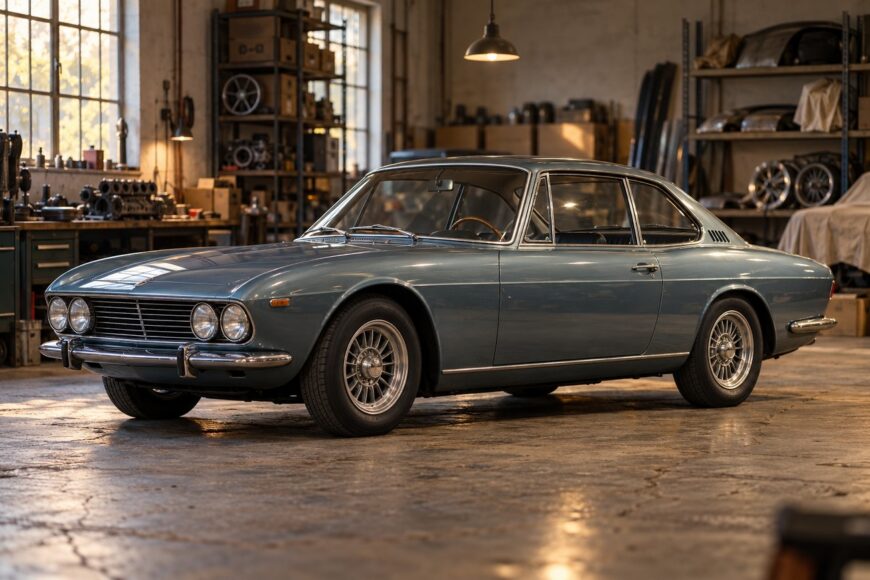
The Glas 1700 GT looks like a BMW at first glance, which is precisely where its identity becomes misleading. Its elegant Italian-influenced shape, later BMW badges, and place in BMW’s post-1966 history suggest a familiar German coupe. Yet the design, much of the engineering, and many of the restoration problems belong to Glas.
That creates the central buying conflict. The car offers rare Frua-influenced styling and an unusual link between an independent German manufacturer and BMW, but it also brings corrosion risk, scarce Glas-specific parts, uncertain documentation, and restoration costs that can exceed those of more common BMWs. Understanding the history is therefore more useful than judging the car by its badges.
- The Glas 1700 GT Before BMW Took Over
- A Glas Chassis Under Italian Styling
- Engines, Performance, and the BMW-Glas Transition
- What It Is Like to Drive Today
- The Restoration Problems Hidden Behind the Shape
- Buying, Identifying, and Preserving an Original Example
- Frequently asked questions
- Was the Glas 1700 GT the “poor man’s BMW”?
- Why was the BMW-Glas GT discontinued?
- What car is the poor man’s BMW?
The Glas 1700 GT Before BMW Took Over
Glas developed the 1700 GT as a compact sporting coupe at a time when a small manufacturer needed a distinctive product to attract attention beyond its existing range. The result was a 2+2 grand tourer with a long, low profile and enough mechanical performance to support its appearance. It was produced from 1964 to 1967, during the final years of Glas as an independent company.
The body was developed with the involvement of Frua, giving the coupe an Italian-influenced grand-tourer style. That contribution matters because the 1700 GT was never simply a scaled-down version of a conventional German sedan. Its proportions, glasshouse, bright trim, and restrained detailing gave it a character closer to contemporary European touring coupes than to the more upright family cars from which its running gear might have been derived.
BMW absorbed Glas in 1966–1967, but the basic coupe remained a Glas design. BMW made changes to the engines, badging, and selected equipment, then placed the inherited model within its own product structure. Calling the car a BMW-designed coupe removes the main reason it is historically interesting: it records a transition between a small marque’s engineering and BMW’s later industrial consolidation.
Total production is generally described as several thousand cars, with exact figures varying by source. That limited volume explains the model’s modern rarity, but rarity alone does not guarantee a good investment. A complete, correctly identified car can attract specialist interest; a damaged shell missing Glas trim can consume far more money than its apparent market value justifies.
A Glas Chassis Under Italian Styling
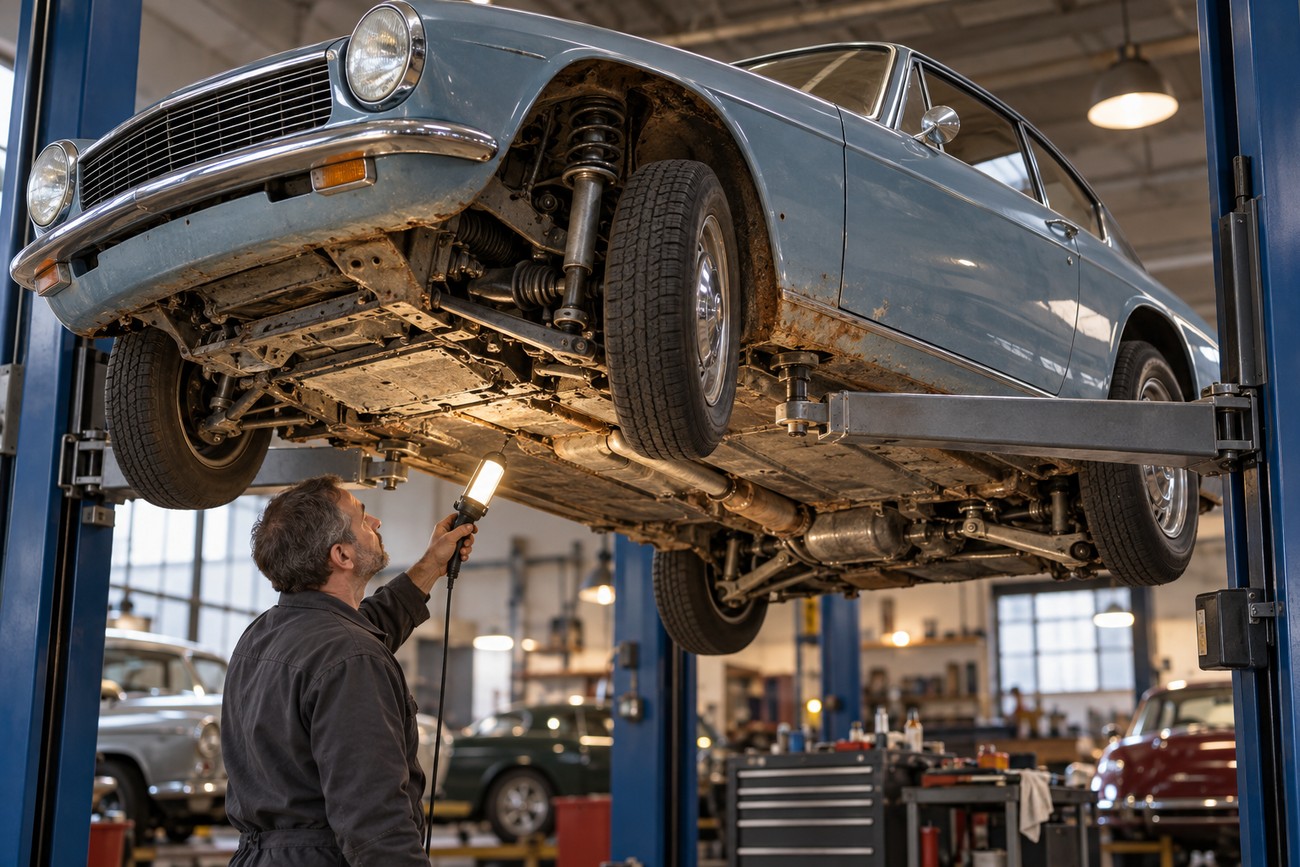
Under the body, the 1700 GT uses a load-bearing unibody shell and a 2+2 cabin. The engine is mounted longitudinally at the front and drives the rear wheels, giving the car the basic layout expected of a compact sporting coupe of the period. Its proportions are attractive, but the shell is also the foundation of the suspension geometry and the restoration cost.
Front suspension is of the independent McPherson strut type, while the rear uses angled or trailing arms. This was a serious and technically credible arrangement for the 1960s, yet it does not make the car mechanically equivalent to a later BMW coupe. Mounting points, component dimensions, and the way the shell carries loads remain Glas-specific in important areas.
On the road, the car’s character is closer to a period European grand tourer than to a direct BMW 2002-style equivalent. Steering response, body stiffness, ride quality, and rear-axle behavior reflect a different design history. A sound example can feel purposeful and balanced, but it does not deliver the same combination of refinement, parts access, and predictable tuning associated with more common BMW models.
Safety is also firmly period-typical. The coupe lacks modern crash protection, restraint systems, and structural expectations, while the low roof and long doors make access to the rear seats awkward. Those seats are useful for children or short trips, but the 2+2 description should not be mistaken for genuine four-adult practicality.
Engines, Performance, and the BMW-Glas Transition
Glas versions used a 1.7-liter OHC inline-four, commonly listed as 1,686 cc. Quoted output varies by version and source, at roughly 100–115 hp. The figures should be treated with care because period catalogs and later reference works do not always agree on exact specifications, and many modern descriptions repeat earlier claims without checking the individual car.
Commonly quoted figures for the strongest versions are approximately 185–190 km/h and 0–100 km/h in about 11–12 seconds. These are catalog or factory-style claims rather than independently verified results that apply to every surviving example. Tire choice, gearing, engine condition, carburetion, ignition setup, and restoration quality can all change the experience substantially.
After BMW absorbed Glas in 1966–1967, related versions received BMW four-cylinder engines in roughly the 1.8–2.0-liter range. These cars are often identified as BMW-Glas 1700 GT or 1800 GT, depending on the market and specification. BMW badging therefore marks an important production phase, but it does not turn the underlying coupe into a clean-sheet BMW design.
The transition can create confusion during parts searches and vehicle valuation. A BMW-era car may have more accessible engine service items, yet its doors, glass, trim, dashboard details, suspension mounts, and other components can remain difficult Glas pieces. A seller who describes the car as “all BMW” may be simplifying the most important fact for a future owner.
The original Glas engine also has historical value beyond its power output. Replacing it with a BMW unit may improve parts availability in some cases, but it changes the car’s identity and can reduce its appeal to collectors concerned with Glas history. A conversion should be judged as a deliberate engineering choice, not as an automatic correction of an inferior design.
What It Is Like to Drive Today
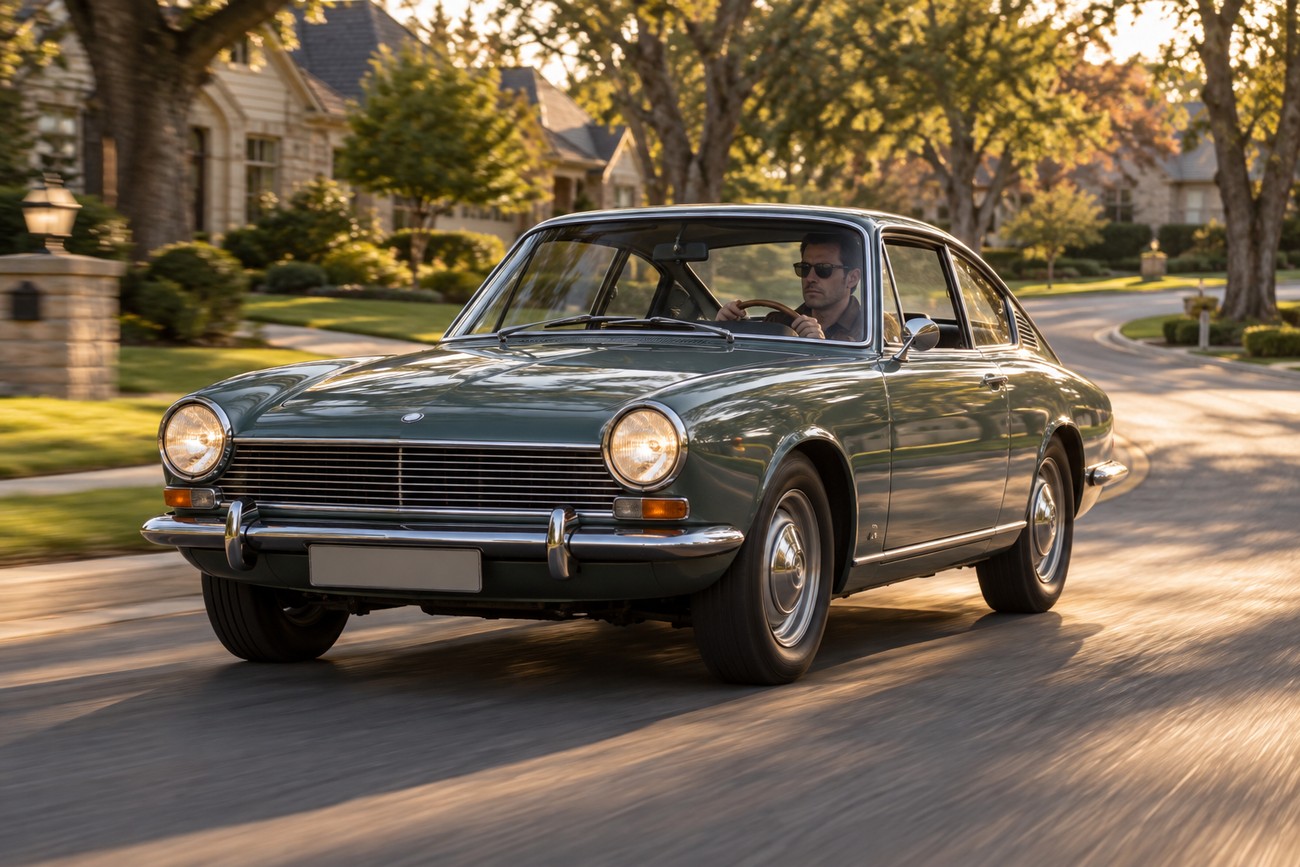
A healthy 1700 GT has the directness of a lightweight rear-wheel-drive coupe, with an engine that needs to work for its performance. The front-engine layout and independent suspension provide a coherent period driving experience, but the car’s appeal lies in involvement rather than modern quietness. Steering feel and ride depend heavily on the condition of bushings, dampers, springs, and the shell itself.
Owners report more engine and driveline noise and vibration than in comparable BMWs. That difference is easy to miss during a short demonstration drive, especially if the car is being presented on a smooth road. Over a longer journey, worn engine mounts, tired transmission supports, or poorly adjusted mechanical components can turn the expected character of an old coupe into a persistent nuisance.
Early cars commonly used front disc brakes with rear drums. Some later BMW versions are reported with disc brakes at both ends, but references disagree on whether this applied to all late cars or only some batches. Buyers should inspect the actual hardware and confirm its history rather than accepting a general statement that every BMW-Glas has four-wheel discs.
The handling, stiffness, and balance should not be assumed to match popular late-1960s BMW coupes. Suspension modifications can make the difference more pronounced: stiff springs and modern wheels may sharpen initial response while increasing impact loads, road noise, and stress in an already old unibody. The most satisfying cars are usually those set up correctly for road use, with geometry and braking condition taking priority over aggressive appearance.
The Restoration Problems Hidden Behind the Shape
The most serious inspection begins beneath the paint. Common corrosion zones include the sills, lower door edges, wheel arches, and suspension mounting areas. Because the shell is load-bearing, rust near structural seams and suspension pickup points is a safety and alignment concern, not a cosmetic defect that can be postponed.
A straight-looking car can still hide extensive previous repairs. Thick filler, replacement sill sections, poorly aligned doors, and uneven gaps may indicate that the shell has been repaired without preserving its reference geometry. The long doors and clean body lines make poor panel alignment especially visible, but a fresh paint finish can conceal the underlying work until the car is placed on a lift.
Shell geometry should be checked against structural reference points before replacement panels are ordered. A visually straight unibody that was repaired out of alignment can make correctly made Glas parts impossible to fit.
Original Glas body panels, trim, interior parts, engines, and timing-related components can be difficult to source. Some items must be repaired, reproduced, or made by hand, and a specialist may need to work from an original sample rather than a reliable catalog number. The scarcity of factory documentation makes a seemingly simple restoration decision slower and more expensive.
BMW mechanical parts may be partly usable, but many Glas-specific components have different geometry, mounts, or specifications. This is why a BMW parts catalog is not a substitute for model knowledge. Old wiring looms and electrical connections add another layer of risk: intermittent faults, poor grounds, and brittle insulation can remain after a car has been cosmetically restored.
Budgeting the project as if it were a mass-market BMW is a common and costly mistake. A familiar engine component may be affordable, while a missing molding, instrument, door trim, or correct panel is effectively a custom job. A workshop that services BMW 2002s competently may still lack the drawings, jigs, and practical experience needed to repair a Glas shell correctly.
Buying, Identifying, and Preserving an Original Example
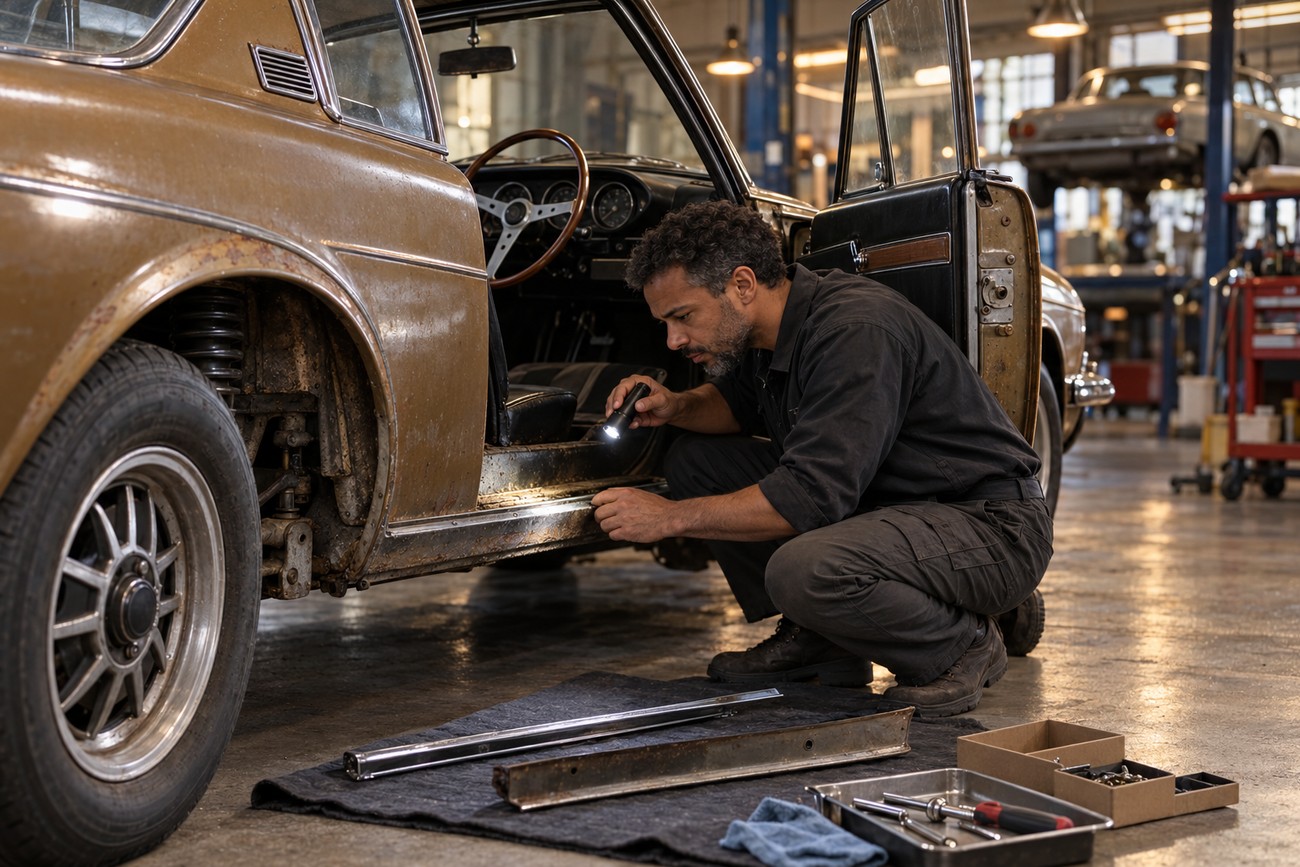
Begin with identity and structure, then assess cosmetics. BMW badges do not automatically mean the car is a fully BMW-engineered model; many examples remain technically Glas-based. VIN and identity records can be confusing across Glas and BMW-Glas cars, and discrepancies may affect registration, insurance, historic classification, and valuation.
Inspect the underside, inner sills, floor edges, suspension mounting areas, wheel arches, and lower door structures. Check whether the doors close evenly, whether the glass and trim sit correctly, and whether previous repairs have altered the shell’s dimensions. A car with worn mechanical parts but a sound, documented body can be a better project than a shiny example with concealed structural corrosion.
Completeness deserves its own valuation. Rare Glas emblems, moldings, wheels, instruments, and interior components can materially affect collector value, even when a modern replacement would be easier to use. Original Glas-specific trim and interior parts generally support historical significance more than convenient BMW substitutions.
Collectors often prefer preservation or restoration of the original Glas engine over a BMW engine swap. Period-compatible suspension substitutions may be possible, but geometry and fitment should be verified with marque specialists. Stiffer springs, modern wheels, or track-style modifications can compromise comfort and place additional loads on the shell, so a modified car should be assessed as an engineered project rather than automatically treated as an upgrade.
Before purchase, obtain every available registration document, production record, restoration invoice, and parts reference. Photograph identification plates and unusual components, then compare them with marque-club knowledge before committing to a major repair. On this model, completeness and credible history can save more money than a low initial asking price.
Frequently asked questions
The Glas 1700 GT sits between two categories: a rare independent-marque coupe and a BMW-era historical curiosity. These distinctions explain why its reputation can be attractive while ownership remains demanding.
Was the Glas 1700 GT the “poor man’s BMW”?
The nickname came from the car’s BMW-era association, its sporting appearance, and the perception that Glas offered BMW-like coupe character at a lower entry price. It was also reinforced after BMW badges appeared on later versions, even though the basic coupe design remained Glas-derived.
The label is misleading today. A rare car with scarce trim, uncertain records, and a corroded unibody can cost more to restore than a common BMW with broad parts support. Its value lies in its independent history and Frua-influenced design, not in being a cheaper substitute for a BMW.
Why was the BMW-Glas GT discontinued?
After BMW absorbed Glas, the inherited coupe had limited volume and occupied a complicated position within the expanding BMW range. Continuing every Glas derivative would have created overlap with BMW’s own models while retaining separate parts, production, and marketing demands.
BMW therefore had practical reasons to rationalize the range rather than preserve the model indefinitely. The end of production reflects product positioning and business consolidation as much as any single mechanical weakness. That decision also helps explain why surviving cars are rare and why their BMW-era identity can be difficult to classify.
What car is the poor man’s BMW?
The phrase has been applied to several affordable sporting cars over the years, depending on the market and period. In the context of the Glas 1700 GT, it is an informal nickname rather than an official model category, and it should not be used as a reliable guide to specification, value, or parts compatibility.
The Glas is better understood as a distinct 2+2 coupe with a BMW-related production history. That description gives a buyer more useful information than a slogan because it keeps attention on the car’s shell, Glas-specific equipment, and documented identity.







