
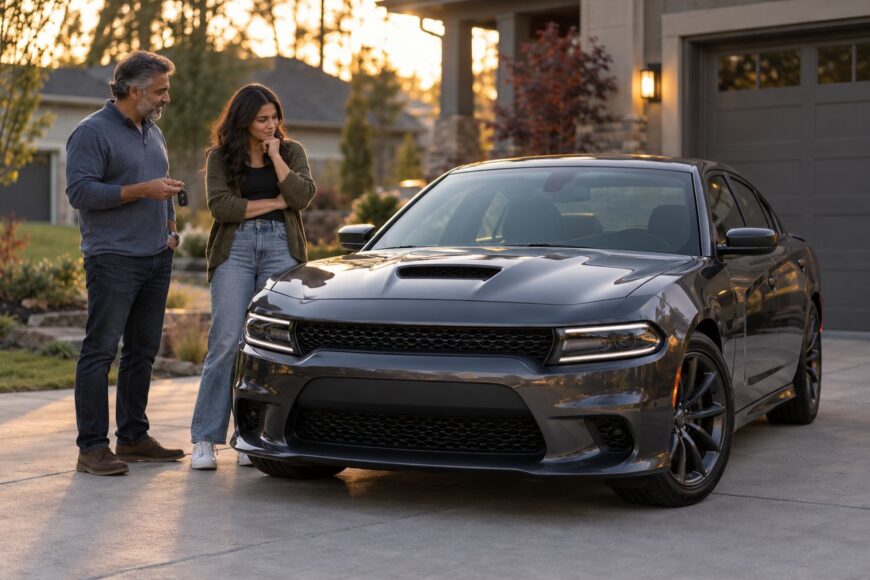
A Dodge Charger can appeal to a family choosing a teen’s first car. It has room for passengers, a substantial presence, and a familiar sedan shape. If a clean used example is available, it may seem like a reassuring choice.
The harder decision is whether that particular Charger suits someone still learning to judge speed, grip, and the space around a car. Its size can complicate parking, performance versions leave less room for acceleration mistakes, and insurance and upkeep may strain the family budget. The right answer depends on the exact vehicle, the teen’s driving habits, and what the family can afford after the purchase.
- Is a Dodge Charger a sensible first car for a teenager?
- V6 versus V8 Charger: the first-car trade-offs
- Why size, power, and road conditions matter to a new driver
- What crash ratings and driver aids do—and do not—prove
- The ownership costs parents can miss
- Buying a used Charger without inheriting expensive problems
- A practical decision rule before handing over the keys
- Frequently asked questions
- How much would insurance be for a 17-year-old with a Dodge Charger?
- What should a teenager’s first car offer instead of a Dodge Charger?
- What’s the best first car for a teenager?
Is a Dodge Charger a sensible first car for a teenager?
A V8 performance trim is a poor default choice for a new driver. Versions such as the R/T, Scat Pack, and Hellcat leave less margin for a novice’s acceleration mistakes than a typical beginner car. A teen who presses the pedal too firmly while pulling into traffic can gain speed sooner than intended.
A V6 Charger deserves an individual assessment rather than automatic approval. It is less performance-focused than those V8 trims, but it remains a large car with potentially substantial ownership costs. The question is whether the teen can drive that specific car calmly and whether the household can comfortably pay to run it.
Crash-test performance in some years and configurations does not establish that every Charger is a suitable first car. Crash protection matters, but it does not prevent a driver from entering a turn too quickly or misjudging a gap. Likewise, a family-sedan shape says little about how forgiving a particular trim will feel to a beginner.
Experience and circumstances matter. A teen who has practiced in a large vehicle, drives on familiar roads, and accepts a gradual learning period may be better prepared than one who has only driven a small training car. Even then, the purchase should pass the same checks for condition, equipment, insurance, and everyday handling as any other first car.
V6 versus V8 Charger: the first-car trade-offs
These categories are a starting point, not a verdict on an individual car. Model year, equipment, condition, and the driver all affect the choice.
| Consideration | V6 Charger | V8 performance Charger | Smaller, lower-powered alternative |
|---|---|---|---|
| Power delivery for a novice | Less performance-focused than the V8 trims; assess how smoothly the teen can start, accelerate, and slow down. | R/T, Scat Pack, and Hellcat trims leave less margin for acceleration mistakes than a typical beginner car. | Lower power may give a beginner more time to recognize and correct an overly firm throttle input. |
| Size and maneuvering | Still a large car; test parking, turning, and judging its corners. | Also large, with performance that adds to the driver’s workload. | Manageable dimensions may make tight spaces easier to learn in. |
| Running-cost pressure | Insurance, fuel, tires, and brakes can still be substantial. | Insurance can be costly for a teen; fuel, tires, and brakes deserve close budgeting. | Costs may be lower, but obtain a quote and assess the specific model. |
| Checks on the exact vehicle | Inspect condition and service history; verify its driver aids and insurance quote. | Make the same checks, with particular attention to wear items and the teen’s response to acceleration. | Check model-year crash results, fitted safety equipment, condition, and insurance cost. |
Why size, power, and road conditions matter to a new driver
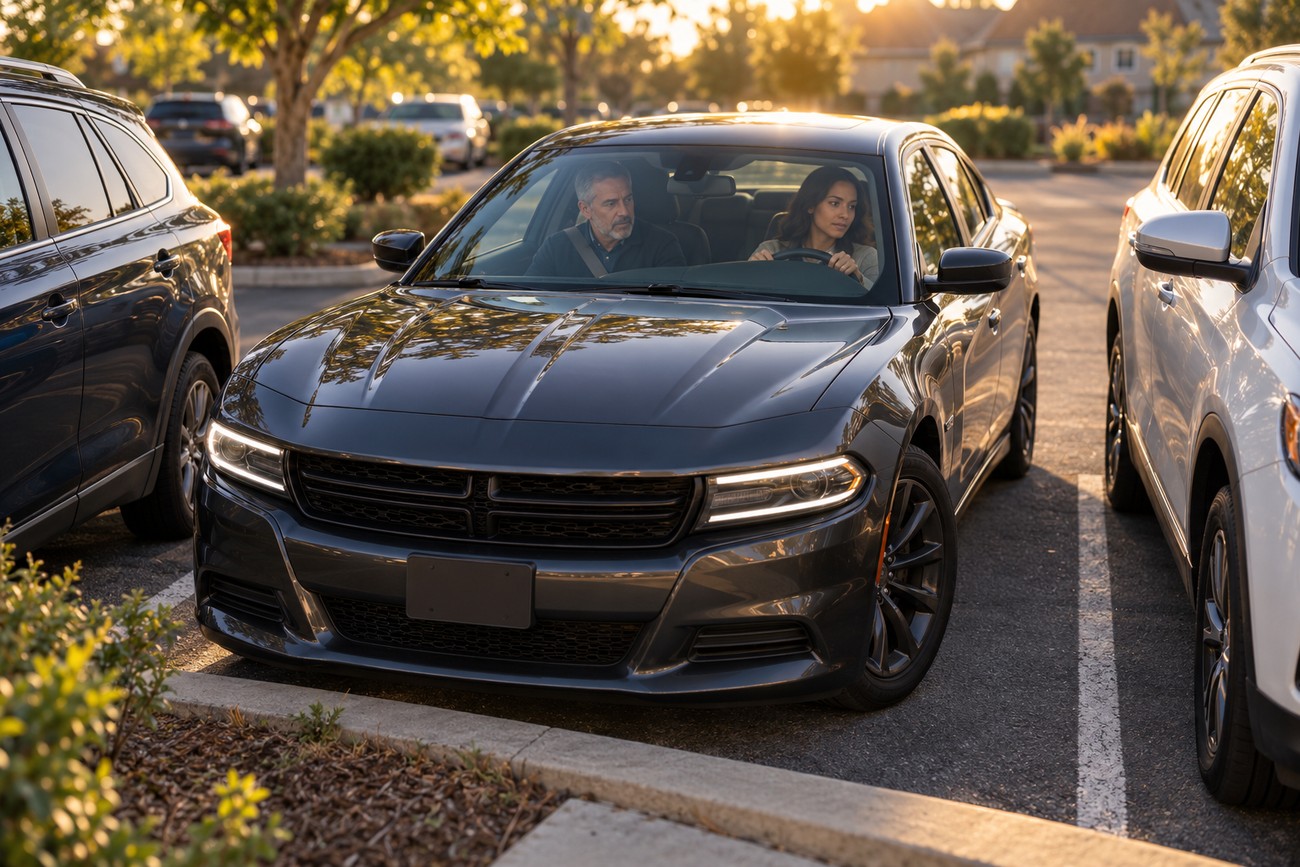
The Charger’s size and weight can make low-speed maneuvering harder for a new driver than in a smaller first car. Parking beside other vehicles, judging a curb, and turning in a narrow space all demand an accurate sense of where the car ends. A camera or parking aid may help, if fitted, but the teen still needs to check around the car and learn its dimensions.
Throttle control is another part of the learning curve. V8 performance trims such as the R/T, Scat Pack, and Hellcat leave less margin for a novice’s acceleration mistakes than a typical beginner car. A hurried start or an overenthusiastic move into traffic can become a speed-management problem before a new driver has settled their steering and observation.
Rear-wheel drive requires appropriate tires and extra care in slippery conditions. Rain can reduce grip, and winter driving calls for tires suited to the conditions where the family lives. Traction-related mistakes are not limited to winter: abrupt acceleration or a poor speed choice can cause trouble on a dry road, too.
Stability control and other electronic aids are useful supports, yet they cannot create grip that the tires do not have. They also cannot choose an appropriate speed or leave enough space for a turn. Supervised practice in ordinary traffic, parking areas, and the conditions the teen will actually encounter gives a better indication of readiness than a brief drive on an empty road.
What crash ratings and driver aids do—and do not—prove
Crash ratings describe aspects of protection in a collision; they do not measure whether a novice is likely to avoid one. Some Charger years and configurations have performed well in crash testing, but those results do not establish that every Charger is a suitable first car. Check the relevant model year and configuration in IIHS and NHTSA information rather than relying on a rating quoted for a different vehicle.
Driver-assistance features vary by model year and equipment. Confirm what the exact car has through its documentation and a hands-on check, including whether any cameras, parking aids, or other advertised systems work as expected. A listing that says “safety features” is too vague to tell you what will help the teen on a daily drive.
A large body can feel reassuring from the driver’s seat, while the same size makes low-speed maneuvering harder for a beginner than in a smaller car. That trade-off matters if the teen will regularly use tight parking spaces or crowded streets. Ask them to demonstrate clear observation and unhurried control rather than assuming the car’s presence will protect them from mistakes.
Electronic aids likewise do not make a powerful trim automatically appropriate for a new driver. Their availability differs between cars, and their effectiveness still depends on sensible speed, sound tires, and driver attention. Treat verified equipment and crash results as evidence to weigh alongside the demands of driving the car.
The ownership costs parents can miss
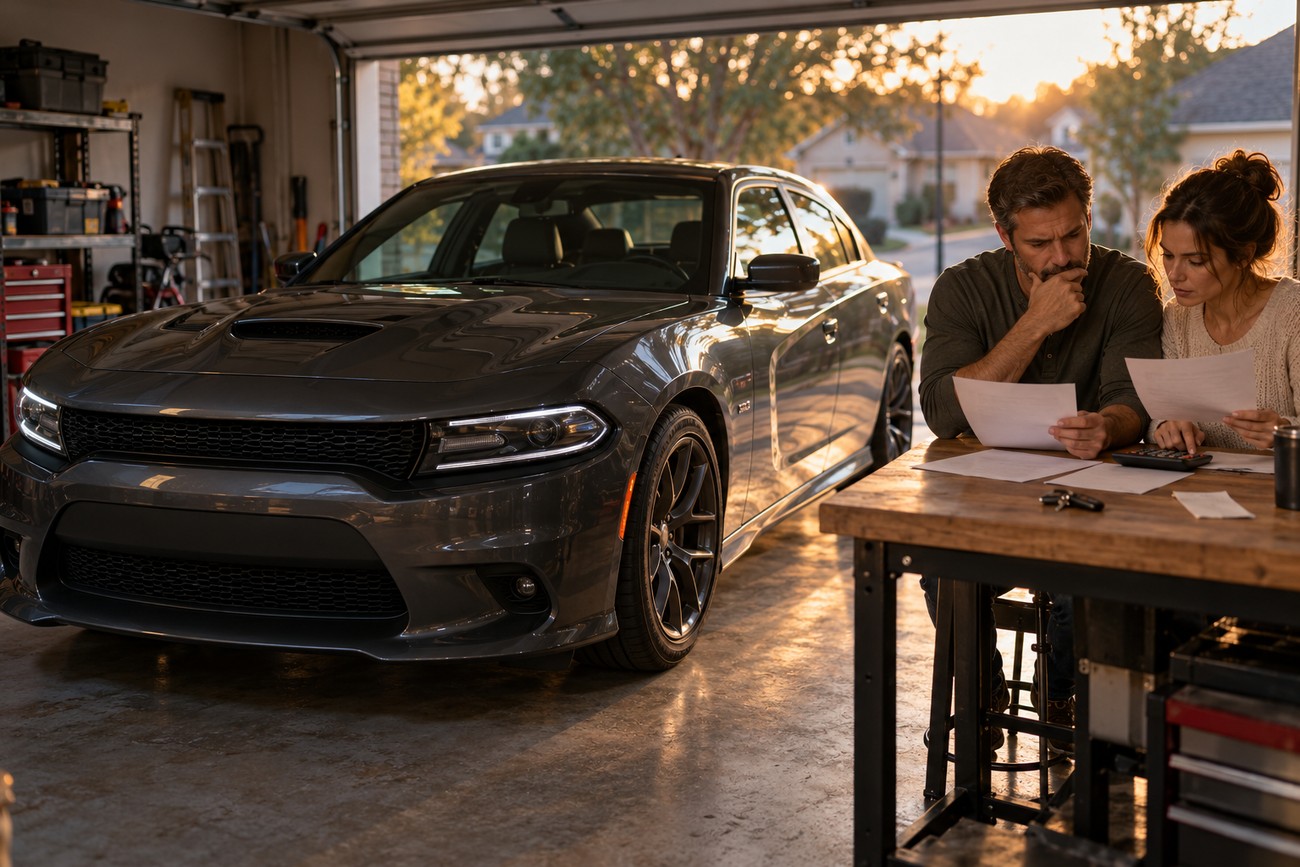
Insurance for a teen in a Charger can be costly, particularly for performance trims. The actual premium requires a quote using the specific vehicle and driver, so request one before agreeing to buy. Check the coverage and deductible as well as the amount due; a cheaper quote may represent a different level of financial protection.
Fuel belongs in the decision before the keys change hands. V8 trims generally create greater fuel-cost pressure than a typical economical first car, especially when the teen will use the car for frequent short trips or a regular commute. Estimate that use realistically rather than judging affordability from the purchase price alone.
Tires and brakes can add materially to ownership costs, especially on a heavy or worn example. Tires suited to local winter conditions may be another necessary expense. A car priced within the family’s purchase budget can still be difficult to keep roadworthy if several wear items need attention soon afterward.
Build a running budget that leaves room for insurance, fuel, maintenance, and repairs. Keep the teen involved in that calculation so they understand what the car requires throughout the year. If the figures only work when nothing wears out and no repair is needed, the Charger is not an affordable first car for that household.
Buying a used Charger without inheriting expensive problems
Start with the service history and an inspection of the exact car. Have an independent professional assess the brakes, suspension, tires, and electronics before purchase. A clean exterior and a low asking price cannot show how much maintenance has been deferred.
Look closely at tire condition and ask whether the tires are appropriate for the conditions in which the teen will drive. Braking feel, suspension noises, and equipment that fails to operate as advertised also deserve attention. These findings affect both the cost of ownership and how predictably the car behaves for a new driver.
A sound, less powerful example may make more sense than a neglected performance trim, although a V6 remains a large car with potentially substantial ownership costs. Ask for an estimate to address inspection findings, then decide whether the vehicle still fits the budget. Walking away from an uncertain car is a reasonable outcome.
During a supervised test drive, let the teen assess seating position, parking visibility, and comfort judging the car’s edges. They should try ordinary low-speed maneuvers without pressure from traffic or a seller. Visibility complaints about one example need not apply to every Charger; what matters is whether this driver can handle this car confidently and carefully.
A practical decision rule before handing over the keys
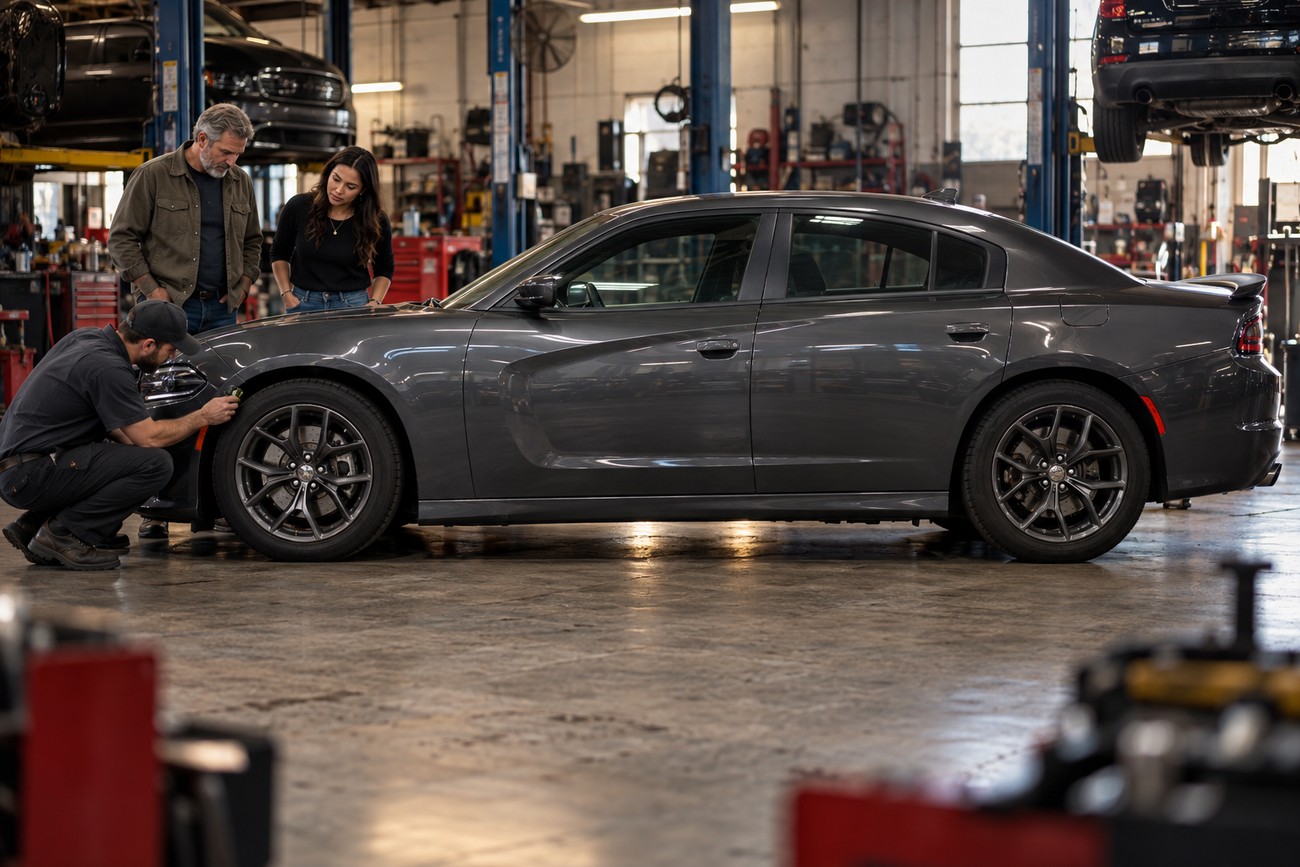
Consider the Charger only if three checks pass: a vehicle- and driver-specific insurance quote fits the budget, an independent inspection supports the purchase, and the teen can maneuver the car calmly. Include realistic fuel, tire, brake, and repair costs in that budget. A favorable purchase price cannot compensate for a failed running-cost check.
If the family proceeds, favor predictable response and sound tires and brakes over extra performance. Use supervised practice to work on parking, gentle acceleration, braking, and speed choice before the teen drives alone. Verify any driver-assistance or parental-control feature on the exact vehicle before making it part of the plan.
Match the tires and practice to local conditions. Rear-wheel drive requires appropriate tires and extra care on slippery roads, with winter tires where conditions require them. Keep practicing smooth control in good weather as well, because traction and speed errors are not confined to winter.
If the budget is tight, the car’s condition is uncertain, or the teen struggles to place it accurately on the road, choose a smaller, less powerful car instead. That is a practical response to the demands of a first car, not a judgment about the teen. The better choice is the vehicle they can learn in and maintain without avoidable pressure.
Frequently asked questions
How much would insurance be for a 17-year-old with a Dodge Charger?
There is no reliable universal price. Give insurers the exact vehicle details, the teen’s driver information, where the car will be kept, and its expected use. Compare available options on the family’s policy and any other suitable arrangements, keeping coverage and deductibles consistent so the quotes are meaningful.
What should a teenager’s first car offer instead of a Dodge Charger?
Shortlist cars the teen can place easily in a parking space and accelerate smoothly in ordinary traffic. For each candidate, check model-year-specific crash results, verify the safety equipment on the actual vehicle, and obtain an insurance quote. A smaller car is only a better alternative if its condition and total costs also stand up to scrutiny.
What’s the best first car for a teenager?
The best first car is a well-maintained vehicle that the particular teen can control consistently and the family can afford to insure and maintain. On a test drive, look for comfortable sightlines, straightforward controls, and calm low-speed handling. Compare those observations with the vehicle’s inspection results rather than choosing by size or image alone.







