

Built from 1968 to 1974, the Ginetta G15 is a small-batch British sports car with an unusually direct recipe: a low, light body, a short wheelbase, and an Imp engine mounted at the rear. Its modest capacity is part of the appeal. In a car this light, the engine can make the drive feel more vivid than its figures suggest.
That appeal depends heavily on condition. Age, cooling-system faults, hidden corrosion, and scarce body fittings can turn a promising G15 into a long sorting project. The badge tells you what the car could be; its restoration history and present setup tell you what it is.
- What the Ginetta G15 Is—and Why It Still Matters
- The Imp Engine: Small Capacity, Big Character
- How the G15 Drives: Lightness Before Horsepower
- Cooling, Corrosion and the Real Cost of Ownership
- How to Inspect a Ginetta G15 Before Buying
- Originality, Modifications and Finding the Right Example
- Frequently asked questions
- How much does a Ginetta G15 cost?
- What is the best lightweight sports car?
- Where can I find a Ginetta G15 for sale?
What the Ginetta G15 Is—and Why It Still Matters
The G15 was produced from 1968 to 1974 as a compact, low British lightweight sports car. It has a rear-engine, rear-wheel-drive layout and a short wheelbase, giving it proportions quite different from a conventional small front-engine coupe. Its small-batch origins are part of its character, though individual cars may differ in equipment and later modifications.
Typical quoted mass is approximately 500–550 kg, depending on specification and source. That figure matters more to the driving experience than a power claim on its own: less weight asks less of the engine, brakes, and tires. The low body also places the driver close to the road, making speed feel immediate without requiring a large engine.
The short wheelbase gives the G15 quick responses, but it leaves little room for careless setup. Tires and suspension choices that seem minor on a heavier car can have a noticeable effect here. This is why a well-sorted example can be more rewarding than one advertised with a higher output and little evidence of careful preparation.
Its significance lies in that combination of lightness and unusual packaging. The G15 is neither a cheap-to-maintain toy nor a miniature grand tourer. It is a focused old sports car whose strengths are easiest to appreciate when its mechanical condition is known.
The Imp Engine: Small Capacity, Big Character
The G15’s reputation is closely tied to its 875 cc Imp four-cylinder engine, which has an aluminum block. Mounted at the rear, it gives the car its distinctive balance and compact packaging. Its small capacity also makes engine condition and tune particularly relevant to how the car feels on the road.
Power claims commonly range from approximately 40–65 bhp. That spread covers standard, club-developed, and modified examples, as well as differences between advertised figures and an engine’s measured condition. A figure quoted for one G15 should therefore never be assumed to describe another.
A commonly quoted top-speed range is approximately 160–170 km/h, although it is more useful as period context than as a promise about a car for sale. Acceleration depends on the state of the engine and gearbox, while usable response depends on carburetor adjustment. A clean-running engine that pulls consistently is worth more on a test drive than an unverified peak-power claim.
The Imp engine’s straightforward design can make repairs seem approachable, yet cooling and lubrication deserve close attention. Poor assembly or an unsuitable setup can undermine the advantages of the lightweight aluminum unit. Before considering performance changes, establish that the engine starts, warms up, and runs under load as it should.
How the G15 Drives: Lightness Before Horsepower

Low mass and a short wheelbase give the G15 its sense of immediacy. It changes direction with little of the inertia associated with larger classics, and its compact dimensions make placement easy to judge. The result is engaging at ordinary road speeds, provided the car tracks consistently and its controls are properly adjusted.
Rear-engine weight distribution makes tire choice and alignment especially consequential. Different tires, springs, dampers, or settings can alter the balance enough to change a driver’s confidence in a corner. Braking balance matters too: on a light car, uneven adjustment is harder to dismiss as a minor imperfection.
More engine output is not necessarily the best route to a better G15. Predictable response on the way out of a corner, dependable cooling, and traction you can use repeatedly are more valuable than a strong single acceleration run. An owner evaluating upgrades should judge the whole car, including its suspension and brakes.
Expect mechanical noise, cabin resonance, and vibration rather than modern refinement. Some of that intensity is intrinsic to the experience, but rattles or harshness should not automatically be excused as “character.” A drive in more than one set of road conditions helps separate the car’s basic personality from faults that need attention.
Cooling, Corrosion and the Real Cost of Ownership
Thermal management is a central ownership concern for an Imp-based G15. A car that behaves during a brief viewing may still run hot in slow traffic. Radiator condition, gaskets, the water pump, trapped air, and incorrect coolant routing can all contribute, so an overheating complaint needs diagnosis rather than a single speculative replacement part.
Engine health also depends on sound lubrication, particularly where earlier work or modifications are poorly documented. Carburetor settings can cause difficult cold starts, an unstable idle, or hesitation under load. Those symptoms may be fixable, but they are reasons to investigate the quality of the car’s setup before relying on it for regular trips.
Fiberglass or thin exterior panels do not make the rest of the car corrosion-proof. Inspect floors, chassis-related mounts, hidden cavities, and fittings, including areas that a tidy exterior can conceal. Corrosion near a mounting point has different implications from a cosmetic blemish and deserves a closer assessment.
Mechanical parts may be obtainable through the wider Imp ecosystem. Body panels, trim, and small exterior hardware are often harder to source, and even modest missing pieces can delay a restoration. The cost of finding, shipping, fitting, or fabricating them may matter more than the price of the obvious mechanical repair.
Finally, allow for the time spent sorting an older small-batch car. Vibration can expose hurried repairs, and one poorly assembled system may lead to repeated minor faults. A G15 described as ready to drive should be judged by sustained, consistent operation, not by how cleanly it starts for a seller.
How to Inspect a Ginetta G15 Before Buying
Begin with identity. Check how the chassis, identification plate or VIN, body, engine, and paperwork relate to one another, and ask for records explaining replacements or alterations. On a car built in small batches and potentially changed over decades, an apparent mismatch needs a documented explanation.
Arrange to see the engine start cold, then allow enough running and driving time to assess idle, response under load, and cooling at normal operating temperature. Check for evidence of oil-pressure problems, gearbox faults, and leaks rather than relying on a short drive around the block. A temperature gauge that looks reassuring during gentle movement does not establish how the system behaves in traffic.
Before trusting an apparently finished restoration, inspect the wiring, hose routing, and fastener choices alongside the cooling system. Untidy work in those less visible areas can reveal how carefully the rest of the car was assembled.
Look underneath and around mounts for structural corrosion, then examine floors, hidden cavities, and fittings. During the drive, assess whether the brakes pull or feel inconsistent and whether the suspension settles predictably. Ask what tires, springs, dampers, and alignment settings are fitted; parts that are new are not automatically suitable.
A heavily modified G15 without a clear history is a separate buying risk. It can take substantial work to establish which parts are original, which Imp-based components are compatible, and how earlier changes interact. A well-documented modification is easier to assess than an unexplained one, even if the latter comes with impressive performance claims.
Put restoration quality and records ahead of rarity, advertised speed, or a freshly detailed exterior. Invoices, photographs of structural work, and a coherent account of mechanical changes give you a basis for judging the car. If those are absent, budget for inspection and remedial setup as though its “finished” status remains unproven.
Originality, Modifications and Finding the Right Example
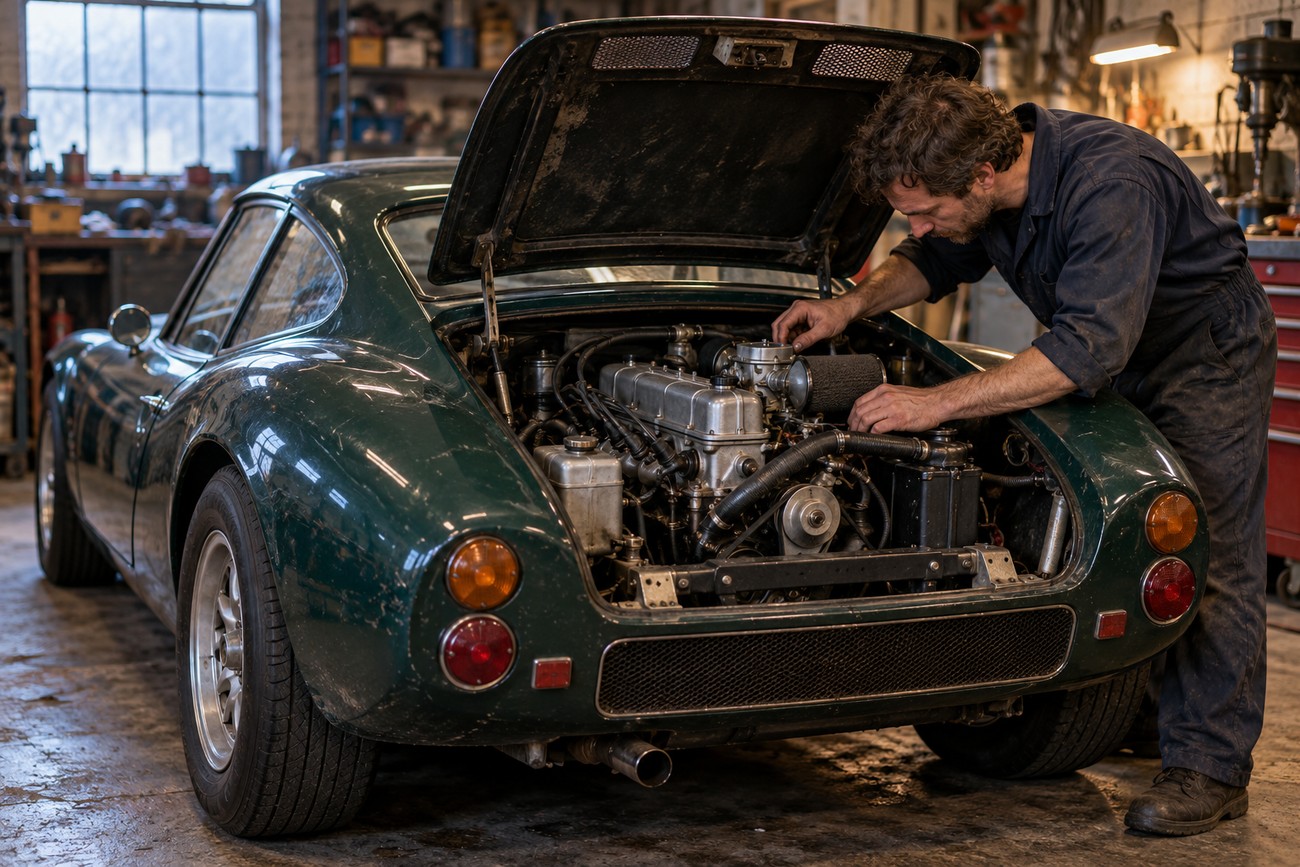
Collector originality and dependable regular use are related, but they are not identical goals. An original component has value when its identity and condition are established. A compatible, well-documented Imp-based change can be the more sensible choice for a driver if it has been fitted and set up properly.
Small-batch construction and decades of repairs mean G15 examples can differ in details. That makes assumptions based on another car or a generic parts list risky. Record what is fitted to the example in front of you, especially before ordering components or commissioning work.
Ginetta and Imp clubs, marque communities, and specialist contacts can help identify parts and established solutions. A general workshop may be capable of routine work, but familiarity with the car’s layout and component variations can save expensive guesswork. Keeping records of your own car’s specification makes future maintenance easier.
A low purchase price should leave room for shipping scarce parts, sourcing missing fittings, and correcting unsuitable setup choices. Rarity does not guarantee reliability, and an apparently complete car may still require substantial sorting. The right example is the one whose condition, engineering, and history you can understand before committing.
Frequently asked questions
G15 prices and suitability vary too much for a single figure or verdict to be useful. Compare cars by their documented condition and by the kind of driving you intend to do; those details will guide both the search and the inspection.
How much does a Ginetta G15 cost?
There is no single reliable price for every Ginetta G15. A project, a usable car needing further sorting, and an exceptional documented example can occupy widely different positions in the market. Chassis integrity, restoration quality, completed mechanical work, originality, and records all affect what a particular car is worth.
Compare the likely work remaining as well as the asking price. A cheaper example with missing trim, uncertain identity, or unresolved cooling faults may cost more to put right than a better-documented car.
What is the best lightweight sports car?
The best lightweight sports car depends on how you plan to use it. The G15 suits someone who wants compact rear-engine character and accepts the need for specialist knowledge and careful setup. Its low weight gives it appeal without making touring comfort or easy parts supply part of the bargain.
If frequent long journeys, broad parts availability, or simpler routine maintenance take priority, a more readily supported lightweight car may be a better fit. Choose by the ownership experience you can sustain, rather than a power-to-weight figure alone.
Where can I find a Ginetta G15 for sale?
Search specialist Ginetta and Imp clubs, marque forums, classic-car classifieds, auctions, and owner networks. Cars may appear through enthusiasts before they reach a broad marketplace, so a patient search is useful.
Before traveling, request photographs of the chassis and identification details, restoration records, and a clear description of modifications. Those documents help you decide whether a car warrants an in-person inspection and which questions to take with you.







