

A company founded to make refrigerator-equipment components eventually became the owner of Volvo Cars, one of the most recognizable names in automotive history. The path from Geely’s first industrial business to a Swedish premium-car brand ran through motorcycles, licensed car production, exports, and a deliberate search for engineering credibility.
The ownership story remains easy to misread. Geely Holding controls Volvo Cars, while Volvo Cars remains a separate company with substantial autonomy; AB Volvo, the truck and industrial group, is a different legal entity. The 2010 transaction was therefore an industrial strategy involving capital, technology, market access, and corporate boundaries rather than a simple takeover that erased Volvo’s identity.
- From Refrigerator Components to Car Manufacturing
- What Geely Actually Bought from Ford in 2010
- Why Geely Wanted Volvo—and Why Volvo Needed Geely
- Ownership, Autonomy, and the Geely Corporate Structure
- What the Geely–Volvo Synergy Changed—and What It Did Not
- The Global Expansion Behind the Volvo Purchase
- Four Myths About Geely Owning Volvo
- Frequently asked questions
- How much of Volvo does Geely own?
- Why does Geely own Volvo?
From Refrigerator Components to Car Manufacturing
Li Shufu founded Geely Holding in 1986 as a manufacturer of refrigerator-equipment components. That origin is often presented as a punchline, yet it describes only the first stage of a broader industrial progression. The company developed manufacturing experience before moving into transportation products.
The group moved into motorcycle manufacturing in 1994. Its automotive activity began in 1997, and the first car appeared in 1998. This sequence matters because Geely did not jump directly from refrigerator components to Volvo; it accumulated production knowledge and commercial experience across several stages.
Geely received official permission to produce cars of its own design in 2002. That licensing process was significant in China’s regulated automotive market, where access to vehicle production was controlled and large state-linked manufacturers held much of the established industry.
The group adopted the name Zhejiang Geely Holding Group in 2003 and began exporting vehicles to Africa, the Middle East, Latin America, and Eastern Europe. These early export markets gave Geely experience with different regulations, customer expectations, and distribution systems before the group pursued a major premium-brand acquisition.
What Geely Actually Bought from Ford in 2010

In late March 2010, Geely Holding bought Volvo Cars’ passenger-car business from Ford. The transaction transferred control of the car company associated with Volvo sedans, wagons, and SUVs. It did not transfer every business that used the Volvo name.
Volvo Cars is a separate passenger-car company. AB Volvo, also known as the Volvo Group, focuses on trucks and other commercial and industrial products. Geely’s purchase from Ford therefore did not mean that Geely bought the entire AB Volvo group or Volvo’s truck operations.
Verify the legal entity, vehicle brand, manufacturing site, and parts or platform agreement separately. Shared branding alone does not prove shared ownership, shared factories, or interchangeable components.
The distinction remains important for investors, owners, and journalists. A reference to “Volvo” can describe Volvo Cars, AB Volvo, or the broader historical brand association, while the ownership and business consequences differ in each case.
Geely’s later investment in AB Volvo was separate from its ownership of Volvo Cars. Treating the two transactions as one purchase creates a misleading picture of both companies and exaggerates the scope of Geely’s control over Volvo-branded businesses.
Why Geely Wanted Volvo—and Why Volvo Needed Geely
For Geely, Volvo offered a shortcut to capabilities that would have taken years to build internally. Those capabilities included global safety engineering, environmental know-how, product development processes, and premium-brand management. The acquisition also gave Geely access to experienced engineers and a stronger platform for international expansion.
Premium credibility was another strategic asset. Geely’s early identity was associated with affordable vehicles, while Volvo carried established associations with safety, Scandinavian design, and technical competence. Owning Volvo Cars allowed the group to operate across several market positions instead of relying on a single mass-market brand.
Volvo Cars also needed a stronger financial and industrial base after its period under Ford ownership. New capital could support product development and manufacturing, while access to China offered a major market and a route to reduce dependence on mature North American and European markets.
The transaction was therefore useful to both sides, although the benefits were uneven and had to be managed. Geely needed Volvo’s capabilities without destroying the brand’s credibility. Volvo Cars needed investment and scale while preserving the engineering standards and identity that made the company valuable.
That logic makes the deal a long-term industrial strategy rather than a one-time public-relations purchase. The difficult work involved coordinating research, platforms, factories, market plans, and legal rights while keeping separate brands credible to different customers.
Ownership, Autonomy, and the Geely Corporate Structure
Geely Holding, Geely Auto, Volvo Cars, and AB Volvo are separate names with different corporate roles. A simplified comparison helps prevent the common mistake of treating the holding company, a listed operating business, a passenger-car brand, and a commercial-vehicle group as one entity.
| Entity | Role | Relationship to the others |
|---|---|---|
| Geely Holding | Parent group with multiple automotive brands, subsidiaries, and joint ventures | Owns Volvo Cars and holds interests in other automotive businesses |
| Geely Auto | Automotive operating and reporting business associated with Geely-branded vehicles | Part of the wider Geely corporate structure; it is not another name for Volvo Cars |
| Volvo Cars | Separate passenger-car company | Controlled by Geely Holding while retaining substantial autonomy in design and development |
| AB Volvo | Volvo Group producing trucks and other commercial and industrial products | Separate from Volvo Cars; Geely later announced an 8.2% stake in AB Volvo |
Shareholder control does not automatically create identical management, products, factories, or service systems. Volvo Cars retained substantial autonomy in design and development after the 2010 transaction, even as Geely influenced capital allocation and broader strategic direction.
The structure is difficult to assess because Geely Holding operates through multiple brands, subsidiaries, and joint ventures. For investors and suppliers, the relevant question is often which legal entity signs a contract, owns an intellectual-property right, reports revenue, or carries a particular operational risk.
The same caution applies to technology. A relationship inside one part of the group does not prove that every Geely and Volvo vehicle uses the same software, parts, electronics, manufacturing process, or service procedure.
What the Geely–Volvo Synergy Changed—and What It Did Not
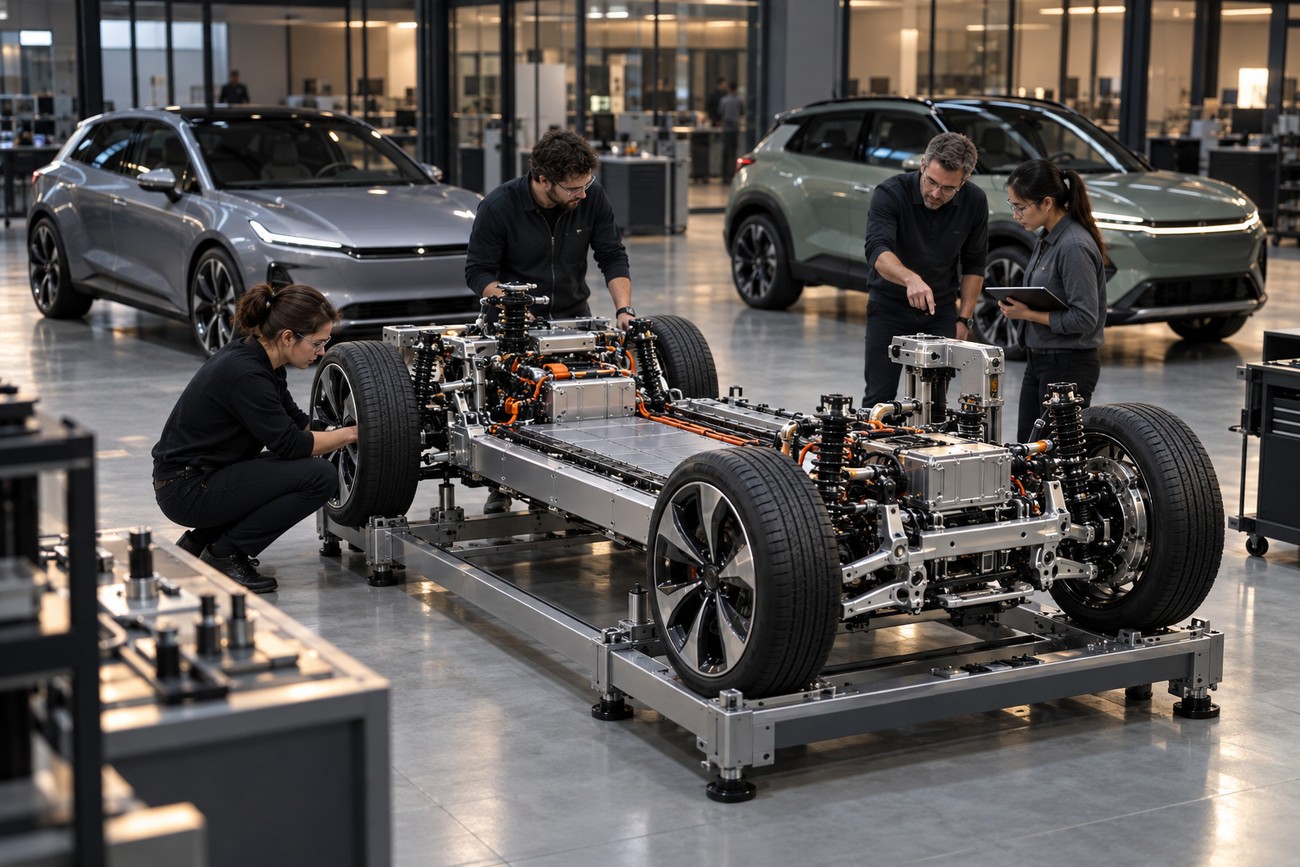
One visible result of cooperation was the development of CMA, a platform architecture created through cooperation between Geely and Volvo. In automotive terms, a platform is a technical foundation that can support multiple models, including basic structures and systems that engineers adapt for different vehicles.
Shared architecture can reduce duplicated engineering work and make it easier to develop several models for different markets. It can also help a growing group spread research costs across brands. The practical result depends on how much of the architecture each vehicle uses and how extensively engineers modify it.
Technology transfer requires agreements, engineering adaptation, and investment. Ownership does not make every component, electronic system, software package, or service procedure interchangeable. A platform relationship can produce common technical foundations while leaving substantial differences in dimensions, calibration, safety equipment, software, and manufacturing location.
Marketing language often compresses these distinctions into the word “synergy.” That is useful for presenting a corporate strategy, yet it can mislead customers who assume that a Volvo part will fit a Geely vehicle or that a dealer’s diagnostic procedure applies across the entire group.
The deeper issue concerns rights as well as hardware. Shared technologies may involve separate development responsibilities, licensing terms, and restrictions on how a system can be reused. The public usually sees the brand relationship more clearly than the legal arrangements governing the underlying technology.
The Global Expansion Behind the Volvo Purchase
Geely’s international strategy was already developing before the Volvo transaction. After adopting the name Zhejiang Geely Holding Group in 2003, the company exported vehicles to Africa, the Middle East, Latin America, and Eastern Europe. Those markets helped establish an outward-looking commercial base.
Later investments broadened the group’s reach. In 2017–2018, Geely announced an 8.2% stake in AB Volvo. It later announced a stake of nearly 10% in Daimler, reinforcing the group’s position as a global automotive holding company rather than a single-brand Chinese manufacturer.
Geely’s stated manufacturing capacity is approximately 1.95–2 million vehicles annually. Official industrial figures are about 1.95 million, while marketing and banking materials often round the figure to 2 million. These figures reflect different reporting conventions.
Reported 2025 Geely Auto revenue figures also vary, ranging from 345.2 billion yuan to 367.4 billion yuan depending on the report or revenue definition. That discrepancy is a reminder to check whether a figure describes a listed operating company, a broader group, or a particular accounting scope before comparing it with another company.
Four Myths About Geely Owning Volvo
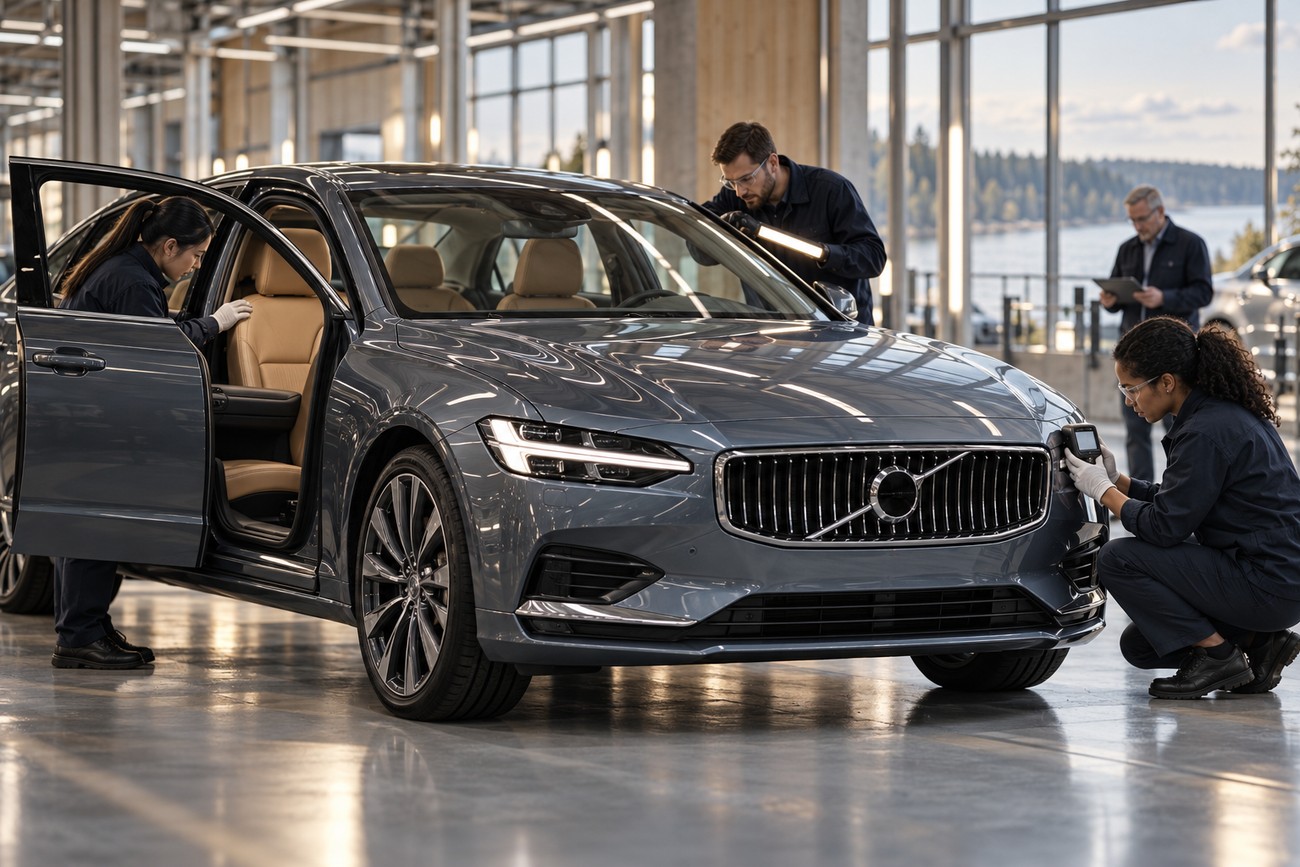
The first myth is that Volvo became a budget Chinese brand after the acquisition. Volvo Cars remained a separate premium company, and its engineering and production operations in Sweden and Europe continued. Geely ownership changed the shareholder and industrial context without eliminating Volvo’s premium positioning.
The second myth is that Geely bought Volvo Trucks. The 2010 transaction concerned Volvo Cars’ passenger-car business, which Ford owned at the time. AB Volvo is a separate company focused on trucks and other commercial and industrial products; Geely’s later 8.2% investment in AB Volvo was a distinct transaction.
The third myth is that every Volvo is built in China. Volvo Cars retained production operations in Sweden and Europe, and ownership did not dictate a single manufacturing geography. The location of a particular vehicle depends on its model, market, and production program.
The fourth myth is that Volvo technology moved to Geely for free. Shared platforms and systems require legal agreements, engineering adaptation, and investment. A common corporate owner can make cooperation easier, yet it does not erase intellectual-property boundaries or guarantee identical parts and service procedures.
Some limits remain difficult to see from the outside. Geely’s businesses are exposed to Chinese regulation and the domestic market, while its multi-brand structure complicates analysis of risk and technology rights. The group’s global branding therefore exists alongside Chinese corporate control, a tension that cannot be resolved by marketing language alone.
Frequently asked questions
The central distinction is between Volvo Cars and AB Volvo. Geely owns Volvo Cars, while AB Volvo is a separate truck and industrial group in which Geely holds a minority stake. Cooperation between related businesses can also involve shared platforms without making their products or operations identical.
How much of Volvo does Geely own?
Geely Holding owns Volvo Cars, the passenger-car company. The answer changes if “Volvo” means AB Volvo: Geely announced an 8.2% stake in AB Volvo in 2017–2018, and that minority investment is separate from its ownership of Volvo Cars.
Volvo Cars and AB Volvo have different corporate identities, management structures, and product areas. One produces passenger vehicles, while the other is the Volvo Group focused on trucks and other commercial and industrial products.
Why does Geely own Volvo?
Geely owns Volvo Cars because the acquisition combined complementary strengths. Geely gained access to established safety, environmental, engineering, and premium-brand capabilities, while Volvo Cars gained capital, scale, and stronger access to the Chinese market.
The arrangement also created a framework for cooperation on products and platforms such as CMA. Its practical value depends on separate agreements and engineering work, so ownership supports cooperation without making the two companies identical.







