
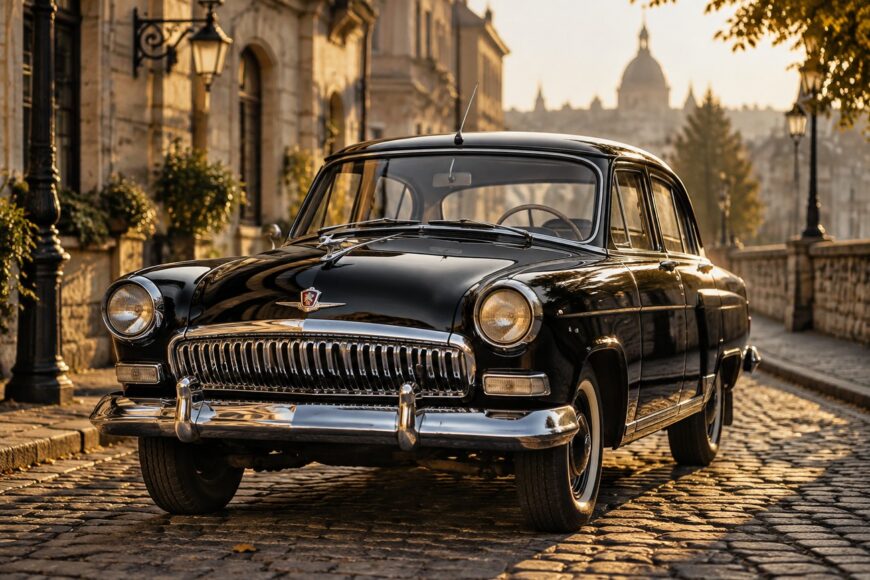
The GAZ-21 Volga still carries the presence of a Soviet status symbol: broad bodywork, prominent chrome, and the sense that it was built for someone important. From behind the wheel today, it is an old rear-wheel-drive sedan with drum brakes, modest power, and responses that demand more planning than modern traffic usually allows. Its appeal is real, but its reputation cannot compensate for worn mechanical parts.
Owning one means deciding how much period character to preserve and where to make discreet improvements for safer, more reliable use. Fuel stops can be frequent, heat can expose weaknesses in the cooling system, and a small fault may start a long search for parts. The best drives come from understanding those limits rather than expecting the Volga to behave like a modern car in vintage clothing.
- Why the GAZ-21 Still Signals Status—and What That Means on the Road
- GAZ-21 Specifications: What the Numbers Mean
- What Driving a GAZ-21 Feels Like in Modern Traffic
- The Ownership Reality: Fuel, Heat, and Small Failures
- Buying One: Condition Matters More Than Chrome
- Safety, Wet Roads, and the Daily-Driver Question
- Authenticity vs. Usability: How Owners Make the Volga Work Today
- Frequently Asked Questions
- What is the average price of a GAZ-21 Volga?
- What is a GAZ-21 Volga likely to cost in 2026?
- Why do GAZ-21 prices vary so widely between listings?
- What was the worst Soviet car?
Why the GAZ-21 Still Signals Status—and What That Means on the Road
Produced at the Gorky Automobile Plant from 1956 to 1970, the GAZ-21 became closely associated with prestige and official life. Its size and distinctive styling still draw attention that an ordinary old sedan rarely receives. That recognition is part of the pleasure of ownership, especially if you enjoy the social history as much as the drive.
The familiar image can also flatten a varied production history. Appearance, engines, and components changed across years and series, so two cars advertised as GAZ-21s may differ in important details. Before buying parts—or deciding what a restoration should look like—identify the particular car rather than relying on a general description of the model.
Prestige is a poor guide to road manners. A car admired at a show may feel slow to react at a junction, require a wider margin for braking, and offer little of the protection expected in a current sedan. Judge the Volga by how the example in front of you starts, steers, stops, and stays cool, not by the strength of its legend.
GAZ-21 Specifications: What the Numbers Mean
GAZ-21 figures vary by modification and reference source, while fuel use changes markedly with the car’s condition and driving conditions. Treat the table as a guide to the commonly cited version and published ranges, not a promise about an individual car.
| Item | Specification or published figure |
|---|---|
| Base engine | 2.432-liter inline four-cylinder, overhead-valve design, aluminum block, and cast-iron wet liners |
| Factory power | 65 hp at 3,800 rpm for the commonly cited factory version |
| Factory torque | 167 Nm at 2,200 rpm for the commonly cited factory version |
| Transmission | Three-speed manual with synchronizers on second and third gears |
| Curb weight | 1,350–1,460 kg, varying by modification and reference source |
| Ground clearance | Often listed as 190 mm |
| Published fuel consumption | 8.8–15 L/100 km across catalogs and reference sources; 15 L/100 km is frequently cited for city driving |
What Driving a GAZ-21 Feels Like in Modern Traffic

The commonly cited 65 hp and 167 Nm give the engine a low-revving, unhurried character. It can pull the car along without constant urgency, though its performance leaves little room for an optimistic overtaking decision. You get more from anticipating the road than from asking for a sudden burst of speed.
The three-speed manual has synchronizers on second and third gears. Its small number of ratios makes each gear choice matter, especially as traffic changes pace around you. A driver accustomed to a modern gearbox will need to slow down the whole sequence of approaching a turn, selecting a gear, and accelerating away.
Ground clearance is often listed as 190 mm, useful when a poor surface might trouble a lower sedan. It does not make the suspension precise or erase the car’s size and weight. Through ruts or a sudden change of direction, smooth inputs and a measured speed matter more than the extra space beneath the body.
Noise, vibration, and dated ergonomics keep the drive firmly in the vintage category. On a relaxed road, they give you a close sense of the machinery; in busy traffic, they add to the work of monitoring speed, gaps, and the car’s response. The Volga rewards a patient driver, while a crowded commute can make the same qualities tiring.
The Ownership Reality: Fuel, Heat, and Small Failures
Published fuel-consumption figures span 8.8–15 L/100 km across catalogs and reference sources. For city driving, 15 L/100 km is frequently cited, and a worn or poorly tuned car can exceed it. Budget for the use of the car you can actually inspect, rather than the lowest figure attached to the model.
Carburetor adjustment, ignition timing, compression, and tire condition all affect how readily a GAZ-21 moves and how much fuel it uses. Rough running can therefore have more than one cause. Simply filling the tank and expecting an old engine to settle into reliable service is an expensive assumption.
Check cooling behavior alongside ignition and carburetor settings when a car runs poorly in traffic. Treating every rough idle or hot-running episode as an isolated carburetor fault can leave the underlying problem untouched.
Traffic and hot weather can expose weaknesses in an aging cooling system. A radiator that looks presentable may still need attention, while hoses and seals can deteriorate even on a car that has covered little distance. Test how the engine behaves after it has warmed fully, rather than judging it only by a brief start-up.
Older sources also record a temporary state fuel-consumption norm of 13.5 L/100 km. It is useful historical context, not a modern consumption guarantee. For an owner, the more consequential numbers are the time and money needed when tired wiring, a wheel hub, or another small component requires diagnosis and a compatible replacement.
Buying One: Condition Matters More Than Chrome
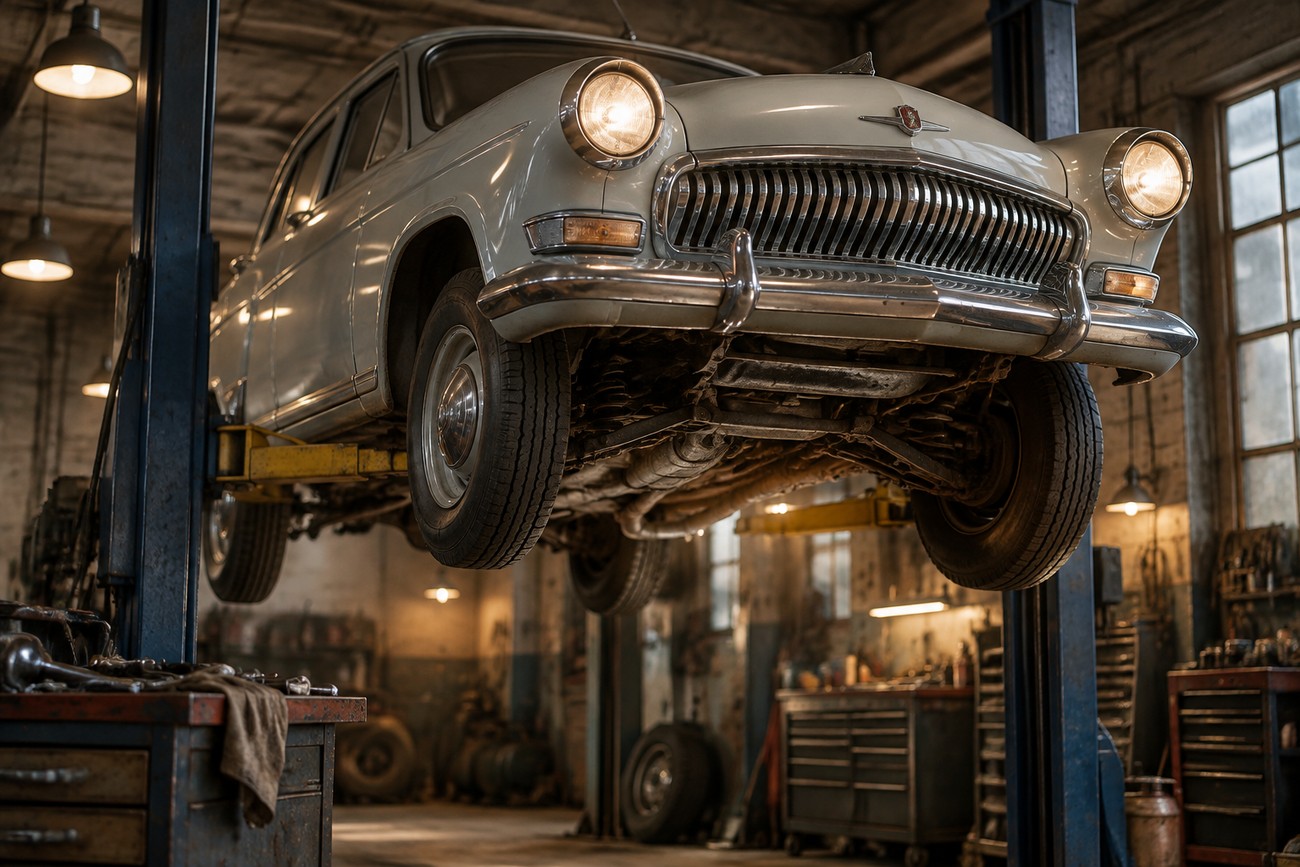
Begin with the structure. A running GAZ-21 can conceal corrosion and low-quality body repairs beneath tidy paint, and those faults are harder to put right than worn trim. Inspect the body carefully and seek an informed assessment before letting a convincing test drive settle the purchase.
Shiny chrome and a presentable cabin tell you little about the condition of the brakes, steering, or electrical system. Check those systems first, then examine the cooling system and signs of leaks or overheating. A seller’s description of a car as “on the road” only establishes that it has been driven, not that it is ready for repeated use.
Low mileage offers limited reassurance when age has been working on rubber parts, hoses, seals, and wiring. Ask what was replaced, when the work was done, and whether there is evidence to support it. An unused restoration may need substantial recommissioning before a long journey.
Allow money and time for consumables, rare parts, and repeated small adjustments after purchase. This changes the apparent value of a cheap, running car: deferred work can absorb the saving while keeping it off the road. A sound structure and documented mechanical attention are worth more to a driver than cosmetic shine alone.
Safety, Wet Roads, and the Daily-Driver Question
The GAZ-21’s drum brakes and period suspension call for a larger stopping-distance margin than you would leave in a modern car. In busy traffic, that means watching farther ahead and resisting the temptation to close a gap simply because the vehicle in front has done so. Brake condition is essential, but even a well-maintained system remains a design from another era.
Rear-wheel drive and old tires can make grip especially difficult to judge on wet or icy surfaces. Owners report sliding that arrives with little reassurance from the car beforehand. Appropriate tires in sound condition help, yet cautious speed and gentle steering and braking remain necessary.
Clearance that helps on a rough road does not protect you from a rut or a sudden evasive maneuver. The car needs space to settle after an input, so it is better driven with an escape margin than threaded through traffic on last-second decisions. Its slower responses should shape your route and timing as well as your driving style.
There are no airbags, ABS, ESP, or modern crash-protection structure. That does not mean every journey is inherently unsafe; it does mean the consequences of a mistake are harder to mitigate. Occasional drives in suitable conditions are a more natural fit than an everyday commute that demands reliable stops and quick reactions in all weather.
Authenticity vs. Usability: How Owners Make the Volga Work Today
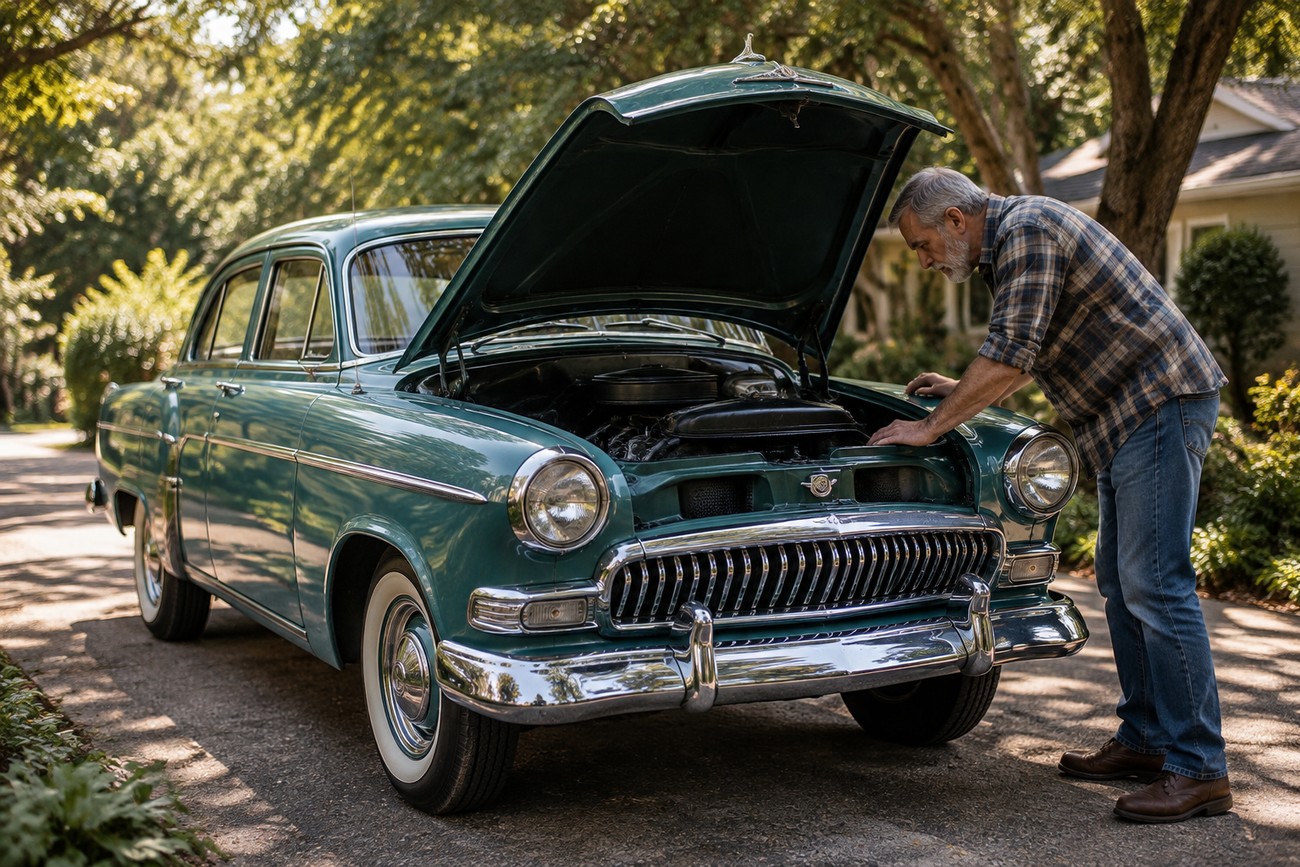
A GAZ-21 need not surrender its character to become more usable. Sound tires, carefully maintained brakes, dependable wiring, and an effective cooling system make more difference to a drive than a cosmetic alteration. The aim is to keep the period experience enjoyable without preserving avoidable faults for the sake of purity.
Restoration quality and the present condition of components matter more to daily usability than the car’s reputation. A balanced combination of authenticity and safe, usable operation is often more practical than originality at any cost. Any changes should be understood and documented, particularly when a future owner must service the car.
Improvements cannot replace inspection or regular adjustment. Carburetor and ignition settings, compression, tires, and the condition of the brakes still determine whether the Volga feels reassuring or troublesome. It suits someone willing to maintain an old machine, plan journeys around its limits, and accept that part of ownership takes place before the engine starts.
Frequently Asked Questions
GAZ-21 values depend on the individual car and the market in which it is sold. These questions are best approached through evidence of condition and completed work, rather than a single headline figure.
What is the average price of a GAZ-21 Volga?
There is no reliable universal average price for a GAZ-21 Volga. Compare cars in the same local market by structural condition, originality, restoration quality, mechanical work, and documentation. An asking price becomes more meaningful when you know which repairs have been completed and which remain your responsibility.
What is a GAZ-21 Volga likely to cost in 2026?
In 2026, assess current local listings as a range of projects and usable cars rather than expecting one representative price. A low-priced project may need extensive structural and mechanical work, while a restored car should justify its premium with evidence of what was done and how it drives. Advertised asking prices are also distinct from completed-sale values, so use them as starting points for comparison rather than proof of what buyers pay.
Why do GAZ-21 prices vary so widely between listings?
Two GAZ-21s can look similar in photographs while carrying different repair bills. Hidden corrosion, non-original parts, incomplete restoration, and neglected mechanical systems can all change the value substantially. Inspect underneath the presentation and check the work history before treating a price gap as a bargain or an overcharge.
What was the worst Soviet car?
There is no defensible single “worst Soviet car” without first choosing a criterion. Reliability, safety, comfort, and the conditions for which a car was produced lead to different judgments. The GAZ-21’s weaknesses against modern traffic are clear, but that comparison alone does not establish a historical ranking across unrelated Soviet models.







