
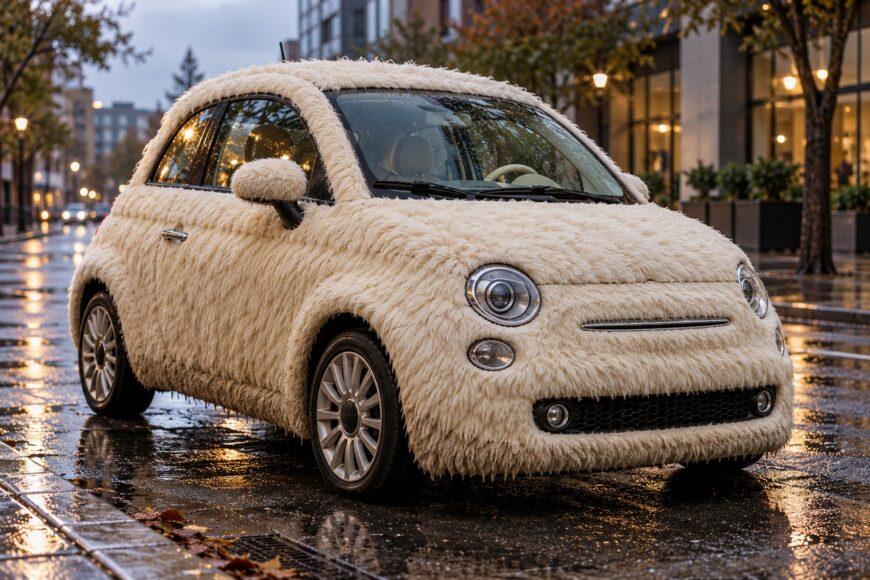
A Fiat 500 covered in fur turns a familiar city hatchback into an instant art object. The rounded body becomes a moving texture, catching light differently from every angle and making the car look closer to a sculpture than ordinary transportation.
That visual shock creates the central engineering conflict. The Fiat 500 from model years 2007–2015 is a small hatchback designed around predictable airflow, cooling, lighting, and visibility. A furry outer shell must still survive weather, remain securely attached, and comply with local road requirements.
- What the Fur-Covered Fiat 500 Experiment Changes
- Why Fur Changes Driving, Visibility, and Cooling
- Materials, Mounting, and Weather: The Failure Points
- Show Car or Road Car? Setting a Sensible Use Limit
- Frequently asked questions
- How should you test a fur panel before covering the whole Fiat 500?
- What should be recorded before taking a fur-covered art car on public roads?
- How can a fur-covered Fiat 500 be prepared for a one-day exhibition?
What the Fur-Covered Fiat 500 Experiment Changes
The original exterior panels are designed for normal aerodynamics and cooling, not a fur-covered body. Their smooth surfaces guide air around the car, while the original layout keeps openings clear and lights in their intended positions. Adding a deep pile changes that carefully controlled surface.
The small size of the Fiat 500 makes the effect especially visible. Fur can exaggerate the car’s proportions, collect dirt around its lower edges, and make the body appear bulky after the fibers become wet or matted. A display piece may benefit from that theatrical volume, while a working vehicle has to manage the practical consequences.
Synthetic pile is often cheaper and more shape-consistent than natural fur, which makes it a more predictable choice for an art project. It remains vulnerable to prolonged UV exposure, rain, snow, road salt, and contamination. The result is a visual experiment rather than a factory-style exterior modification with factory-tested behavior.
Why Fur Changes Driving, Visibility, and Cooling
A fur or pile covering noticeably increases aerodynamic drag and wind noise. Raised fibers disturb the air, and loose sections can produce whistles or flapping sounds that become tiring on longer drives. On a small car, pile exposed to crosswinds can behave like a sail, affecting the driver’s sense of stability.
Fur also holds dust, leaves, insects, and road debris. After rain, snow, or roadside spray, the material becomes heavier and less presentable, while its texture can hide damage to the underlying panel. These changes may reduce confidence at speed even when the car’s mechanical systems remain standard.
Headlights, indicators, number plates, and ventilation or cooling channels must remain functional, visible, and unobstructed. Fur around a headlight can create edge shadows or stray light, reducing effective visibility at night. Covering a plate or an opening can lead to fines, inspection problems, or safety orders, depending on local rules.
The idea that decoration cannot affect safety is therefore misleading. A covering that changes airflow, light distribution, plate readability, or the driver’s view has moved beyond a purely cosmetic detail.
Materials, Mounting, and Weather: The Failure Points
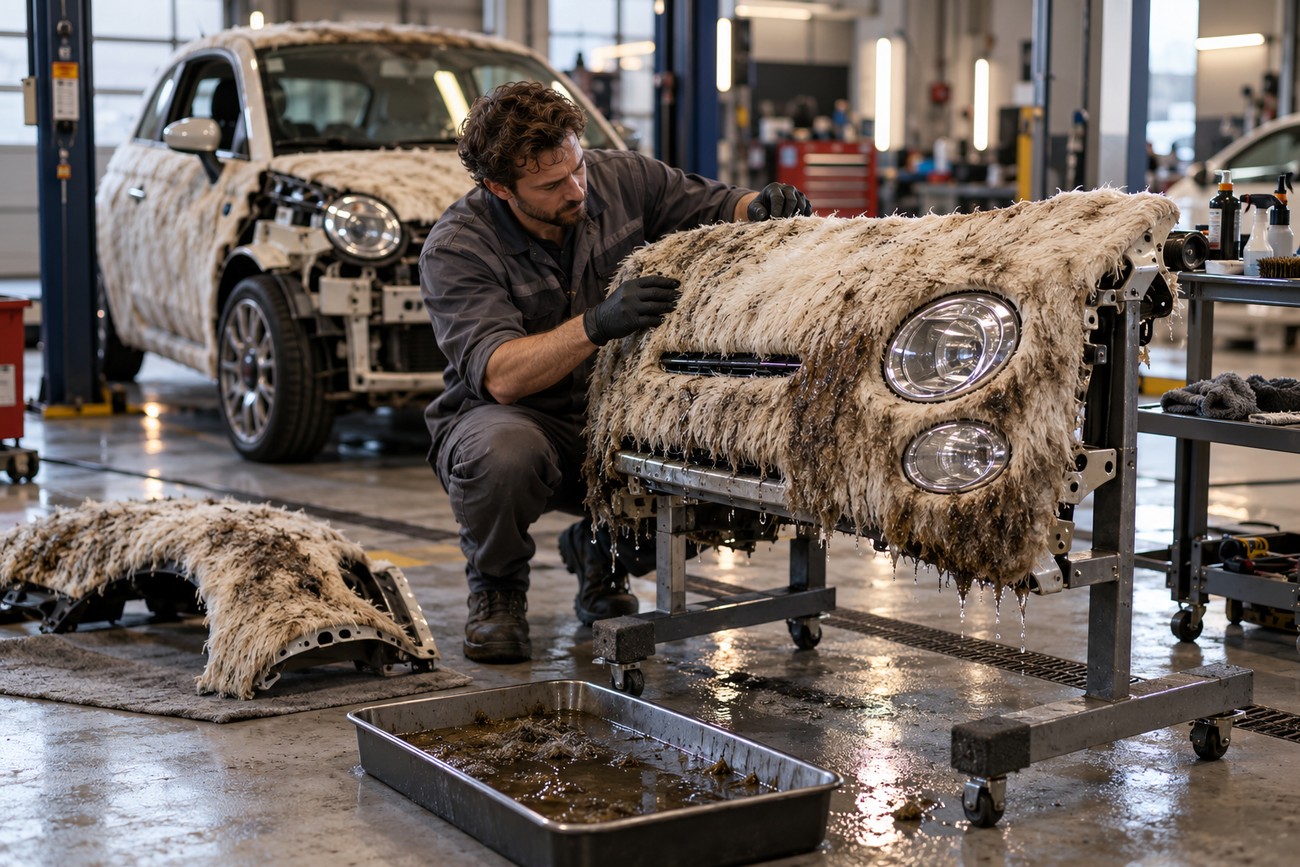
Automotive exterior materials need weather resistance and fire performance. Ordinary decorative fabric or faux fur is not normally certified for road use, so its appearance alone says little about how it will react to heat, moisture, sparks, or long exposure to sunlight.
Rain and snow can make the covering heavier, dirtier, and less presentable. Salt and dust work into the pile, while moisture held against damaged paint can increase the risk of localized corrosion. A full covering also needs planned cleaning, drying, inspection, and replacement of worn sections.
A removable test panel and a small paint-release check should come before any large adhesive application. The attachment method is often the real source of finish damage, especially when a project is removed after weather has worked its way under the edges.
Temporary, non-destructive mounting is often preferable to permanent bonding. Modular sections can be removed for drying and inspection, and they allow one damaged area to be replaced without dismantling the entire car. Automatic brushes, harsh chemicals, and aggressive washing can snag or mat the pile, so ordinary car-wash routines may be unsuitable.
Show Car or Road Car? Setting a Sensible Use Limit
Display and photography use are generally more realistic than routine daily driving, subject to local rules and the actual build. A car can look convincing under controlled lighting while the same material appears dirty, flattened, or uneven after a wet commute. Short, planned appearances reduce exposure to weather and road debris.
Some fur-covered art cars are suitable only for exhibitions or photo sessions. Registration, inspection, insurance, and enforcement consequences depend on local requirements and on whether the modification affects visibility or safety. Covering lights or number plates creates a practical compliance risk, rather than a disagreement about style.
A sensible road-use decision starts with four checks:
- All lights remain visible.
- Number plates remain readable.
- Airflow and cooling openings stay clear.
- Every panel is securely attached.
Even when those conditions are met, daily exposure to dirt, moisture, salt, and UV can rapidly degrade exterior pile.
A removable, modular design is therefore more practical than permanently bonding a single full-body covering. For a long-term daily car, vinyl or film usually offers a more manageable maintenance burden. Fur works best as a controlled visual layer with a defined removal point.
Frequently asked questions
Start with a small panel before covering the whole car. If you plan to use public roads, record the condition of the lights, plates, openings, and attachments. For an exhibition, plan how you will fit, maintain, and remove the covering.
How should you test a fur panel before covering the whole Fiat 500?
Start with one small removable section in an area away from lamps and cooling openings. Check for paint damage after fitting and removing the panel, then inspect edge lift, water retention, signs of heat damage, and clearance around lamps or sensors.
Leave the test panel in place long enough to experience ordinary handling and a wet cycle. If the backing stays damp, the edges move, or removal marks the finish, change the attachment method before scaling up.
What should be recorded before taking a fur-covered art car on public roads?
Keep dated photographs showing unobstructed headlights, indicators, number plates, and ventilation openings. Record how the panels are attached, where they can be removed, and whether the vehicle has passed any required inspection for the modification.
Documentation should also include communication with the insurer and the intended route or event conditions. A controlled daytime appearance on a dry route may involve different practical risks from overnight parking or an extended trip in rain.
How can a fur-covered Fiat 500 be prepared for a one-day exhibition?
Transport the covering dry and protected from compression. On arrival, inspect seams, fasteners, edges, and clearance around lighting before fitting it to the car. Carry replacement sections and lint-removal tools for loose fibers, dust, and small debris.
Remove the material before prolonged rain or overnight storage. Let both the covering and the painted surfaces dry separately, then inspect for trapped moisture or damage before packing the panels away.







