
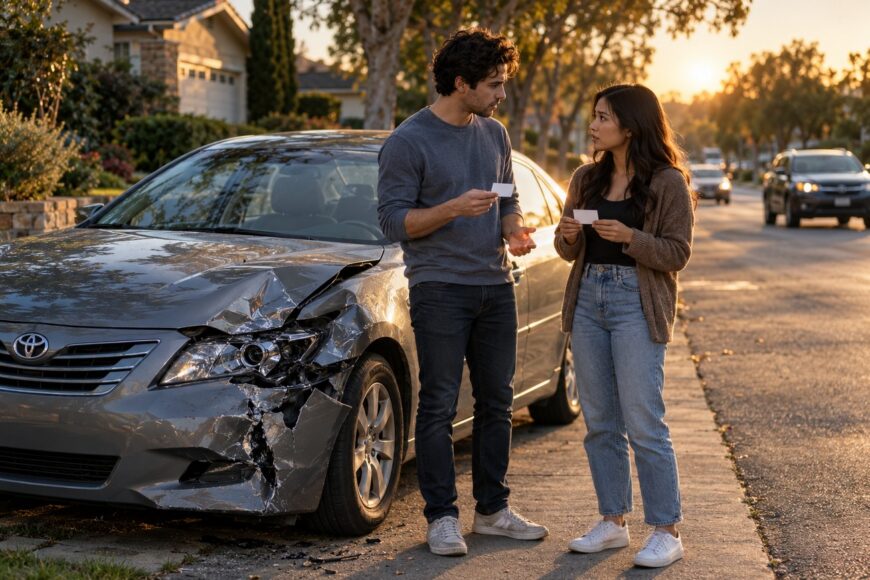
A friend’s promise to pay can feel simple until a claim arrives under your Toyota Camry policy. In a common US arrangement, permission to drive often makes the owner’s policy the first place a covered third-party claim is handled, even when the friend caused the crash.
That does not mean the same policy repairs your Camry. Liability coverage generally addresses injuries or property damage suffered by others; collision coverage generally addresses crash damage to your vehicle, subject to the deductible, policy terms, and state law.
- Who pays when a friend crashes your Camry?
- Why your liability policy may pay first
- Who pays to repair your Toyota Camry?
- When permission does not mean full coverage
- What to do before a friendly promise becomes a claim problem
- The costs that can remain after the repair
- Frequently asked questions
- What if another driver hit my Camry while my friend was driving?
- What if my friend will not give me their insurance details?
- What if my friend crashed the Camry in another state?
Who pays when a friend crashes your Camry?
The answer depends on fault, permission, the policy wording, available limits, and applicable state law. The table below describes common outcomes, not guaranteed payments.
| Loss or situation | Policy or person that may respond | Important condition |
|---|---|---|
| Another person’s injuries or property damage | The Camry owner’s liability policy is generally primary; the friend’s policy may apply secondarily | The friend must generally have permission, and the claim must be covered |
| Crash damage to the Camry | The owner’s collision coverage may pay, subject to the deductible and terms | Liability coverage alone does not repair the Camry |
| Third-party losses above the owner’s liability limits | The friend’s applicable liability policy may respond; the owner or friend may face personal exposure | Coverage, fault, ownership, and state law must be assessed separately |
| Excluded, unauthorized, unlicensed, impaired, or business use | Coverage may be limited or denied, leaving the friend and possibly the owner exposed | The policy’s exclusions and the state’s rules control |
Why your liability policy may pay first
US auto insurance generally follows the vehicle for a permitted driver’s covered third-party losses. If you let a friend borrow the Camry occasionally, your liability insurer is generally the primary starting point for claims involving another person’s injuries or property. Permission alone, however, does not override exclusions or special limits in the policy.
The friend’s own auto policy may become relevant after the owner’s available liability limits are exhausted, if that policy provides applicable secondary coverage. A non-owner policy can sometimes address qualifying liability to other people, although it generally does not cover physical damage to the borrowed Camry.
Fault and insurance priority are separate issues. The friend may be at fault for causing the collision, while your policy still responds first under its contract. Ownership also does not automatically make you personally liable for every mistake a borrower makes; personal liability depends on the facts, the claim, and applicable law.
Problems become more serious when injuries are substantial or losses exceed policy limits. The injured party may pursue available insurance and, depending on the facts and state law, claims against the driver, owner, or both. A private agreement that the friend will handle everything does not change an injured third party’s rights or an insurer’s obligations.
Who pays to repair your Toyota Camry?
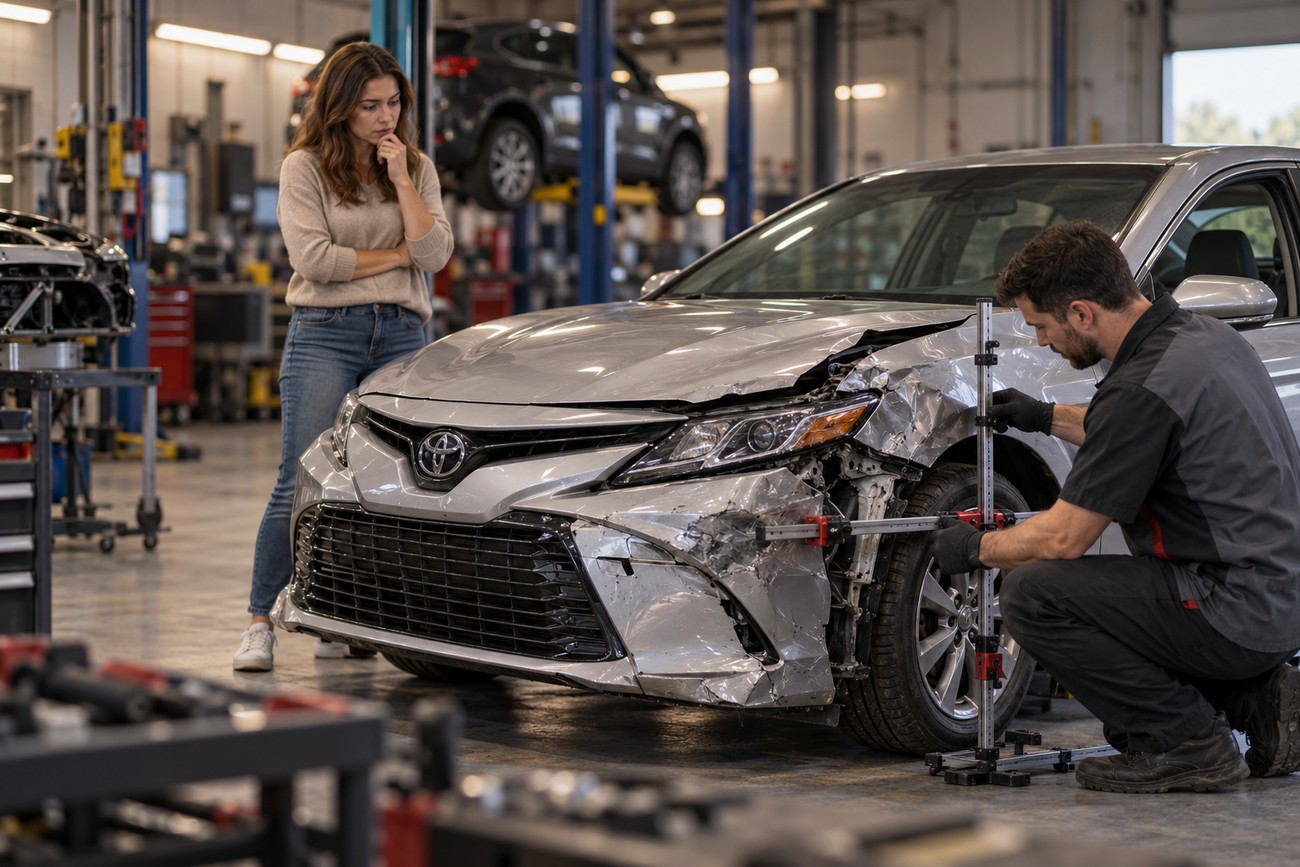
Liability coverage does not, by itself, pay to repair the owner’s Camry. It is designed primarily for covered injuries or property damage that you or an insured driver cause to other people. The relevant first-party coverage for crash damage to your vehicle is generally collision coverage.
If your Camry has collision coverage, you may be able to file under that coverage and have repairs handled under the policy, subject to the deductible, valuation rules, and other terms. The insurer may later investigate whether it can recover money from the responsible driver or another insurer. Any deductible recovery depends on the claim outcome and applicable recovery rights.
Comprehensive coverage is not a substitute for collision coverage after a crash. Comprehensive commonly addresses covered losses such as theft, certain weather events, or contact with an animal, while collision generally addresses impact with another vehicle or object. The exact definitions remain policy-specific.
Without collision coverage, you may need to seek voluntary reimbursement from the friend or pursue a viable claim against the responsible party. The friend’s non-owner policy generally addresses qualifying third-party liability rather than damage to the borrowed Camry. A court claim may be possible, but collecting can still be difficult if the responsible person lacks funds or applicable insurance.
When permission does not mean full coverage
Permissive-use coverage varies by policy and state. Some policies provide reduced limits or impose restrictions for an occasional permitted driver, while others treat certain drivers differently from a listed insured. The wording may also distinguish a one-time loan from regular use of the Camry.
An unlisted household member or regular driver can create a different coverage issue from an occasional friend. An excluded driver may have no coverage under the owner’s policy, depending on the exclusion and state law. Driving without permission, driving without a valid license, impaired driving, or using the vehicle for business can also trigger exclusions or limitations, but none of these facts produces the same result in every state.
Commercial activity and platform use require separate attention. A Camry booked through Turo or a similar service is not an ordinary informal loan between friends; the platform’s coverage arrangements, the owner’s policy, and the driver’s insurance may have different priorities and exclusions. The booking documents should be reviewed before assuming that personal coverage applies.
Negligent entrustment is a separate possible claim against an owner who knowingly lends a vehicle to someone unsafe to drive. Examples may involve known serious impairment, lack of a valid license, or other circumstances showing that lending the car created a foreseeable risk. Whether such a claim succeeds depends on evidence and state law, so a friend’s crash does not automatically make the owner personally responsible.
What to do before a friendly promise becomes a claim problem
Start with safety. Call emergency services when anyone may be injured, follow required reporting rules, and avoid arguing about fault at the scene. Take photographs of the vehicles, road conditions, signs, visible damage, and the location, and collect contact information from other drivers and witnesses when it is safe to do so.
Ask the friend for a written account, license information, insurance details, and a clear description of how the Camry was being used. Notify the appropriate insurers promptly, even if the friend says they will pay privately. Preserve repair estimates, medical or towing records, photographs, text messages, and any statement offering reimbursement.
If you have collision coverage, using it may move the Camry repair process forward while your insurer investigates recovery from the responsible driver or another insurer. Do not conceal who was driving to protect the friendship. Misrepresenting the facts can create a separate coverage dispute and make a later recovery harder.
For a substantial loss, put any private reimbursement agreement in writing, including the amount, payment dates, and what happens if insurance pays part of the loss. That document does not replace prompt reporting, required cooperation, or the rights of an injured third party. It also should not promise that a deductible will be recovered when that depends on the claim and applicable law.
The costs that can remain after the repair
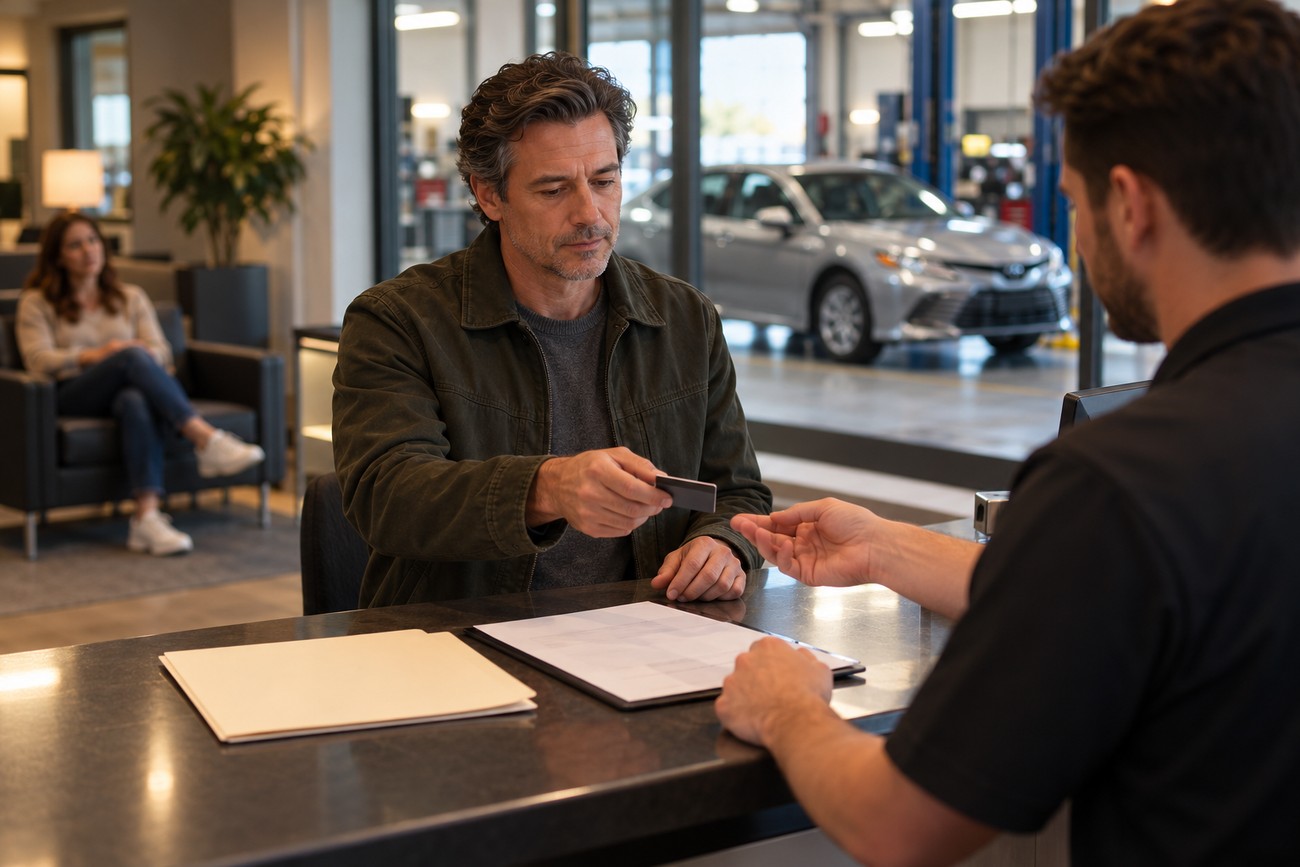
Your collision deductible may remain an immediate out-of-pocket cost, even when the friend caused the crash. If the insurer later recovers from another responsible party, the deductible may be included in that recovery, but the result depends on fault, evidence, settlement terms, and applicable recovery rights.
Serious injuries or property damage can exceed the available liability limits. Losses above those limits may create personal exposure for the driver and, in some circumstances, the owner. That does not mean both people are automatically liable; their legal responsibility must be determined separately from the question of which insurance policy responds first.
A claim may affect your premium or renewal, even though an increase or nonrenewal is not automatic or uniform. The insurer may consider the loss, the driver’s status, the claims history, and state rules at renewal. A friend’s promise to reimburse you may also be difficult to enforce if it was vague, undocumented, or abandoned after the initial conversation.
- Give permission only after checking the driver’s license and insurance status.
- Tell your insurer if someone in your household or another person regularly drives the Camry.
- Review permissive-use, excluded-driver, non-owner, business-use, and platform-use provisions.
- Keep written records of permission and any private repayment agreement for significant use or losses.
Frequently asked questions
The next steps depend on who caused the crash and what information is available. If another driver hit the Camry, fault and that driver’s coverage matter. If your friend withholds insurance details or the crash happened in another state, report what you know to your insurer and preserve the available records.
What if another driver hit my Camry while my friend was driving?
You may be able to pursue the at-fault driver’s liability coverage for the Camry damage and any qualifying injuries, subject to proof of fault and available coverage. Obtain the other driver’s information, photographs, witness details, the police or incident report, and any insurer claim number.
If fault or coverage is disputed, notify your own insurer promptly and ask whether your collision coverage can address the vehicle damage while the insurers investigate. Your insurer may seek recovery from the responsible driver or that driver’s insurer. The deductible and any recovery depend on the claim outcome, policy terms, and state law.
What if my friend will not give me their insurance details?
Do not wait for the friend’s policy number before reporting the crash. Notify your insurer, provide the friend’s name and contact information, and submit the police report, photographs, messages, repair estimates, and your own account of permission and vehicle use.
An insurer may be able to verify coverage through other records or handle the claim under your policy if applicable. Continue requesting the information in writing, but do not pressure the friend to alter facts or describe the loss inaccurately. A private promise or refusal to cooperate does not decide whether your policy must respond.
What if my friend crashed the Camry in another state?
Do not apply your home-state answer automatically. Out-of-state claims can involve the law of the accident state, the policy’s out-of-state provisions, and rules governing minimum limits, permissive use, reporting, and liability.
Report the collision to your insurer and identify the state where it occurred, the friend’s permission status, and the vehicle’s use. Preserve local police or crash records and follow the other state’s reporting requirements. If there are serious injuries, disputed coverage, or a potential claim against you, a qualified attorney familiar with the relevant states may be appropriate.







