
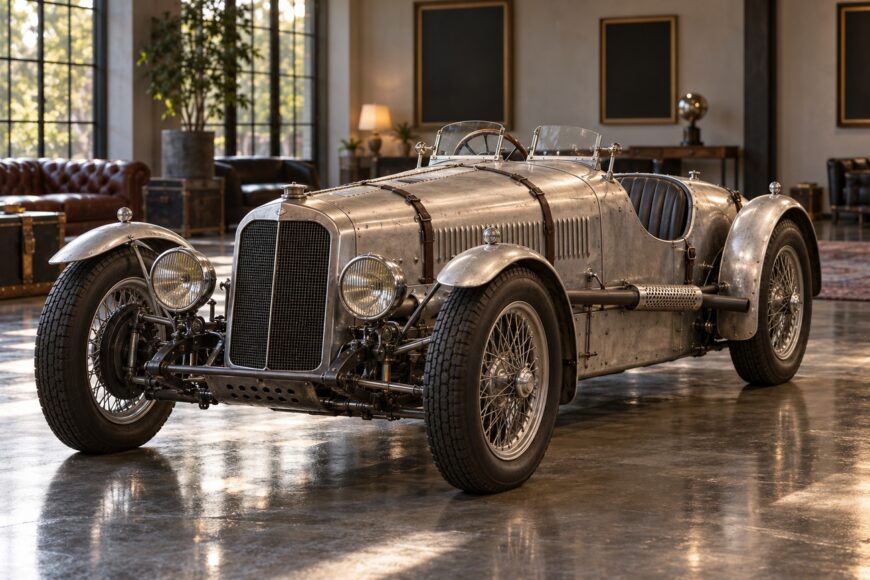
A road car named for Le Mans carries an unusual promise: genuine competition ancestry with room for a number plate. Frazer Nash made that promise tangible in 1948 with a factory-built sports car, rather than a modern kit or a retrospective tribute.
Yet “Replica” describes the model’s name, not a uniform specification. Chassis design, axles, engine tune, and surviving documentation can differ substantially. That distinction matters to a driver choosing a usable historic sports car and to a buyer deciding whether the car in front of them is an authentic, correctly identified example.
- A Le Mans Name You Could Actually Buy
- The Specification Depends on the Chassis
- What the Racing Pedigree Feels Like on the Road
- Before Buying, Verify the Car Beneath the Body
- Frequently asked questions
- How much does a Frazer Nash Le Mans Replica cost?
- What are the best replica cars available?
- How much is a Frazer Nash car?
- How much does a Le Mans car cost?
A Le Mans Name You Could Actually Buy
Introduced in 1948 as the High Speed Competition Model, the Frazer Nash was an open, two-seat, aluminum-bodied sports car available to customers. Its identity changed after a Frazer Nash achieved third place at Le Mans in 1949, when the model was renamed Le Mans Replica.
The name therefore records a racing result and a market opportunity. It does not mean that every customer car raced or that every example was built to the exact specification of the Le Mans entrant. These were road-going competition cars, shaped by the same sporting priorities but delivered in more than one configuration.
Production totals remain a matter of definition. Sources give roughly 29 to around 50 cars, depending on which early Competition or High Speed cars and which production periods they include. The Frazer Nash archive’s chassis groupings are valuable evidence, but they should not be turned into one supposedly undisputed total.
The Specification Depends on the Chassis
The shared mechanical starting point was a 2-liter Bristol straight-six derived from the prewar BMW 328 engine, paired with a four-speed Bristol manual gearbox. The car used a 96-inch wheelbase, approximately 2,438 mm, an open aluminum body, and hydraulic drum brakes on all four wheels.
That baseline hides important variation. The Frazer Nash archive identifies 26 earlier tubular A-frame cars with Bristol rear axles, followed by eight later parallel-tube-frame cars with Austin rear axles. They are related cars, but the chassis and driveline details should be checked separately.
Only the final two cars are identified with de Dion rear suspension and wire wheels. A photograph showing wire wheels cannot establish that a car belongs to this final pair, just as a “Bristol engine” description says little about its exact head, carburetors, camshaft, or rebuilding history.
Published power figures run from about 110 bhp to 132 or 150 bhp, depending on version and tune. Period or racing figures are often repeated as if they applied to every car; they do not. The chassis number and surviving records matter more than a sales listing’s single headline figure.
What the Racing Pedigree Feels Like on the Road
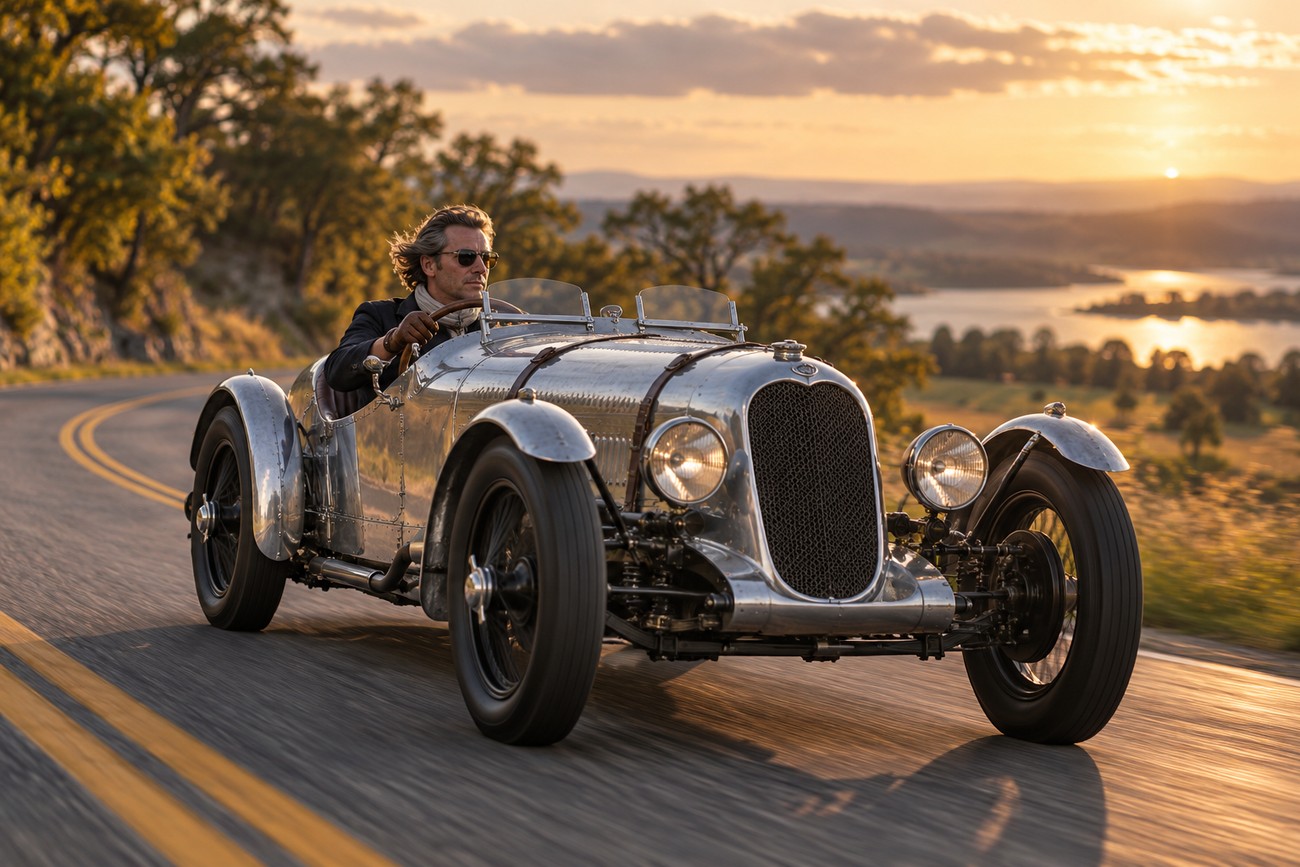
The appeal is immediate in concept: a light, open two-seater, a responsive Bristol six, and a four-speed manual transmission in a car shaped by competition. Period claims exceeding 120 mph or covering the quarter-mile in about 16 seconds explain the model’s reputation, but they are estimates, not guaranteed results for every surviving car.
On the road, the experience is concentrated and exposed. The cockpit offers little shelter from wind, noise, weather, and road spray, while the competition-style driving position makes the car feel purposeful rather than relaxed. It suits short sporting runs better than long-distance comfort.
Hydraulic drums on all four wheels are part of the period character and part of the responsibility. Their condition, adjustment, and specification deserve close attention, and modern braking performance or passive safety should not be assumed from the car’s reputation.
Before Buying, Verify the Car Beneath the Body
Start with identity. Match the chassis number to the archive and establish a continuous ownership and restoration history before judging originality. Then compare the fitted frame, rear axle, suspension, wheels, engine, and brakes with the specification documented for that particular chassis.
An aluminum body can look convincing in photographs while concealing old repairs or damage around its structure. A specialist should inspect the underside, frame geometry, steering, axle mounting points, and brake system. The condition of the chassis matters more than a low claimed mileage or a freshly finished body.
Have the chassis record reconciled with the installed axle, suspension, and engine before ordering parts or judging a change to be original.
Replacement engines, axles, body panels, and brake components are not automatically disqualifying, especially on a competition-bred car. They do make documentary verification more important. Parts should be ordered against the chassis and actual components, because “Le Mans Replica” is too broad a description for reliable identification.
Rarity can also make restoration slower and more expensive. A purchase should therefore include an independent inspection by someone familiar with Bristol and BMW 328-related engines, Frazer Nash chassis, and period running gear. A small market makes recent comparable sales and proven history more useful than an optimistic asking price.
Frequently asked questions
How much does a Frazer Nash Le Mans Replica cost?
There is no responsible universal figure. A credible current price requires recent comparable sales and an assessment of the individual car’s identity, condition, specification, and documented history. Before comparing advertisements, confirm whether the chassis is an original Frazer Nash, whether major components are correctly recorded, and whether the restoration work is independently supported.
What are the best replica cars available?
“Best” depends on whether you value historic authenticity, road usability, competition eligibility, or ease of maintenance. The Frazer Nash is compelling for its genuine period design and Bristol six, while a later continuation or kit-based car may offer easier parts supply. Those categories should be compared separately, since they do not carry the same historical identity.
How much is a Frazer Nash car?
Frazer Nash values vary by model and by the quality of its evidence. The Le Mans Replica name alone does not establish a car’s rarity or worth. Use the chassis record, inspection report, restoration invoices, and recent sales of genuinely comparable cars to form an assessment rather than relying on a broad marque average.
How much does a Le Mans car cost?
There is no single “Le Mans car” price category. A documented competition car, a factory road sports car named after a race, and a modern replica occupy different markets. Identify the car’s period, builder, chassis history, and eligibility first; only then can auction results or specialist valuations provide a meaningful comparison.







