
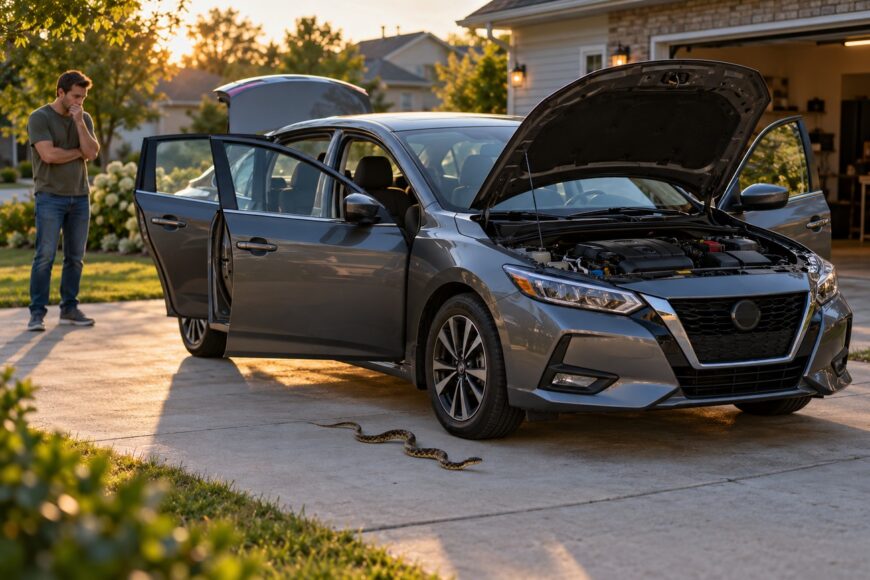
A snake may seem to have vanished while remaining in the cabin, ventilation passages, engine bay, or underbody. That makes driving unsafe because the animal could appear near the pedals, steering wheel, or another control without warning.
Do not drive or start the engine until the snake’s location is established and the Nissan Sentra is checked. Leave the vehicle, close the doors only if you can do so without approaching the animal, move away, and contact animal control, wildlife rescue, or a qualified snake-removal specialist.
- Do Not Drive: Secure Your Nissan Sentra First
- If the Snake Disappeared, Assume It Is Still Inside
- What to Check After the Snake Is Removed
- Mistakes That Make a Snake Incident Worse
- Frequently Asked Questions
- What time of day do snakes usually come out?
- How likely is it for a snake to get into a car?
- How long can a snake survive in a car?
Do Not Drive: Secure Your Nissan Sentra First
A snake in the cabin or engine bay creates both bite and driver-distraction risks. Do not sit behind the wheel, reach under a seat, or attempt to move the car. If the snake is visible, keep a safe distance and avoid sudden movements that could drive it into a deeper cavity.
Do not put your hands behind the glovebox, into vents, under trim, or near the radiator. An unseen snake can react defensively when touched, and a tool or broom may make it harder to establish where the animal has gone.
Treat an unidentified snake as potentially dangerous. Color, markings, and a poor photograph are not enough to determine its species or venom status. A specialist can assess the animal and remove it using equipment and procedures suited to the situation.
Tell the responder whether the snake was in the cabin, near the hood, or beneath the vehicle. Warn any repair shop before work begins. The shop needs to know that an animal may still be present before opening panels, starting equipment, or lifting the car.
If the Snake Disappeared, Assume It Is Still Inside
A snake can move from a visible cabin area into trim cavities, ventilation passages, the engine bay, underbody protection, or another concealed space. The vehicle’s ventilation system connects to the external air intake, so outside-air mode is a possible entry route described by owners.
Opening the hood or leaving the windows open does not prove that the snake has exited. The animal may move farther into a duct, filter housing, lower cover, or wiring area when people approach or when the vehicle changes temperature.
A proper work order should name every suspected zone—cabin, HVAC intake, filter housing, engine bay, and underbody. Checking only the visible engine bay is a common diagnostic failure.
From a safe distance, record the last confirmed location, direction of movement, time, and any visible markings. A photo or video may help the specialist, but do not move closer for a better image. Keep people and pets away, and leave the vehicle undisturbed until it is assessed.
What to Check After the Snake Is Removed
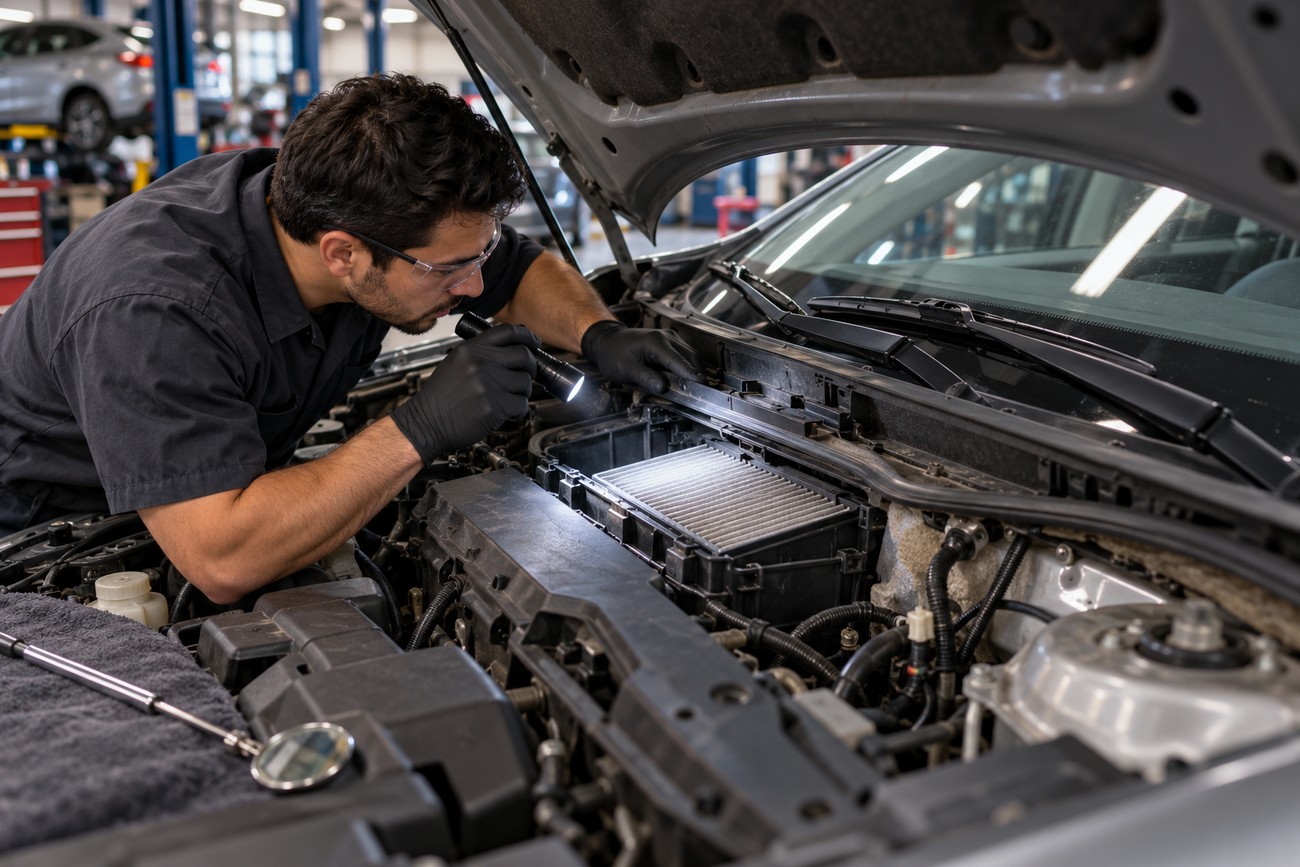
Removal is only the first part of the inspection. Check the cabin, outside-air intake, ventilation passages, cabin air filter, and filter housing. Also inspect the engine bay, wiring, insulation, seals, and underbody covers for damage or contamination.
Damage to wiring, filters, insulation, or seals may be related to rodents or their prey rather than the snake itself. Rodent activity can also explain why a snake was attracted to the vehicle area. A technician may need to trace entry points before replacing damaged components.
If exhaust is suspected in the cabin, stop, open all windows, and have the vehicle checked before driving again. A snake in the engine bay can distract attention from a separate exhaust or sealing problem, so unusual fumes should be treated as an independent safety issue.
Never remove the radiator cap or expansion-tank cap while the engine is hot. Hot coolant and steam can cause burns. Cleaning, odor removal, filter replacement, and diagnostic labor may cost more than simple animal removal, especially if concealed areas must be opened.
Mistakes That Make a Snake Incident Worse
Starting the engine to force a snake out is not a verified procedure. It can create movement, burns, injury, and exhaust risks, while also placing the driver and nearby people in danger. Engine noise or heat does not establish a safe removal method.
Do not pour gasoline, solvents, aerosols, boiling water, or other substances into or around the vehicle. These materials can create fire hazards, toxic vapors, damaged plastics, and contamination inside the cabin. An open hood is also unreliable because the snake may move into ducts, underbody protection, or other hidden cavities.
Do not dismantle trim, vents, or lower covers casually. Electrical systems, clips, airbags, and hot components can add hazards, and partial disassembly may push the snake deeper. Use tools only when the entire animal is visible and a qualified professional directs the process.
After inspection, address conditions that could attract prey or provide access. Check for rodent activity, damaged seals, and openings around relevant intake or underbody areas. Repair the cause as well as the visible damage, so the vehicle is less likely to become shelter again.
Frequently Asked Questions
Snake behavior varies with species, temperature, weather, habitat, and the conditions inside the vehicle. Those variables can explain movement, but they cannot establish that an unattended Sentra is safe to drive.
What time of day do snakes usually come out?
Activity may increase in daylight, at night, or during cooler or warmer periods, depending on the species, temperature, weather, and local habitat. A snake may seek shade, warmth, shelter, or prey, so the time of day is not a reliable safety test.
Do not use a quiet vehicle, darkness, or a period without sightings as evidence that the snake has left. Its activity pattern may change after the cabin, engine bay, or surrounding temperature changes.
How likely is it for a snake to get into a car?
There is no universal likelihood. An incident becomes more plausible where a vehicle is parked near vegetation, debris, prey, shelter, or habitat that allows access to the engine bay, underbody, or external air intake.
Ventilation passages, seals, ducts, and lower covers create different possible routes. The circumstances of the parking area and the car’s condition matter more than a general assumption about Nissan Sentra vehicles.
How long can a snake survive in a car?
There is no dependable fixed survival time. Species, temperature, ventilation, water availability, weather, and the vehicle’s conditions all affect activity and survival.
That uncertainty is not a reason to wait for the snake to leave. Waiting can allow it to move into a less accessible cavity, while heat and restricted ventilation may create additional risks. Professional inspection remains the safer choice.







