
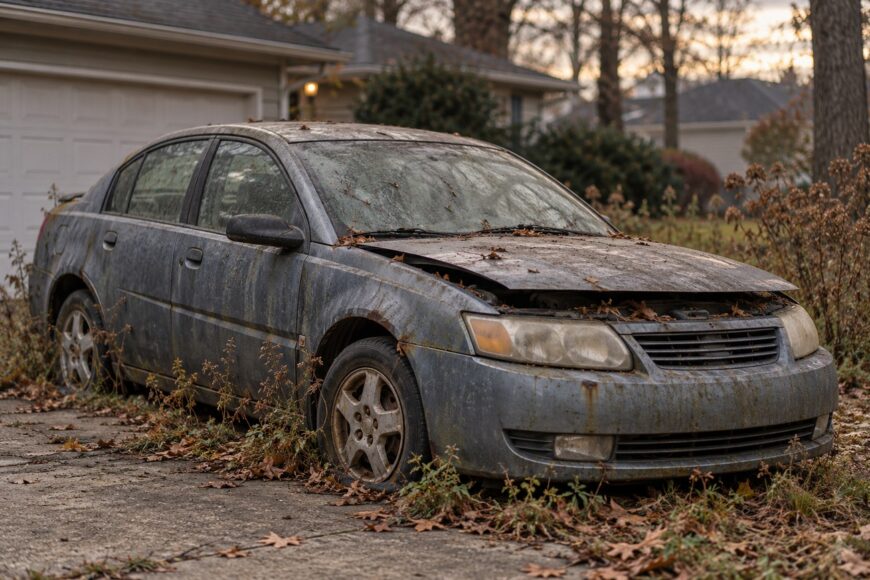
The key turns, the starter catches, and a Saturn Ion abandoned for 20 years seems to offer a tempting moment of revival. That sound proves only that some electrical power is reaching the starter. It says nothing about fuel quality, oil pressure, brakes, tires, wiring, or the condition of the structure beneath the car.
A low-mileage Ion can be a worthwhile rescue project or a collection of aged fuel, brittle rubber, seized brakes, damaged wiring, and hidden corrosion. The engine may run after careful preparation, yet the car can remain unsafe to drive. Treat the first start as a controlled diagnosis, never as permission to take the car onto the road.
- What 20 Years of Sitting Does to a Saturn Ion
- Before Turning the Key: The Inspection That Prevents Bigger Damage
- How to Prepare the Engine and Fuel System for a First Start
- If It Starts, Why You Still Should Not Drive It Yet
- What the First Start-Up Symptoms Really Mean
- Revival or Parts Car? Decide Before Spending on Cosmetics
- Frequently asked questions
- How long can a Saturn Ion last?
- What should you do if the engine will not turn by hand after sitting for 20 years?
- How do you start an engine that has been sitting for 20 years?
- Which car can last 500,000 miles?
What 20 Years of Sitting Does to a Saturn Ion
Saturn Ion production ran from 2003 to 2007. Common versions used 2.2-liter or 2.4-liter Ecotec four-cylinder engines on GM/Opel Delta architecture. Those engines can be durable when maintained, but an odometer reading cannot show what 20 years of storage has done to the surrounding systems.
Old gasoline oxidizes, loses volatility, and may leave varnish and sludge in the tank, pump, filter, injectors, and fuel passages. Engine oil can drain away from working surfaces, while moisture and surface corrosion increase the risk of a damaging dry start. Coolant, brake fluid, and other fluids also need inspection because age changes their condition even when the car has barely moved.
Rubber ages in storage as well as in service. Hoses, seals, boots, belts, tires, and brake hoses may crack or fail after 15–20 years, sometimes when first flexed or pressurized. Pulleys, calipers, wheel cylinders, and other moving parts can seize, while corroded electrical connections and grounds may produce faults that look like engine problems.
The original battery is practically unusable if it has been left uncharged for many years. Some Saturn Ions also have known ignition-switch and electronic-throttle concerns, so an intermittent electrical fault can complicate an otherwise sound mechanical diagnosis. A fresh battery supplies power; it does not certify the car’s health.
Before Turning the Key: The Inspection That Prevents Bigger Damage
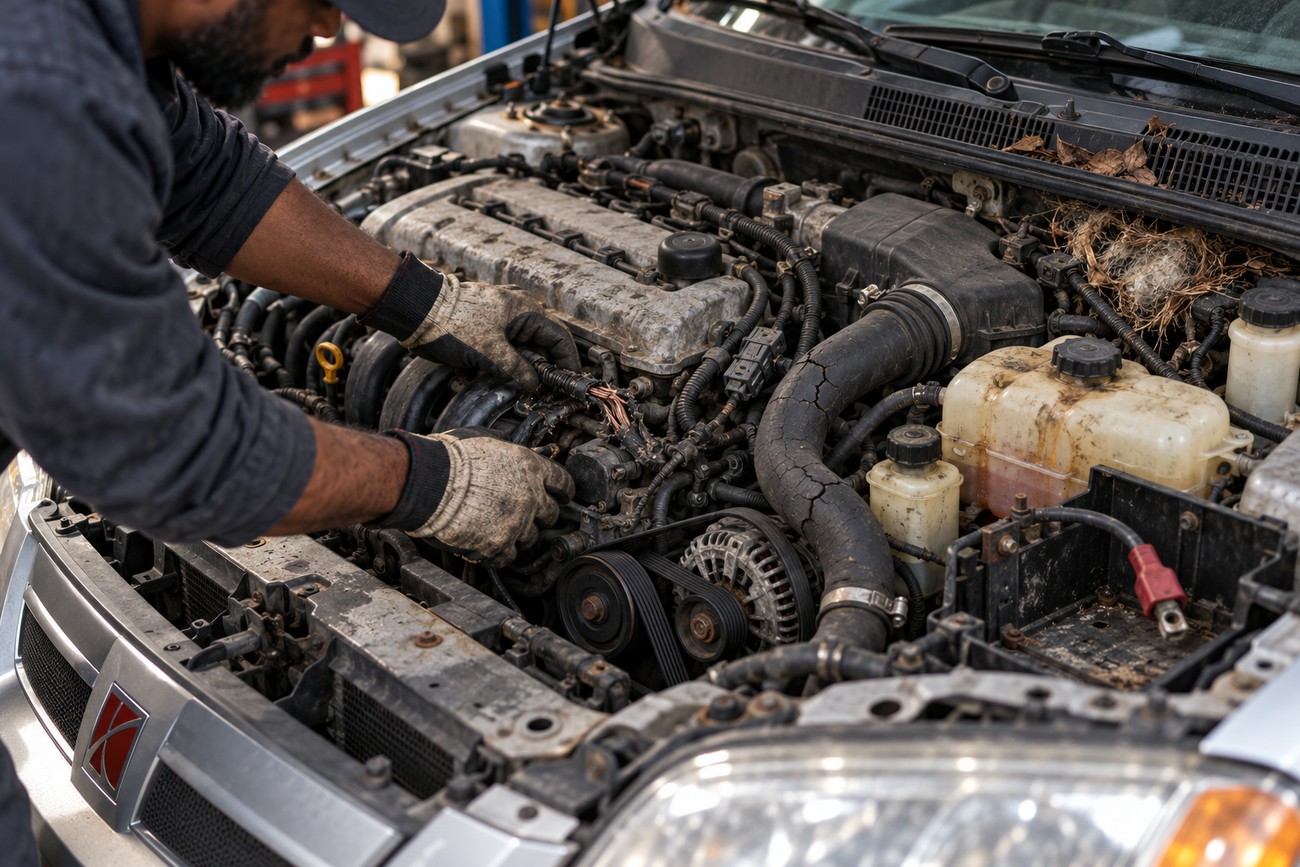
Begin in the engine bay with the battery disconnected. Look for rodent nests, chewed wiring, droppings, damaged insulation, disconnected hoses, and fluid staining. Inspect the oil, coolant, brake fluid, and transmission fluid for an incorrect level, contamination, or evidence of a leak. A damp patch under the car deserves investigation before any attempt to start it.
Examine the belts, hoses, wiring insulation, connector seals, and visible pulleys. A belt with cracks or missing material can fail immediately, while a seized pulley can damage a new belt during cranking. Check the air intake for nesting material and confirm that the throttle mechanism is free from contamination without forcing an electronic actuator.
Move to the wheels and brakes before applying power. Look for heavily rusted discs, stuck pads, damaged calipers, collapsed brake hoses, and brake fluid leaks. Tires that hold air can still have age cracks, flat-spot damage, or internal separation; a car stored on flat tires may also have unseen wheel, hub, or suspension deformation.
Use a light and a safe lifting method to inspect the underside. Brake lines, suspension mounts, rocker panels, fasteners, the underbody, and the subframe can hide serious corrosion beneath dirt or surface rust. Soft floor sections, perforation near mounting points, or weakened brake lines can make the project unsafe regardless of how clean the body looks.
How to Prepare the Engine and Fuel System for a First Start
Old fuel is the first major obstacle. Gasoline stored for years oxidizes, loses volatility, and leaves varnish and sludge. If contamination is visible or the fuel smells strongly degraded, drain it rather than trying to dilute it with fresh gasoline. The tank, pump area, filter, lines, and injectors may require cleaning before reliable fuel delivery is possible.
Check the engine oil level and condition, inspect the coolant, and look for coolant or oil in places where it should not be. Remove the spark plugs if appropriate for the engine and use the access to assess the cylinders and turning resistance. Rotate the engine manually before connecting a fresh battery or attempting powered cranking. This can reveal seizure, severe corrosion, or a mechanical obstruction before the starter causes further damage.
Manual rotation and fuel inspection should come before using a new battery as a diagnostic tool. A battery can make a neglected engine spin while hiding seizure, contamination, poor lubrication, or an unsafe fuel system.
Clean and inspect the main electrical grounds, battery cables, and accessible connectors. Confirm that the oiling system has a reasonable chance to build pressure before extended cranking, and keep the first attempts brief. High revs, long starter sessions, and repeated fuel-rich attempts can damage the engine, starter, catalytic converter, or exhaust system.
A spinning starter proves only that the crankshaft is turning. It does not prove good compression, correct timing, lubrication, or healthy piston rings. Stop if the engine binds, produces unusual mechanical noise, or shows no credible path to oil pressure and controlled combustion.
If It Starts, Why You Still Should Not Drive It Yet
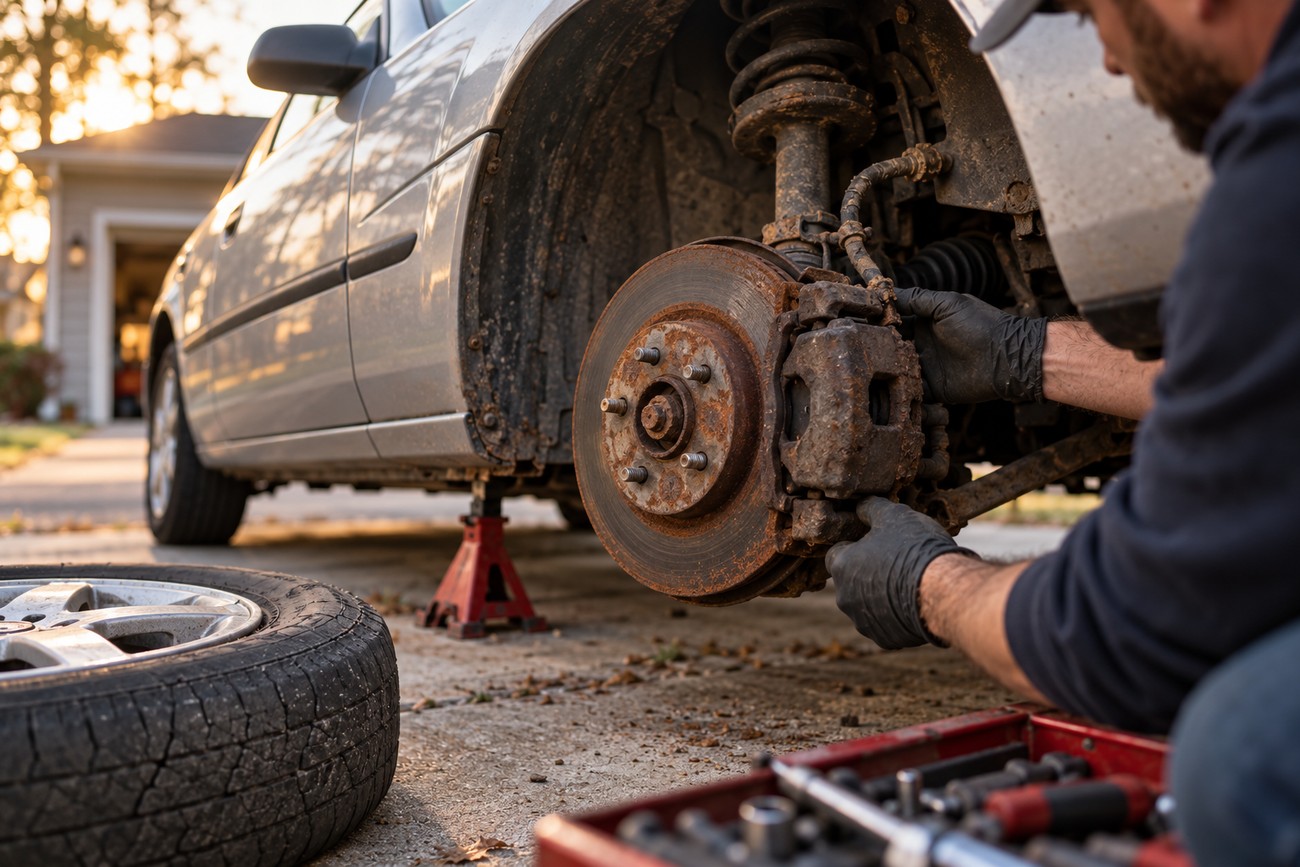
A running engine creates a false victory after a long storage period. Brake discs may be heavily rusted, pads may be stuck, and calipers may remain seized. The car can move while dragging a brake, or it may have little braking force when the system is first loaded.
Tires and brake hoses aged 15–20 years are immediate safety-critical replacement candidates, even if they appear intact. Brake hoses can deteriorate internally or along hidden sections, and brake lines can corrode along concealed areas. A brief movement in a driveway cannot verify braking performance at road speed.
Structural corrosion deserves equal caution. Damage around the subframe, suspension mounts, rocker panels, floor, or brake-line mounts can change how the vehicle responds and may make lifting it hazardous. Surface rust on a body panel is less important than corrosion affecting a load-bearing or hydraulic component.
Keep the Ion stationary until the brakes, tires, steering, suspension, lines, structure, lights, and fluid systems have been checked. If it must be moved before that work, use a tow service or suitable transport equipment. An engine that starts does not mean the vehicle is safe to drive.
What the First Start-Up Symptoms Really Mean
A crank-but-no-start condition commonly points to degraded fuel, restricted delivery, weak ignition, or an electrical fault. Old gasoline can prevent proper combustion even when the pump runs, while varnish can restrict injectors or filters. Check the basics in a controlled order rather than repeatedly cranking until the battery or starter overheats.
If the engine starts and immediately misfires or stalls, inspect for vacuum leaks, dirty injectors, weak spark, and aging sensors. Brittle hoses can split as soon as vacuum develops, and a sensor that tolerated storage may fail once exposed to heat and vibration. Rough running can also result from fuel pressure that collapses after initial priming.
Erratic gauges, intermittent cranking, disappearing accessories, or an electronic throttle warning can come from corroded connectors and poor grounds. Moisture damage does not require obvious flooding. On some Saturn Ions, ignition-switch and electronic-throttle concerns deserve specific attention when the electrical behavior seems inconsistent.
Smoke or a burning oil smell after the first start is not automatically catastrophic. Oil or residue may be burning from external surfaces, but the condition requires close monitoring of oil pressure and temperature. Stop the engine if pressure is absent, temperature rises abnormally, a leak grows, or smoke becomes heavy and persistent.
Revival or Parts Car? Decide Before Spending on Cosmetics
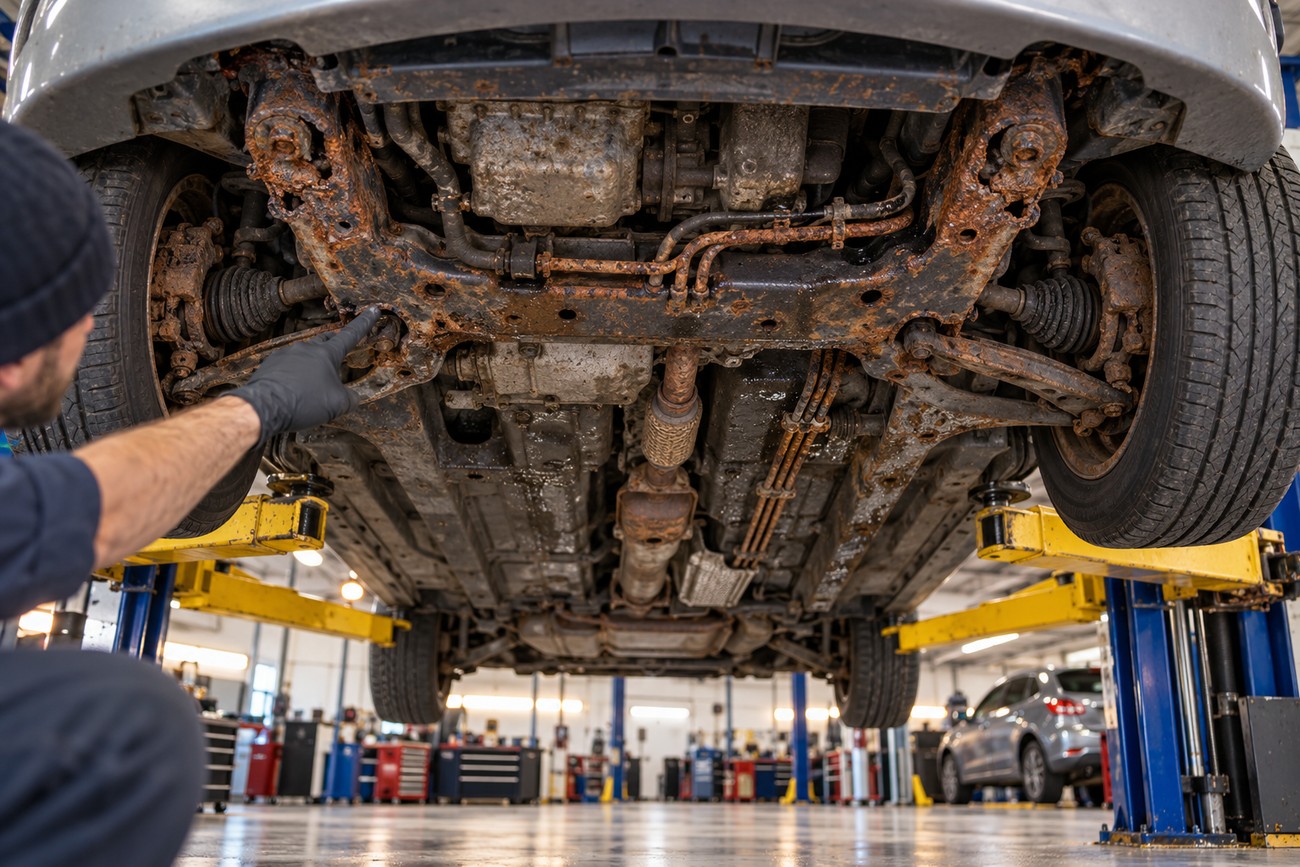
Make the first financial decision around structure and safety. Inspect corrosion, brake lines, mounting points, tires, and the underbody before buying paint, interior parts, or cosmetic trim. A clean-looking exterior cannot compensate for a weakened subframe or an unsafe hydraulic system.
After the structure and brakes, prioritize fuel delivery, cooling, lubrication, ignition, and basic electrical integrity. These systems determine whether the Ion can run without damaging itself and whether it can later be tested safely. Rubber parts, seals, belts, hoses, and boots should be treated as age-related service items rather than deferred repairs.
Repeated rich or unsuccessful starting attempts can damage the catalytic converter and exhaust system. Seals and gaskets may also begin leaking only after the first heat cycles and vibration, so a dry engine during inspection does not guarantee a dry engine after revival. Plan for a second inspection once the vehicle has run and warmed carefully.
The odometer is only one part of the decision. A Saturn Ion’s realistic future depends more on corrosion, service history, parts availability, and the total repair scope than on low mileage alone. If structural repairs, fuel-system restoration, braking work, and electrical faults accumulate, the car may make more sense as a parts source than as a road vehicle.
Frequently asked questions
A 20-year storage period changes the decision from a simple starting test into a condition assessment. The Saturn Ion’s common Ecotec engines may be recoverable, but the vehicle must earn road use through inspection and repair. These answers separate mechanical possibility from sensible ownership.
How long can a Saturn Ion last?
There is no fixed mileage guarantee for a Saturn Ion. Corrosion, maintenance, service history, repair quality, and the cost of keeping the car safe matter more than a single lifespan figure.
An Ion with sound structure and consistent maintenance may remain useful, while a low-mileage example with rusted brake lines, damaged mounts, or neglected systems may be uneconomical. After 20 years of storage, condition and repair economics control the decision more than the odometer.
What should you do if the engine will not turn by hand after sitting for 20 years?
Stop and do not force the starter. A locked engine may have seized bearings, corroded cylinder walls, stuck rings, internal debris, or an external accessory that has locked up.
Remove the source of resistance methodically and determine whether the obstruction is internal. Only after inspection can you judge whether lubrication work, partial disassembly, or a full teardown is justified. Attempting ignition before that decision can turn a recoverable problem into additional damage.
How do you start an engine that has been sitting for 20 years?
Start with a condition check: inspect for rodent damage and leaks, drain or assess the old fuel, check oil and coolant, clean electrical grounds, and rotate the engine by hand. Then address fuel delivery, lubrication, ignition, and cooling in a controlled sequence before brief cranking.
Keep the vehicle stationary during the first run. Confirm oil pressure, temperature control, stable combustion, and the absence of major leaks before considering brake and chassis repairs. A successful start is the beginning of the assessment, not its conclusion.
Which car can last 500,000 miles?
No model can be promised a 500,000-mile life under every use and maintenance pattern. Reaching exceptionally high mileage depends on corrosion control, service history, repairs, operating conditions, and whether maintaining the vehicle remains economically sensible.
For a Saturn Ion, evaluate the individual car rather than relying on a mileage claim. A well-maintained example with sound structure may be worth preserving, while a neglected or heavily corroded one can become impractical much earlier.







