
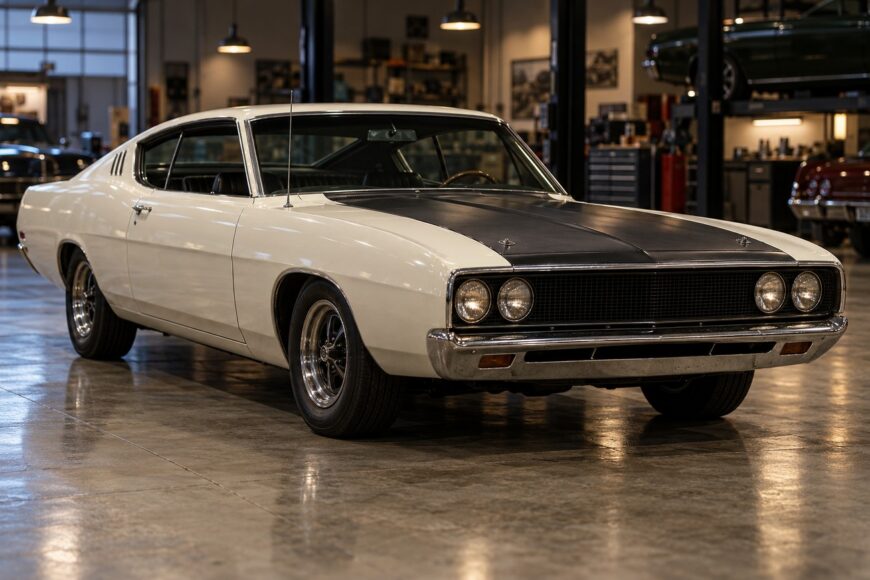
The Ford Torino Talladega has one of the most recognizable noses of the muscle-car era, yet that shape can conceal difficult questions. A convincing-looking car may have an uncertain identity, replacement aerodynamic parts, or expensive rust beneath old repairs. Even its advertised engine output needs context before it tells a buyer much about the car in front of them.
The 1969 Ford Torino Talladega was introduced as a NASCAR homologation model. Its significance lies in the road cars Ford built to support a racing program and in the front-end engineering intended to improve high-speed oval-track performance. For an owner or buyer, understanding that purpose is the starting point for judging authenticity, restoration work, and value.
- What the 1969 Ford Torino Talladega Was Built to Do
- The Nosecone and the Aerodynamics That Made It Different
- Engine Claims, Gross Horsepower, and Real-World Performance
- How to Authenticate a Genuine Talladega
- Restoration Risks and the Hidden Cost of Correct Details
- 1969 Ford Torino Talladega vs. Torino SportsRoof
- What a Talladega Is Really Worth to Collectors
- Frequently asked questions
- How many Ford Torino Talladegas were made?
- How much is a 1969 Ford Torino Talladega worth?
- Which car did NASCAR ban: the Talladega or another aero car?
What the 1969 Ford Torino Talladega Was Built to Do
NASCAR homologation rules of the period required a racing model to have a road-going counterpart produced in sufficient quantity. Ford therefore had to build Talladegas for customers as part of making the design eligible for competition. The commonly cited production total is approximately 750 cars, a limited run that makes a surviving car’s identity particularly important.
The Talladega arrived during a late-1960s contest in which speed on large ovals depended on airflow as well as engine power. Ford’s aero-car response addressed the drag and high-speed behavior of a body that would spend much of a race at sustained speed. A street car inherited the resulting shape, even though ordinary driving offered few opportunities to use its intended advantage.
This distinction matters when interpreting the Talladega as a muscle car. The 428 Cobra Jet V8 is central to its specifications, but engine output alone does not explain why Ford built the model. Its defining feature was a production body configured around the racing program’s aerodynamic and regulatory needs.
A surviving Talladega is therefore evidence of a particular moment in NASCAR history, rather than simply a scarce trim variation. That history also raises the standard for verification: a conventional Torino wearing the right-looking front end cannot establish the same connection to the homologation run without supporting evidence.
The Nosecone and the Aerodynamics That Made It Different
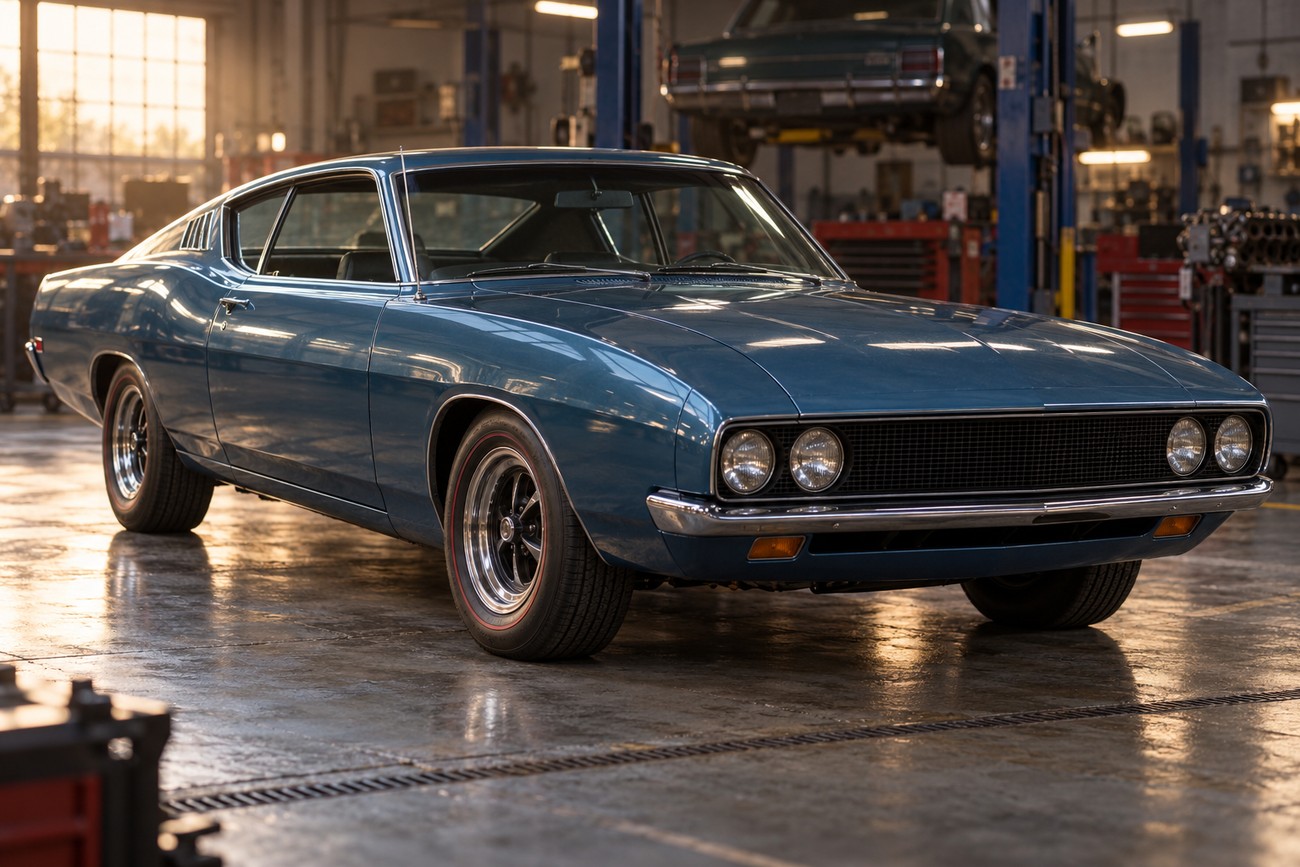
The Talladega was based on the Ford Torino SportsRoof, but its front end received an extended nosecone. The longer, smoother shape was intended to lower aerodynamic drag and improve high-speed oval-track performance. It changed the way air met the car before flowing over the familiar fastback roof.
The treatment involved a reshaped or enclosed grille area, recessed front-end elements, and smoother transitions around the leading edges. Those details worked together; the nose was more than a bolt-on visual flourish. For restoration purposes, small differences in the shape and fit of associated parts can matter as much as the overall silhouette.
Oval-track priorities do not automatically translate into better everyday usability. At normal road speeds, a driver gains little from a shape optimized for sustained racing speeds, while the unusual front-end layout can introduce compromises in visibility and day-to-day convenience. Its historical purpose is clearer than any claim that it made the Talladega a universally better road car.
Paint can also make incorrect parts look coherent in photographs. Close inspection should focus on how the nose, grille treatment, recessed elements, and surrounding panels meet. Preserving those relationships is important to both the car’s appearance and the credibility of a historically accurate restoration.
Engine Claims, Gross Horsepower, and Real-World Performance
Talladega specifications are commonly associated with the 428 Cobra Jet V8. Commonly cited factory specifications put its output at approximately 335 hp gross, though publications and sale listings may differ or exaggerate that figure. A larger number in an advertisement should prompt a request for its source, rather than serve as proof of a special factory specification.
Gross horsepower is a period rating convention, so it should not be read as a direct comparison with a modern car’s advertised output. Catalogs, later accounts, and sales descriptions may also mix different claims or omit the rating method. None of those numbers establishes whether the engine currently in a particular car is original or healthy.
Condition matters more to present-day driving than a period figure on paper. Decades of use, rebuilding, or modification can change how an engine performs, while brakes, suspension, and cooling may become the limiting factors during demanding driving. Inspect those systems on the actual car instead of assuming a strong engine makes the whole vehicle ready for sustained hard use.
Period acceleration and top-speed claims vary with measurement method and vehicle condition; no single figure applies to every Talladega. The same caution applies to modern demonstrations using restored or modified examples. They may show what that car can do, but they do not define the performance of an untouched 1969 production car.
How to Authenticate a Genuine Talladega
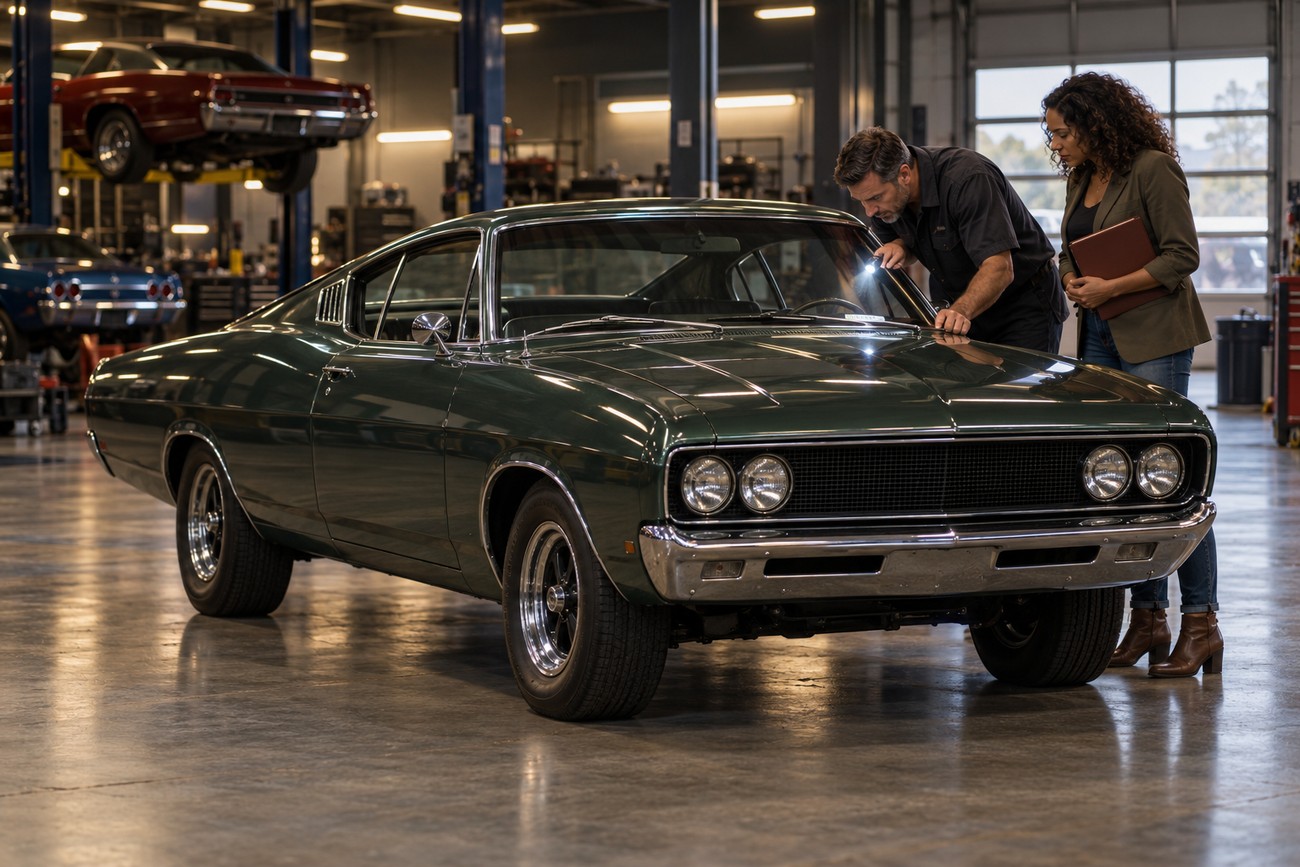
Appearance alone is insufficient to authenticate a Talladega. A standard Torino SportsRoof can be altered to resemble one, and a genuine car can acquire replacement panels during a long restoration history. Both may look persuasive in photographs, so a buyer needs evidence that ties the body’s identity to its claimed factory origin.
Start with available factory documentation and trace the vehicle’s identity through its ownership and repair history. Check that the VIN and supporting records tell a consistent story, then inspect Talladega-specific body and trim details in person. Missing records do not automatically settle the question, but unexplained gaps should affect how much confidence you place in the claim.
Check the nose’s geometry and attachment details before relying on paint, badges, or a seller’s description of a “true Talladega.” A well-finished conversion can look convincing while carrying different underlying parts.
Matching numbers can strengthen the case for originality, particularly when they align with reliable documentation. They do not independently prove that the complete body is an authentic Talladega or that its aerodynamic components remain original. Treat engine identity, body identity, and the survival of model-specific parts as related questions that each need an answer.
Ask what happened during earlier bodywork. Photos taken before restoration, records of panel replacement, and an informed inspection of the front end can help distinguish preserved factory material from reproduction or conversion work. Where evidence remains incomplete, describe the car’s status accordingly rather than paying a fully documented Talladega premium on trust.
Restoration Risks and the Hidden Cost of Correct Details
Scarce Talladega-specific panels and front-end parts can turn a straightforward-looking project into a prolonged search. A missing or damaged nose-related component may require repair or careful sourcing rather than a simple replacement from ordinary Torino stock. Before buying, identify which parts are present and which merely appear correct under paint.
Chrome, trim, emblems, and interior hardware deserve the same attention. Individually small pieces can be difficult to find in the right form, and their cumulative cost can alter a restoration budget substantially. A complete but worn car may be a better starting point than a tidy shell with many distinctive details missing.
Old repairs are another financial risk. Rust and metal fatigue can extend beneath acceptable-looking exterior work, particularly where panels have been repaired more than once. Inspect the structure and the work behind the visible finish before treating a mechanically sound car as an affordable Talladega restoration candidate.
Correctness calls for knowledge of this particular model, not only general bodywork skill. Some parts resemble standard Torino pieces yet differ in geometry or fit, and a modernized front end can erase evidence that collectors want to see. Mechanical improvements may suit an owner’s driving plans, but a restomod approach can reduce historical authenticity and market appeal.
1969 Ford Torino Talladega vs. Torino SportsRoof
The shared SportsRoof foundation explains the visual resemblance; the distinctions below explain why identification requires more than a glance.
| Point of comparison | 1969 Ford Torino Talladega | Torino SportsRoof |
|---|---|---|
| Purpose | Produced as a NASCAR homologation model. | Served as the production model on which the Talladega was based. |
| Front-end design | Extended nosecone with reshaped or enclosed grille treatment, recessed elements, and smoother transitions. | Does not have the Talladega’s homologation-specific front-end treatment as a standard feature. |
| Aerodynamic intent | Shaped to lower drag and improve high-speed oval-track performance. | Its standard form was not the Talladega’s dedicated aero package. |
| Authentication risk | Requires documentation, identity history, and scrutiny of model-specific details. | Can be modified to resemble a Talladega, making appearance alone unreliable. |
| Collector implications | Verified identity and preserved aero parts can increase desirability. | A conversion does not acquire genuine Talladega provenance through appearance. |
What a Talladega Is Really Worth to Collectors
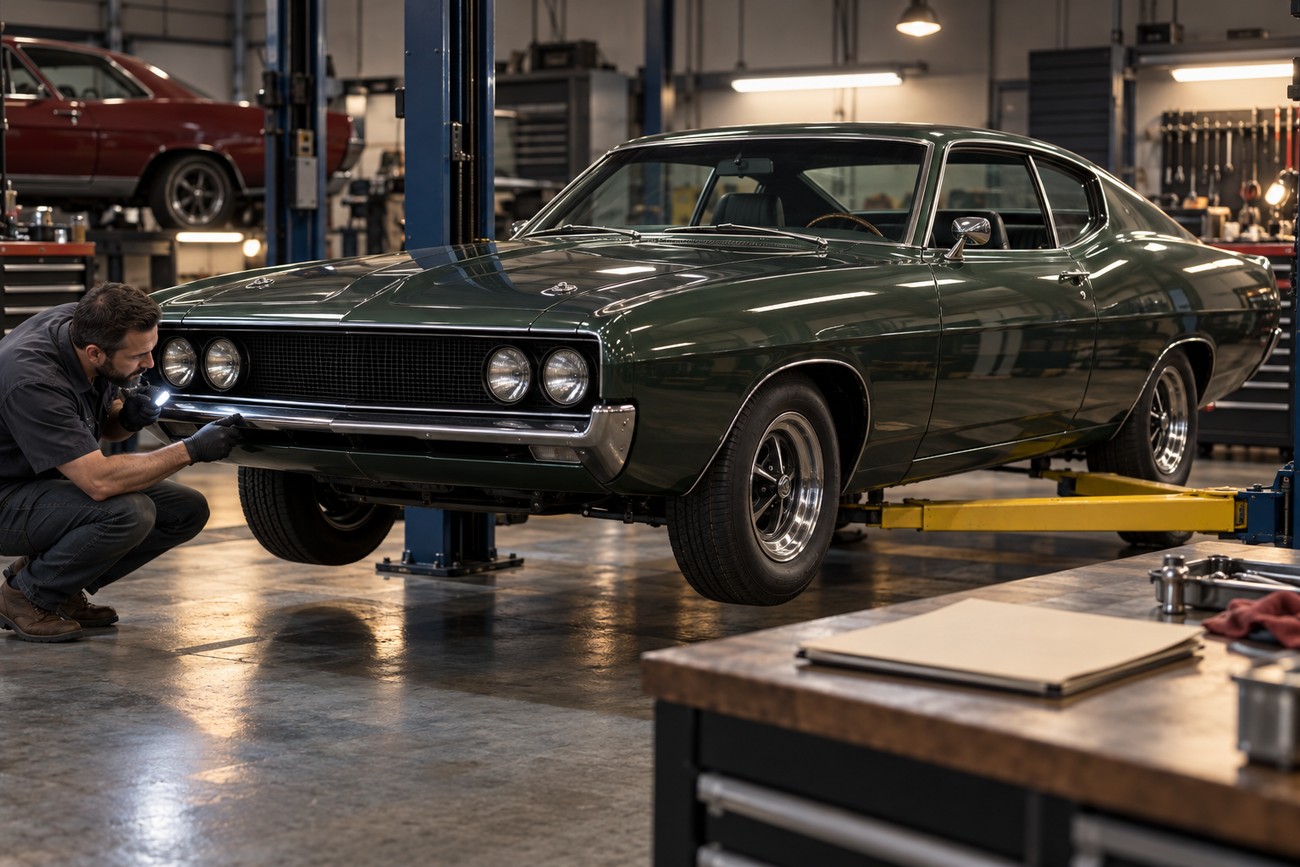
A genuine Talladega generally attracts more collector interest than an ordinary Torino of the same year, but there is no useful single price for every example. Documentation, identity history, condition, and restoration scope can change the judgment substantially. Compare what a seller can establish about the car with what an inspection confirms.
Matching numbers and verified provenance can improve desirability, especially when the body retains its distinctive aerodynamic components. Conversely, a replaced nose or uncertain front-end history creates a question that glossy paint cannot answer. The more significant the replacement, the more important it is to know exactly what was done and why.
A less-perfect preserved car may be more compelling than a flawless-looking restoration with little evidence of its earlier condition. Original assembly details and an honest record of wear can help establish what has survived. Cosmetic perfection has less evidential value if extensive work has obscured the body’s history.
For a buyer, value is the balance between verified authenticity and the work still required. Price a conversion as a conversion, and account for scarce parts and hidden corrosion before committing to a project. If a car has been heavily modernized, judge it against your intended use while recognizing that those changes may narrow its appeal to originality-focused collectors.
Frequently asked questions
These questions address the Talladega’s limited production, market value, and NASCAR history. They also reinforce why documentation and model-specific details matter when evaluating one of these cars.
How many Ford Torino Talladegas were made?
The commonly cited production figure is approximately 750 cars. Because the run existed to support NASCAR homologation, its limited size makes documentation and identity history especially important: a similar-looking SportsRoof does not become one of those cars through a later conversion.
How much is a 1969 Ford Torino Talladega worth?
There is no fixed value that applies to every 1969 Ford Torino Talladega. Assess a specific car by the strength of its identity records, matching-numbers evidence, preservation of aero components, structural condition, and the cost of correcting missing or incorrect details. A documented car with honest wear may justify more confidence than a highly polished example with an unclear body history.
Which car did NASCAR ban: the Talladega or another aero car?
Calling the Talladega simply a “banned car” oversimplifies its history. Ford built it to meet the homologation requirements that allowed its aerodynamic design into NASCAR competition; later rule restrictions affected the broader aero-car era. Distinguish those changing racing rules from the Talladega’s original purpose as an eligible production-based design.







