
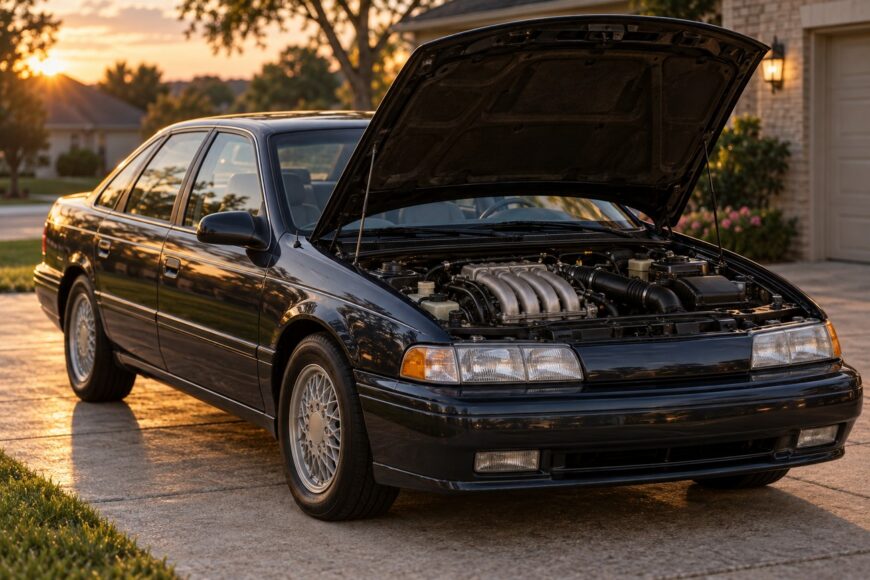
The original Ford Taurus SHO paired ordinary family-sedan packaging with an engine that felt entirely out of place in that setting: a Yamaha-developed, high-revving V6 mounted transversely under the hood. Its willingness to run toward a redline around 7,000 rpm gave the SHO a distinctive character, especially with the five-speed manual transmission.
The SHO badge later returned on a mechanically different car. From 2010 through 2019, it identified a twin-turbocharged, direct-injected 3.5-liter EcoBoost V6 sedan with all-wheel drive. That car delivers substantially more torque and performance, while adding a power transfer unit, turbochargers, and other expensive systems to the ownership equation.
- How Yamaha Turned a Family Sedan Into the Original SHO
- What the Yamaha Car Feels Like—and What Its Age Changes
- The EcoBoost SHO Is a Different Kind of Fast Taurus
- Original Yamaha SHO vs. EcoBoost SHO: The Differences That Matter
- The Expensive Risks Hidden Behind the Later SHO Badge
- How to Inspect a SHO Without Buying the Badge
- Frequently asked questions
- Which years of the Ford Taurus SHO should I avoid?
- How much horsepower can you get out of a Ford Taurus SHO?
- What records should a seller provide for a used SHO?
How Yamaha Turned a Family Sedan Into the Original SHO
The original SHO engine was a Yamaha-developed, transversely mounted 60-degree DOHC 3.0-liter V6. It was factory-rated at 220 hp and used a redline around 7,000 rpm, characteristics that separated it from the softer, lower-revving engines commonly associated with family sedans of the period.
Transverse installation made the engine fit the Taurus platform while preserving useful cabin and trunk space. That packaging created the central engineering contrast of the SHO: the car served as practical transportation, yet its compact V6 rewarded sustained engine speed and deliberate gear selection.
Early SHO cars used a five-speed Mazda MTX-IV manual transmission. The gearbox made the driver part of the engine’s character, allowing the Yamaha V6 to work through its rev range instead of relying on a conventional automatic to manage power delivery.
The result was a performance sedan with a technical identity of its own. The Yamaha name matters because of the engine’s design and sound, though it should be attached to this original configuration rather than treated as a description of every Taurus SHO ever built.
What the Yamaha Car Feels Like—and What Its Age Changes
The original SHO rewards a driver who is comfortable carrying revs and using the manual gearbox. Its appeal comes from response and engine character rather than from a single acceleration number. In a family sedan body, the high-revving V6 creates a more involving experience than the car’s understated shape suggests.
Age changes the buying decision. A surviving example’s condition depends heavily on its cooling system, timing-drive history, clutch operation, and the behavior of the Mazda MTX-IV gearbox. A well-preserved car can retain the qualities that made the SHO special, while deferred maintenance can turn the same mechanical complexity into a substantial repair bill.
Clutch inspection deserves close attention. Reported release-bearing failures can damage the fingers of the pressure plate, so a noisy bearing, unusual pedal feel, slipping clutch, or difficult engagement should prompt further diagnosis rather than be dismissed as a minor nuisance.
Service records also carry more weight than the Yamaha badge. Verify what was replaced, when it was done, and whether the work addressed the cooling system and timing drive. A test drive should include cold operation, full clutch engagement, every gear, and the transition from low engine speed to the upper part of the rev range.
The EcoBoost SHO Is a Different Kind of Fast Taurus
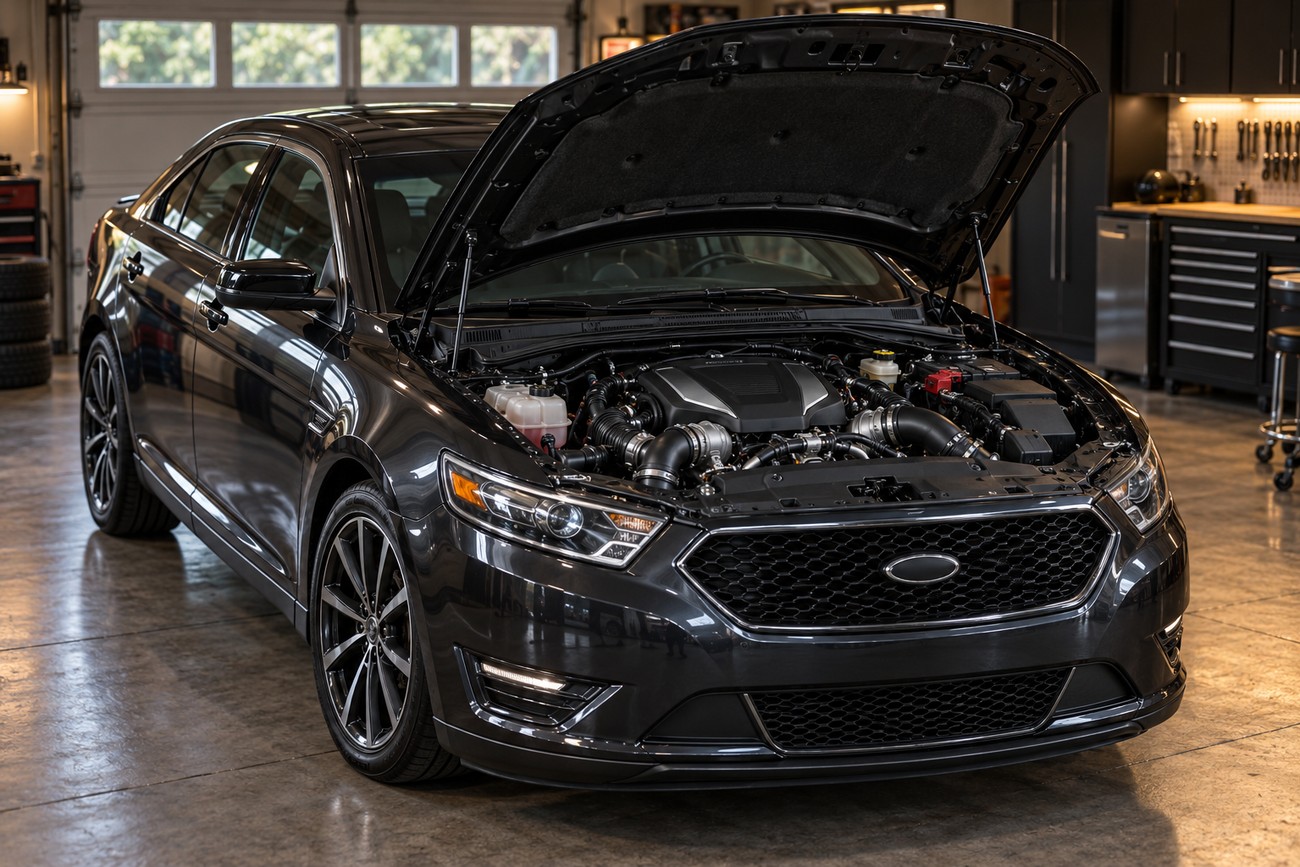
The 2010–2019 Taurus SHO moved away from the original naturally aspirated Yamaha-and-manual formula. It used a twin-turbocharged, direct-injected 3.5-liter EcoBoost V6 factory-rated at 365 hp and 350 lb-ft. An individual car’s measured output can vary with condition, fuel, modifications, and test method.
This later SHO paired a transversely mounted V6 with all-wheel drive and a separate power transfer unit, or PTU. The layout gives the sedan strong traction and a different kind of speed, with turbocharged torque arriving through a drivetrain designed to manage power at both axles.
The extra hardware changes the inspection list. A buyer must account for turbochargers, direct-injection components, additional driveline parts, and the PTU alongside the engine and transmission. AWD also increases the number of seals, shafts, joints, and fluid systems that can develop problems.
There were intervening automatic and other SHO configurations in the badge’s history, so the original Yamaha car and the 2010–2019 EcoBoost car are useful representative points rather than a complete description of every model year. Their engines, drivetrains, and ownership risks should be evaluated separately.
Original Yamaha SHO vs. EcoBoost SHO: The Differences That Matter
These are representative configurations, not a substitute for checking the exact year, engine, transmission, and drivetrain in the car you are considering.
| Area | Original Yamaha/manual SHO | 2010–2019 EcoBoost/AWD SHO |
|---|---|---|
| Engine | Yamaha-developed, transversely mounted 60-degree DOHC 3.0-liter V6 | Twin-turbocharged, direct-injected 3.5-liter EcoBoost V6 |
| Induction | Naturally aspirated | Twin turbochargers |
| Factory output | 220 hp | 365 hp and 350 lb-ft |
| Transmission or driveline | Five-speed Mazda MTX-IV manual transmission | AWD with a separate power transfer unit, or PTU |
| Driving character | Rev-hungry, manual-shifted, and responsive as engine speed rises | Torque-rich, turbocharged, and traction-focused |
| Major inspection priorities | Cooling system, timing-drive condition, clutch, release bearing, and gearbox behavior | Internal water pump, engine oil, turbo oil lines, turbochargers, PTU condition, leaks, and AWD components |
The table also explains why a general statement such as “the Yamaha SHO is reliable” has limited value when applied to a later EcoBoost car. The two representative cars share a badge and a performance mission, yet their mechanical failure points and maintenance costs are substantially different.
The Expensive Risks Hidden Behind the Later SHO Badge
The internal water pump in the 3.5-liter EcoBoost family deserves particular caution. If it fails, coolant can enter the engine oil and cause severe engine damage. Because the failure may develop without obvious overheating or an immediate check-engine light, a normal temperature gauge does not provide a clean bill of health.
Oil condition is therefore important during a purchase inspection. Check for coolant contamination, unexplained loss of coolant, unusual oil level changes, and maintenance records that show how the engine has been monitored. A clean-looking exterior does not rule out a problem inside the engine.
The PTU is another source of cost. Owners report leaks and overheating, while the unit’s fluid can degrade under demanding use. Owners commonly recommend PTU-fluid changes around every 50,000 miles, though that is not a universal Ford-prescribed interval; the applicable manual and operating conditions should determine the service decision.
Where inspection access permits, assess PTU fluid by its level, smell, color, and any metallic debris. A burnt odor, severe discoloration, or metal can indicate overheating or developing wear. A neglected PTU can turn the AWD advantage into a substantial repair risk.
Turbo-related oil-line leaks, turbocharger failures, rear-seal leaks, and drive-axle leaks also appear in owner reports. Brakes can wear quickly, and individual caliper failures are reported. Fuel consumption varies with the turbocharged engine, AWD hardware, vehicle condition, and driving style, so the ownership budget must cover the whole drivetrain rather than the engine alone.
How to Inspect a SHO Without Buying the Badge
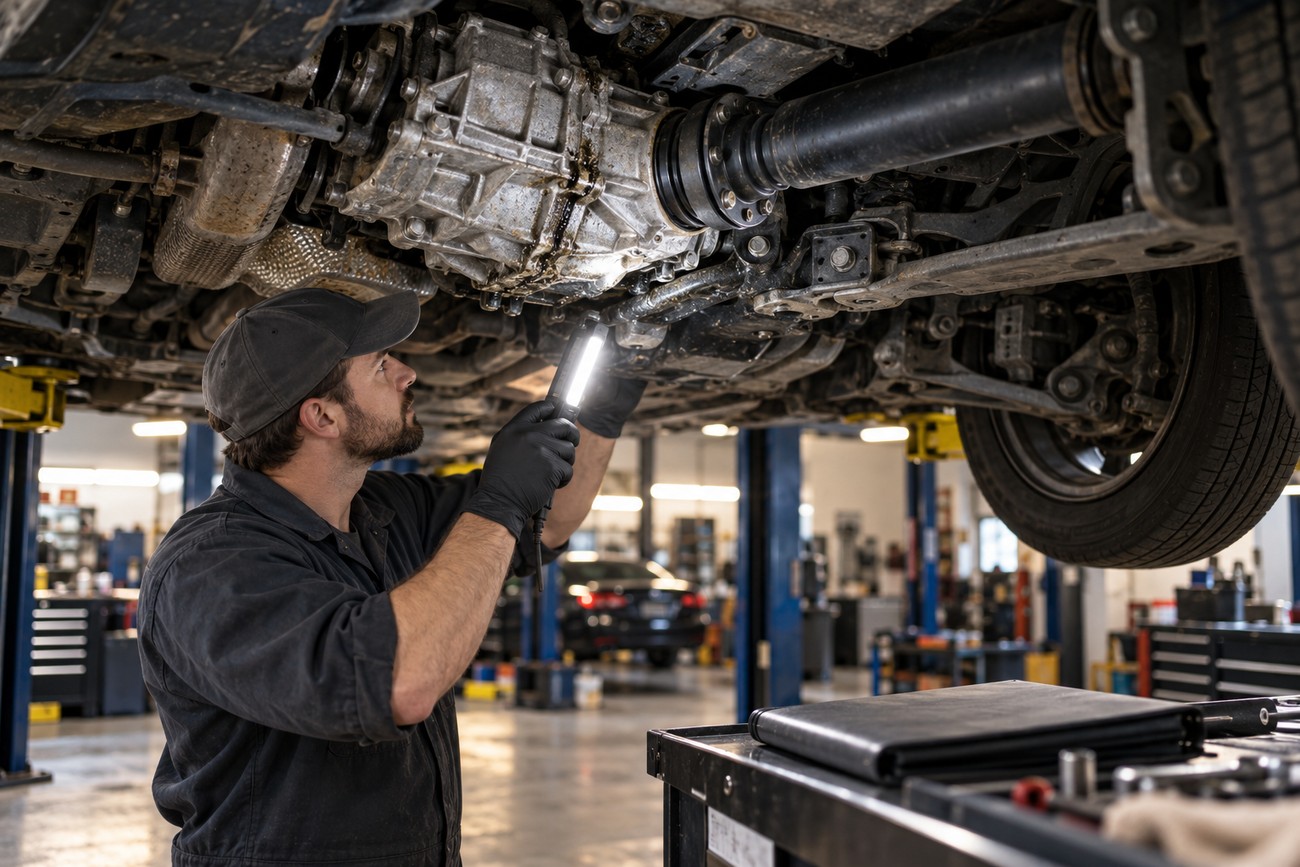
Start by confirming the actual drivetrain from the vehicle identification information and service records. The original manual Yamaha car requires a different inspection plan from a 2010–2019 EcoBoost AWD SHO. An attractive badge, a low asking price, or a seller’s description cannot establish which mechanical risks are present.
Review dated records before beginning the road test. For an early manual car, look for evidence of cooling-system work, timing-drive attention, clutch service, and gearbox repairs. For a later EcoBoost car, examine engine-oil history, coolant concerns, turbo-related work, and any documentation involving the PTU.
Raise the car or use a professional inspection facility to examine the PTU, turbo oil lines, axle seals, CV boots, and other lower-engine and driveline areas. Several important leaks are difficult to see from above, especially when shields or surrounding components conceal the first signs of a problem.
Use appropriate engine diagnostics rather than relying on the absence of a check-engine light. Compression and leak-down testing can help assess engine condition, while comparing required and actual fuel-rail pressure can provide additional information on the direct-injection system. These tests support a decision; none guarantees future reliability.
On a manual Yamaha SHO, check clutch take-up, bearing noise, gear selection, synchro behavior, cooling performance, and evidence of timing-drive neglect. On an EcoBoost SHO, assess the PTU fluid where possible, inspect for turbo oil leaks, and evaluate the engine oil and coolant together. An unmodified car with identifiable records is easier to judge than one tuned on an unknown transmission, PTU, or cooling system.
Frequently asked questions
Model year alone cannot settle a used-SHO purchase. Engine and drivetrain determine which records and inspection findings matter most. Factory power ratings also need to be kept separate from modified-output claims.
Which years of the Ford Taurus SHO should I avoid?
There is no defensible blanket avoid-year list from the available evidence. Some owners report fewer problems in 2013-and-later cars, but that is an owner impression rather than verified official model-year failure-rate data.
Shortlist individual cars by condition, records, inspection results, and drivetrain. A documented example with an independent inspection can be a stronger purchase than a supposedly preferable year with unknown maintenance, tuning, or unresolved PTU and engine concerns.
How much horsepower can you get out of a Ford Taurus SHO?
The original Yamaha 3.0-liter SHO was factory-rated at 220 hp. The 2010–2019 EcoBoost SHO was factory-rated at 365 hp and 350 lb-ft, though an individual car’s measured output can differ with condition, fuel, modifications, and test method.
There is no universal defensible modified-power figure. Any meaningful estimate must identify the engine, turbo and fuel hardware, calibration, fuel, transmission and drivetrain condition, and whether the result is a crankshaft rating or measured wheel horsepower.
What records should a seller provide for a used SHO?
Useful records are dated and itemized, identify the vehicle, describe the work performed, and specify the fluids or parts used. Verbal claims such as “recently serviced” provide little evidence without invoices or a clear maintenance log.
Look for documentation covering cooling and timing-drive work on early manual cars, plus engine-oil, coolant, turbo, and PTU service on later EcoBoost AWD cars. Match records against the physical inspection, since paperwork cannot substitute for checking leaks, fluid condition, clutch operation, or drivetrain noise.







