
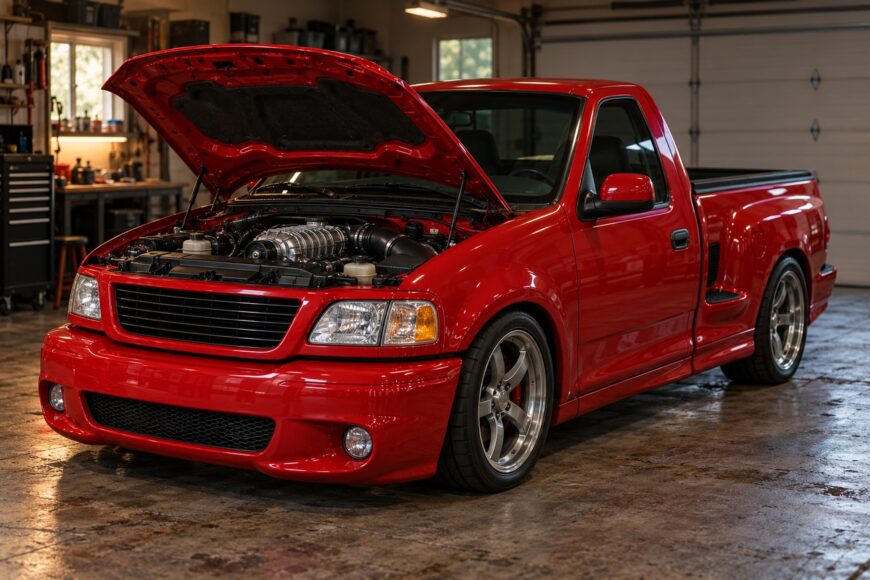
Supercharged acceleration feels almost absurd in a pickup. The Ford SVT Lightning delivers its shove from low engine speed, sends it through the rear wheels, and turns a familiar F-150 shape into a factory-built performance vehicle with genuine attitude.
That appeal comes with a buyer’s dilemma. A 1999–2004 Lightning is now an aging performance truck, not a conventional work pickup, so condition, maintenance, and past modifications matter more than a headline horsepower figure. Its influence is real, although saying it was the first fast pickup oversimplifies a longer history of performance trucks.
- What the SVT Lightning actually started
- More than an F-150 with a supercharger
- 1999–2000 vs. 2001–2004 SVT Lightning specifications
- Why its speed comes with everyday trade-offs
- Buying one: inspect the truck, not just the horsepower
- The legacy is real, but it is not an electric Lightning
- Frequently asked questions
- How many Ford SVT Lightnings were made?
- How much is a Ford SVT Lightning worth today?
- What is the top speed of a Ford SVT Lightning without a limiter?
What the SVT Lightning actually started
An earlier first-generation SVT Lightning preceded the supercharged 1999–2004 model. That history matters because the later truck did not appear from nowhere; it developed an idea Ford had already explored and gave it a more forceful, recognizable performance identity.
The supercharged model is best understood in two specification phases. The 1999–2000 trucks and the 2001–2004 trucks are not separate generations. They share the same basic concept, while the later phase received a higher factory rating and became the version many enthusiasts seek.
“Started it all” therefore describes influence rather than absolute chronology. The Lightning helped make the factory performance pickup a serious enthusiast category, showing that a truck could be engineered around acceleration, handling, and visual presence instead of being judged only by towing and payload.
Its importance also came from being a coordinated factory project. Ford SVT developed the powertrain response, chassis tuning, and suspension as a package, giving the truck credibility that a dealer-installed engine upgrade could not provide.
More than an F-150 with a supercharger
The central hardware was a 5.4-litre (5,409 cm³) supercharged SOHC V8 with a cast-iron block and aluminum heads. Its character came from substantial torque at low engine speed, so the truck responded immediately in normal driving and did not need sports-car-style revs to feel quick.
Power went to the rear wheels through a four-speed automatic. That layout made the Lightning relaxed to drive in traffic, while also placing considerable demands on traction, tires, and the transmission whenever the driver used the available torque aggressively.
SVT also gave the truck specific suspension and chassis tuning. The result was sharper body control and a more deliberate connection with the road than a standard F-150, although the truck remained a pickup with a livable road-going compromise rather than becoming a sports car in every respect.
The distinction is important during a used inspection. The Lightning was not simply an ordinary F-150 carrying a larger engine; its purpose-built calibration is part of the model’s value. At the same time, familiar truck components still age, and the SVT badge does not remove the need to check them.
1999–2000 vs. 2001–2004 SVT Lightning specifications
These are two specification phases of the supercharged model, rather than separate generations. Both used the same basic engine and drivetrain layout.
| Specification | 1999–2000 | 2001–2004 |
|---|---|---|
| Factory-rated horsepower | 360 hp | 380 hp |
| Factory-rated torque | 597 Nm | 610 Nm |
| Engine | Supercharged 5.4-litre SOHC V8 | Supercharged 5.4-litre SOHC V8 |
| Drivetrain | Rear-wheel drive, four-speed automatic | Rear-wheel drive, four-speed automatic |
Why its speed comes with everyday trade-offs
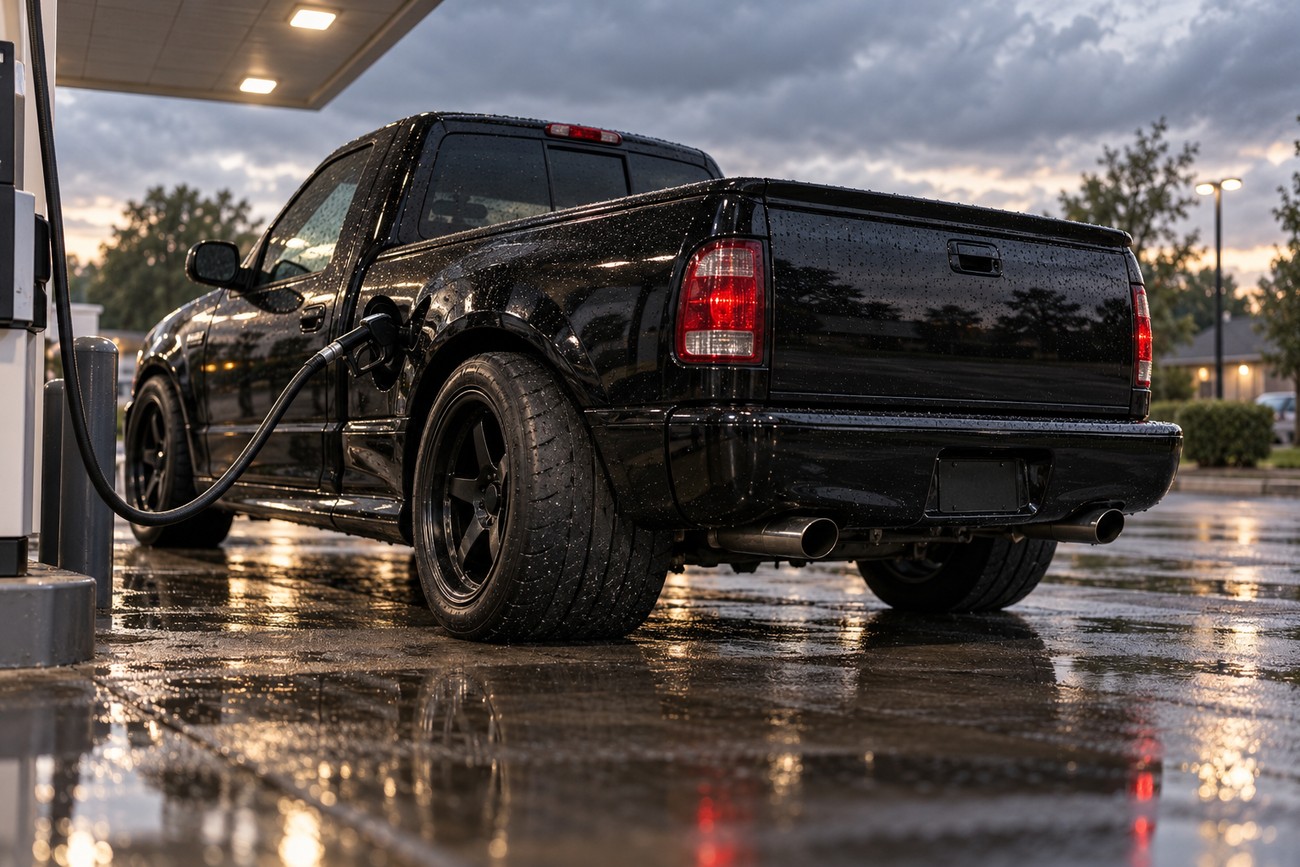
Low-rpm torque is the Lightning’s signature strength, but rear-wheel drive gives that force a narrow margin on cold, wet, or worn tires. Hard acceleration can produce wheelspin, and owner reports commonly identify rear-tire wear as an ongoing cost of enjoying the truck properly.
Fuel consumption is another permanent compromise. A supercharged V8 moving a full-size pickup body will use substantially more fuel than an economy-minded vehicle, especially in urban driving or during repeated acceleration. Catalog fuel figures from third-party listings should be treated as reference material, not as a universal Ford rating.
The SVT-specific suspension improves control but can feel firm on damaged pavement. That trade-off suits a driver who values steering response and straight-line stability more than a soft ride. A family expecting ordinary F-150 comfort may find the truck tiring over poor roads.
Carrying ability also needs careful verification. One catalog suggests about 365 kg, but published figures vary; do not treat this as a universal factory rating, and verify the individual truck’s load label. The Lightning’s bed and cab retain useful truck features, yet its real strength is performance rather than heavy-duty work.
Buying one: inspect the truck, not just the horsepower
Begin with the truck’s history. Look for service records, evidence of overheating, repeated hard use, and modifications to the engine, supercharger system, exhaust, suspension, or transmission. A stock-looking truck can still have a demanding past, while a carefully documented modified example may be safer than an abandoned “original” truck with no maintenance evidence.
Inspect the supercharger and its belt drive for unusual noise, poor belt condition, or signs that the system has been altered without supporting maintenance. The cooling system deserves equal attention because heat management becomes more important after hard driving or power increases. Check for leaks, neglected hoses, aging rubber, and wiring that has suffered from time or previous repairs.
Evidence of transmission heat stress and cooling maintenance matters more than a claimed power figure on a modified truck. A dyno number cannot show whether the four-speed automatic has been repeatedly overheated or whether the cooling system can control temperatures under load.
The four-speed automatic should engage cleanly and behave consistently when cold and warm. Harsh shifts, delayed engagement, slipping, or unexplained fluid condition justify a professional inspection before purchase. Owner-reported transmission heat concerns are inspection priorities, not proof that every Lightning has an inevitable defect.
Finally, examine the rear tires, suspension bushings, brake components, wiring, and other age-sensitive parts. Confirm the load limit on the individual vehicle’s label rather than relying on an advertisement or a catalog. The early phase was factory-rated at 360 hp, while the 2001–2004 phase was factory-rated at 380 hp, but a well-maintained truck with its original specification is generally a better proposition than a neglected example with more claimed power.
The legacy is real, but it is not an electric Lightning
The SVT Lightning established a memorable factory performance identity by combining a supercharged V8, rear-wheel drive, and SVT-specific chassis work in a pickup body. Its appeal is direct and mechanical: strong acceleration, rear-tire drama, and a distinctive late-1990s and early-2000s presence.
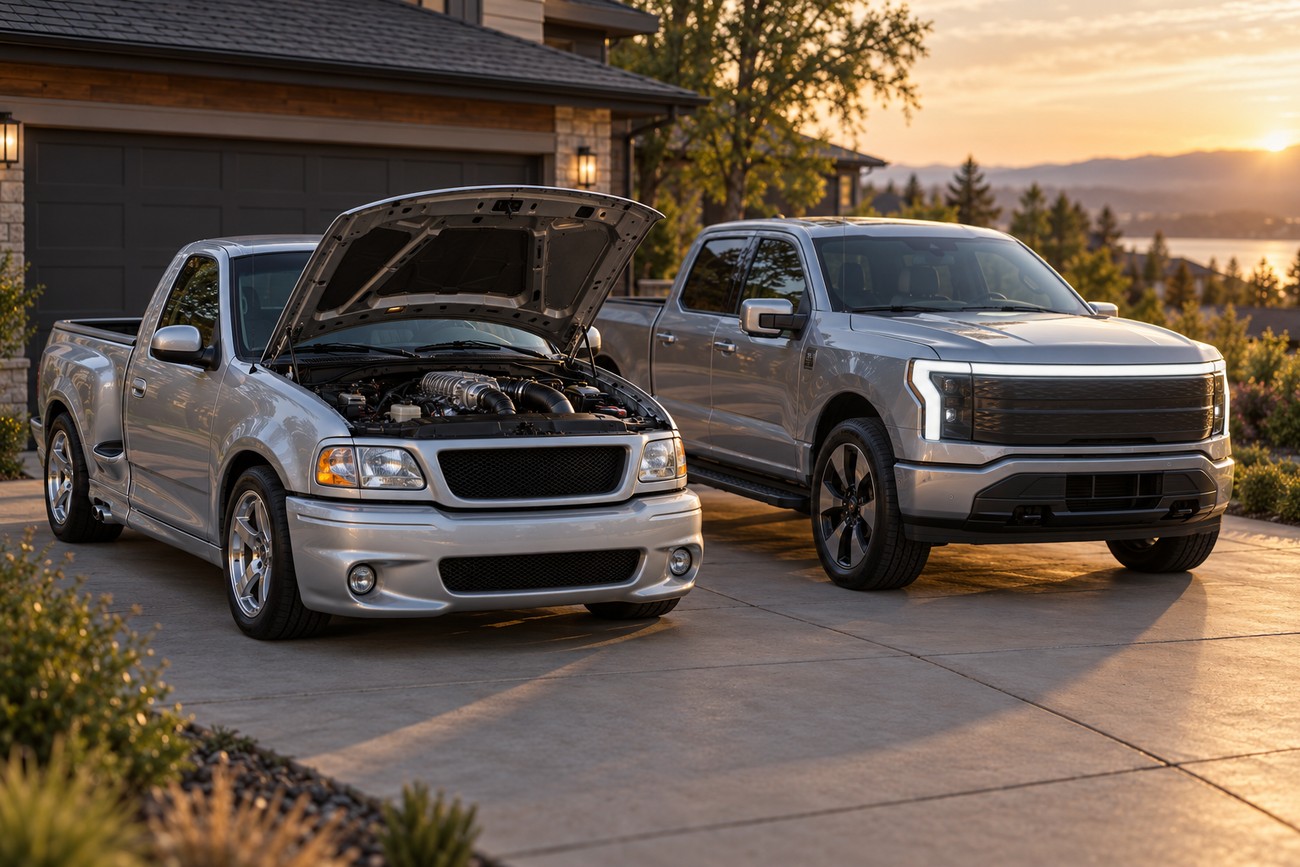
The name can cause confusion because the later electric F-150 Lightning is a different vehicle. The supercharged V8 SVT Lightning and the electric F-150 Lightning do not share the same powertrain, engineering priorities, or useful specification comparisons. Their figures should never be mixed in buying research.
As a used vehicle, the SVT truck works best as a second vehicle, enthusiast machine, or carefully chosen collector-oriented pickup. It can handle ordinary driving, but its firm ride, limited carrying focus, fuel demands, and aging performance hardware make it less convincing as a universal family or work truck.
Buyers who want factory-developed character and straight-line acceleration may find the compromises worthwhile. Drivers who need dependable hauling, generous payload capacity, quiet comfort, or modern everyday practicality will usually be better served by a conventional pickup.
Frequently asked questions
How many Ford SVT Lightnings were made?
The supplied evidence does not establish a reliably corroborated production total. Any serious count should distinguish the earlier first-generation SVT Lightning from the supercharged 1999–2004 model and should identify whether it covers the entire model run or particular model years.
For a purchase decision, the truck’s individual documentation is more useful than an unverified internet total. Confirm the model year, VIN, factory equipment, and service history before treating a production-count claim as evidence of rarity.
How much is a Ford SVT Lightning worth today?
There is no single defensible current price without a market date and a comparable vehicle. Estimate value by comparing recent completed sales of similar-year trucks, then adjust for condition, originality, mileage, documentation, and modifications.
Mechanical health deserves special weight. A lower-mile truck with neglected cooling or transmission service may be a poorer purchase than a higher-mile example with clear records, careful maintenance, and an unaltered or professionally documented specification.
What is the top speed of a Ford SVT Lightning without a limiter?
The available research does not establish a verified unrestricted top-speed figure. A reliable answer would require a documented test or manufacturer-backed data, rather than a number inferred from engine output.
Gearing, engine redline, tire capability, aerodynamic drag, and the truck’s condition all affect the result. A theoretical calculation can indicate what might be possible, but it should not be presented as a confirmed road speed.







