
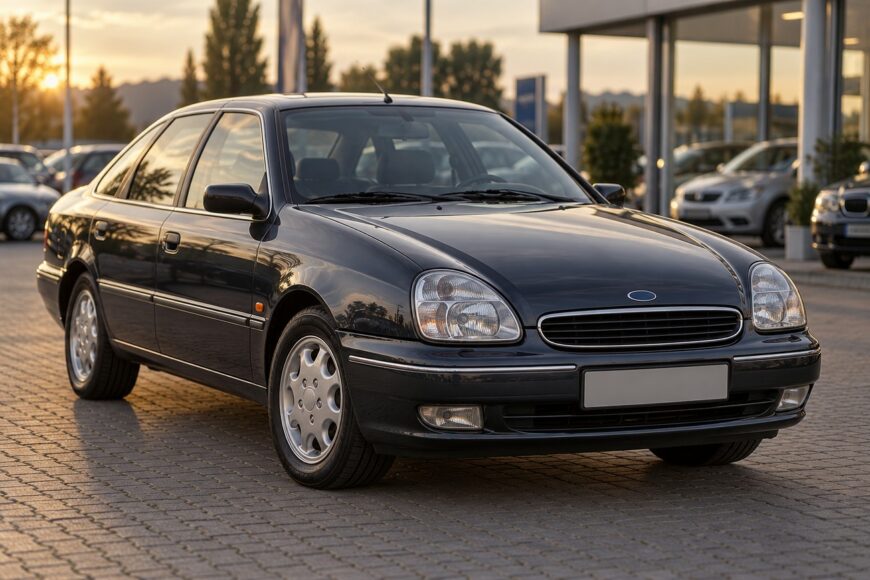
The Ford Scorpio Mk2 offered a serious large-car formula, yet many people remember it chiefly for its enormous headlights and smiling nose. Its spacious cabin, rear-wheel-drive layout, and executive-car ambitions were pushed aside by a face that looked closer to a cartoon than a formal European sedan.
That reaction was powerful because the Scorpio arrived in 1994 at a difficult point in automotive design. Rounded 1990s biodesign promised aerodynamic modernity and premium appeal, while buyers in the large-car market still expected disciplined lines and visible authority. The issue was therefore larger than personal taste: Ford’s futuristic experiment collided with the visual rules of the E-segment.
- The Front End That Changed the Scorpio’s Reputation
- Why the Headlights Looked Wrong on a Big Executive Car
- 1990s Biodesign Met a Conservative Market
- Was the Scorpio Mk2 Actually a Bad Car?
- How a Design Problem Became a Market Problem
- The Classic-Car Trap: What Buyers and Restorers Miss
- Frequently asked questions
- Why do Scorpios have a bad reputation?
- Was the Ford Scorpio a good car?
- What happened to the Ford Scorpio?
- Which Ford Scorpio Mk2 body style is easiest to accept visually?
The Front End That Changed the Scorpio’s Reputation
The Ford Scorpio Mk2 debuted in 1994 as a deeply redesigned second-generation Scorpio. The model remained a large European family/executive car in the E-segment, with sedan, hatchback, and estate body styles depending on market and year. Underneath, the basic idea still made sense for its class: substantial dimensions, generous equipment, and a drivetrain intended for long-distance comfort.
The new front end changed the conversation immediately. Very large rounded headlights sat high in a broad, soft-looking nose, creating the expression that became known as a smile. The lamps appeared exposed and bulbous, while the bonnet and grille gave the car a heavy visual forehead. Every element was recognizable on its own; together, they produced a face many viewers found awkwardly theatrical.
Ford presented the design as aerodynamic, modern, and premium. That ambition was easy to understand in the context of the period, when smooth surfaces and organic forms suggested computer-aided development and reduced wind resistance. The trouble lay in the relationship between those forms and the Scorpio’s role. A car expected to represent status suddenly looked approachable, comic, and unusually difficult to take seriously.
The reaction also obscured the rest of the car. Its side profile was more conventional, and the cabin did not attract the same level of hostility. The hatchback and estate could appear more coherent than the sedan, especially when viewed from an angle. For many observers, however, the first impression was decided by the nose before the practical qualities had any opportunity to register.
Why the Headlights Looked Wrong on a Big Executive Car
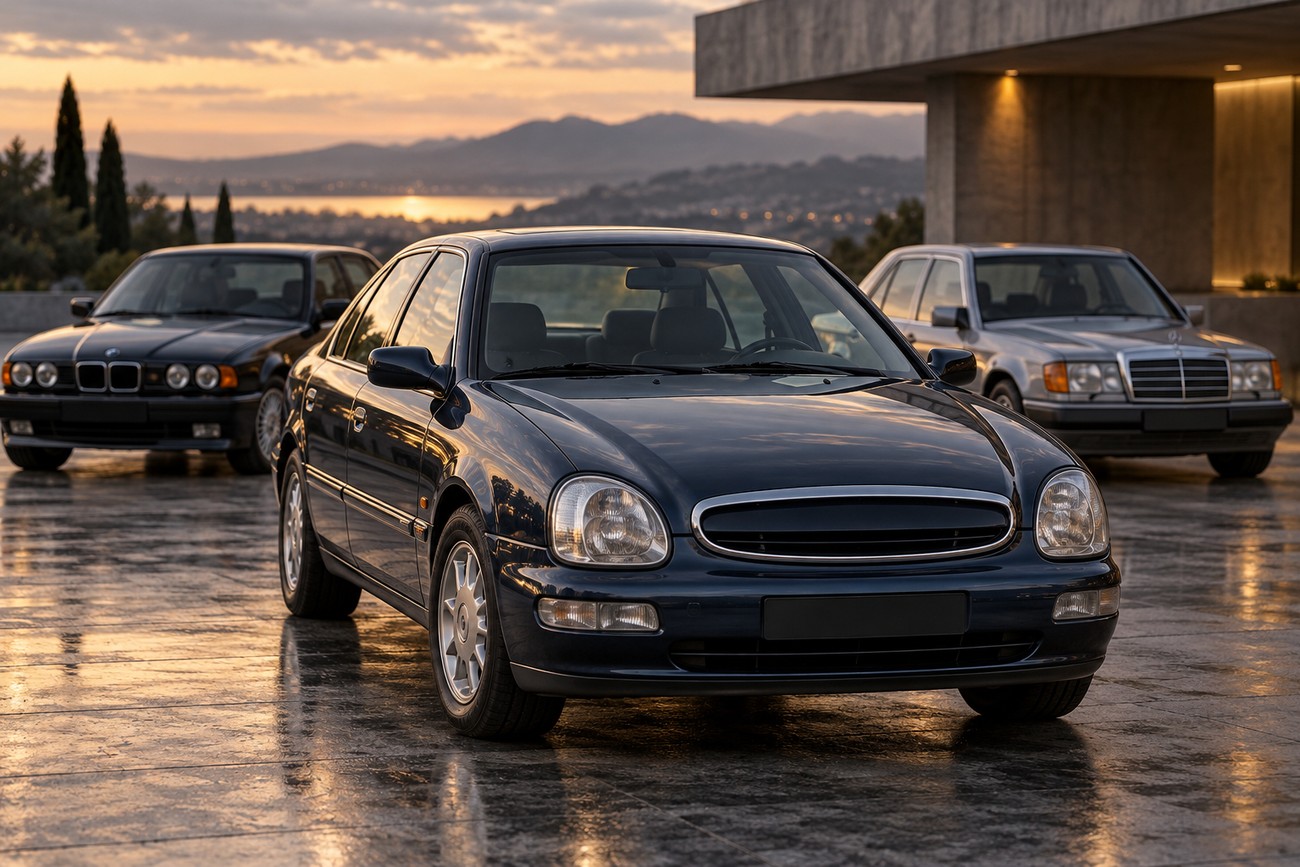
The central problem was visual proportion rather than rounded design by itself. The front appeared wider, taller, and heavier than the rest of the body, so the headlights seemed to dominate the car instead of completing it. Their shape also lacked the contained, technical appearance associated with executive vehicles of the period.
Established rivals communicated their intentions more clearly. The BMW 5 Series E34 and E39 used restrained surfaces and a focused front graphic, while the Mercedes-Benz W124 and W210 occupied a more formal visual territory, even where the W210 introduced its own rounded details. Those cars told buyers that they belonged to a serious hierarchy. The Scorpio’s expression suggested friendliness at the very moment its size and equipment asked for authority.
This mismatch affected perceived quality. A large bonnet, a high nose, and broad lamps made the car seem physically cumbersome, even though the underlying engineering followed a familiar executive-car formula. Critics read the exposed-looking optics as cheap or strange, and the smiling grille weakened the status cues that traditionally helped a large Ford compete with more prestigious badges.
The calmer response to the side profile and interior is important. It shows that the model was not rejected as a complete design object. The front created a visual interruption so strong that it became the shorthand for the entire car. Once that image had formed, comfort, space, and equipment were judged through it.
1990s Biodesign Met a Conservative Market
The Scorpio’s appearance made more sense inside the design climate of the 1990s. Aerodynamic bodies were becoming smoother, edges were disappearing, and manufacturers were experimenting with forms that suggested motion even when a car was parked. Ford’s approach followed that direction with unusual commitment, giving the Scorpio a biodesign face instead of a lightly modernized version of the previous model.
Large executive cars, however, carried conservative expectations. Buyers often wanted a vehicle that looked composed outside a hotel, office, or formal event. The Scorpio’s high smiling front end challenged that code. Its designers pursued a modern and premium impression, while many customers interpreted the same shapes as playful, ungainly, or insufficiently expensive-looking.
European motoring press in the mid-1990s frequently treated the Scorpio Mk2 as one of the decade’s least successful automotive designs. Magazine spreads and caricatured comparisons gave the nose a life of its own, especially in the period before mass internet use. A memorable image could travel farther than a balanced road test, and public ridicule became attached to the model even among people who had never driven one.
Old press photographs also exaggerated the effect. A straight-on image isolates the headlights and makes the nose appear especially broad. In person, changing light, body color, and viewing angle could make the car less shocking. That softer real-world impression never fully erased the backlash, because the design still delivered its strongest visual statement from the front.
Was the Scorpio Mk2 Actually a Bad Car?
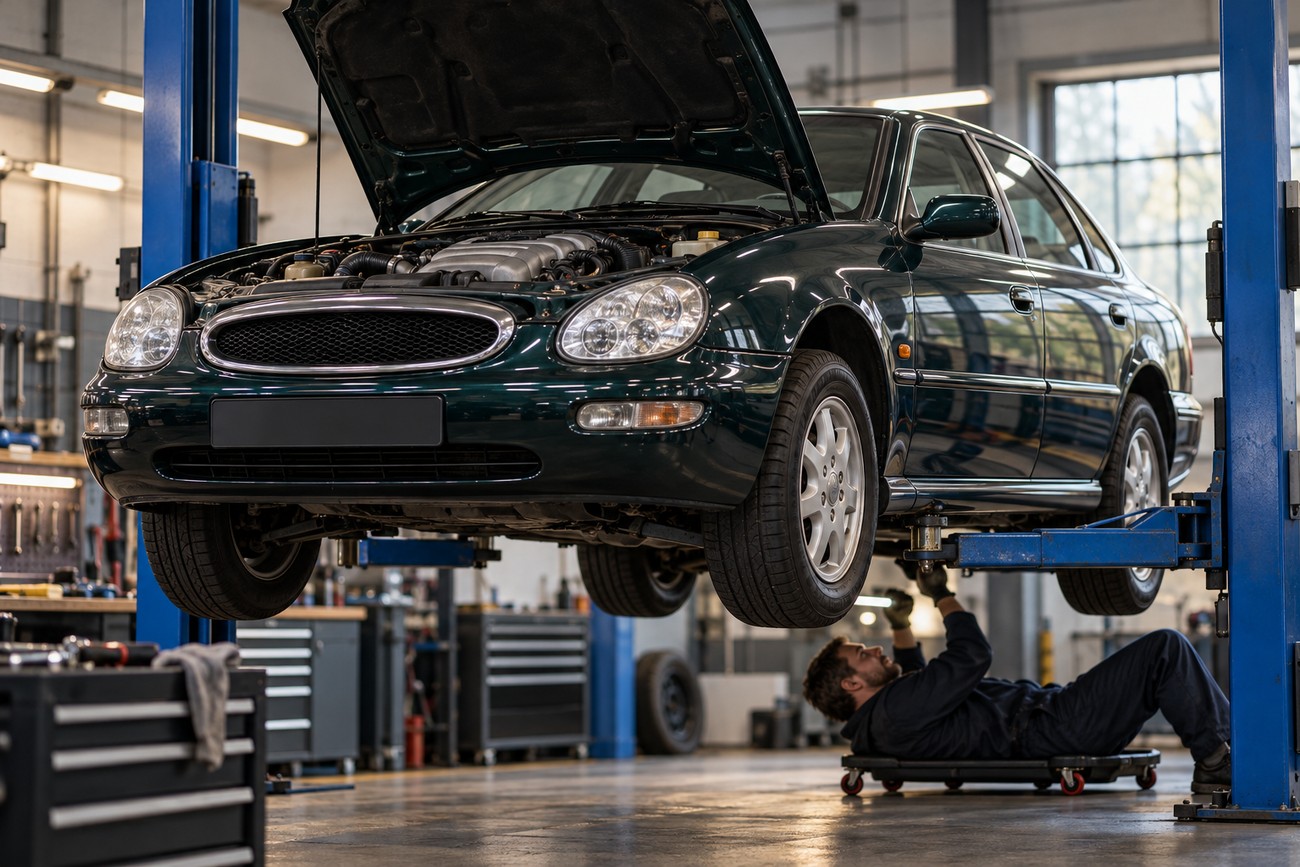
Its mechanical concept was conventional for the segment rather than an obvious technical failure. The Scorpio Mk2 used a longitudinal engine, rear-wheel drive, and independent suspension, a layout suited to a large European car intended to carry passengers over distance. Those fundamentals gave it a credible basis for comfort and stable road manners.
Space and equipment were genuine strengths. The large body provided a useful cabin, and the car offered the kind of relaxed travel that many buyers expected from an executive vehicle. Its architecture also preserved a rear-drive character that had become less common among ordinary family cars, giving the Scorpio a distinct technical identity beneath the controversial styling.
That does not make the car flawless. Age, maintenance, and the condition of an individual example matter greatly, and a sound engineering layout cannot guarantee an easy ownership experience decades later. The fair conclusion is narrower: the model’s bad reputation came primarily from its front-end design, rather than from an objectively catastrophic technical concept.
The distinction matters for buyers. Calling the Scorpio a bad car because its face was unpopular confuses market acceptance with engineering judgment. Its useful qualities were real, yet they were repeatedly overwhelmed by the first visual impression, which explains why the model could be comfortable and competent while still becoming a commercial disappointment in the public imagination.
How a Design Problem Became a Market Problem
A large car must project more than transport. Its appearance reassures the owner that the purchase carries a certain level of dignity, and it signals that status to everyone else. The Scorpio’s nose weakened that exchange: observers often saw a comic or inexpensive expression where the buyer expected executive authority.
That reputational damage affected the car beyond its years in showrooms. A model that is mocked becomes harder to recommend, harder to sell, and harder to present as an overlooked classic. The front-end reaction therefore did more harm than a specification sheet could repair. Good equipment and rear-wheel-drive engineering remained facts, while the face became the story people repeated.
Cosmetic improvements have clear limits here. Fresh paint, polished trim, or larger wheels can improve the condition of an example, yet they cannot alter the underlying proportions of the nose. A tired Scorpio may look worse than intended, but a perfect one still carries the same design decision. Buyers should judge the car only after deciding whether they can live with that permanent feature.
Dislike was never universal. Darker colors can reduce the contrast around the lamps, and estate bodywork gives the overall shape a longer, more practical balance. Seeing the car in person can also soften the effect compared with old photographs. Those nuances make the Scorpio more interesting, though they do not turn its front into a conventionally elegant design.
The Classic-Car Trap: What Buyers and Restorers Miss
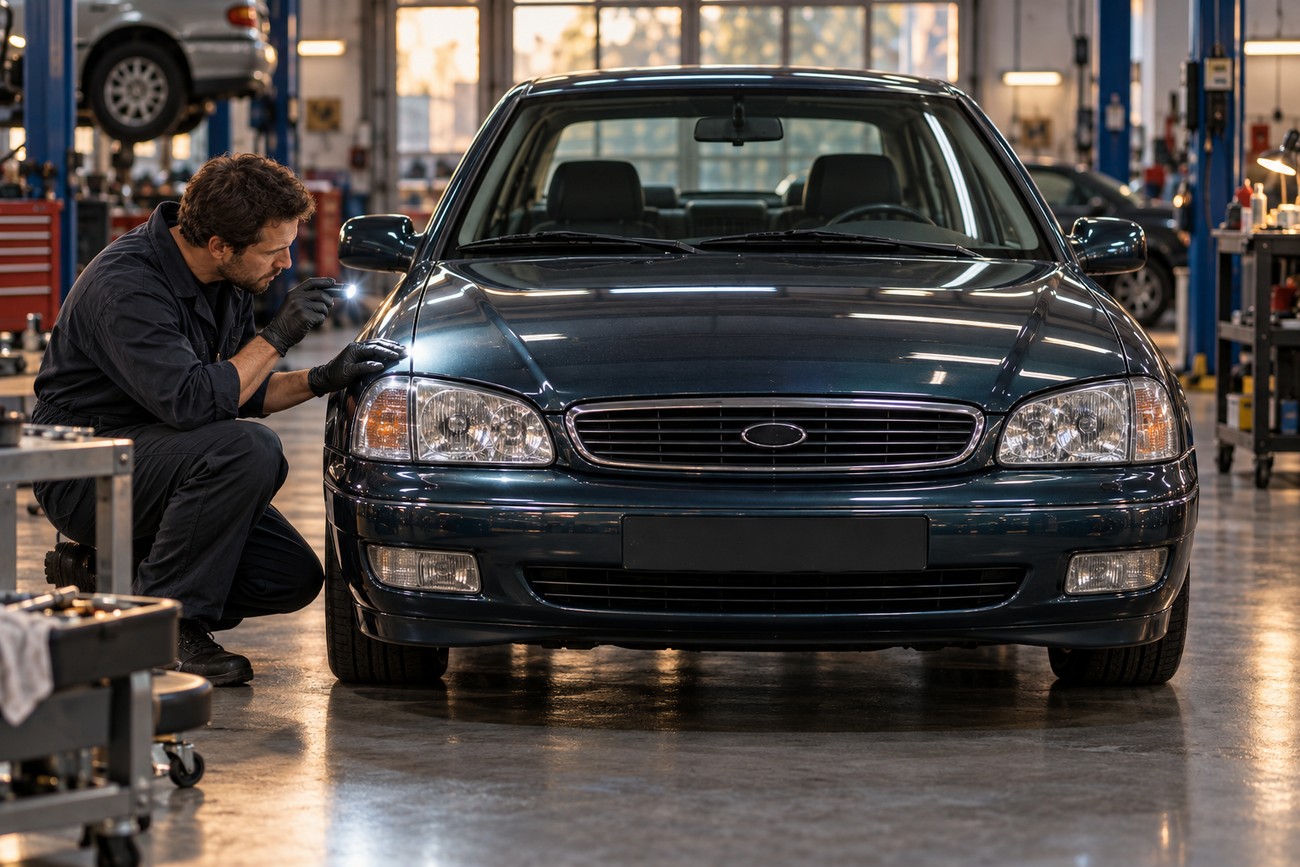
Rarity is a reason to inspect a Scorpio Mk2, not a reason to assume it has strong value. The model’s cultural status comes from its controversial design experiment, and that status may appeal to an enthusiast who enjoys unusual automotive history. It does not guarantee rising prices, broad demand, or easy resale.
Condition at the front deserves special attention. Check that the headlights match in color, clarity, and fit, and inspect the bonnet, grille, bumper, and surrounding panels for uneven gaps. Poor-quality repairs or repainting can make the already complex nose look distorted, while faded or mismatched optics amplify the traits critics disliked most.
Front-end originality matters more on this model than cosmetic upgrades such as wheels or polishing. Correct lamp condition and repair geometry preserve the intended shape, while a bright finish cannot disguise a nose assembled out of alignment.
A buyer should also look for evidence of crash repairs and confirm that the front retains the correct visual relationship between its parts. The Scorpio’s unusual design leaves little room for casual substitutions or approximate panel alignment. An apparently minor mismatch can change the expression of the entire vehicle, making it seem heavier and less coherent than a properly preserved example.
The sensible appeal is therefore specific. A good Scorpio Mk2 combines long-distance comfort, spaciousness, rear-wheel-drive character, and a direct connection to one of the most debated design experiments of the 1990s. It works best for someone who values that history and accepts the styling openly, rather than for a buyer hoping rarity alone will transform an unpopular face into a valuable investment.
Frequently asked questions
The Scorpio Mk2 is easiest to understand when appearance, engineering, and market reputation are judged separately. These answers focus on the distinction that casual descriptions often lose.
Why do Scorpios have a bad reputation?
The name’s stigma is largely shorthand for the Mk2’s controversial face. Its very large rounded headlights and high, smiling front end conflicted with the restrained appearance expected from a large European executive car, so public ridicule became more memorable than its comfort or conventional rear-drive engineering.
That reputation should not be treated as a complete technical verdict. The car had a longitudinal engine, independent suspension, useful space, and substantial equipment. Its image was damaged by the way it looked and what that appearance seemed to say about status.
Was the Ford Scorpio a good car?
It could be a good spacious, comfortable rear-wheel-drive car for a buyer who values relaxed travel and large-car practicality. Its mechanical layout was credible for the segment, and its strengths were more substantial than the jokes surrounding its styling suggested.
It was a poor choice for someone who needed conservative styling, easy resale, or universal approval. The front-end design remains inseparable from ownership, so condition and price should be judged alongside the buyer’s tolerance for an unusually divisive appearance.
What happened to the Ford Scorpio?
The design experiment failed to connect with much of its intended audience, weakening the model’s identity as an executive car. Once the front became the subject of repeated criticism, the Scorpio struggled to make its comfort and equipment the center of public discussion.
The name later survived more as a cultural reference to controversial automotive design than as a mainstream executive-car success. That legacy explains its interest today, while also explaining why rarity does not automatically create strong collector demand.
Which Ford Scorpio Mk2 body style is easiest to accept visually?
The estate is often the easiest to accept because its longer body gives the front a more balanced context. Darker colors can also soften the contrast around the headlights. The hatchback may appear more coherent than the sedan from some angles, while the sedan exposes the controversial nose most directly.
None of these versions removes the underlying design issue. They change how dominant the front appears, especially in person, so the best choice remains the body style and color that make the buyer comfortable with the car’s character rather than an attempt to disguise it.







