
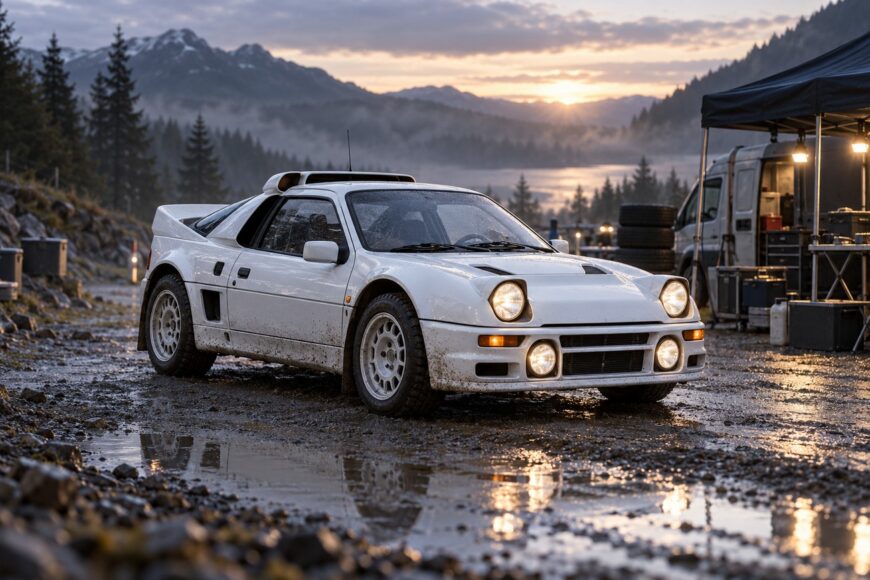
Ford built the RS200 as a spectacular Group B weapon, yet its competition life was cut short almost as soon as it began. Delays pushed its World Rally Championship debut into 1986, and the category was banned soon afterward. The car’s engineering was therefore tested far less extensively in top-level rallying than its reputation suggests.
The standard road car used a turbocharged 1,803 cc Cosworth BDT engine and approximately 246–250 hp. Evolution specifications and competition cars moved into different territory, including about 2.1 liters and outputs above 420 hp. Those figures are often blended together, creating a misleading picture of the car a buyer actually sees.
The real ownership issue is less romantic: the RS200 is a rare, competition-derived collector car assembled in small numbers, not an ordinary Ford with exotic styling. Its value depends on identity, structure, parts support, and documented care. A usable example can be rewarding, while an undocumented one can turn into a specialist restoration project with little warning.
- Why Ford Built the RS200 for Group B
- The Engineering That Made the RS200 Different
- Road RS200 vs. Evolution: The Numbers People Get Wrong
- A Perfect Group B Car Arriving Too Late
- What Owning an RS200 Really Demands
- Buying Checklist: Identity, Condition, and the Biggest Myths
- Frequently asked questions
- How much does a Ford RS200 cost?
- Was the Ford RS200 sold in the US?
- Why does the FIA specification list 2,525 cc for the RS200?
- How many road-going RS200s were actually built?
Why Ford Built the RS200 for Group B
Group B rules required at least 200 road cars before a manufacturer could homologate a model for competition. The number in RS200 therefore refers to the regulatory minimum, not to engine output and not automatically to the exact number produced. Claims about completed, surviving, or modified cars should be treated separately from that basic requirement.
Ford chose to build a purpose-designed machine rather than adapt a conventional front-engine road model. The result placed the engine longitudinally in the middle of the car and used four-wheel drive, giving Ford a platform designed around rally requirements from the start. This approach improved the competition package, but it also created a car with little commonality with ordinary Ford service practice.
Ford commissioned Reliant to assemble the RS200 at Shenstone. That detail matters to a buyer because the RS200 was a low-volume homologation special, assembled through a specialist arrangement rather than produced like a mainstream Ford model on a large factory line.
The FIA homologated the RS200 on February 2, 1986, as Group B homologation number 280. By then, development and production timing had become critical. The car’s identity is consequently tied to a narrow regulatory window, and the phrase “Ford RS200” should not be treated as proof that every example has the same specification or competition history.
The Engineering That Made the RS200 Different
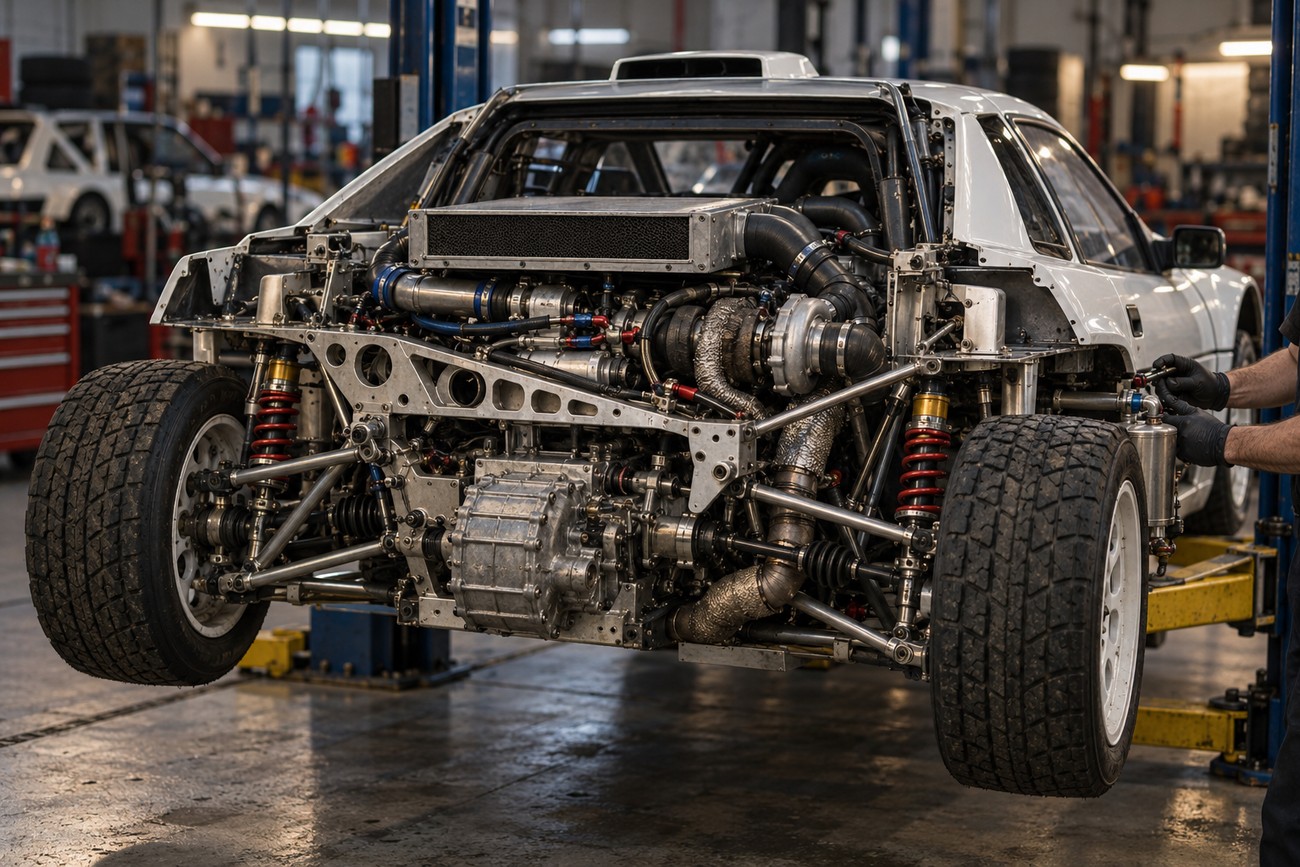
The road RS200 used a turbocharged Cosworth BDT engine of 1,803 cc, a five-speed manual transmission, and four-wheel drive. Published road-car output is commonly given as approximately 246–250 hp. The difference between 246 hp and 250 hp is generally a matter of measurement, cataloging, and rounding, rather than evidence of two separate standard engines.
Its chassis used an aluminum honeycomb lower structure, a central safety cell, and front and rear subframes. The suspension used double wishbones with two dampers per wheel. These are serious engineering choices for a road car, but they also create more inspection points than a conventional Ford shell and suspension layout.
The driveline’s arrangement was intended to help balance the car, with the longitudinal mid-mounted engine working through a complex four-wheel-drive system. That complexity affects ownership directly: wear, incorrect setup, corrosion, or previous impact damage may involve several connected assemblies rather than one easily replaced component.
A Ford badge can therefore create the wrong service expectation. Many components cannot be substituted with ordinary production Ford parts, and structural or composite-body repairs require appropriate knowledge. A clean-looking car with uncertain subframe history deserves more caution than a less polished example with clear engineering records.
Road RS200 vs. Evolution: The Numbers People Get Wrong
The three specifications below are related, yet they should never be presented as one generic RS200 specification.
| Specification | Engine and power claims | Intended use | Why the figures must be separated |
|---|---|---|---|
| Standard road homologation RS200 | 1,803 cc; approximately 246–250 hp | Road use and Group B homologation | This is the baseline road specification |
| Evolution specification | About 2.1 liters; higher-performance specification | Competition development and later racing use | It was separately homologated and is not the standard road engine |
| Competition configurations | Figures above 420 hp may apply | Rallying and rallycross | Race outputs do not describe a standard road RS200 |
The Evolution specification was homologated on December 1, 1986, after Group B had ended. It used an engine of about 2.1 liters, while competition-oriented configurations could exceed 420 hp. Those numbers belong to later or race-focused applications, not to every road-going RS200.
The FIA homologation card adds another source of confusion by listing 2,525 cc. This is a turbocharged-engine regulatory equivalency figure, not the physical displacement of the road engine. The commonly quoted 1,803 cc road specification remains the relevant figure when assessing a standard car.
A Perfect Group B Car Arriving Too Late
The RS200 entered the World Rally Championship after delays in 1986. Its debut came shortly before Group B was banned, leaving little time for Ford to develop a long, mature WRC campaign. The car may have had substantial potential, but potential is not the same as a proven championship record.
That timing shaped the RS200’s historical reputation. It was built for one of the most demanding categories in rallying, yet the regulatory environment disappeared before the design could establish itself through sustained competition. This is why descriptions that imply a fully realized Group B career overstate the evidence.
The Evolution specification was homologated on December 1, 1986, already after Group B had ended. Its more visible later competition career came in rallycross, where the platform could continue to demonstrate its engine, four-wheel-drive system, and chassis in a different setting.
For collectors, the late arrival is more than a historical footnote. A car with limited original WRC mileage may sound desirable, but the absence of a long factory campaign also means fewer competition records and less direct evidence about how every development stage performed under sustained rally conditions.
What Owning an RS200 Really Demands
Parts are scarce and expensive, and many cannot be replaced with ordinary production Ford components. The engine, transmission, four-wheel-drive system, and composite bodywork all benefit from specialists familiar with old competition-derived hardware. A general repair shop may be able to service individual items, yet that does not guarantee correct diagnosis of the complete system.
Driving demands concentration as well. Turbo lag followed by a sharp boost transition can make the car difficult at low speed or on a slippery surface. Four-wheel drive improves traction, but it does not cancel the effects of a short wheelbase, sudden power delivery, and high output.
Inspect the chassis, subframes, cooling, fuel delivery, and driveline before discussing boost or cosmetic restoration. Those systems determine whether the car is fundamentally healthy; paint and extra power come later.
Age adds less glamorous risks. Original tires, seals, and plastic components may be difficult to source or preserve, and long storage can be more damaging than regular, documented use. Service history can matter more than mileage because a low-mileage car may have spent years idle or may have been repaired without a reliable record.
Increasing boost immediately after purchase is a poor shortcut. The fuel system, cooling system, clutch, and transmission should first be verified, with the chassis and subframes inspected for hidden damage. A cosmetic restoration that leaves those areas uncertain can make the car look finished while preserving its largest risks.
Buying Checklist: Identity, Condition, and the Biggest Myths
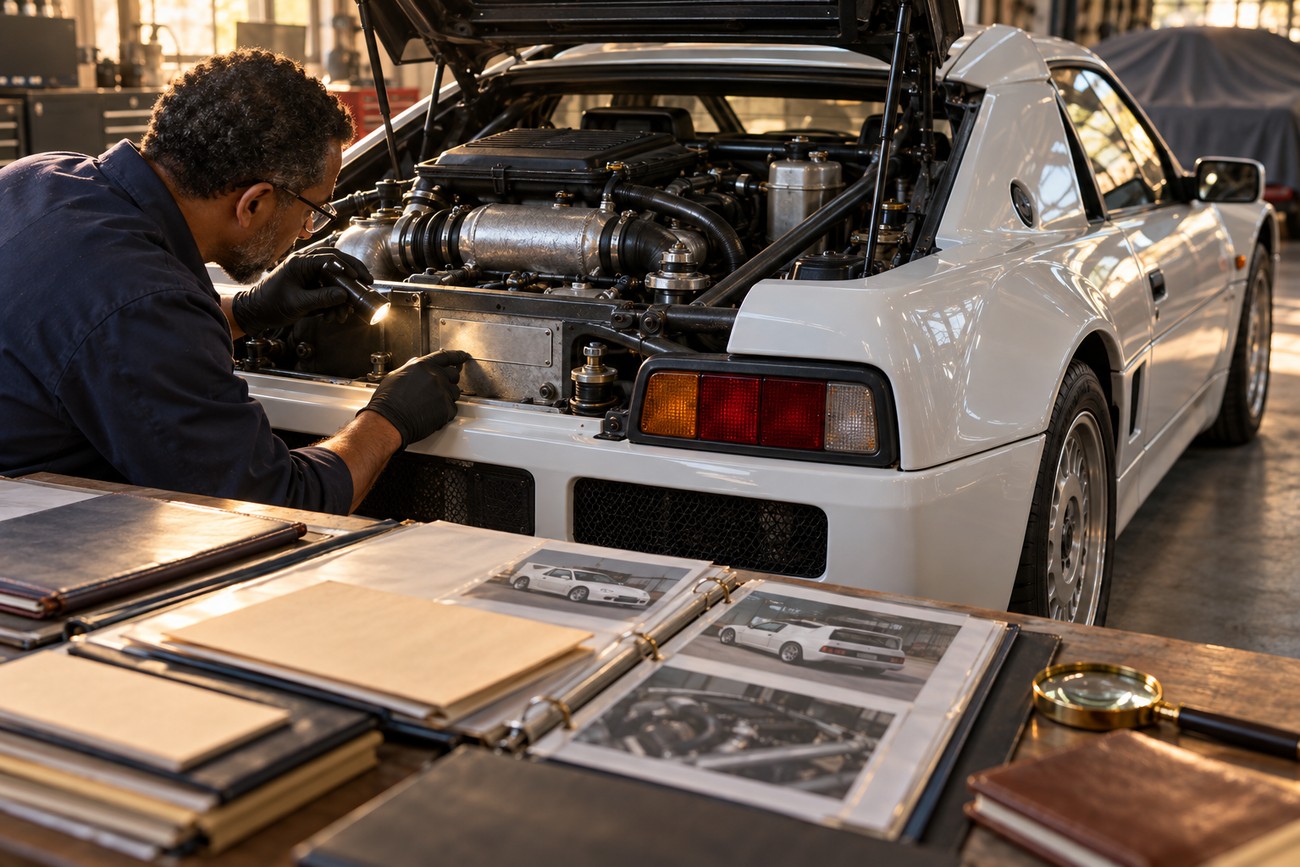
Begin with identity, not paintwork. The VIN, chassis number, engine identity, and accompanying documentation should agree with the claimed specification. The records should also distinguish an original road homologation car from a competition car, a modified example, or a later restomod.
A standard road RS200 should not be described using every Evolution or race-car figure. The 2.1-liter engine and outputs above 420 hp belong to later or competition-oriented configurations, while the baseline road car is generally described with a 1,803 cc engine and approximately 246–250 hp.
Inspect the chassis and subframes carefully, including evidence of repaired competition damage hidden beneath good bodywork. Composite panels can be made presentable, but presentation does not establish structural originality. A polished shell with incomplete records may be a worse purchase than a less perfect car with traceable maintenance and specialist inspection.
Four-wheel drive does not make the RS200 easy for an inexperienced driver, and parts offered by one seller do not prove stable long-term supply. Buyers should confirm who can maintain the car, how difficult key components are to obtain, and whether future repairs can be supported before committing to ownership.
Frequently asked questions
How much does a Ford RS200 cost?
There is no dependable single price for an RS200. Specification, provenance, documentation, structural condition, originality, and the quality of previous work can outweigh mileage, especially in a car produced for homologation rather than ordinary retail use.
A cheaper undocumented example may require the larger investment once identity, subframes, driveline, cooling, and composite repairs are investigated. The purchase figure should therefore be considered alongside a realistic specialist inspection and restoration budget.
Was the Ford RS200 sold in the US?
The RS200 was not a normal US-market Ford model sold through the regular dealer network. It was a low-volume Group B homologation special assembled by Reliant at Shenstone, so its presence in the United States generally reflects private importation or later movement between collectors rather than official mainstream availability.
US buyers should separate import and registration questions from the car’s original Ford specification. A car being present in the United States does not by itself confirm its documentation, originality, or eligibility for every intended use.
Why does the FIA specification list 2,525 cc for the RS200?
The FIA figure uses a turbocharged-engine equivalency formula for regulatory purposes. It does not describe a different production engine and should not replace the commonly quoted 1,803 cc displacement of the standard road RS200.
This distinction matters when checking a car against its documents. The regulatory capacity and the physical road-engine capacity serve different purposes, so both can appear in credible technical records without indicating a contradiction.
How many road-going RS200s were actually built?
At least 200 road cars were required for Group B homologation, but that requirement should not automatically be treated as the precise total built or the number surviving today. Production claims may include completed cars, competition-related examples, conversions, or cars with later specification changes.
For a buyer, the individual car’s identity and history are more useful than an unverified total. Matching records, chassis details, engine identity, and evidence of correct assembly provide stronger protection than relying on the number 200 alone.







