
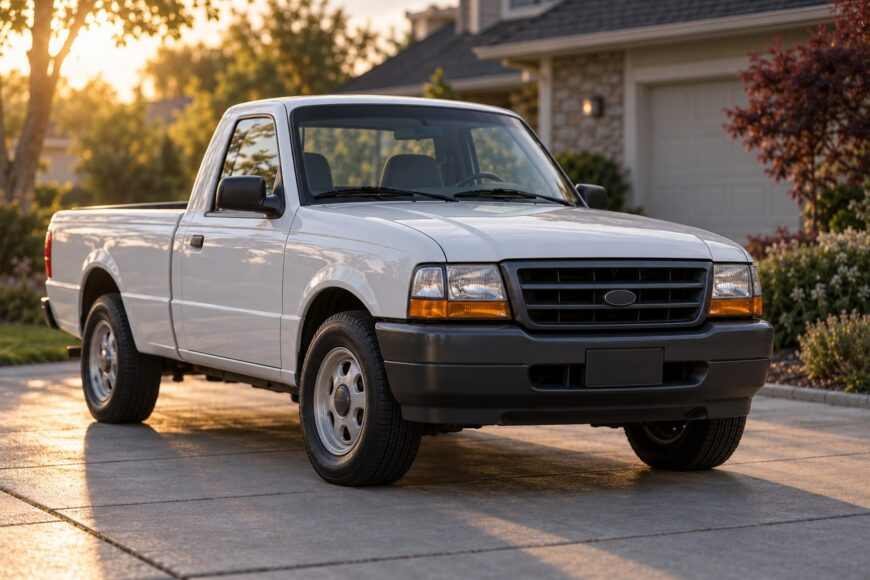
The Ford Ranger EV was an early electric pickup built around a familiar truck platform, and its appeal rests on that contradiction. It looked like a Ranger, retained rear-wheel drive, and offered a usable bed, yet its battery system consumed much of the payload and delivered the compromises expected from late-1990s electric-vehicle technology.
The 1998 technical-sheet range was 86.9 miles. Real-world reports for lead-acid trucks commonly place practical range closer to 35–50 miles, with cold-weather use sometimes reducing it to around 35 miles. That gap is the key to understanding the Ranger EV: its technical-sheet figures describe a test condition, while battery age, temperature, load, and speed determine whether a surviving truck can complete an ordinary trip.
- What the Ford Ranger EV Was—and Wasn’t
- 1998 Ford Ranger EV: The Numbers That Matter
- Range Reality: Why the Official Figure Wasn’t the Whole Story
- A Pickup with a Heavy Compromise
- Living with One Today: Battery, Service, and Usability
- The Biggest Myths and Specification Traps
- Frequently Asked Questions
- How much is a 1998 Ford Ranger EV worth today?
- How many Ford Ranger EVs were made?
- Which Ranger EV battery type is generally more desirable?
What the Ford Ranger EV Was—and Wasn’t
The Ranger EV was a battery-electric pickup built around the conventional Ford Ranger platform. Ford produced it across the 1998–2002 model years, making it an early factory electric pickup from a major automaker rather than a one-off conversion assembled by an independent enthusiast.
The familiar body concealed a substantially different powertrain. The truck used rear-wheel drive and a single-speed transmission, with electric traction replacing the conventional engine and gearbox arrangement. Sources commonly describe the model as Regular Cab only, which limited passenger capacity and made its everyday role narrower than that of a typical Ranger offered in several configurations.
It is important to separate the Ranger EV from ordinary 1998 Ford Rangers. Gasoline and diesel versions shared the Ranger name and much of the platform identity, but their payload expectations, service procedures, and operating range were fundamentally different. A used-truck buyer who assumes that an electric Ranger behaves like a conventional Ranger will misjudge both its strengths and its limitations.
The model also occupied a low-volume niche. Estimates commonly cluster around approximately 1,500 vehicles, although that figure should be treated as an estimate rather than an exact verified production total. Descriptions of the Ranger EV as a first electric pickup require similar care: it can reasonably be discussed as an early Ford production EV pickup, while broader claims about being the first electric pickup on the market depend on how the category is defined.
1998 Ford Ranger EV: The Numbers That Matter
The figures below come from the 1998 technical material and related period or secondary references. Motor output is source-dependent, so the differing figures should remain visible rather than being merged into one supposedly definitive specification.
| Specification | 1998 Ranger EV figure |
|---|---|
| Battery chemistry | Lead-acid; Delphi VRLA modules |
| Battery modules | 39 |
| Nominal battery voltage | 312 V |
| Battery capacity | 60 Ah |
| Technical-sheet range | 86.9 miles |
| Stated energy use | 237 Wh/mile |
| Battery-pack mass | 870.1 kg |
| Curb weight | 4,700–4,731 lb |
| GVWR | 5,400 lb |
| Payload | 700 lb |
| Drivetrain | Rear-wheel drive with a single-speed transmission |
| Reported motor power | Source-dependent: 60 hp, 75 hp, or 90 hp |
Range Reality: Why the Official Figure Wasn’t the Whole Story
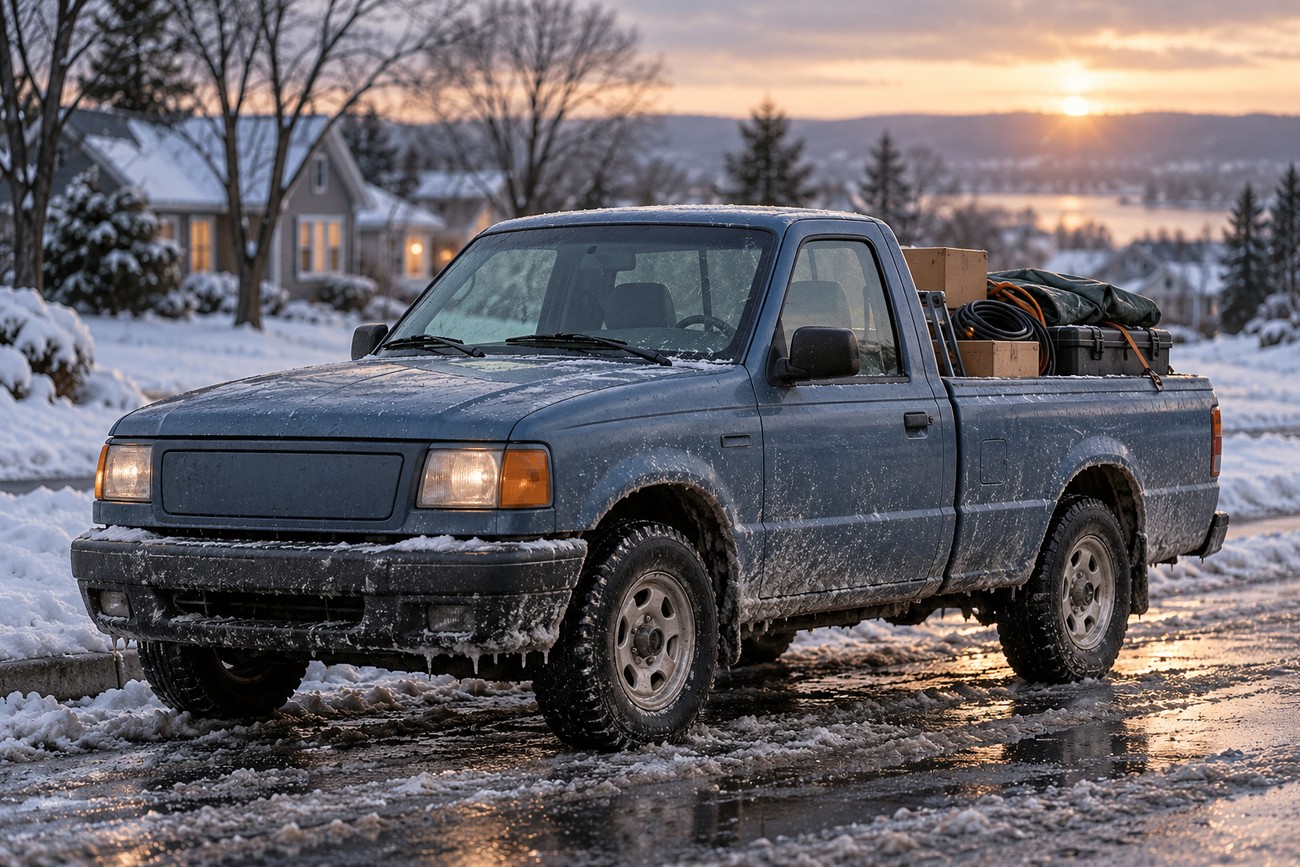
The 86.9-mile figure is useful as a period technical reference, yet it should not be treated as a promise for every surviving truck. It describes the vehicle and test conditions represented by the technical sheet, while an old battery pack may have lost substantial usable capacity. The condition of the pack can therefore matter more than the number printed in an old listing.
Lead-acid versions are commonly reported to deliver approximately 35–50 miles in practical driving. Cold weather can reduce that result to around 35 miles, and the same vehicle will lose further range when carrying a load, traveling quickly, or operating with degraded batteries. These effects compound because the heavy truck requires energy simply to move its own mass.
Later Ranger EV versions are associated with nickel-metal hydride batteries and are commonly reported at about 74 miles of range. That figure gives the NiMH trucks a different practical profile, although it still belongs to a period EV with limited reserve compared with modern electric pickups. Battery chemistry must therefore be identified before comparing one Ranger EV with another.
A surviving truck may also have replacement modules, an incomplete battery installation, or a pack whose usable capacity is difficult to confirm from appearance alone. The odometer and a seller’s range estimate cannot establish battery health. A meaningful evaluation requires charging behavior, a controlled drive, and evidence about the pack’s service history.
A Pickup with a Heavy Compromise
The battery pack weighed approximately 870.1 kg, an extraordinary burden for a compact pickup. That mass helps explain the vehicle’s 4,700–4,731 lb curb weight and left less room within the 5,400 lb GVWR for cargo. The resulting payload was about 700 lb, a major limitation for anyone expecting ordinary Ranger utility.
Acceleration reflected the same compromise. Reported 0–60 mph times range from approximately 12.5 to 16.4 seconds, depending on the source and likely on vehicle condition. Those figures are slow by modern pickup standards, and they also make clear that the Ranger EV was engineered around low-speed, short-distance usefulness rather than performance.
The single-speed transmission was a sensible period choice for an electric drivetrain. Electric motors can provide useful torque across a broad speed range, so multiple gears were unnecessary for the intended operating envelope. It also simplified the mechanical layout, though it did not remove the weight, thermal, or energy demands created by the battery system.
The truck could still make sense for predictable local work when its battery was healthy and its load stayed modest. Its bed and conventional driving position preserved some pickup functionality, but the payload rating and range demanded careful planning. Treating it as a normal work truck would quickly expose the limits of the design.
Living with One Today: Battery, Service, and Usability
Battery identity should be established before judging a surviving Ranger EV. The 1998-era trucks are associated with lead-acid Delphi VRLA modules, while later versions are associated with NiMH batteries. Chemistry, module age, replacement history, and the condition of the charging system all influence whether the truck can be used reliably.
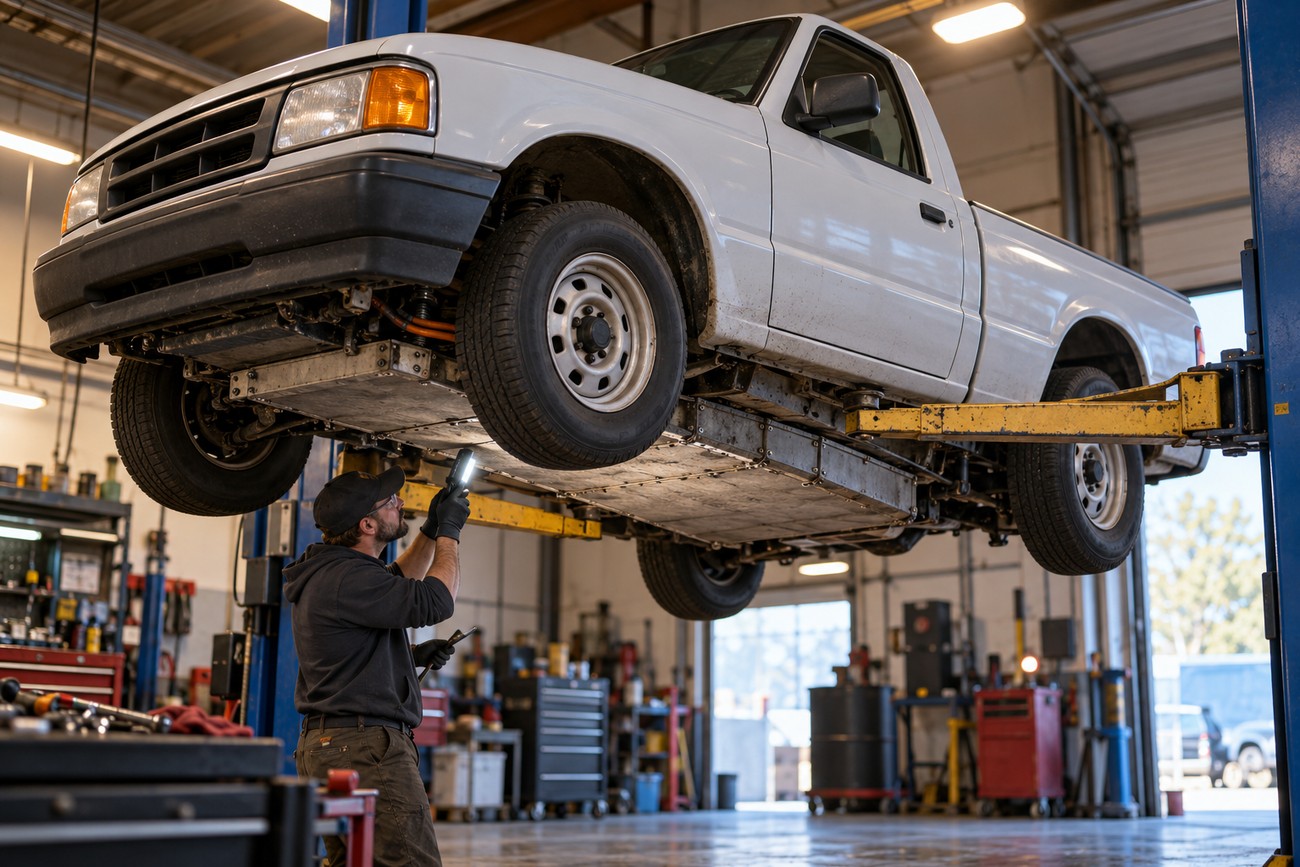
Inspection should begin with the high-voltage system rather than the paint or trim. A buyer needs evidence that the pack charges correctly, holds usable capacity, and remains electrically safe during operation. Charging equipment, isolation-system condition, and specialist knowledge may be harder to source than ordinary Ranger body or suspension parts.
Battery-capacity and isolation-system checks should come before judging range, cosmetics, or the asking price of a surviving truck. A clean body can conceal an unusable pack, while a rough-looking example may be the more practical restoration starting point if its electrical system is complete.
The Regular Cab layout also limits daily practicality. Passenger space is restricted, and the modest range makes the truck difficult to use as an unrestricted commuter or general-purpose pickup. Low-volume production further complicates parts sourcing and service, because knowledge shared with a conventional Ranger does not cover the battery, charger, control systems, or high-voltage safety procedures.
Restoration planning should separate the truck into two projects: preserving the original vehicle and making the electric system operational. Original documentation, complete battery hardware, and evidence of previous repairs can be more valuable than cosmetic refurbishment. A replacement pack may improve usability, yet it can also alter the vehicle’s historical specification and should be documented carefully.
The Biggest Myths and Specification Traps
The first common error is the 1998-only claim. The Ranger EV is documented across the 1998–2002 model years, and differences between those years may include battery chemistry and reported range. A listing that gives only “1998 Ranger EV” without confirming the vehicle’s actual configuration leaves important questions unanswered.
Motor output is another trap. Secondary references give 60 hp, 75 hp, or 90 hp, and auction descriptions do not always explain which specification they used. Those figures should be presented as source-dependent rather than treated as proof that every Ranger EV had one fixed motor rating.
The technical-sheet range also does not mean that the truck routinely traveled about 100 miles. Lead-acid versions are commonly associated with approximately 35–50 miles in practical use, with cold weather capable of reducing that result further. The later NiMH figure of about 74 miles belongs to a different battery configuration and still depends on condition, load, temperature, and speed.
Finally, the Ranger EV was a low-volume niche project rather than a mass-market electric pickup. Secondary specifications disagree because surviving records, auction descriptions, model-year differences, and vehicle modifications are often mixed together. Before comparing two trucks, identify the model year, battery chemistry, source of each figure, and present condition of the vehicle.
Frequently Asked Questions
The Ranger EV’s historical interest does not make every example equally valuable or usable. These answers focus on the factors that distinguish a complete, operational truck from a visually similar project.
How much is a 1998 Ford Ranger EV worth today?
There is no universal value because battery condition and operating status can outweigh the body’s appearance. A complete running truck with documented battery work, functional charging equipment, and clear history will generally be more desirable than an incomplete example, even when both have similar cosmetics.
Rarity can support collector interest, while missing electrical components, uncertain documentation, or a failed battery system can sharply reduce practical value. The sensible valuation method is to assess completeness, verified operation, battery condition, service records, and restoration cost together rather than applying the price of an ordinary 1998 Ranger.
How many Ford Ranger EVs were made?
Commonly cited production estimates cluster around approximately 1,500 vehicles. That number should be treated as an estimate, since publicly available references do not always separate model years, fleet deliveries, and surviving vehicles in the same way.
The low estimated volume explains why parts, technical knowledge, and comparable sales are scarce. It also means that an intact truck with original documentation may have historical importance beyond its usefulness as transportation.
Which Ranger EV battery type is generally more desirable?
NiMH configurations are generally more desirable for usability because secondary sources commonly associate them with about 74 miles of range, compared with the shorter practical range often reported for lead-acid versions. Lead-acid trucks can still be attractive to collectors because they represent the earlier 1998-era specification and may preserve more of the model’s original technical character.
Battery type alone does not decide the purchase. A complete, documented lead-acid truck can be a better restoration candidate than a neglected NiMH example with missing hardware or uncertain service history. The condition and completeness of the actual pack should be checked before assigning preference.







