
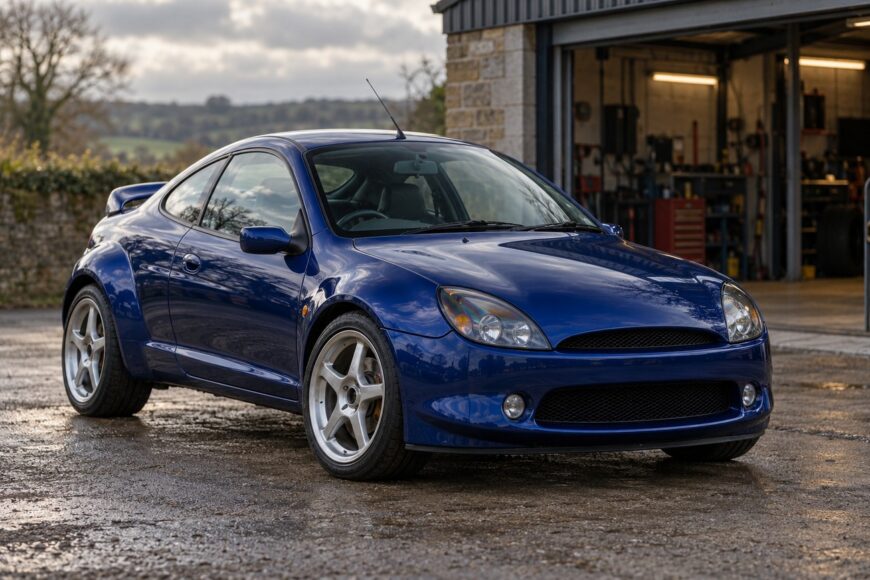
The Ford Racing Puma is a rare 500-car British hot coupe whose appeal comes as much from its chassis as its engine. That same rarity creates a buyer’s problem: specialist body and suspension parts can be difficult and expensive to source, so provenance, originality, and condition matter more than the badge on the trunk.
Published specifications are less tidy than the car’s reputation suggests. Power appears as about 155 PS, 153 bhp, or 155 hp; quoted 0–100 km/h times range from 7.9 to 8.6 seconds, while top speed is listed between 195 and 202 km/h. Mass is reported as approximately 1,040 kg or 1,174 kg, depending on equipment and measurement method.
This is also why treating the Racing Puma as an ordinary Puma can lead to an expensive mistake. Its wider body, altered suspension, stronger brakes, specific wheels, and modified engine give it a distinct identity. They also make an individual car’s history more important than a simple claim of “155 horsepower.”
- What makes the Ford Racing Puma different
- The engine is special, but the figures need context
- Ford Racing Puma: the numbers that need context
- Why the chassis matters more than the horsepower
- The ownership compromises hidden by exclusivity
- How to buy an authentic Racing Puma
- Frequently asked questions
- How much is a Ford Racing Puma worth?
- How many Ford Racing Pumas are left?
- What is the top speed of a Ford Racing Puma?
What makes the Ford Racing Puma different
The Racing Puma was a limited-production derivative built around 1999–2000, although some sources list 2000 alone. The stated production run was 500 cars, and access was effectively limited to UK buyers. That makes it a period-specialist coupe rather than a broadly distributed performance model.
Its differences begin with the body. The car uses widened front wings, altered rear panels or arches, and a wider track to accommodate its revised chassis layout. Those panels are part of the model’s identity, so a repaired or converted car can look convincing while still lacking the correct structure and specification.
Engine identity can provide another useful authenticity clue. Numbered or marked engine details are documented for some examples, and they should be checked alongside the vehicle’s provenance rather than accepted from a seller’s description. A standard Puma with cosmetic changes, aftermarket wheels, and a claimed engine upgrade does not automatically become a Racing Puma.
The UK-market background also matters to international buyers. Import history, registration documents, old invoices, and photographs can help establish whether a car is an original limited edition or a standard Puma modified to resemble one. With only 500 cars in the stated run, missing documentation is a material concern rather than a minor inconvenience.
The engine is special, but the figures need context
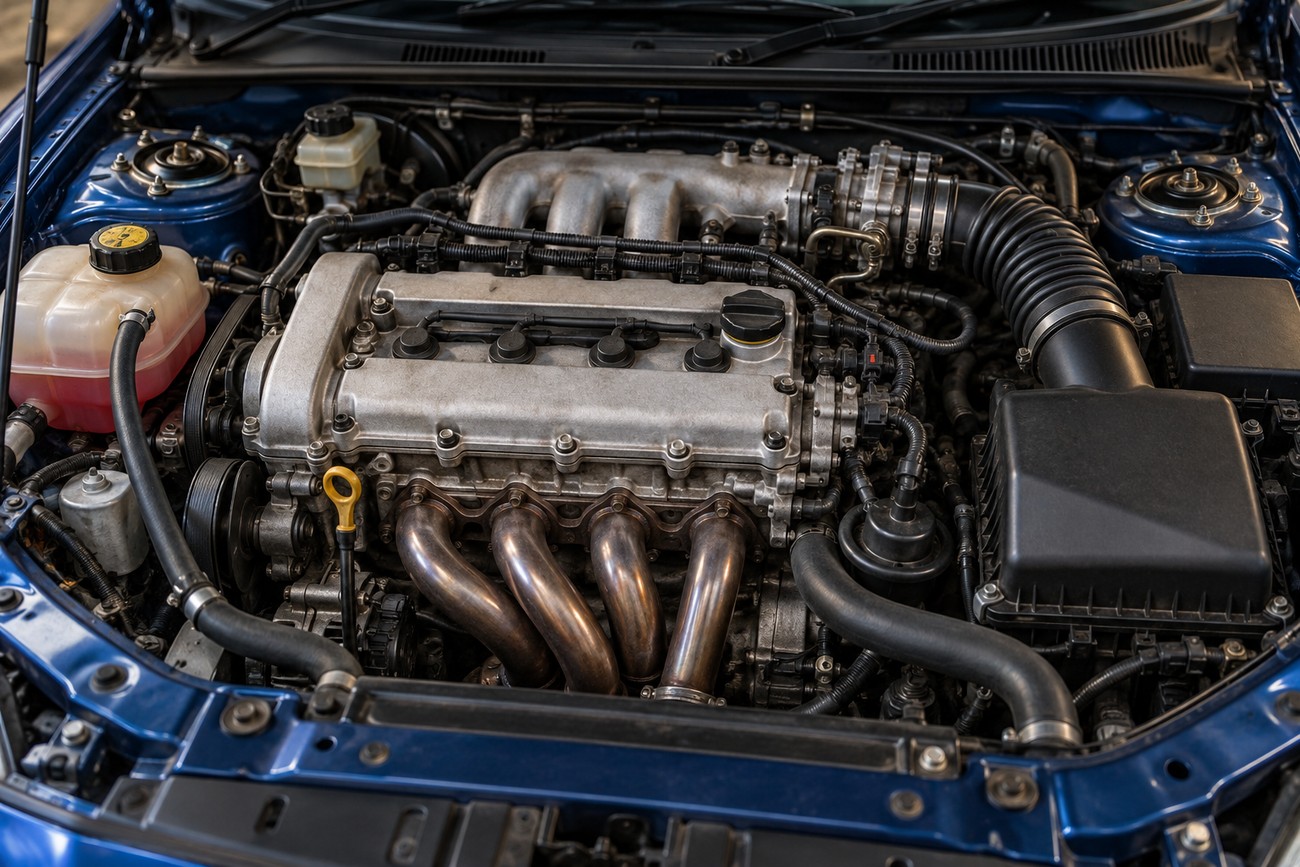
At the center is a naturally aspirated 1.7-litre Zetec SE. Ford Racing Puma development involved more than a software change: the engine received a revised intake, camshafts, exhaust, and engine management. The result was intended to sharpen response and support the car’s sporting character without relying on forced induction.
Output is commonly given as about 155 PS. Other references use 153 bhp or 155 hp, differences that reflect power units, rounding, and period reporting rather than three entirely different engines. Torque is generally quoted at approximately 162 Nm at 4,500 rpm.
That output was meaningful in a small coupe, yet the engine’s role should be understood in context. The car’s gearing, throttle response, front-end reaction, and ability to carry speed through corners contribute more to its character than the headline figure alone. A healthy standard-specification engine is therefore more valuable than an apparently stronger unit with uncertain calibration or history.
The quoted acceleration range of 7.9–8.6 seconds to 100 km/h illustrates the same caution. Road surface, test method, vehicle condition, and source conventions can all influence a period figure. Buyers should assess how the engine starts, pulls cleanly, responds to throttle, and works with the gearbox before treating a brochure number as a promise.
Ford Racing Puma: the numbers that need context
The following table keeps the commonly quoted specifications visible without pretending that every period source used the same method.
| Specification | Commonly quoted figure | Buyer’s context |
|---|---|---|
| Engine | Naturally aspirated 1.7-litre Zetec SE | Modified intake, camshafts, exhaust, and engine management |
| Power | About 155 PS; also reported as 153 bhp or 155 hp | Unit and rounding differences appear across sources |
| Torque | Approximately 162 Nm at 4,500 rpm | Useful reference for checking engine specification |
| 0–100 km/h | 7.9–8.6 seconds | Source-dependent period performance range |
| Top speed | 195–202 km/h | Quoted range rather than a universal result |
| Mass | Approximately 1,040 kg or 1,174 kg | Likely reflects differing equipment or measurement methods |
| Wheels | 17×7.5 | Part of the intended chassis specification |
| Tyres | 215/40 ZR17 | Fitment affects steering response and clearance |
| Front brakes | Alcon four-piston calipers with 295×28 mm ventilated discs | Published sources specify this upgraded hardware |
| Rear brakes | Rear disc brakes | Check condition and correct installation |
The discrepancies are best treated as specification-source differences, not as evidence that one simple number must be correct. Weight can change with equipment and measurement method, while acceleration and top speed depend on test conditions and the condition of a surviving car. A buyer should record which specification is being quoted and verify the physical car against it.
Why the chassis matters more than the horsepower
The Racing Puma’s main engineering story is its chassis. A wider track works with widened front wings and altered rear panels or arches, giving the car a broader stance and supporting its revised suspension geometry. The 17×7.5 wheels and 215/40 ZR17 tyres complete a package designed around response, grip, and stability.
Braking hardware is another major separation from a standard Puma. Published sources specify Alcon four-piston front calipers with 295×28 mm ventilated front discs, together with rear disc brakes. That hardware gives the car a stronger performance identity, while also making replacement parts and routine servicing more expensive than the basic body shape might suggest.
Geometry and wheel fitment can reveal a badly repaired or heavily altered Racing Puma sooner than an engine compression test. Check whether the car tracks correctly, whether the wheels and tyres match the intended specification, and whether suspension parts have been bent or substituted.
On the road, this creates a chassis-led hot coupe. Turn-in, braking confidence, and the ability to maintain a clean line matter more than a dramatic power advantage. The trade-off is clear: low-profile tyres, firm suspension, and specialized components can make a damaged or incorrectly assembled car feel nervous even when its engine appears healthy.
Correct wheels and tyres are especially important. Replacing the specified fitment with whatever is available can alter steering feel, clearance, ride quality, and the car’s visual authenticity. A seller’s statement that the car has “bigger wheels” is therefore less useful than checking dimensions, tyre size, condition, and suspension geometry.
The ownership compromises hidden by exclusivity
Rarity can make the Racing Puma desirable while making ownership less forgiving. Owner-reported concerns include low ground clearance and firm suspension, which can become punishing on poor roads. A car that feels focused on smooth back roads may become tiring when used every day over broken urban surfaces.
Motorway refinement is another compromise. Short gearing and the sports exhaust contribute to a high level of road and mechanical noise at speed. The narrow cabin limits shoulder and elbow room, while the rear seats are cramped enough that regular passenger use quickly exposes the coupe’s practical limits.
Surviving examples can also show age in their seats, plastic trim, and electrical components. These concerns are owner-reported and should not be treated as universal defects, yet they are relevant during inspection because an interior restoration can consume substantial time and money. A clean, carefully maintained cabin has practical value beyond appearance.
Specific body and suspension parts create the largest ownership risk. A small accident or corrosion issue can become a major project if a correct replacement panel is difficult to locate. The same applies to unusual suspension hardware: a cheaper substitute may restore basic mobility while compromising the handling that defines the model.
How to buy an authentic Racing Puma
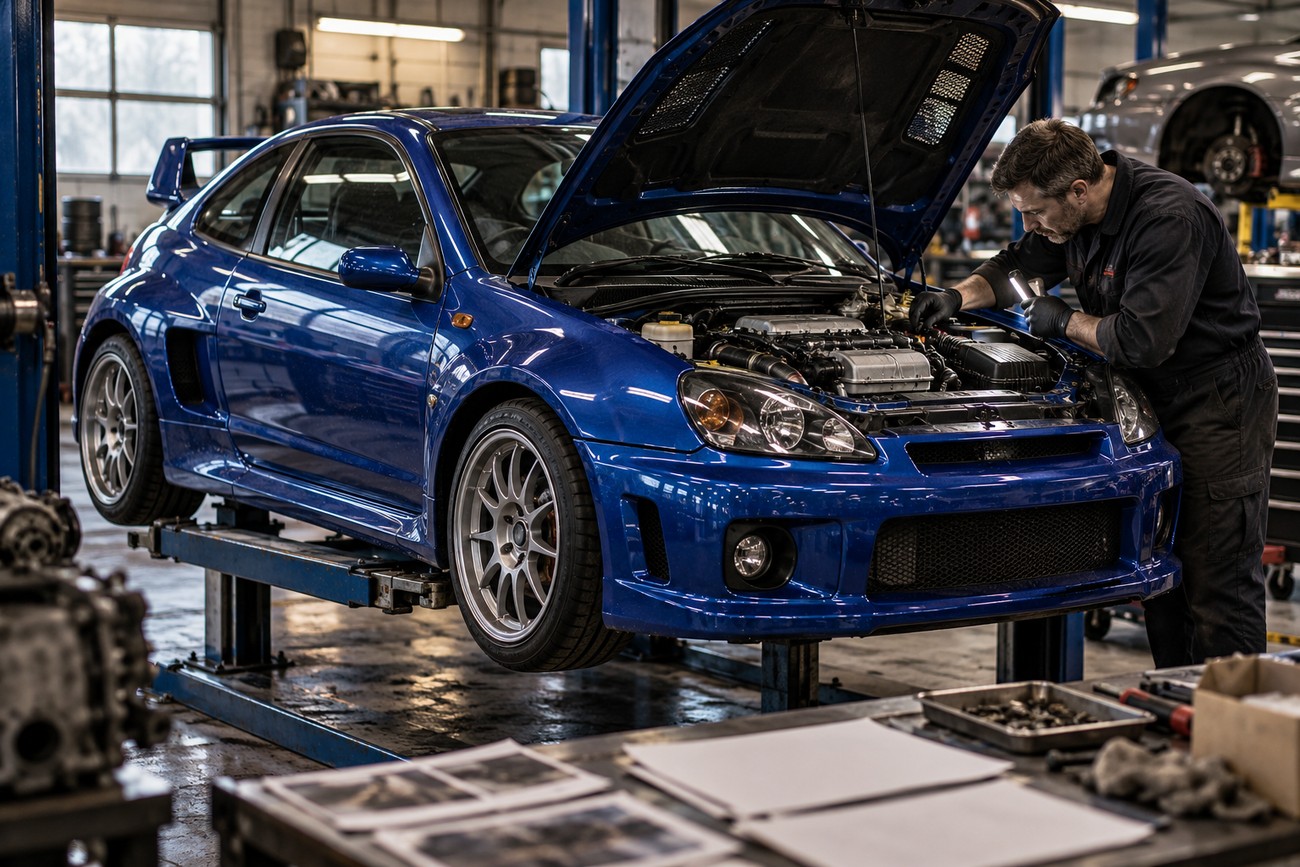
Start with provenance before discussing performance. Check registration records, invoices, import documents, photographs, and any available history that connects the car to the limited UK-market production run. Where documented, numbered or marked engine details should agree with the car’s claimed identity.
Inspect the body as a Racing Puma, not as a normal Puma. Confirm the widened front wings, altered rear panels or arches, and signs of accident repair. Uneven gaps, mismatched paint, distorted inner structure, or panels that do not match the correct shape may indicate a conversion or an expensive previous repair.
Next, compare the mechanical specification. The correct 17×7.5 wheels and 215/40 ZR17 tyres should be present or properly accounted for. Check the Alcon four-piston front calipers, 295×28 mm ventilated front discs, rear discs, suspension mounts, dampers, bushes, and evidence of bent or substituted components.
- Verify the car’s provenance and available identity documentation.
- Confirm the correct body panels and inspect for accident repair.
- Check the engine specification and numbered or marked details where documented.
- Inspect wheel and tyre dimensions, brake hardware, and suspension geometry.
- Assess interior, electrics, engine behavior, and parts availability before valuing the car.
The final judgment should rest on the individual example. A genuine car with tired suspension, incorrect wheels, and incomplete bodywork may be a worse purchase than a carefully documented example that has been maintained correctly. Condition and parts availability matter more than the 155-PS label.
Frequently asked questions
Buying decisions should focus on the individual car rather than headline performance figures. Provenance, originality, and condition help establish whether an example is genuine and properly specified. The following answers address value, surviving numbers, and published performance.
How much is a Ford Racing Puma worth?
Its value depends primarily on provenance, originality, body condition, correct wheels, and the availability of specific parts. The 155-PS badge alone cannot establish a fair value, particularly when the market contains standard Pumas modified to resemble the limited edition.
A documented car with correct bodywork, engine details where available, specified brakes, and a sound chassis is easier to assess and preserve. A cheaper-looking example may require rare panels, suspension components, or interior parts that quickly outweigh the initial saving.
How many Ford Racing Pumas are left?
The stated production figure is 500 cars, but that is not a count of surviving examples. Some cars may have been scrapped, exported, modified, or lost from public records.
A reliable current total would require a complete registry or documented ownership database, and such information may not be publicly complete. Buyers should therefore verify the identity and history of the individual car rather than infer its survival status from the original production run.
What is the top speed of a Ford Racing Puma?
Published sources quote a top speed of 195–202 km/h. This should be treated as a source-dependent period specification rather than a guaranteed result for every surviving car.
Engine condition, gearing, tyre choice, test method, and measurement conventions can all affect the result. For a buyer, smooth power delivery, correct specification, and chassis condition are more useful indicators than attempting to validate the highest published number.







