
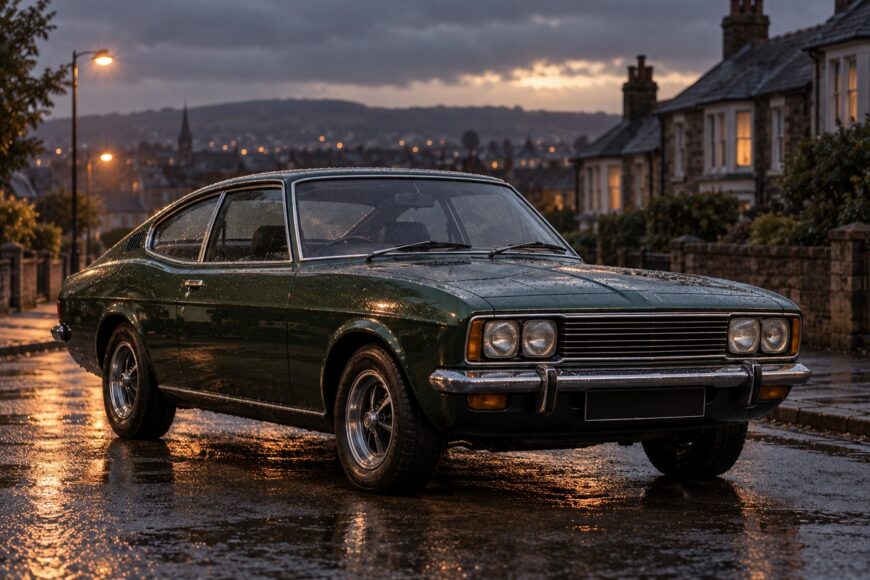
The Ford Granada coupé carries the sort of presence that suited The Sweeney: a long bonnet, a broad stance, and the promise of V6 power. Its television association still gives the car a hard-edged appeal. Finding the right example is less straightforward than recognizing the shape.
Badges and added trim can blur the distinction between generations and engines, while fresh underseal can hide the condition of the metal beneath. “Sweeney-era” describes a period and a screen association, not a factory coupé specification. For a buyer, the car’s identity and structural history matter more than its resemblance to a remembered scene.
- The Sweeney connection is an era, not a trim level
- What made the Granada coupé different
- Which V6 is under the bonnet?
- A big cruiser, not a sports-car shortcut
- Where a handsome shell can hide expensive rust
- Buying one: verify the car before chasing the image
- Frequently asked questions
- What car did John Thaw drive in The Sweeney?
- How much is a Ford Granada coupé worth?
- Was the Ford Granada a Fox-body car?
- What should be checked before driving a long-stored Granada coupé?
The Sweeney connection is an era, not a trim level
The Granada looks at home in the world of The Sweeney. Its size gave it authority on screen, while the coupé’s fastback roof added a sharper silhouette to Ford’s large-car range. That association helps explain the “bruiser” label, though it says little about the specification of a car offered for sale.
Series records cite a silver Mk I Granada S 3.0 V6 and a 1978 Mk II 2.8iS. Those are useful points of reference, but they do not establish that every Granada shown was a coupé or that every recorded car belonged to one actor’s regular screen transport.
There was no single factory “Sweeney Coupe”. The phrase works as a cultural and period description, covering an image formed across different cars and Granada generations. A seller may use it to evoke the programme; the build details must establish what the car actually is.
What made the Granada coupé different
The Mk I Granada arrived in 1972 as the replacement for the Ford Zephyr-Zodiac range. Buyers could choose a saloon, estate, or two-door fastback coupé. The coupé shared the Granada’s substantial footprint, but its descending roofline gave the familiar large Ford a distinct profile.
Independent rear suspension was a notable technical distinction of the Mk I. It suited a car intended to cover distance with composure rather than feel like a smaller, lighter sports model. Its condition matters today: worn components need attention, and corrosion at their body mountings is a far more serious prospect.
The Mk II arrived in 1977 and also included two-door versions. A two-door Mk II should not automatically be described as the Mk I-style fastback, however tempting it is to group them under “Granada coupé”. Establishing the generation first makes photographs, parts listings, and claims in an advert easier to interpret.
Which V6 is under the bonnet?
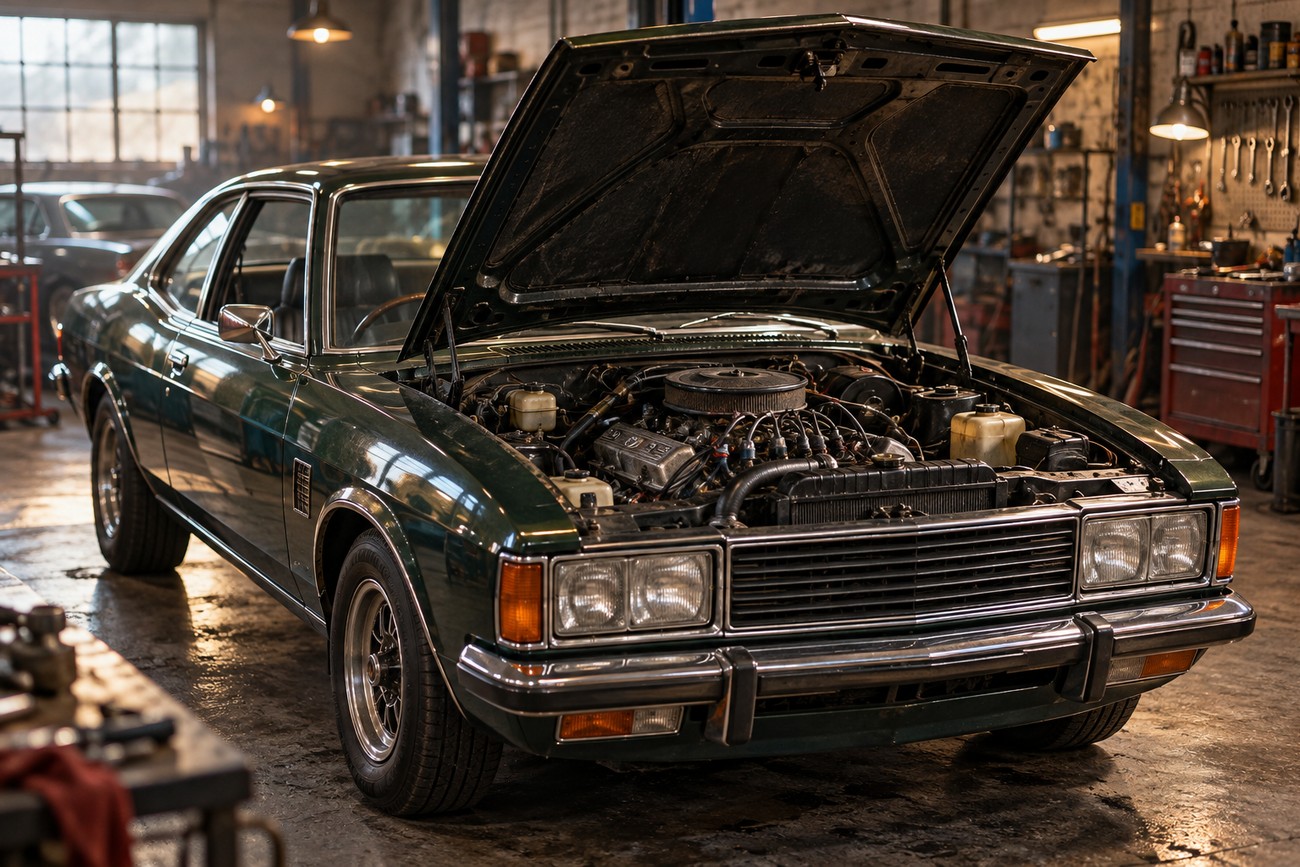
Mk I engine choices included a 2.0-litre Essex V4 and 2.5- and 3.0-litre Essex V6s; a 2.0-litre inline OHC appeared later. The existence of the four-cylinder cars is worth remembering when an advert treats the coupé shape as proof of a particular engine.
Listed figures for Mk II two-door V6 versions include 2.0 liters with 90 hp, 2.3 liters with 114 hp, and 2.8 liters with 135 hp. Outputs depend on market, year, and specification, so these are reference points rather than guaranteed figures for an individual car.
A Mk I 3.0 S and a Mk II 2.8iS are distinct versions. Neither badge supplies a performance description for every V6 Granada. Check the engine, fuel system, gearbox, and build details together, especially where a car has been modified or its badges have been replaced.
A big cruiser, not a sports-car shortcut
The V6 Granada’s appeal lies chiefly in smooth, relatively unstressed power. It can suit unhurried long-distance driving, with the Mk I’s independent rear suspension contributing to its grand-touring character. Expecting sports-car responses from the engine badge alone misses the point of a large Ford.
Mk II reference dimensions put it at approximately 4.63 m long and 1.79 m wide, on a 2.77 m wheelbase. Depending on version, mass is around 1.24–1.39 tonnes. Those figures help explain why even the stronger V6 versions are better judged by their ease of progress than by outright pace.
Size and an older V6 also have a running-cost consequence. Fuel use will depend on the particular car, its tune, and how it is driven; a single consumption claim would be poor evidence for a purchase. Budget for upkeep on the basis of condition and intended use, rather than the television image.
Where a handsome shell can hide expensive rust
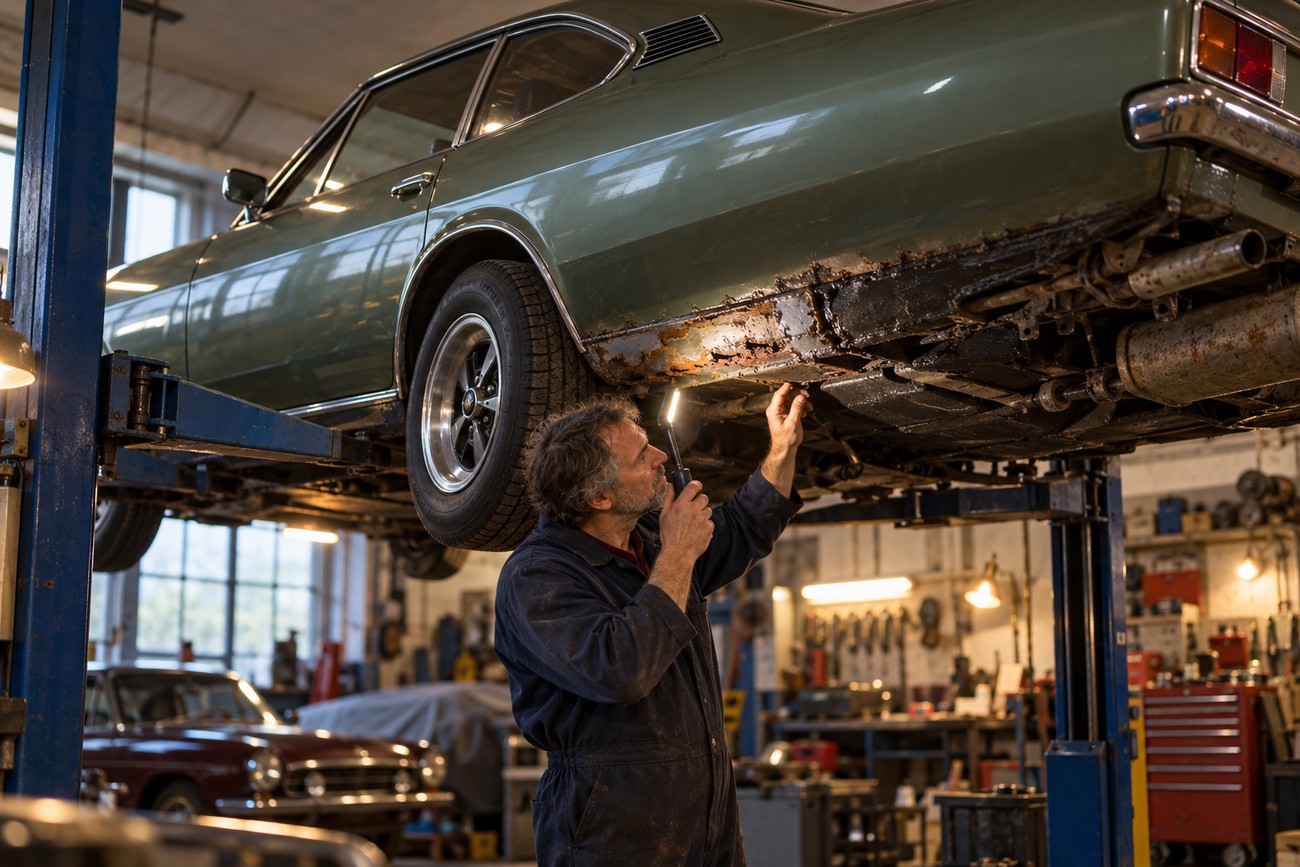
Begin underneath and inside: inspect the floors and inner sills, then the arches and wings, boot floor, and window surrounds. Finish with the suspension mounting points and other structural areas. A glossy exterior cannot show whether the sections carrying loads remain sound.
Thick underseal deserves scrutiny rather than automatic approval. It may cover corrosion that began before the coating went on, and years in a garage do not prove a dry, solid underside. Repairs around floors or independent rear-suspension mountings can quickly change the scale of a project.
Look for records showing sound metal and completed structural work before fresh coating was applied. If that evidence is absent, arrange a thorough inspection and allow for the possibility that apparently tidy areas need opening up. Renewing underseal over loose rust only makes the next assessment harder.
Buying one: verify the car before chasing the image
Start with the VIN, build date, and factory plate, then compare them with the car’s body, engine, and paperwork. Badges and added trim are easier to change than an identity. This is especially important if an advert uses “Sweeney-era” as though it names a factory version.
Structural inspection comes next. A low asking price offers little protection if the floors, sills, or suspension mountings require major metalwork. Evidence of repairs before coating is more persuasive than a newly blackened underside, and uncertainty should weigh on any buying decision.
Check missing pieces before agreeing a price. Some shared Ford brake and suspension service parts are easier to source than Granada-specific panels, glass, mouldings, and interior trim. A mechanically tired but complete, sound-bodied car may therefore be a more manageable prospect than a shiny shell missing hard-to-find details. The coupé remains compelling for its shape and period character, provided those qualities do not distract from the metal beneath.
Frequently asked questions
The questions below address common identification and ownership assumptions. For an individual Granada, documentary evidence and a physical inspection remain more useful than a screen-inspired description.
What car did John Thaw drive in The Sweeney?
Series records do not establish that John Thaw always drove one Granada coupé. They cite a silver Mk I Granada S 3.0 V6 and a 1978 Mk II 2.8iS, but do not assign every recorded vehicle to him. A claim about a particular screen car needs evidence tied to that car, rather than a matching color or badge.
How much is a Ford Granada coupé worth?
Value depends heavily on structural condition, identity, and completeness; no verified current price range is available here. Compare recent sales of similar versions, then examine documented metal repairs and price the panels, glass, or trim a candidate lacks. A cheap car with missing scarce parts or uncertain floors may cost more to put right than a sound, complete one.
Was the Ford Granada a Fox-body car?
No. The European Granada discussed here is distinct from American Ford Fox-platform cars. “Granada” appeared on cars in different markets, so establish the market and generation before using an American platform reference to research a European Mk I or Mk II.
What should be checked before driving a long-stored Granada coupé?
Have the brakes, tyres, fluids, and fuel system checked before road use, even if the body appears sound. Storage can leave a car needing mechanical recommissioning without obvious exterior clues. A satisfactory structural inspection is therefore only one part of making it fit for a journey.







