
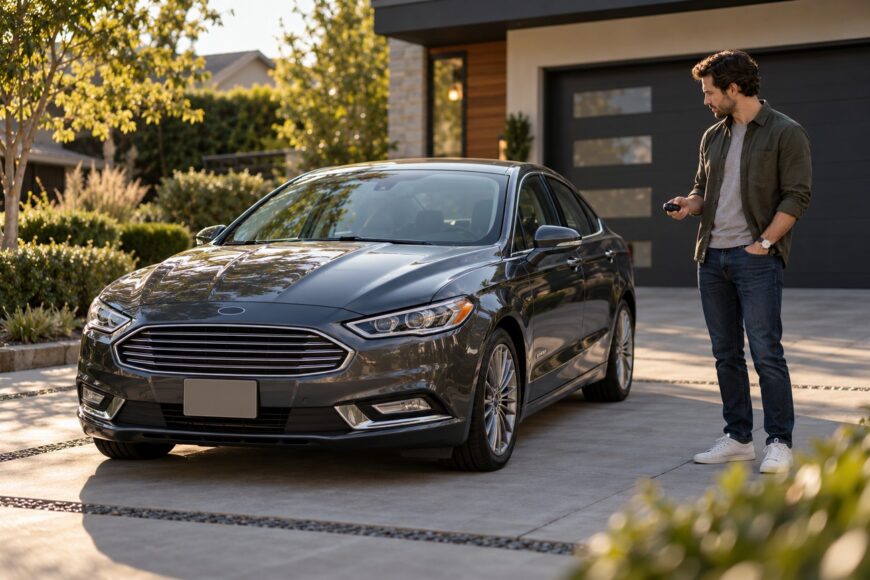
A Ford Fusion horn that starts sounding while the car is parked can disturb a neighborhood; on the road, it can distract you and other drivers. The first distinction is whether the horn is receiving a continuous, unwanted electrical command or the security system is repeatedly commanding it to sound. The noise and accompanying vehicle behavior offer clues, but neither proves the cause on its own.
Advice for a horn that will not sound addresses a different symptom. A failed horn unit or an open circuit may explain silence, while a horn that sounds by itself calls for a search for an unwanted command or power supply. The safest approach is to quiet the vehicle, record what happened, and use checks appropriate to its exact model year and equipment rather than assume one Fusion-wide fix.
- What to do when the horn will not stop
- Is the horn stuck on, or is the alarm going off?
- Trace a steady honk without buying a horn first
- Match the repair to the fault you actually found
- Why a simple horn swap can become an expensive mistake
- When to hand the diagnosis to a technician
- Frequently asked questions
- Why does my Fusion beep briefly when I lock it?
- Why does the honking happen after rain or a car wash?
- Why does my Ford Fusion horn honk by itself?
- Why does my Ford horn honk by itself?
- Why is my car horn honking by itself?
What to do when the horn will not stop
If the horn starts sounding while you are driving, pull over somewhere safe before investigating. Switch off the vehicle when it is safe to do so and note whether the sound continues. Do not remove steering-wheel trim, press into a damaged horn pad, or work near the airbag as a roadside fix.
If the horn sounds in bursts and the lights flash, try the normal remote or vehicle controls to unlock or disarm the car. Watch whether that stops the sequence. A continuously sounding horn and a security alarm that repeatedly commands the horn require different diagnosis, even though both may seem like the same problem from outside the car.
For persistent noise, consult the owner’s manual for your exact Fusion model year and equipment before touching a fuse. Fuse identification and horn-circuit layout vary, and a guess based on another Fusion may isolate the wrong circuit. If you cannot identify and access the appropriate fuse safely, seek roadside assistance or qualified service.
Isolating the correctly identified horn fuse may stop the noise temporarily. Treat that as a way to manage the immediate problem, not as permission to carry on driving with no dependable warning device. The fault still needs to be found and the horn restored before the repair is complete.
Is the horn stuck on, or is the alarm going off?

A steady blast points toward a horn circuit that remains energized or commanded on. Repeated honks with flashing exterior lights may point toward alarm activity instead. Alarm behavior and horn hardware vary across Fusion years and equipment, so the pattern is a starting observation rather than a definitive test.
Record what the car does alongside the sound: whether the lights flash, whether a dashboard message appears, and whether the honking continues with the vehicle switched off. Also note whether unlocking or disarming stops it. A response to those controls supports an alarm-related lead, but an intermittent electrical fault can still complicate the picture.
If the evidence points toward a false alarm, possible leads include a door, trunk, or hood input, the key fob, or another security-system fault. None is an established cause for every Fusion. Identifying which input or event the vehicle reports, where that information is available, is more useful than replacing the horn because it made the noise.
When the sound is steady and normal disarming does not stop it, diagnosis shifts toward the horn’s command and power circuits. Keep a note of the exact sequence rather than repeatedly operating the controls to see whether the symptom changes. That record can help a technician separate a persistent circuit fault from an alarm event that happened to be heard at the same time.
Trace a steady honk without buying a horn first
Begin with checks that do not require dismantling the steering wheel or probing live wiring. Use the exact-year owner’s manual to identify the relevant fuse, then inspect it and any accessible horn wiring or connectors for damage, corrosion, or a loose fit. A fuse that looks intact does not rule out an unwanted horn command or a wiring fault.
Some circuit layouts may include a separately serviceable relay; others require a different diagnostic approach. If vehicle-specific information identifies one, a technician can check whether its contacts are stuck or whether the circuit is continually commanding it. Do not assume every Fusion has a replaceable horn relay, or buy one based on a procedure for a different year.
A connector-jumper trick used to diagnose a horn that will not sound should not be copied into a self-honking diagnosis. First establish from the vehicle-specific wiring diagram what each terminal does; bridging unidentified pins can damage a circuit or create a new hazard.
Chafed wiring can supply power where it does not belong, while a steering-wheel switch or its control circuit can issue an unintended command. A clock spring or steering-wheel contact can affect horn operation, particularly when the horn fails to sound, but reports of that failure do not establish it as the usual cause of self-honking. Testing those components calls for airbag-aware procedures, not exploratory probing at the wheel.
If the accessible checks do not isolate the fault, ask for an electrical diagnosis based on the wiring diagram for the specific vehicle. The useful distinction is whether power reaches the horn without a valid command or the vehicle is issuing the command unexpectedly. That finding directs the repair toward the correct part of the circuit instead of another replacement horn.
Match the repair to the fault you actually found
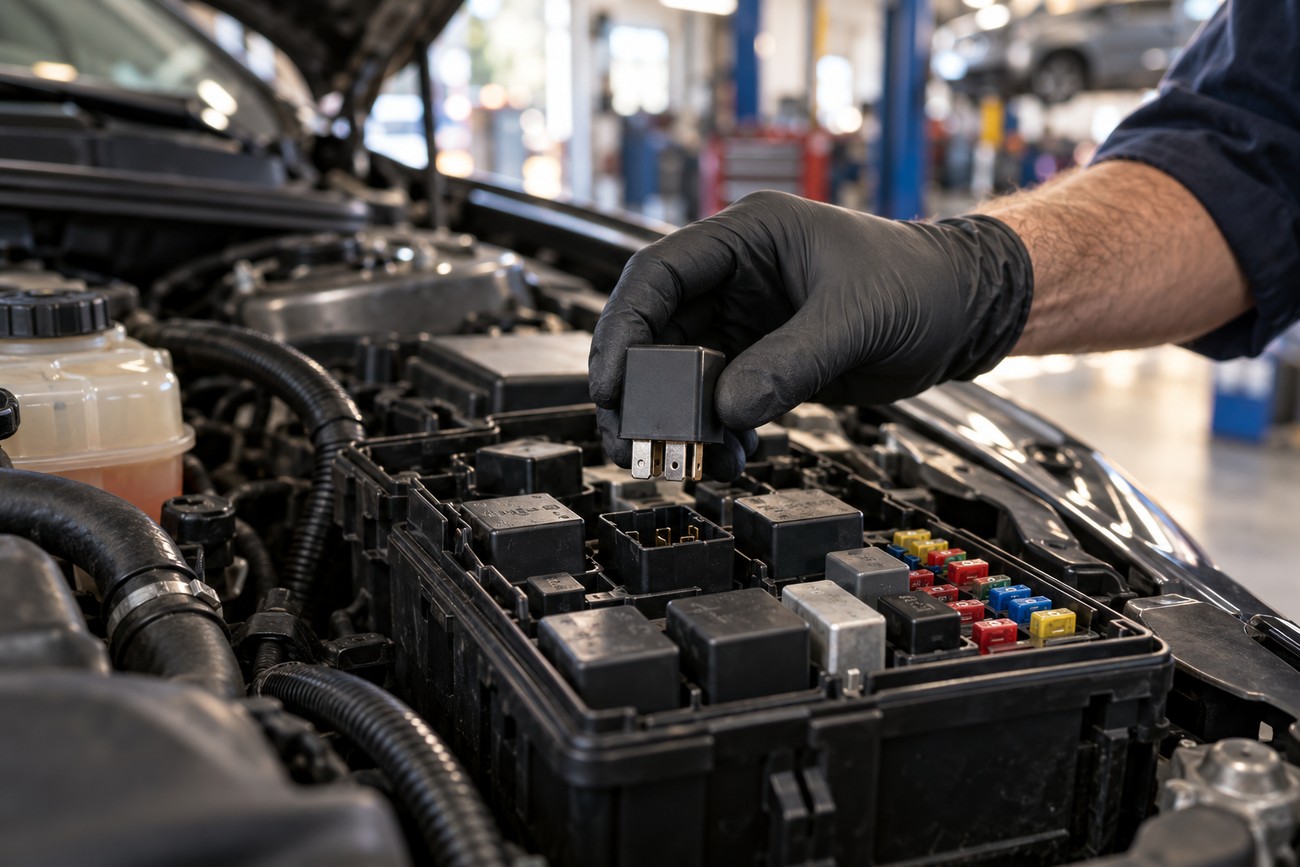
Repair the condition the tests confirm. Secure or repair a loose or damaged connector, correct damaged wiring, or replace a verified faulty relay if that Fusion has a serviceable one. If the fault is in a steering-wheel control or clock spring, have a qualified technician handle it using the appropriate airbag safety procedures.
An alarm-related fault needs a separate repair path. Inspect the input or security-system component implicated by the vehicle’s behavior or diagnostic evidence, rather than replacing the horn that carried out the command. A door, trunk, or hood input and a key fob are possible leads, not parts to replace as a set.
Recent work near a headlight or elsewhere at the front of the car makes connector seating worth checking. An incompletely seated component or connector in that area has been reported in one case; it is a prompt to inspect relevant work, not a known defect across Fusion models. Confirm that any disturbed connector and component are properly secured before reassembly.
A horn that sounded raspy before a fuse began blowing presents a different failure pattern. That combination suggests an electrical fault in the horn or its circuit and warrants testing both. It does not, by itself, explain why a horn would begin sounding without a driver or alarm command.
Why a simple horn swap can become an expensive mistake
Replacing the horn unit may make sense when testing shows the unit itself has failed. It will not correct an upstream command, damaged wiring, or a security-system fault that keeps requesting a honk. For a self-honking complaint, buying the horn first can leave the original problem untouched.
Access also affects the cost and effort of a mistaken repair. The horn may sit behind front-end components rather than in easy reach from above. One replacement video for a North American 2013–2020 Fusion shows bumper removal, but that is not a universal procedure for every Fusion year or configuration.
Check the service procedure for your exact vehicle before ordering parts or taking apart the front end. This matters especially if testing requires access to a connector: the work involved in reaching it may be greater than the electrical check itself. A technician with the right circuit information may be able to narrow the fault before disassembly.
After front-end work, confirm that disturbed connectors are fully seated and components are secured. A connection left loose during reassembly can create a fresh, intermittent symptom and obscure whether the original repair succeeded. A final horn-function check should confirm both that it responds when requested and that it stays quiet otherwise.
When to hand the diagnosis to a technician
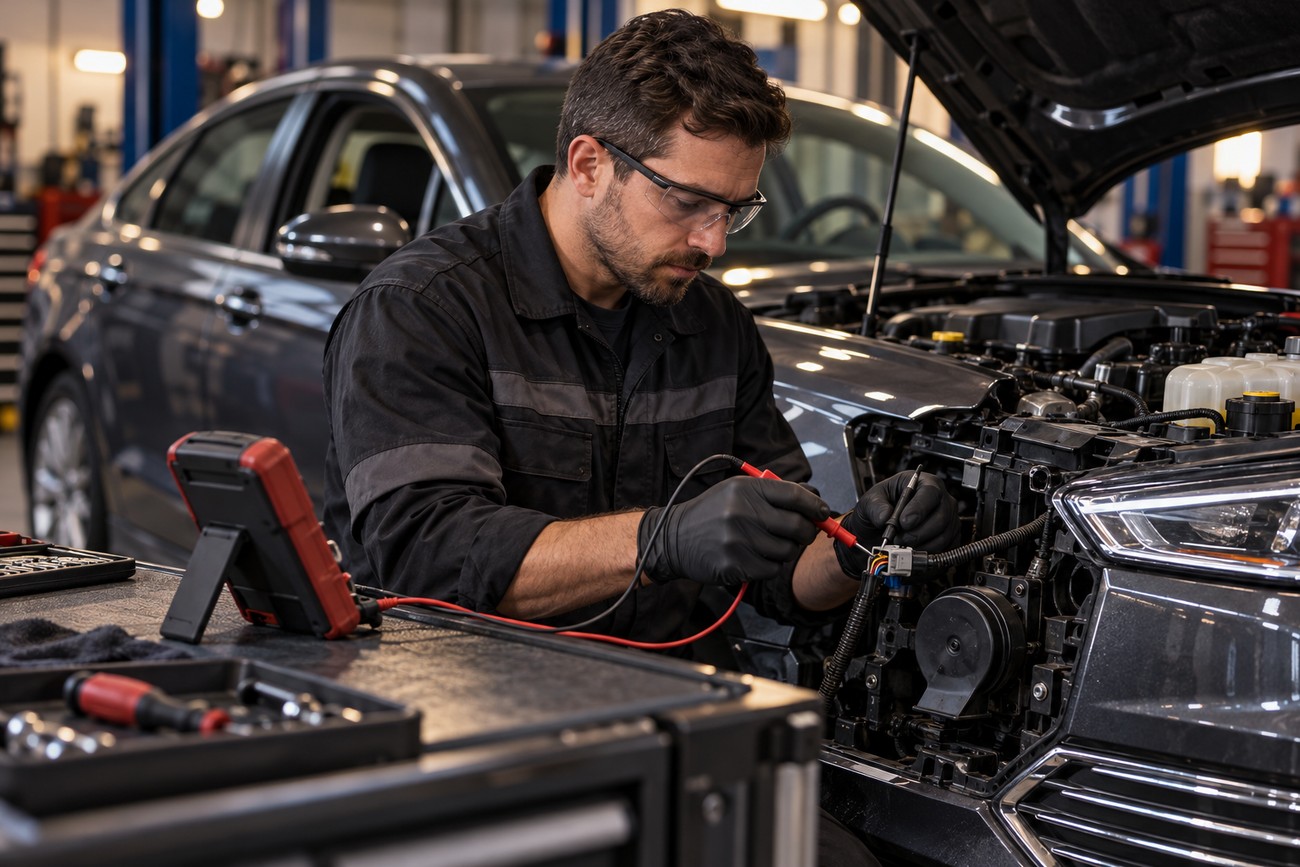
Stop replacing parts and arrange circuit diagnosis if a fuse fails repeatedly, wiring damage is visible, or the honking comes and goes without a safe way to reproduce it. Repeated fuse failure indicates an electrical problem that another fuse cannot repair. Intermittent faults often need measurements made while the relevant circuit is being commanded or monitored.
Leave tests involving the steering wheel, airbag-related components, or vehicle control modules to someone equipped for the specific Fusion. Unidentified connector terminals should not be bridged, and steering-wheel circuits should not be probed as a trial-and-error check. Vehicle-specific wiring information and safety procedures are essential at that point.
Bring a concise account of what happened: steady or cycling sound, flashing lights or messages, whether it continued with the vehicle off, recent front-end work, and which control—if any—silenced it. Mention any blown fuse, raspy sound, or moisture-related timing as separate observations. Those details help the technician choose between an alarm investigation and horn-circuit testing.
Silencing the horn resolves the immediate disruption, but it does not restore a working warning device. Before considering the job finished, confirm that the horn operates on command, stops when released, and no longer sounds unexpectedly.
Frequently asked questions
These short answers cover patterns that can look similar from the driver’s seat. Compare the timing and accompanying vehicle behavior with what is normal for your Fusion before treating every beep as a fault.
Why does my Fusion beep briefly when I lock it?
A brief chirp immediately associated with locking may be an enabled lock-confirmation feature, depending on the vehicle’s year and settings. Check the owner’s manual and the vehicle’s settings for your exact Fusion. Prolonged honking, repeated alarm-like cycles, or a beep unrelated to a lock command is a different symptom worth investigating.
Why does the honking happen after rain or a car wash?
Timing after rain or washing makes moisture exposure a useful diagnostic lead, but it does not prove that water has reached a particular part. Note whether the symptom appears immediately, after the car sits, or only when an alarm sequence occurs. An inspection can then focus on relevant accessible connectors, wiring, and signs of water intrusion or corrosion without replacing parts on suspicion alone.
Why does my Ford Fusion horn honk by itself?
The vehicle may be commanding the horn through its security system, or the horn circuit may be receiving an unintended command or power. Note whether it honks steadily or in cycles, whether lights flash, and whether normal disarming stops it. Those observations help determine which circuit or system to test on your exact Fusion year.
Why does my Ford horn honk by itself?
Across Ford models, uncommanded honking can originate in alarm activity or an electrical fault affecting the horn command or power circuit. The fuse location, relay arrangement, and alarm behavior depend on the model and equipment. Use the manual and wiring information for the specific vehicle rather than applying a Fusion repair procedure to another Ford.
Why is my car horn honking by itself?
A car horn sounds on its own when the vehicle commands it unexpectedly or an electrical fault keeps its circuit active. If it happens while driving, stop safely; if the sound follows an alarm-like cycle, try the normal disarm controls. Persistent noise needs vehicle-specific diagnosis, and temporarily disabling the horn is not a completed repair.







