
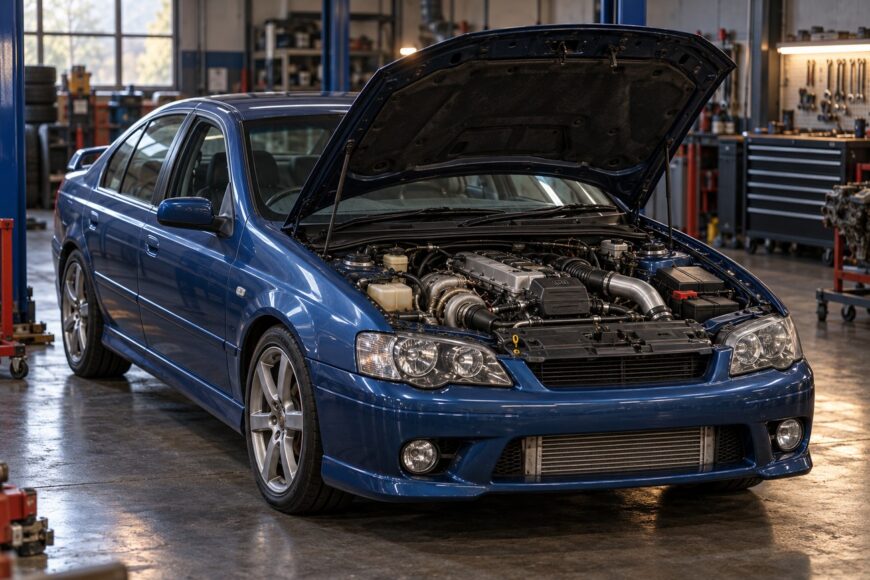
The Ford Falcon XR6 Turbo carries a reputation that can make a tired, modified performance car look like a safe investment. The Barra’s engineering, broad torque, and tuning support are real strengths, yet age, neglected servicing, overheating, and hard use can turn a famous drivetrain into an expensive diagnostic exercise.
The central issue is whether the legend comes from factory engineering and repeatable ownership experience, or whether tuning culture and survivor stories have inflated expectations. The answer sits between both: the XR6 Turbo has a strong mechanical foundation, but every used example must earn its reputation through inspection.
- Why the XR6 Turbo Barra Became a Legend
- Barra 240T vs. 270T: What the Numbers Actually Mean
- What the Turbo Engine Has That the Naturally Aspirated Barra Does Not
- Why Real-World Reliability Is More Complicated
- The Used XR6 Turbo Inspection: What Buyers Commonly Miss
- Tuning Claims, Maintenance Traps, and Barra Myths
- Frequently asked questions
- What is the most powerful factory Barra engine ever created?
- How much horsepower does a Ford XR6 Turbo have?
- How much is a Ford Barra engine worth?
Why the XR6 Turbo Barra Became a Legend
The Barra is a 3983 cc inline-six petrol engine with a cast-iron block, an aluminum DOHC cylinder head, 24 valves, and port fuel injection. That layout gives the engine smooth primary balance, a long torque curve, and a straightforward mechanical identity that appealed to both factory engineers and tuners.
The turbo version added factory-developed hardware rather than relying on a fragile aftermarket conversion. Strong low-rpm torque made the XR6 Turbo quick in ordinary driving, while the engine’s substantial aftermarket created a clear path from standard road car to serious project.
That combination explains the “Australian 2JZ” comparison. The label refers to the factory turbo platform, the large tuning community, and the availability of performance knowledge. It does not mean the engines have identical designs, identical limits, or guaranteed reliability.
A buyer should separate the Barra’s reputation from the condition of the Falcon carrying it. A clean-looking car may have a modified calibration, repeated overheating, worn driveline components, or incomplete servicing. The engine’s design earns attention; the individual car still requires evidence.
Barra 240T vs. 270T: What the Numbers Actually Mean
Factory outputs depend on the Barra generation, market, and measurement standard. The figures below describe the relevant factory ratings and early turbo hardware, while enthusiast claims about modified power belong to a different category.
| Version or detail | Factory or stated specification | Buyer’s interpretation |
|---|---|---|
| Early XR6 Turbo | Barra 240T: 240 kW at 5250 rpm and 450 Nm at 2000 rpm | Early factory turbo rating; do not apply it to every XR6 Turbo generation. |
| Later turbo version | Barra 270T: 270 kW and 533 Nm | Later factory rating; figures vary by generation, market, and measurement standard. |
| Early turbocharger | Garrett GT40 with an intercooler | Factory hardware, rather than proof that every surviving car remains standard. |
| Early test boost | Approximately 5.8 psi in an American test | A test-specific figure, not a universal boost specification for every model year. |
| Early turbo compression ratio | Approximately 8.7:1 | Part of the factory turbo strategy and different from the naturally aspirated engine’s higher ratio. |
The 240T’s 450 Nm at 2000 rpm explains the XR6 Turbo’s immediate road performance. Torque arriving low in the rev range also sends substantial load through the automatic or manual transmission, tailshaft, differential, and rear suspension bushes.
The later 270T rating should be treated as a separate factory specification, rather than an upgrade every XR6 Turbo possesses. A vehicle advertised with a later engine, a replacement turbocharger, or a dyno result needs documentation showing what was changed and how the result was measured.
What the Turbo Engine Has That the Naturally Aspirated Barra Does Not
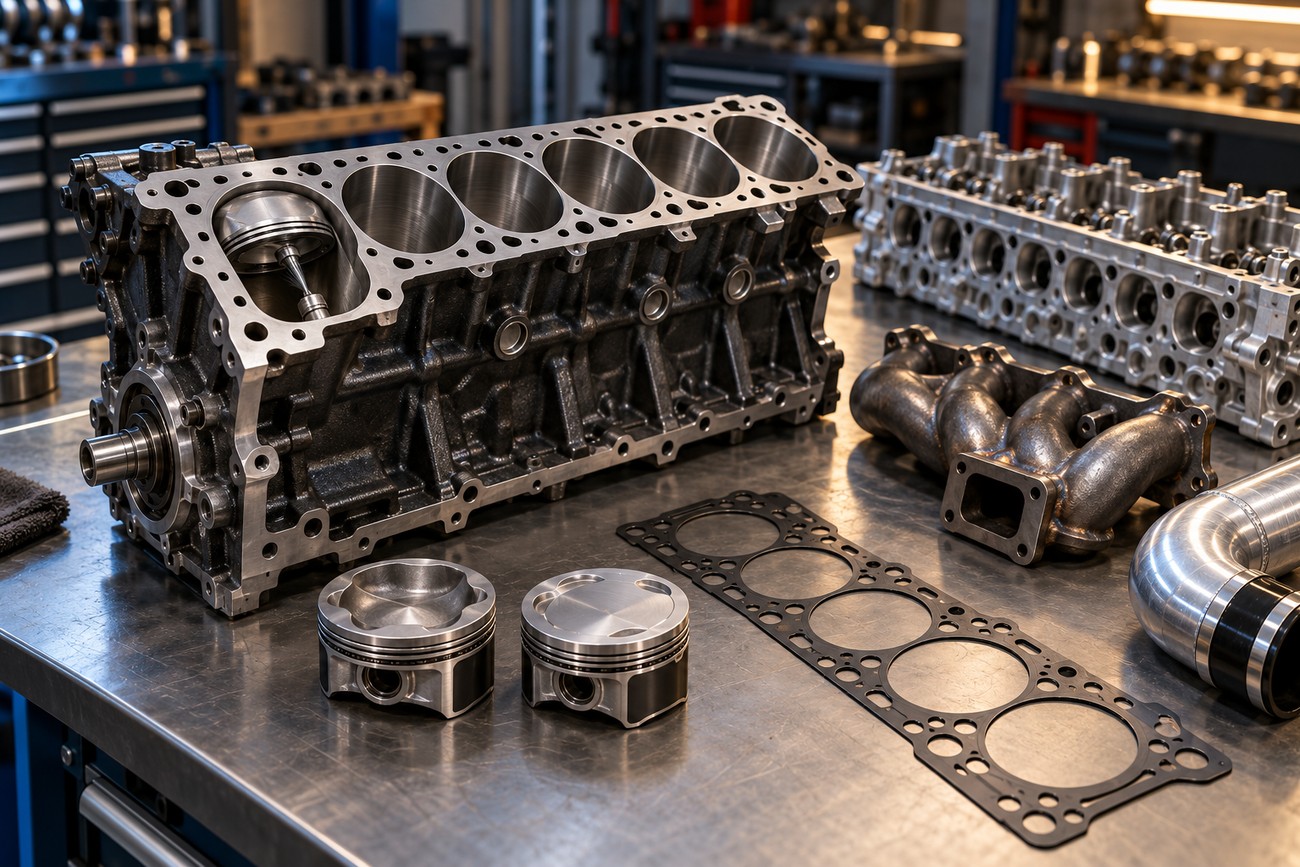
The naturally aspirated Barra is not simply the turbo engine with the turbocharger removed. The turbo version uses different pistons, piston-cooling oil jets, and a different head gasket, with its approximately 8.7:1 compression ratio forming part of the factory boost strategy.
The naturally aspirated engine has a higher compression ratio. That affects combustion conditions, fuel requirements, thermal loading, and the margin available when boost is introduced. Installing a turbocharger onto a naturally aspirated engine therefore involves more than adding an exhaust manifold, intercooler, and plumbing.
Parts selection matters because the turbo system changes cylinder pressure and heat rejection. The factory piston design and oil-cooling arrangement are part of the package that allows the turbo engine to manage those conditions. A conversion that ignores those differences can create a running car without creating a durable one.
A naturally aspirated Barra can be useful in a carefully engineered project, but it should be assessed as a conversion base with its own limitations. The turbo engine’s lower compression ratio is a factory design choice, not a universal recipe for converting every Barra to forced induction.
Why Real-World Reliability Is More Complicated
Age-related failures account for many complaints around surviving XR6 Turbos. Water-pump leaks, front-seal leaks, and timing-cover leaks can develop even when the core engine remains healthy. These faults are easier to manage when found early, since coolant or oil loss can create secondary damage if ignored.
Ignition coils are another practical inspection point. A failing coil can produce misfires, rough running, and power loss, symptoms that some owners may mistakenly attribute to a larger turbo, poor fuel, or an aggressive calibration.
ZF automatic transmission condition varies substantially between individual vehicles and depends heavily on service history. A smooth test drive does not establish the transmission’s long-term condition, particularly if the car has spent years producing more torque than standard.
Underneath the car, a worn tailshaft center bearing or differential bushes can create a clunk during load changes. Manual cars also raise a separate concern: crankshaft end-float associated with clutch and release-bearing loads. These faults can be expensive because diagnosis and repair involve the drivetrain rather than a simple engine service.
Examples above 300,000–500,000 km exist, but that range is neither a prescribed service life nor a guarantee. Age, overheating, missed maintenance, and previous modifications often matter more than an inherently poor base engine. A high-mileage Barra may remain healthy while its seals, wiring, pumps, accessories, and turbo-related hardware require substantial spending.
The Used XR6 Turbo Inspection: What Buyers Commonly Miss
Start with service records, then verify the car’s behavior from cold. Cold starting can expose poor maintenance, ignition faults, fueling problems, battery weakness, or an unsuitable calibration before heat masks the symptoms. Check for smoke, unstable idle, unusual noises, and evidence of coolant or oil loss.
Oil pressure and cooling-system condition deserve priority over advertised dyno power. Inspect for leaks around the water pump, front seal, and timing cover, and look for signs of overheating or improvised repairs. A proper mechanical inspection is more useful than a polished engine bay.
Test the transmission at light and heavy throttle, including shifts, engagement, and changes in load. Listen for driveline clunks when moving between acceleration and overrun, because the tailshaft center bearing and differential bushes can reveal hard use more clearly than exterior presentation.
A clunk on throttle transition and a poor cold start often reveal neglected driveline or maintenance work more reliably than dyno figures and cosmetic presentation.
Many surviving factory turbo cars have been modified or driven hard, so the badge alone says little about current condition. Record the turbocharger, injectors, exhaust, intercooler, engine management, and transmission work, then ask whether the calibration matches the hardware and the fuel available to the owner.
Tuning Claims, Maintenance Traps, and Barra Myths
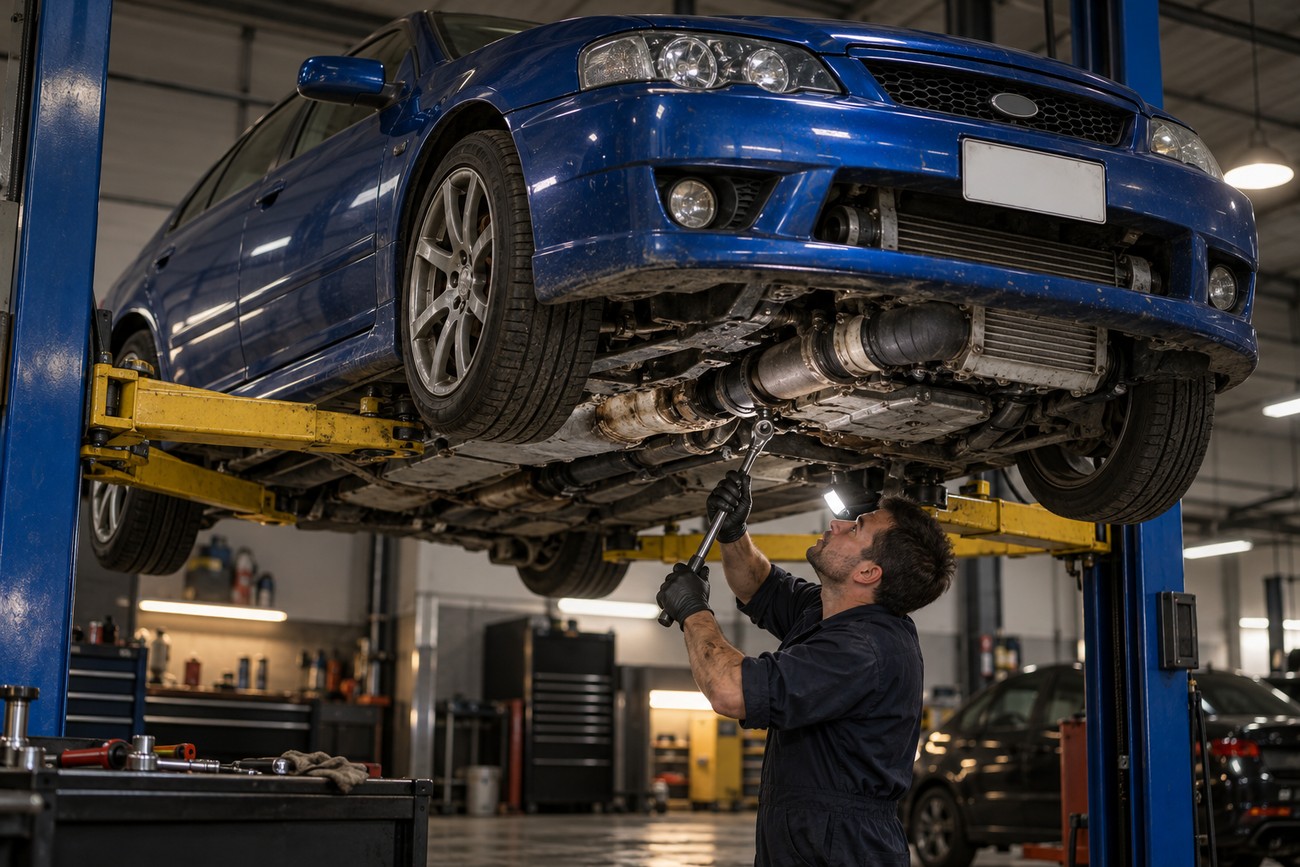
Claims of 500+ kW on standard internal components describe individual projects, not Ford specifications. Such results may depend on careful calibration, fuel quality, temperature control, operating conditions, and a favorable combination of parts. They should never be used as a buying assumption for a standard XR6 Turbo.
The same caution applies to claims that any Barra can reliably withstand 1000 hp. That level belongs to carefully engineered builds with appropriate supporting systems and inspection. A standard road car has a different durability margin, especially when its transmission, cooling system, fuel system, and driveline remain original.
A timing chain is not maintenance-free. The chain, tensioner, guides, and related components can wear, and a chain-driven engine still requires condition checks and proper oil servicing. The absence of a timing belt does not remove the need for preventive maintenance.
Long oil-change intervals can accelerate wear and may contribute to turbocharger problems in an older or heavily used engine. The right interval depends on the oil, engine condition, operating conditions, and service history, but stretching maintenance because the Barra is considered “bulletproof” is poor risk management.
Higher boost raises thermal and mechanical loads, while reliability depends heavily on calibration, fuel, temperature, boost level, and operating conditions. A loud exhaust, large turbocharger, and impressive dyno number prove that modifications exist; they do not prove that the build was assembled or maintained correctly.
Frequently asked questions
Factory power figures vary by Barra generation, market, and measurement standard. Modified engines and race cars should be assessed separately from factory specifications. The same distinction matters when valuing a used engine or XR6 Turbo.
What is the most powerful factory Barra engine ever created?
The highest factory rating cited here is the later Barra 270T at 270 kW and 533 Nm. That figure applies to the relevant later factory version, rather than to every XR6 Turbo or every Barra-powered Falcon.
Race cars and heavily modified projects can produce substantially more power, but those results do not change the factory ranking. Factory output must be separated from aftermarket development when comparing engines or valuing a car.
How much horsepower does a Ford XR6 Turbo have?
There is no single horsepower answer for every XR6 Turbo. Early cars with the Barra 240T were rated at 240 kW at 5250 rpm and 450 Nm at 2000 rpm, while later Barra 270T versions were rated at 270 kW and 533 Nm.
Figures vary by generation, market, and measurement standard. Conversions to horsepower can also differ depending on whether the source refers to engine output or a chassis-dyno result, so the original factory rating and test method should always be identified.
How much is a Ford Barra engine worth?
There is no universal value for a Barra engine. A sensible valuation considers the engine variant, completeness, documented history, mileage, turbo hardware, condition, and modifications.
A complete turbo engine with identifiable provenance and compatible ancillaries is a different proposition from a high-mileage long block or an undocumented modified assembly. Location, supply, and the cost of missing components also affect the final price, so an advertised figure without that context is weak evidence.







