
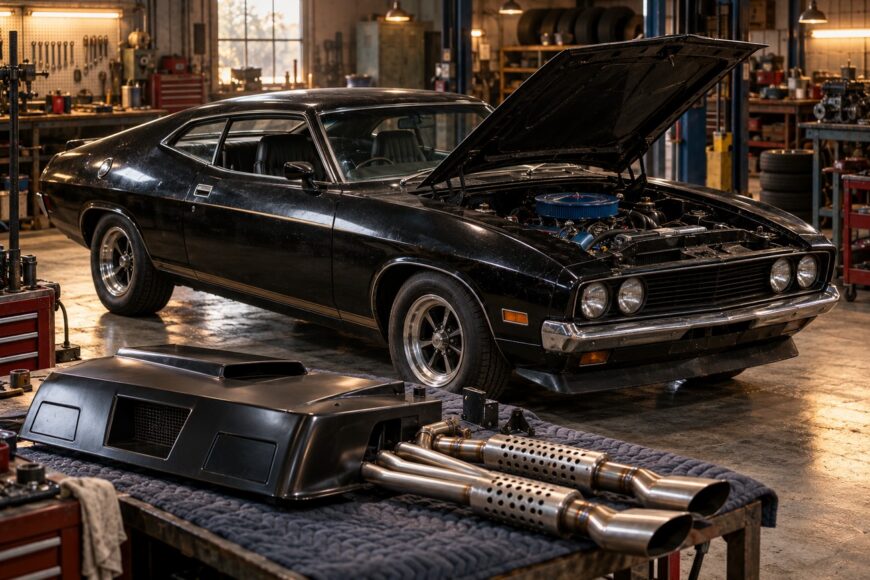
The Mad Max Interceptor looked like a Ford Falcon XB GT, but it was not a factory-delivered specification. The screen car was a modified XB Falcon hardtop prepared for cinematic use, with several donor vehicles involved in filming and stunt work.
That distinction matters if you are buying one today. You may be choosing between an authentic XB GT, an ordinary XB hardtop built as an Interceptor tribute, or a heavily rebuilt film-style car. Provenance, rust, structural repairs, and original GT details carry more weight than black paint, V8 badges, or an impressive horsepower claim.
- What the Ford Falcon XB GT Actually Was
- Why the XB Hardtop Became the Mad Max Interceptor Base
- Factory XB GT vs. Film-Built Mad Max Interceptor
- How to Tell a Real XB GT from a Black Tribute Car
- The Rust and Restoration Problems That Change the Value
- Original GT, Restomod, or Interceptor Tribute: Which Car Makes Sense?
- Frequently asked questions
- What car is the Mad Max Interceptor based on?
- How much is a Ford Falcon XB GT worth?
- How many Ford Falcon XB GTs were made?
What the Ford Falcon XB GT Actually Was
The Ford Falcon XB was produced in Australia from 1973 to 1976. Within that range, the XB GT was a factory V8-oriented performance specification, separate from ordinary V8 Falcons and related models such as the GS and GS 500.
The engine most commonly associated with the XB GT is the 351 cu. in. Cleveland V8, approximately 5.8 liters. That association helps explain the car’s reputation, although engine size alone cannot establish GT identity. A regular XB fitted with a V8 remains a different specification from a documented GT.
Published power figures require caution. Figures vary by market and measurement method, and period publications, later advertisements, and auction descriptions do not always use the same basis. Treating one printed or auction figure as universally definitive can distract from the evidence that matters more during an inspection.
Factory identification should therefore be checked through the car’s numbers, original specification, trim, and documentation. XB, GT, GS, GS 500, and ordinary V8 cars are related names in the same family, but they are not interchangeable descriptions for valuation or restoration purposes.
Why the XB Hardtop Became the Mad Max Interceptor Base
The XB hardtop supplied the shape that made the film car instantly recognizable: a long, low roofline, broad body, and aggressive front-end presence. Its rarity also gives it stronger collector interest than sedan or utility versions when the intended result is an Interceptor-style build.
The cinematic Interceptor was based on a modified Ford Falcon XB hardtop. It was not a standard showroom GT left untouched for the cameras. The production used several donor vehicles for filming and stunt work, and those cars did not all receive the same mechanical treatment or survive in the same condition.
That production history explains why descriptions of “the” film car can become imprecise. One vehicle may be associated with close-up footage, another with stunt work, and another with later restoration or display. A convincing tribute can reproduce the visual language without sharing the identity or provenance of any original screen-used car.
For a buyer, the hardtop body is the logical starting point for visual accuracy. A sedan or utility may produce an entertaining V8 project, but its silhouette and collector connection are different from the XB hardtop that established the Interceptor image.
Factory XB GT vs. Film-Built Mad Max Interceptor
A factory XB GT and a film-built Interceptor share a platform connection, yet they represent different kinds of evidence. The table separates factory identity from cinematic modification and later tribute construction.
| Area | Factory XB GT | Film-built Mad Max Interceptor |
|---|---|---|
| Factory identity | A documented Ford Falcon XB GT, a factory V8-oriented specification. | A modified XB Falcon hardtop prepared for cinematic use. |
| Body style | GT examples must be assessed by their documented factory specification and body type. | Based on an XB hardtop chosen for its visual profile. |
| Engine context | Most commonly associated with the 351 cu. in. Cleveland V8, approximately 5.8 liters. | Mechanical specification could vary between donor and stunt vehicles. |
| Modifications | Factory equipment and GT trim, subject to original specification and later changes. | Pursuit/interceptor-style modifications for screen appearance and filming requirements. |
| Provenance | Factory records, matching numbers, original details, and restoration documentation. | Film documentation, donor history, surviving production parts, or later tribute evidence. |
| Collector meaning | Valued as an authentic GT according to condition, originality, and history. | Valued as a film-related car, tribute, or replica according to its evidence and execution. |
How to Tell a Real XB GT from a Black Tribute Car
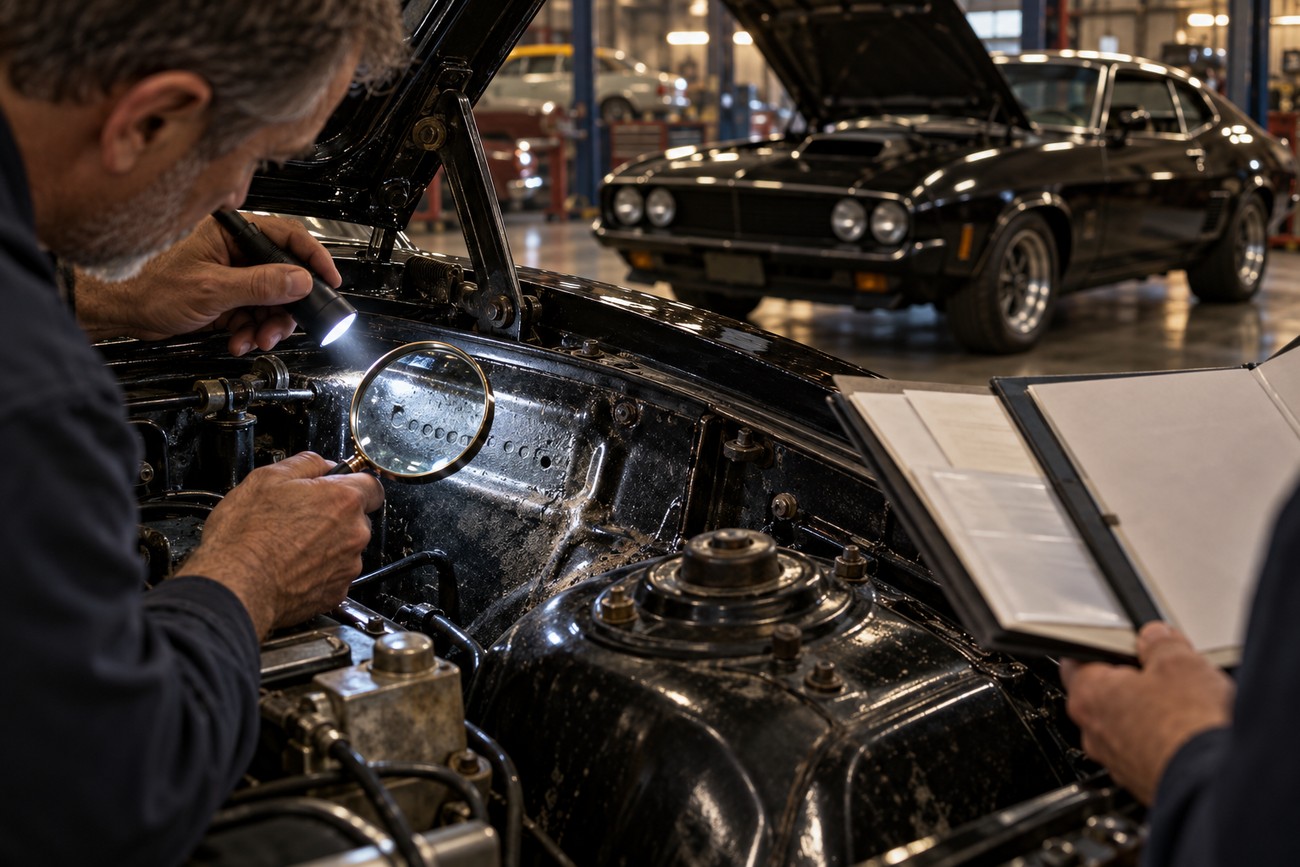
A black XB hardtop with a V8 is neither automatically an XB GT nor a genuine Interceptor. Color, hood hardware, graphics, and exhaust sound can create the right impression while saying little about the car’s factory identity. Sellers sometimes compress XB, GT, GS, GS 500, and ordinary V8 specifications into one convenient description.
Begin with the body and chassis numbers, then compare them with registration records, factory documentation, restoration invoices, and any established ownership history. The numbers should support the claimed model rather than merely match a replacement plate or a seller’s interpretation. Matching numbers can strengthen the case, although they should be considered alongside the complete specification and the quality of the restoration.
Inspectors prioritize chassis rails, floor repairs, weld quality, and panel gaps before decoding badges or evaluating the engine bay. Straight structure and consistent factory-style construction are harder to recreate convincingly than a set of badges.
Inspect welds, floor sections, wheel arches, and areas where panels meet. Uneven gaps, excessive sealant, fresh undercoating, or inconsistent paint texture can indicate earlier repairs that deserve closer investigation. Original GT components should be identified individually rather than accepted because a car carries decorative replicas.
Restoration records are especially useful when they show what was removed, repaired, replaced, or reproduced. A car with a documented rebuild and some correct replacement parts may be easier to assess than a visually spectacular example with no photographs, invoices, or explanation of its previous work.
Matching numbers and provenance can matter more than a claimed output figure. A period-correct GT interior, correct wheels, trim, badges, and dashboard details contribute to authenticity, while Interceptor graphics establish only the theme of the build.
The Rust and Restoration Problems That Change the Value
Rust is the structural issue that can turn an apparently complete XB into an expensive shell project. Corrosion may affect chassis rails, floors, and wheel arches more seriously than the visible cosmetic areas. A shiny exterior can conceal weakened metal beneath repairs, coatings, or fresh carpet.
Previous welding deserves the same scrutiny as corrosion itself. Poorly shaped patches, excessive weld buildup, distorted seams, and uneven panel alignment can indicate that the car was repaired for appearance rather than restored to sound structure. Hidden corrosion around earlier work may return after the car has been painted and assembled.
Correct panels and GT trim can be harder to source than mechanical components. Interior pieces, chrome, wheels, badges, and small finishing parts often determine whether a restoration looks coherent, and replacing them can take longer and cost more than repairing an engine or transmission.
A half-finished Interceptor project is particularly risky when the seller has solved the visible styling and postponed the shell. Before valuing the car, establish the condition of the rails, floors, arches, and repaired joints, then inspect the alignment of doors, hood, and hardtop panels. Geometry problems can consume a restoration budget long after the purchase.
Effective corrosion protection is part of a proper restoration. Without it, concealed rust can return even after extensive metalwork. The best evidence is a clear record of the repairs, bare-metal preparation, seam treatment, and protection applied before final paint and trim installation.
Original GT, Restomod, or Interceptor Tribute: Which Car Makes Sense?
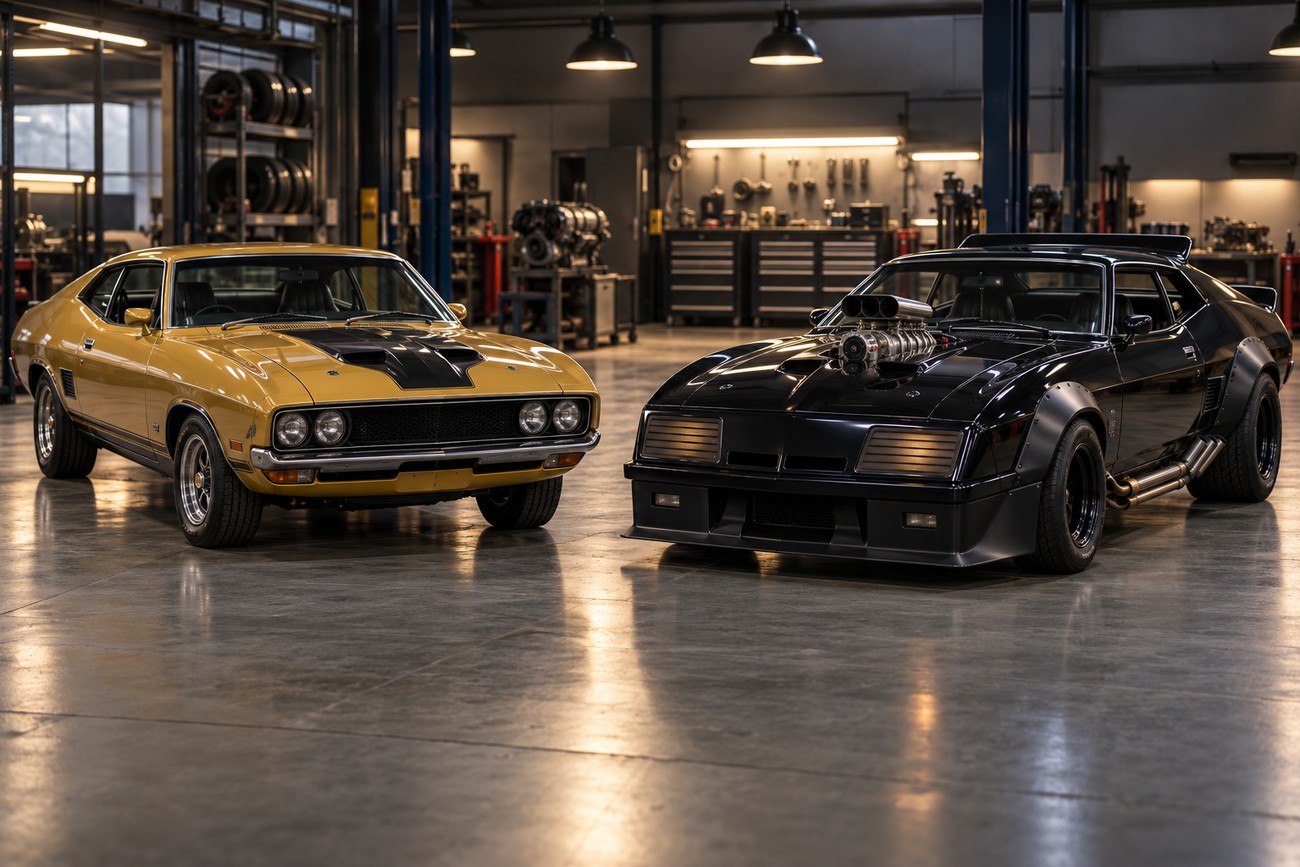
Preserving a documented GT makes sense when originality, factory identity, and future collector appeal are the priorities. That path can be costly because correct details must be found and protected, and every irreversible modification reduces the pool of buyers interested in an authentic example.
A tribute built on a cheaper XB hardtop can be the more rational choice for an owner who wants the Interceptor appearance without cutting a rare GT original. It allows the builder to focus on stance, period-style details, and mechanical reliability while leaving a documented GT available for preservation.
A high-quality restomod offers a different ownership brief. Modernized suspension, brakes, wiring, or engine management may improve usability, yet those changes can reduce collector appeal if the car’s original specification becomes difficult to recover. The result may be excellent as a driver while carrying less status as an original GT.
A convincing replica generally sits below a documented GT with film provenance in the collector market. The final decision should account for body condition, originality, history, specification, and provenance together. Authenticity can cost more to preserve than speed costs to add, which is why the cheapest-looking project often becomes the least predictable purchase.
Frequently asked questions
What car is the Mad Max Interceptor based on?
The Mad Max Interceptor was based on a modified Ford Falcon XB hardtop. It was not a single untouched factory GT taken directly from a showroom specification.
Several donor vehicles were used for filming and stunt work, with different levels of modification and survival. References to one definitive donor can therefore be misleading unless they are supported by specific film or ownership documentation.
How much is a Ford Falcon XB GT worth?
There is no universal value for an XB GT. A meaningful assessment depends on body condition, hardtop status, originality, matching numbers, factory specification, documented restoration history, and provenance.
A black tribute car and a documented GT may share an engine and visual details while occupying very different market positions. Film provenance can add another layer, but it should be documented rather than inferred from Interceptor styling.
How many Ford Falcon XB GTs were made?
Any production total should be tied to a defined factory specification and a reliable source. Rounded figures are unsafe when listings and references combine different XB variants, body styles, markets, or GT-related specifications.
The responsible buying approach is to verify the identity of the individual car rather than use an unsupported total as proof of rarity. Its documented specification, body condition, originality, and provenance determine practical significance more directly than a loosely quoted production number.







