
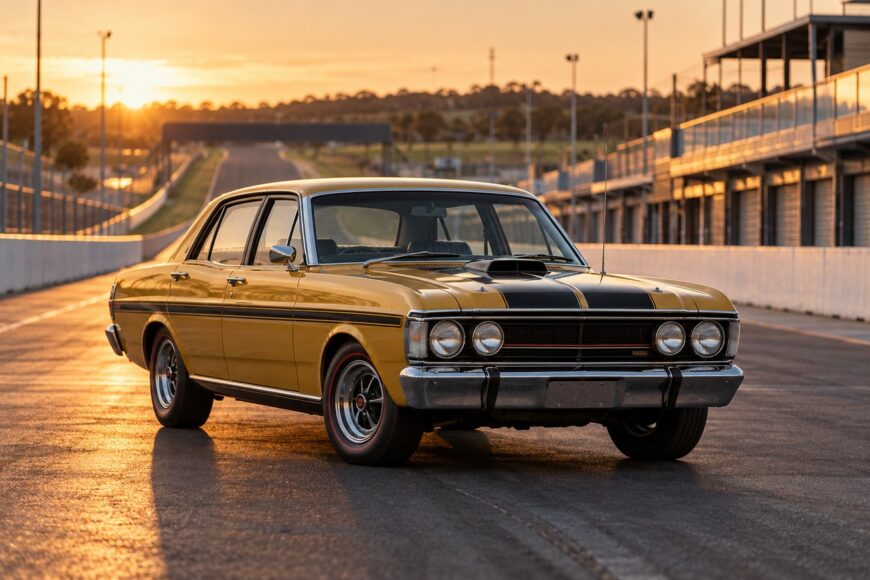
The Ford Falcon GT-HO Phase III carries the reputation of Australia’s fastest sedan of its period, yet even basic claims about the car can be difficult to pin down today. Power figures vary, test results depend on conditions, and identifying a genuine car requires more than a GT-HO badge or a restored finish.
Built in 1971 from the XY Falcon, the Phase III belonged to the Bathurst era, when road cars and touring-car competition were closely linked. Its significance came from that relationship: a large four-door sedan developed with homologation requirements, racing ambitions, and Australian road use in mind.
That context gives the fastest-sedan description its proper meaning. It refers to an exceptional period performance reputation, rather than a verified all-time or worldwide ranking. Today, the Phase III is valued as much for its specification, history, and rarity as for the speed recorded in contemporary tests.
- Why the Phase III became Australia’s fastest-sedan legend
- Built for the Bathurst era: more than engine output
- Phase III figures: specifications versus performance claims
- What those speed figures cannot tell you about driving one
- The collector’s real challenge: proving a Phase III
- What is a GT-HO Phase III worth?
- Frequently asked questions
- Was an automatic GT-HO Phase III available?
- Was the Phase III the fastest Ford Falcon ever made?
- How much is a GTHO Phase 3 worth?
- How much horsepower did a GTHO Phase 3 have?
- What was the fastest Ford Falcon ever made?
Why the Phase III became Australia’s fastest-sedan legend
The 1971 Ford Falcon XY GT-HO Phase III was an Australian four-door sedan with an unusually direct connection to the Bathurst racing scene. Large family-sized sedans were central to Australian touring-car competition, and the GT-HO program turned that environment into a road-car proposition. The result combined long-distance pace with the practicality of four doors.
Its reputation grew from a complete performance package rather than a single engine statistic. The Cleveland V8, manual transmission, revised exhaust system, carburetion, and braking changes all formed part of a specification aimed at sustained high-speed use. That made the car especially significant in a market where locally built sedans were expected to carry both passengers and sporting credibility.
The phrase “Australia’s fastest sedan” is best understood as a period description repeated in road tests, enthusiast writing, and historical accounts. The commonly quoted acceleration and top-speed figures were outstanding for 1971, although they do not establish a verified fastest-sedan title across every country and era.
Claimed production was 300 cars, which added scarcity to the performance story. A limited run also meant that the Phase III became a distinct collector model rather than merely a high-output Falcon variant. For historians, its importance lies in the way competition rules, local manufacturing, and road-car marketing converged in one specification.
Built for the Bathurst era: more than engine output
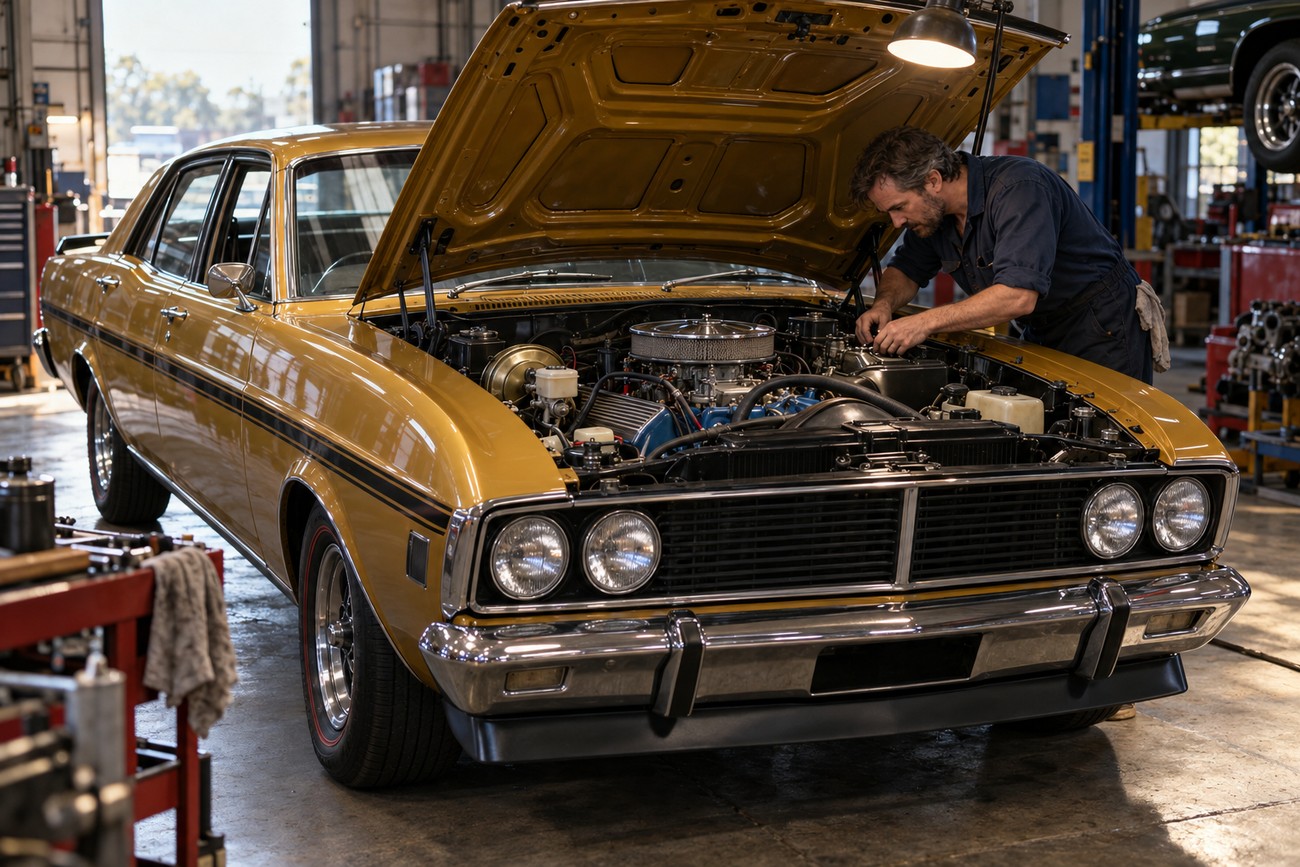
The Phase III was a distinct XY Falcon GT-HO specification shaped by Bathurst-era homologation logic. In that period, the road car had to provide a credible foundation for competition development, so changes extended beyond installing a larger or more highly tuned V8. The specification reflected the demands placed on a heavy sedan at racing speeds.
Reported equipment includes a 780 cfm carburetor, exhaust-system changes, and upgraded brakes with a vacuum reservoir. These details matter because they show the engineering intent behind the model. They also help distinguish a genuine Phase III specification from a loosely described Falcon GT or another GT-HO version.
The Cleveland V8 supplied the headline appeal, while the supporting systems determined how effectively the car could use its output. A larger carburetor or freer-flowing exhaust could support performance, but neither component alone made the road car equivalent to a race car. Tuning, gearing, condition, and the rest of the chassis remained decisive.
That distinction is important in the collector market. Falcon GT and GT-HO names are sometimes treated as interchangeable, although the Phase III represents a particular XY-based specification. Correct identification therefore depends on the complete car and its history, rather than on a single engine, badge, or visual detail.
Phase III figures: specifications versus performance claims
The figures below bring together commonly quoted specifications and reported results. The power entries require particular care because the sources use different rating and estimation methods.
| Item | Quoted figure | Meaning and qualification |
|---|---|---|
| Production | 300 cars | Claimed production figure for the GT-HO Phase III. |
| Engine | Approximately 5,763–5,800 cc Cleveland V8 | Figures vary slightly by source and specification description. |
| Power | 224 kW; estimates of 370–376 bhp; claims approaching 390 hp | These figures are not interchangeable conversions and should not be presented as one agreed factory output. |
| Torque | 515 N·m | Commonly quoted torque figure in specialist references. |
| Mass | Approximately 1,524 kg | Quoted vehicle mass; equipment and measurement conventions can affect published figures. |
| 0–100 km/h | Approximately 6.4–6.6 seconds | Commonly quoted period or specialist result, dependent on the car and test conditions. |
| Top speed | Around 227–228 km/h | Reported maximum; gearing, condition, tires, and test conditions affect repeatability. |
What those speed figures cannot tell you about driving one
For 1971, a 0–100 km/h time of approximately 6.4–6.6 seconds and a top speed around 227–228 km/h placed the Phase III in exceptional company among sedans. Those results describe straight-line ability under particular test conditions. They do not promise identical performance from every surviving car, especially after decades of repairs, tuning changes, and restoration work.
At approximately 1,524 kg, the Falcon carried substantial mass for a performance car. Its period chassis, steering, and suspension design can feel heavy and less precise to a driver accustomed to modern performance sedans. The car’s size and weight were part of its character, but they also demanded more planning on a narrow road or through a sequence of corners.
Reported disc-and-drum braking equipment deserves similar perspective. The upgraded Phase III brakes and vacuum reservoir were meaningful period improvements, yet sustained aggressive driving can expose limitations that modern drivers may take for granted. Concerns about fade should be treated as a practical reason to inspect and use the system carefully, rather than as a documented result applying equally to every car.
Road surface, tire condition, gearing, engine tune, and driver technique all influence repeatability. A carefully prepared example on suitable tires may reproduce a period result more convincingly than a poorly sorted car, while a collector-grade restoration may be used too sparingly to reveal its mechanical weaknesses. The historic figures remain valuable benchmarks, provided they are not mistaken for modern test guarantees.
The collector’s real challenge: proving a Phase III
A badge, paint color, or the word “restored” cannot establish original Phase III identity by itself. With claimed production of 300 cars, the distinction between a documented example and a reconstructed car has a direct effect on historical and financial significance. The model’s rarity also makes incorrect identification a continuing risk.
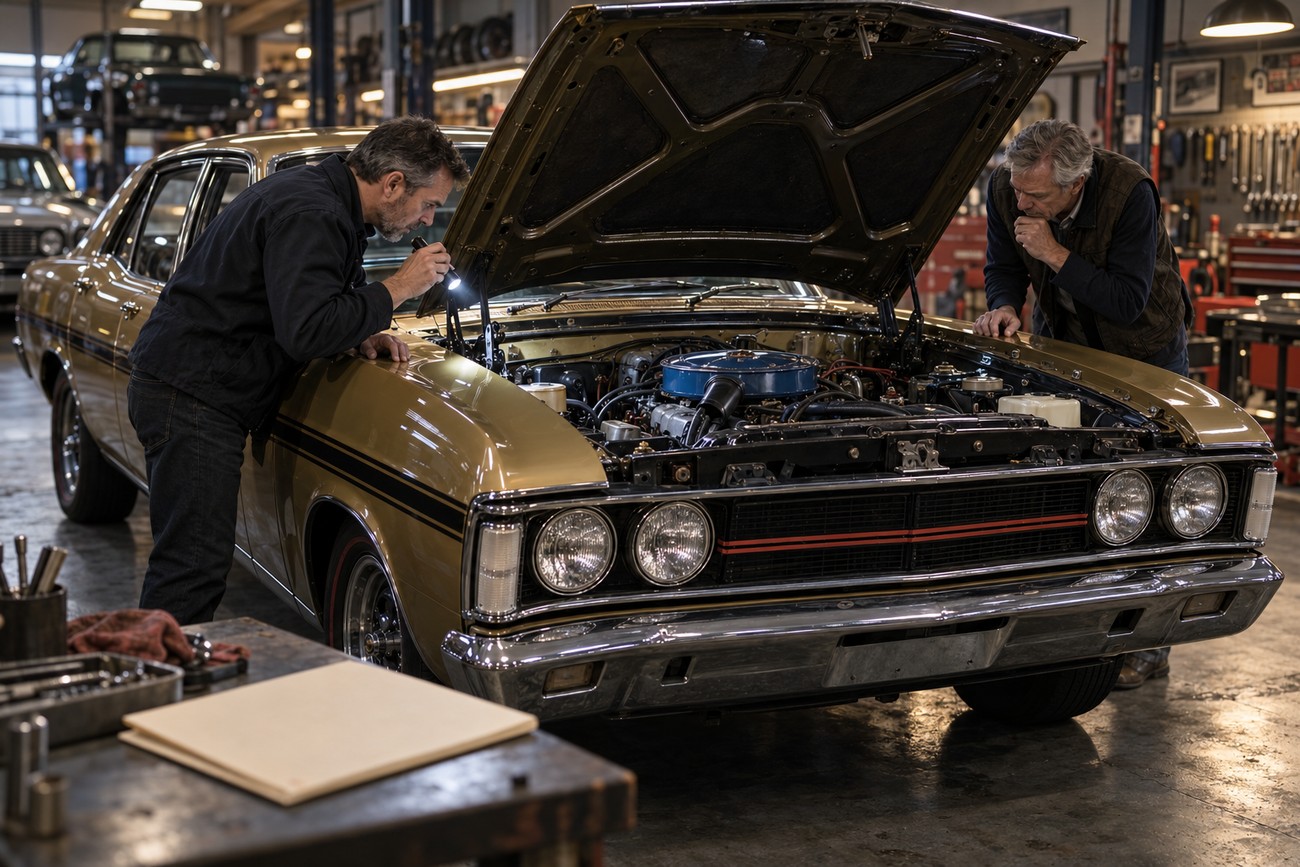
The first examination should focus on the car’s documented identity. Check the chassis identification, build documentation, and available ownership history before judging the finish or counting attractive replacement parts. The evidence should support the claim that the car began life as a GT-HO Phase III, rather than merely showing that it now resembles one.
Next, compare the surviving specification with the claimed model. The engine, transmission, braking equipment, exhaust arrangement, interior details, and other major components should be examined by someone familiar with the model. A replacement part may be mechanically sensible while still reducing originality or raising questions about the car’s history.
Specialist scrutiny is worthwhile before a purchase is agreed. It should include the records supplied with the car, the consistency of the chassis and body, evidence of restoration stages, and the provenance of major components. No single visual inspection can settle every question, particularly where a car has been rebuilt over many years.
Buyers should also budget for the possibility that rare correct parts are difficult and expensive to source. Drivetrain, brake, interior, and bodywork discrepancies can become major projects after purchase. The safest approach is to value the evidence first and the appearance second.
What is a GT-HO Phase III worth?
Without current sales data, no precise market value can be established. Examples, including some with imperfect histories, can command hundreds of thousands of Australian dollars, but that broad description is not a live auction quote or a reliable valuation for every car.
Condition affects the result, although originality and documentation can matter just as much. Two cars may share the same model name and year while differing substantially in surviving equipment, restoration quality, provenance, and confidence of identity. Those differences are especially important when the claimed production is only 300 cars.
A restored car may present well while containing reconstructed or substituted components. That does not automatically make it worthless, but the market value should reflect what is documented and what remains authentic. The premium belongs to a credible, correctly specified car with a history that can withstand specialist examination.
Potential buyers should therefore treat the purchase price as only one part of the commitment. Rare correct parts, brake work, transmission repairs, and further documentation can add materially to ownership costs. A lower entry price may offer poor value if it conceals uncertainty that cannot be resolved economically.
Frequently asked questions
Questions about the Phase III often come down to original specification, period performance, and present-day value. Published power and speed figures need their qualifications. For an individual car, documentation and mechanical condition matter more than a badge or headline figure.
Was an automatic GT-HO Phase III available?
The specialist specifications cited here list a four-speed manual transmission for the GT-HO Phase III and do not list an automatic option. That transmission choice forms part of the model’s performance character and is also an important point to verify when assessing a car presented as a genuine Phase III.
An automatic Falcon may belong to another specification or may have been converted during its life. Either possibility needs to be documented rather than assumed to represent original Phase III equipment.
Was the Phase III the fastest Ford Falcon ever made?
The Phase III is renowned for exceptional sedan speed in its period. That reputation does not prove it was the fastest Ford Falcon ever made across every later generation, engine option, and performance measurement.
Such a ranking would require a consistent comparison of factory specifications and test conditions. The Phase III’s stronger claim is its importance as a 1971 Bathurst-era homologation-oriented sedan.
How much is a GTHO Phase 3 worth?
There is no single dependable price for every GT-HO Phase III. Cars with strong documentation, original specification, sound condition, and credible provenance command the greatest collector interest, while uncertain or heavily reconstructed examples may be judged very differently.
Even examples with imperfect histories can command hundreds of thousands of Australian dollars. That is a broad market observation, not a current valuation or guaranteed selling price.
How much horsepower did a GTHO Phase 3 have?
Published figures are inconsistent. Sources cite a 224 kW rating, estimates of 370–376 bhp, and claims approaching 390 hp. These figures should not be treated as equivalent conversions or as one universally accepted factory output.
The commonly quoted torque figure is 515 N·m. For a particular surviving car, engine condition, tuning, and measurement method are more useful than repeating one disputed headline number.
What was the fastest Ford Falcon ever made?
The figures here do not establish a definitive fastest Falcon across all generations. The GT-HO Phase III is best described as an exceptionally fast Australian sedan of its 1971 period, with commonly quoted performance of approximately 6.4–6.6 seconds from 0–100 km/h and a top speed around 227–228 km/h.
Comparisons with later Falcons would need consistent testing, factory specifications, and a clear definition of “fastest.” The Phase III’s historical standing rests on its Bathurst-era role and rarity as much as on its straight-line figures.







