
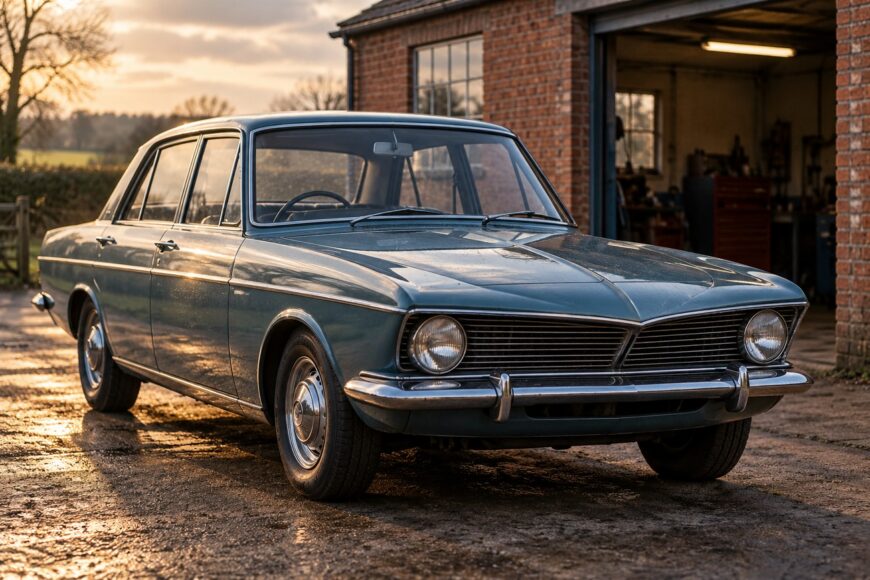
The Ford Corsair’s pointed nose promises more drama than the car generally delivers from behind the wheel. It was conceived as a larger, more prestigious saloon, with familiar Ford engineering beneath its distinctive shape. The engine story complicates its reputation: early Corsairs did not have a V4, and a 2.0-liter badge does not automatically identify a 2000E.
That distinction matters now because surviving cars can tell a different story from their badges or brochure figures. A sound Corsair offers relaxed cruising and an unusual piece of British Ford history; a tired one can demand patient work on its shell, engine, and trim. Understanding what changed during production makes it easier to appreciate the design without mistaking every vibration for a fault.
- Why the Corsair wore such a pointed nose
- Kent, GT and 2000E: the engine changes at a glance
- What the V4 and 2000E feel like on the road
- When V4 roughness is normal—and when it is not
- Buying one: verify the shell before the badges
- The Corsair’s appeal beyond the brochure figures
- Frequently asked questions
- Which documents help confirm a claimed Corsair 2000E?
- Where can an owner look for Corsair-specific trim?
- Was the Ford Corsair a good car?
- What was Ford’s biggest flop?
- What is the best year for a Lincoln Corsair?
Why the Corsair wore such a pointed nose
Produced in Britain from approximately 1963 to 1970, the Corsair occupied a more prestigious position than the everyday Cortina. Its long, sharply defined front end gave it a recognizable identity in a showroom, while its greater size helped make the case for a more substantial family saloon. The shape was an important part of its appeal, though it did not signal exotic machinery underneath.
Ford built that identity around familiar mechanical ideas: a front-mounted engine, rear-wheel drive, and, in most cars, a four-speed manual gearbox. This kept the Corsair recognizable within the Ford range for an owner used to conventional saloons. The unusual-looking bonnet is therefore best understood as a statement of style and status, rather than a promise of sporting performance.
Early examples used a 1.5-liter inline-four Kent engine. The V4 arrived later, so describing the whole production run as a V4 saloon obscures an important difference for anyone viewing an early car. Its engine, identification details, and surviving records deserve more weight than assumptions drawn from the body shape.
The nose still earns its place in the Corsair story. It gives the car presence even at rest and explains why it attracts interest beyond its modest performance figures. On the road, its character depends far more on which engine it has and how well that engine has been maintained.
Kent, GT and 2000E: the engine changes at a glance
The badges cover several stages of development, and the change to V4 power was not a single change to one 2.0-liter specification.
| Version | Period | Engine | Distinguishing point |
|---|---|---|---|
| Early Corsair | From approximately 1963 | 1.5-liter inline-four Kent | The original engine was not a V4. |
| V4-era GT | V4 introduced in 1965; 2.0-liter V4 followed in 1966–1967 | 1,663 cc Essex V4, then 1,996 cc V4 applications | Early 2.0-liter GT tuning should not be assumed to match the later 2000E. |
| 2000E | Replaced the GT in 1967 | Revised 1,996 cc V4 | Revised ports, camshaft, and carburation accompanied the better-equipped model. |
Sources cite different Weber carburetor specifications, including 32DIF and 28/36, for 2.0-liter V4 applications. Check the year, market, and individual engine before treating either as definitive.
What the V4 and 2000E feel like on the road
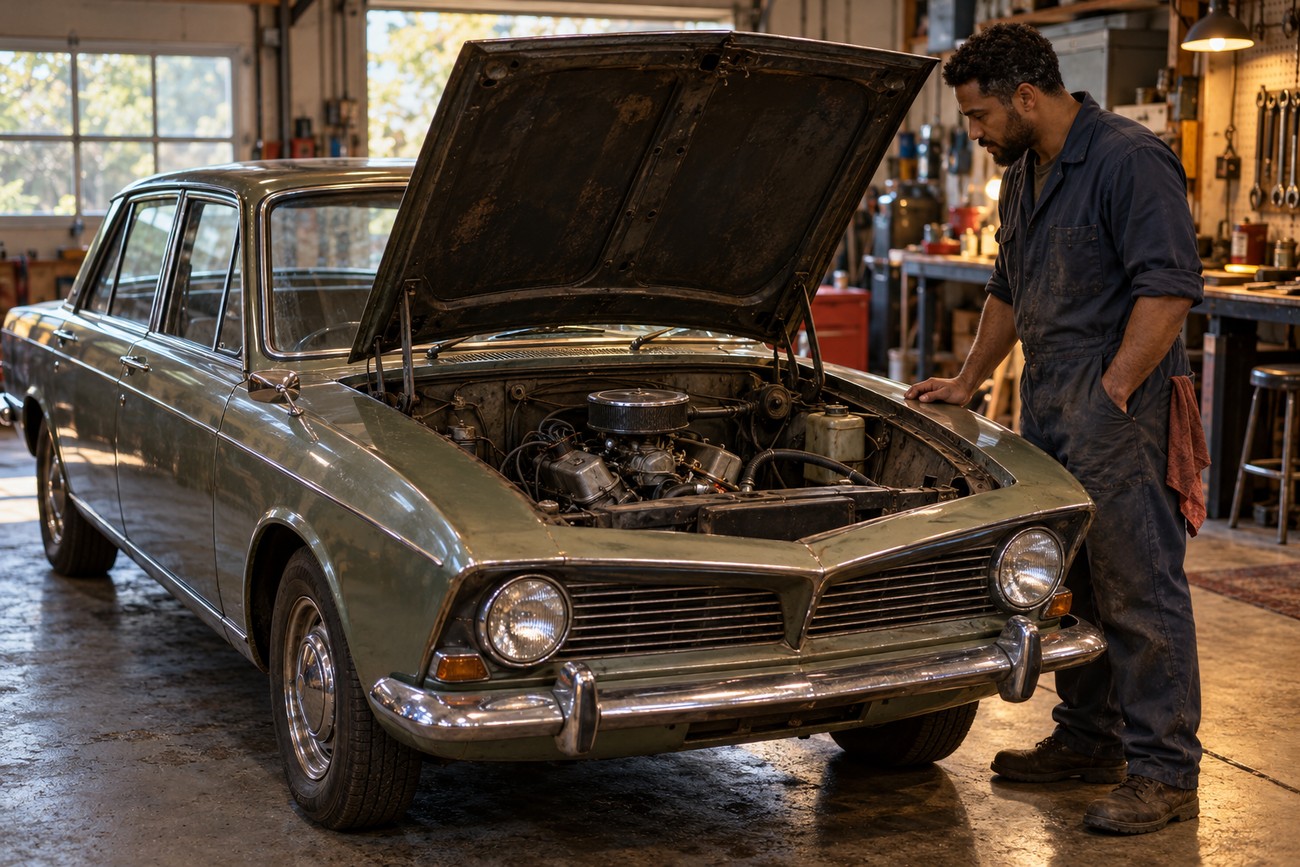
The compact Essex V4 gave the later Corsair an engine layout distinct from the early Kent car. With rear-wheel drive and usually a four-speed manual gearbox, it makes most sense driven at an unhurried pace. Settled cruising suits the car better than repeated demands for high-rev acceleration.
A healthy V4 can still have an uneven idle and become noticeably harsh as revs rise. Some of that texture follows from the engine’s inherent balance characteristics; it need not mean an imminent failure. Pronounced shaking, however, is a reason to investigate rather than an accepted feature of ownership.
The 2000E’s Executive identity referred to its place in the range, not to sports-saloon pace. Period figures put its revised 2.0-liter V4 at approximately 97–98 bhp, with 0–60 mph taking about 13.5–14 seconds and a top speed around 97 mph. Those are useful historical reference points, not results a surviving car should be expected to reproduce without regard to its condition.
A three-speed automatic was offered on certain versions. Its shifts may complement the V4’s relaxed character, although it can make the moderate acceleration feel less immediate and adds another component whose condition and parts availability deserve attention. The earlier 2.0-liter GT also needs to be judged on its own tune: its engine was not identical to the revised 2000E unit.
When V4 roughness is normal—and when it is not
Begin an assessment after the engine has reached operating temperature. A cold start shows that it starts, but it may conceal an idle or fueling problem that appears only once warm. Listen to how steadily it runs, how it responds to gentle throttle, and whether the vibration changes sharply with engine speed.
Excessive movement calls for ordinary checks before a verdict on the V4 itself. Air leaks can disturb the mixture, while worn ignition components or a faulty vacuum-advance mechanism can make an otherwise serviceable engine feel reluctant. A replacement carburetor or ignition system is no guarantee of improvement if its settings do not suit the particular engine.
Check ignition timing and vacuum advance on a warm engine before adjusting the carburetor mixture. Otherwise, a mixture change can mask the original fault and make the idle harder to diagnose.
Once those basics are sound, inspect carburetor adjustment and engine mounts. The mounts can transmit more movement into the cabin, while incorrect fueling can exaggerate the V4’s natural unevenness. A prospective buyer should also seek compression and oil-pressure checks: they provide evidence about internal condition that a brief, successful start cannot.
Electrical faults deserve similarly careful diagnosis. Aging wiring, contacts, and instruments may need restoration rather than another battery or fuse. On a test drive, note which gauges and electrical functions behave consistently, then establish the cause of any fault; there is no sound basis for assuming a particular gearbox or suspension failure pattern applies to every Corsair.
Buying one: verify the shell before the badges
The paint is the easiest part of a Corsair to admire and a poor substitute for a structural inspection. Examine floors, sills, concealed cavities, and mounting areas for corrosion, including signs of earlier repairs. A glossy exterior can coexist with difficult work beneath it, and sound metal matters more to a usable car than a convincing finish.
Identity comes next. Reconcile the car’s identification plates, engine details, and trim with whatever registration and ownership records survive. A 2000E badge, black vinyl roof, or Rostyle wheels may suit its appearance, but none independently establishes how that particular car left the factory.
This matters especially where an early GT is presented as equivalent to a later 2000E. Both can be appealing, yet the 2000E replaced the GT in 1967 with changes to ports, camshaft, and carburation. Establishing what is fitted helps you judge the car fairly and locate the right information when work is needed.
Allow for the difference between a mechanically complete car and one missing Corsair-specific pieces. Body panels, interior trim, and distinctive fittings can be harder to find than comparable parts for the more common Cortina. A seemingly minor cosmetic gap may therefore take more effort to put right than a straightforward service item.
Rarity claims also need perspective. Approximately 171,000 V4 Corsairs is a qualified estimate covering different bodies and specifications, not a verified total for the 2000E. A number for the range cannot authenticate an individual car; condition, consistent details, and a credible paper trail remain more useful.
The Corsair’s appeal beyond the brochure figures
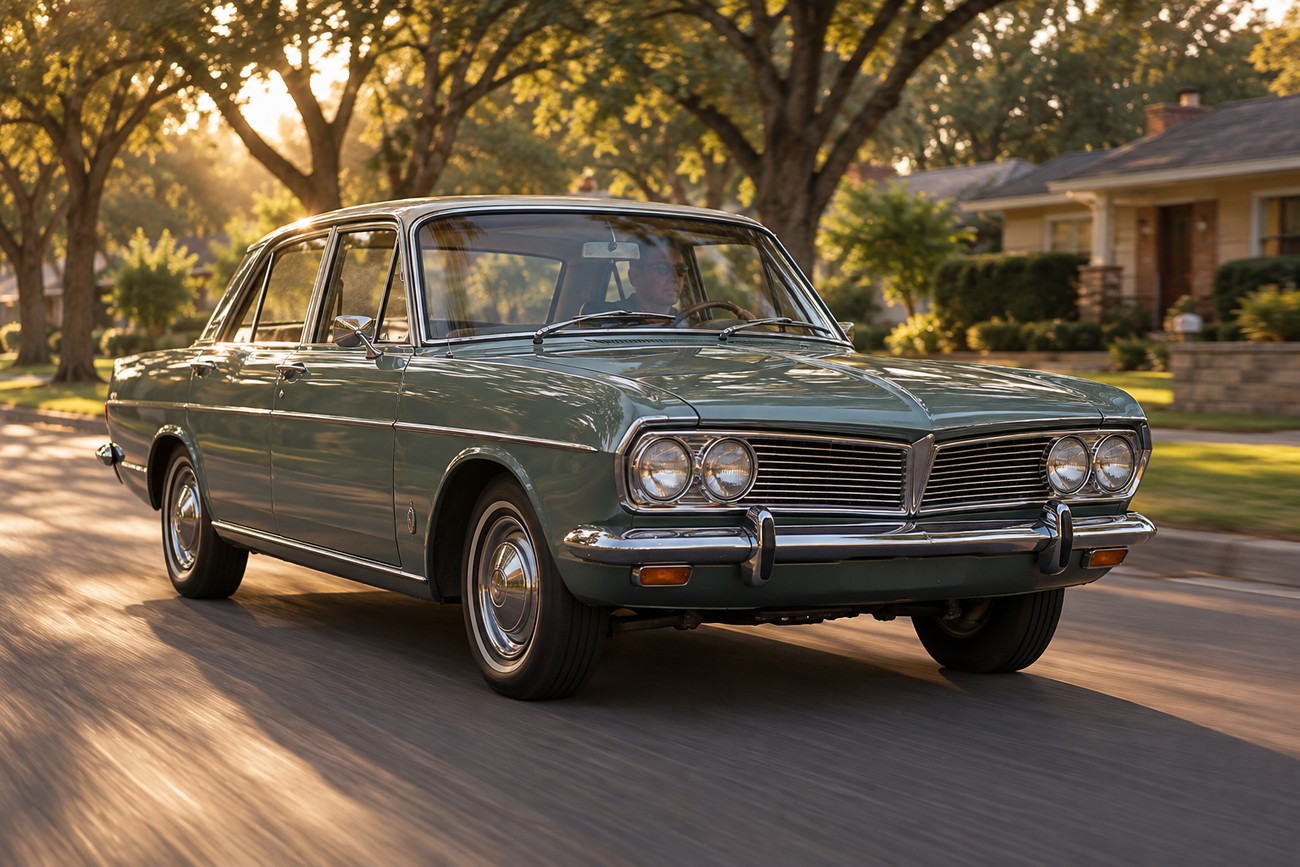
The Corsair rewards a buyer who likes its shape and understands its pace. Its pointed front end gives it a character few conventional saloons share, while the V4 adds a distinctive feel during relaxed travel. Neither feature requires the car to behave like a sports model to be enjoyable.
The revised, better-equipped 2000E is an interesting version of the idea, but its moderate acceleration and the V4’s higher-rev harshness set sensible limits on expectations. Sustained hard driving tends to emphasize the engine’s least polished qualities. A sound example makes a stronger case at cruising speeds.
An honestly documented Corsair with a solid shell may be more satisfying than a cosmetically persuasive car whose identity and condition are uncertain. The former lets its unusual design remain the attraction; the latter can turn every missing detail or unexplained vibration into a project. That balance, rather than a badge or a quoted top speed, is the basis for choosing one.
Frequently asked questions
These answers concern the British Ford Corsair produced from approximately 1963 to 1970. The modern Lincoln Corsair is a separate vehicle.
Which documents help confirm a claimed Corsair 2000E?
Period registration and ownership records can help establish a claimed 2000E when their details agree with surviving identification plates and the engine fitted to the car. Compare dates and identifying information across the documents rather than relying on a single entry. Gaps in the record do not automatically disprove the claim, but they leave it less certain.
Where can an owner look for Corsair-specific trim?
Owners’ clubs, specialist classic-Ford suppliers, autojumbles, and donor cars are sensible places to search. Confirm that a piece fits the relevant version and inspect its condition before buying; a scarce part is of little use if it needs repairs beyond those already planned.
Was the Ford Corsair a good car?
For a buyer who wanted a distinctive, more substantial Ford saloon, it had a clear appeal. It is less convincing if judged primarily by speed or engine refinement. Today, the condition and documented history of a particular example matter more than a general verdict on the model.
What was Ford’s biggest flop?
There is no single answer without a measure of failure, such as sales, financial loss, or reputation. Edsel is often cited as one of Ford’s most conspicuous commercial disappointments, though it was a separate marque. That label offers little insight into the Corsair’s merits as a classic car.
What is the best year for a Lincoln Corsair?
No single model year is reliably best for every buyer of a Lincoln Corsair. It is a modern, unrelated vehicle, so compare the equipment, maintenance history, and applicable recall information for the specific examples available. Advice about the British Ford Corsair’s engines and trim does not transfer to it.







