
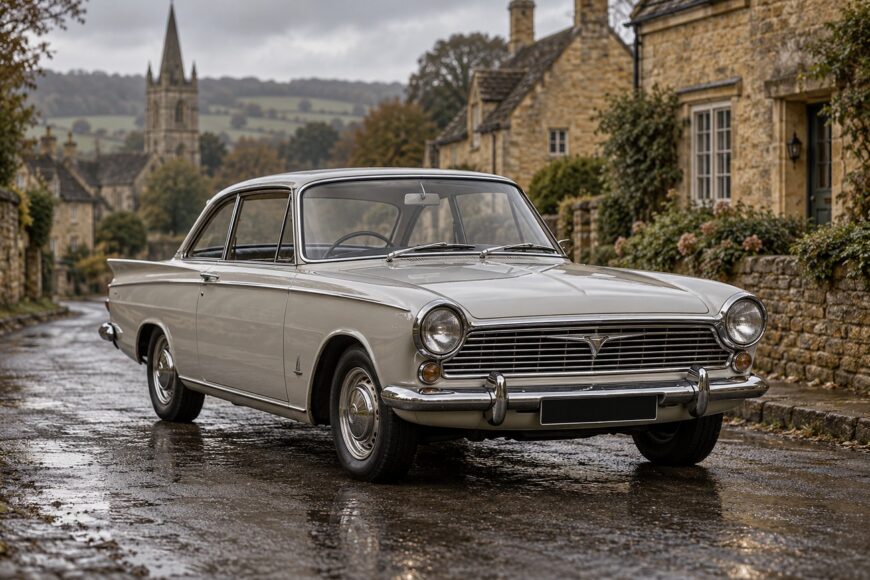
The Ford Consul Capri is easily confused with the far better-known Capri launched in 1969. This earlier British coupe belongs to a different branch of Ford history: its dramatic roofline and generous glass sit over Consul Classic-derived foundations, rather than the later car’s underpinnings.
Finding one is harder than admiring one. A complete, sound example is a different proposition from a shiny car with corrosion beneath its paint or missing coupe-specific trim. Its appeal makes most sense when its identity, modest driving performance, and restoration risks are considered together.
- Why the Consul Capri is the original British Capri
- A distinctive coupe on Consul Classic foundations
- Engines, brakes, and the reality of driving one
- Why a short production run became lasting rarity
- Buying one: inspect the structure before the paint
- Restoration reality: scarce parts and the value of originality
- Frequently asked questions
- How much is a Ford Consul Capri worth?
- How many Ford Consul Capris are left?
- How do you insure a Ford Consul Capri accurately?
Why the Consul Capri is the original British Capri
The Ford Consul Capri was an early-1960s British coupe derived from the Consul Classic. Production ran approximately from 1961 to 1964, giving it a brief place in Ford’s range. Its name and appearance have kept it prominent among classic Ford enthusiasts despite limited sales.
Enthusiasts call it “the original Capri” because it carried the Capri name first. That is a useful historical description, rather than an official “Capri Mk1” designation. The better-known European Ford Capri launched in 1969 was a different model that reused the name; treating the two as successive generations obscures what the earlier car actually was.
Although it drew on the Consul Classic, the coupe had its own proportions and much of its own bodywork. Its roof and rear end give it a character quite unlike a conventional saloon conversion. Those differences are central to its attraction and, for anyone seeking a car to restore, central to the difficulty.
The short production life also needs context. The Consul Capri itself had limited sales; it was not an early version of a later mass-market success. An owner is buying into a small, distinctive model with some familiar Ford engineering, rather than into the broad parts supply associated with more common classics.
A distinctive coupe on Consul Classic foundations
The Consul Capri’s long-looking roofline, shaped rear bodywork, broad windows, and slim pillars make an immediate impression. The glass area provides excellent outward visibility by the standards of many coupes. From inside, the airy cabin is part of the design’s appeal, although its slender structure should never be mistaken for modern crash protection.
Underneath, it used Consul Classic-derived running gear and monocoque construction. Front MacPherson struts and a leaf-sprung live rear axle place it firmly among straightforward period Fords. Shared mechanical roots can make routine work more approachable than the exterior suggests, provided the parts fitted to a particular car are correctly identified.
The distinction matters when a car is incomplete. Coupe-specific doors, rear glazing, moldings, and other exterior pieces cannot safely be treated as interchangeable Classic parts. A missing strip of trim may look trivial in an ad yet prove far more troublesome to replace than a familiar mechanical service item.
Age and construction also affect how the car feels. Thin metal, limited sound insulation, and period suspension allow more road and drivetrain noise into the cabin than its elegant shape might lead a newcomer to expect.
Engines, brakes, and the reality of driving one
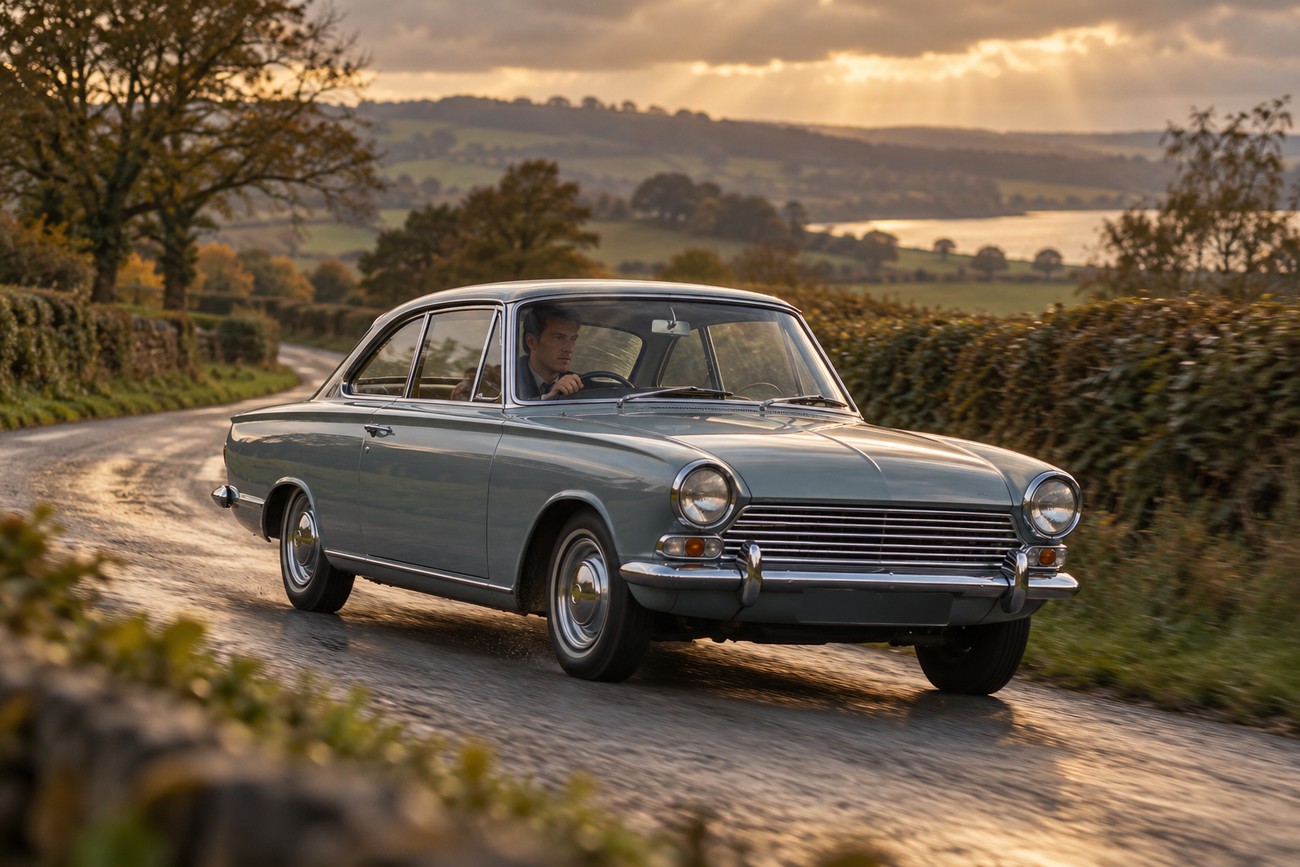
The original four-cylinder Kent engine displaced 1,340 cc, with period power estimates of approximately 54–59 bhp. From 1963, the Capri GT offered a 1,498 cc Kent engine, quoted at approximately 60–78 bhp depending on specification and source. Both belong to an era in which a four-speed manual gearbox and careful use of momentum shaped an ordinary journey.
The GT brought a worthwhile improvement, but it did not turn the car into a muscle car. Period and club figures suggest a maximum speed of approximately 145–150 km/h for the GT. Its strengths lie in its style and period character; expecting the acceleration of a later, larger-engine Capri is likely to end in disappointment.
Unassisted steering takes effort, particularly at low speed. Braking likewise calls for more anticipation than a modern driver may be used to, and condition matters at least as much as the specification claimed in an ad. Check the system actually fitted, its maintenance history, and its behavior on a careful test drive instead of assuming every surviving car brakes alike.
A Kent engine that feels flat need not require ambitious modifications. Correct carburetor adjustment and ignition timing can make a substantial difference to ordinary drivability, while poor maintenance can compound the smaller engine’s limited performance and cooling problems. Even a well-set-up car remains noisy and mechanically direct by present-day standards.
Why a short production run became lasting rarity
The Consul Capri’s rarity grew from limited sales and an early end to production, rather than from a commercially successful model later prized simply because it aged well. Collector estimates put output at approximately 15,000–19,000 cars. That range is an estimate, not a verified exact total.
Production and survival are separate questions. Decades of use, corrosion, dismantling, and unfinished repairs have reduced the pool of usable examples. A photograph of a stored shell or a name in an old register does not establish that another roadworthy Capri exists.
Scarcity alone cannot establish the value of an individual car. A rare coupe with serious structural corrosion, absent rear glass, and little evidence of its past may be a poorer prospect than a less glamorous example that is sound and complete. The details of what survives matter more to a buyer than the headline production estimate.
Originality deserves the same careful language. A car can retain its identity while carrying later Ford components or replacement trim; equally, an attractive repaint can conceal extensive alteration. Before accepting claims of exceptional rarity or factory correctness, compare the car’s specification with credible documentation and the physical evidence in front of you.
Buying one: inspect the structure before the paint
Start with the body, even if the engine runs well and the paint presents nicely. Inspect the sills, lower doors, and wheel arches, then follow the structure underneath to the rear members and suspension mounting points. Have the car raised for a thorough examination, ideally with a specialist familiar with older monocoque Fords.
Look closely at the quality of previous repairs. Heavy filler can soften the outline of a rotten panel, while fresh paint may cover untidy welded inserts or corrosion continuing behind them. Uneven gaps and poorly supported metal deserve investigation; a visual walk-around cannot establish the strength of the shell.
Rear structural members and suspension mounting points need assessment before cosmetic work is priced. An old repair hidden beneath a tidy finish can change the viability of the entire purchase.
Mechanical faults may be easier to define than widespread body damage. A cosmetically tired coupe with a sound structure and its distinctive pieces intact can therefore make more sense than a gleaming project needing extensive reconstruction. That judgment depends on inspection, rather than on a blanket rule that faded paint is reassuring.
Bring photographs and repair records into the assessment, but check that they show the relevant areas before and during work. Ask how replacement metal was shaped and attached, especially near suspension loads. A general body shop may produce an appealing finish without preserving the panel fit or structural details that make the car worth saving.
Restoration reality: scarce parts and the value of originality
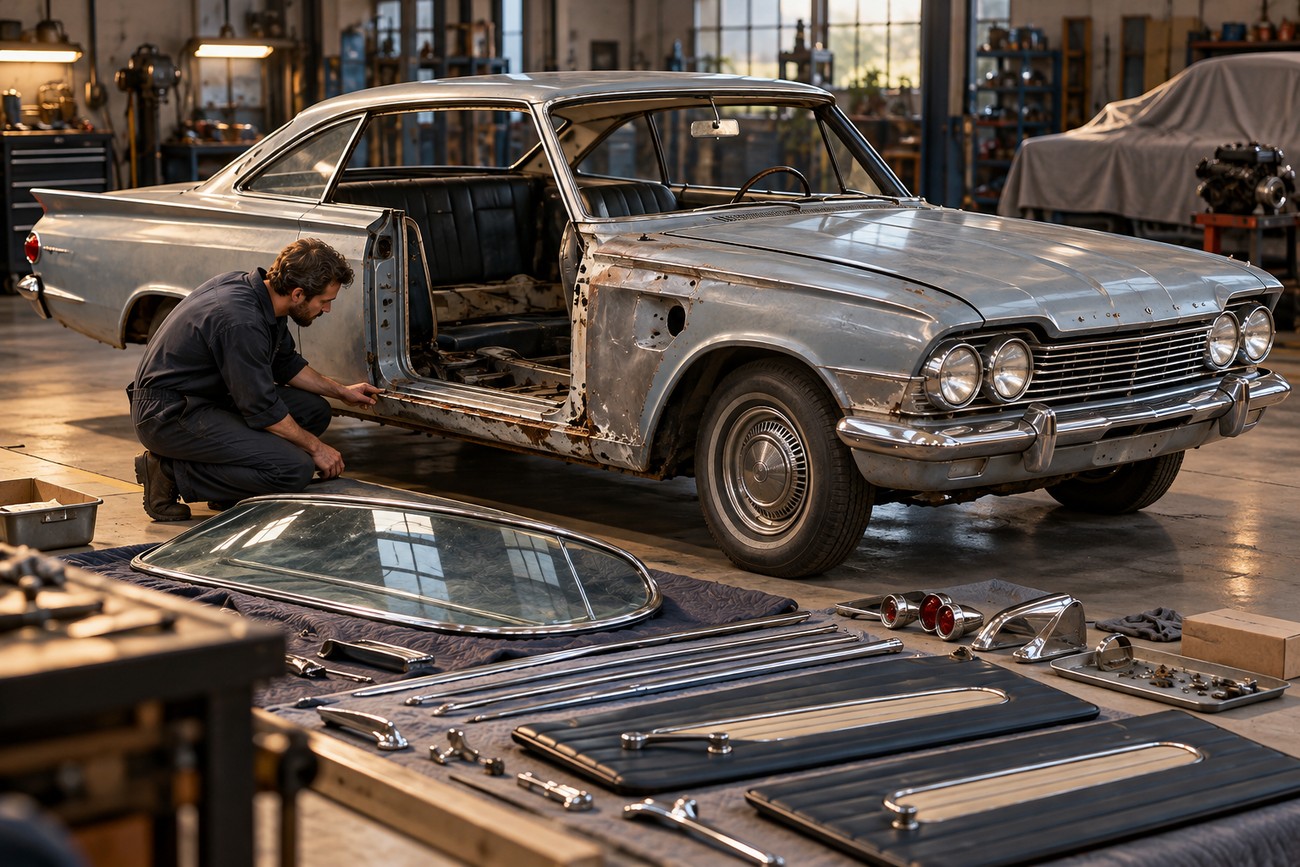
Familiar Ford mechanical roots help with some servicing, but a full Consul Capri restoration is a different undertaking. Coupe-specific doors, rear glass, moldings, and certain interior pieces are difficult to replace. Before buying a dismantled car, lay out what is included and identify missing parts individually; a generic promise that everything is available from a catalog is poor reassurance.
Surviving cars may carry components borrowed from a Consul Classic or another period Ford. Some substitutions can keep a car usable, yet fit and authenticity must be checked rather than assumed. The distinction is especially important where a replacement affects body alignment, instruments, or visible trim rather than a straightforward service item.
Interior work can involve repairing original pieces or making replacements by hand instead of ordering a complete ready-made kit. Wiring deserves similar scrutiny: repeated alterations can leave lights and instruments unreliable and make later fault-finding needlessly difficult. Documenting what is present before dismantling helps prevent a repair from erasing useful evidence.
Claims that every departure from a single pictured specification is wrong should also be treated cautiously. Factory and dealer trim variations can affect colors, seats, and brightwork. Establish the car’s history and examine period evidence before replacing an apparently unusual feature; an unsupported “correction” may remove something genuine.
Frequently asked questions
Condition and documentation matter more than a simple model label when assessing a Consul Capri. These answers set out how to check claims that commonly affect a purchase or ownership decision.
How much is a Ford Consul Capri worth?
Its worth depends on evidence from genuinely comparable completed sales, adjusted for the car in front of you. Compare structural condition, completeness, originality, and documented restoration work rather than relying on asking prices or rarity claims. Account separately for missing coupe-specific glass, panels, and trim: finding them may be a greater obstacle than repairing familiar Ford mechanical parts.
How many Ford Consul Capris are left?
There is no definitive worldwide survivor total. Club discussions suggest only a few hundred usable survivors by the 2020s, while an isolated estimate puts survivors at roughly 2,000; the figures cannot be treated as equivalent counts. Registered cars, roadworthy cars, stored projects, and vehicles outside a particular club’s records are different groups, and neither claim resolves all of them.
How do you insure a Ford Consul Capri accurately?
Describe it clearly as the early-1960s based on observations from specialists with practical expertise agreed-value cover. Supply current photographs, a condition report where available, restoration records, and evidence supporting the proposed value. Check how the policy defines the agreed value and any usage or storage terms before relying on it; treatment can vary by insurer and location.







