
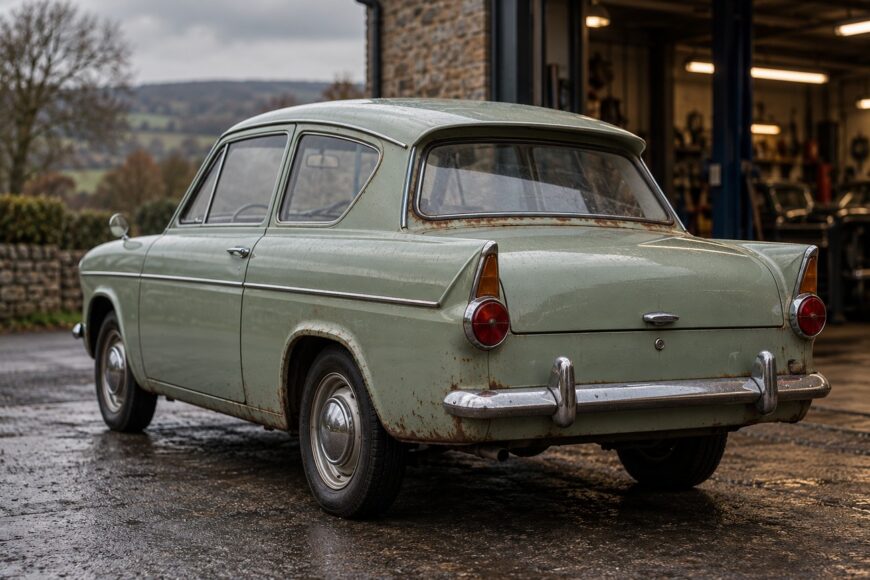
The Ford Anglia 105E announces itself from behind: its rear window leans the opposite way from the glass on most small cars. The condition of the metal beneath that distinctive shape is much harder to read. An attractive example can offer an accessible introduction to classic-car ownership, or become a substantial bodywork project hidden under tidy paint.
Built for ordinary transport rather than modern driving expectations, the Anglia has appeal in its compact proportions and straightforward mechanical layout. Buying one calls for a clear distinction between enjoying a usable old car and funding a restoration. The difference usually lies in the shell and the quality of earlier repairs.
- The small Ford behind the unmistakable silhouette
- What the reverse-rake rear window does—and does not do
- Kent engine, gearbox, and the reality of driving one
- Rust inspection: buy the shell before the engine
- Parts, originality, and the real restoration budget
- Is a 105E the right classic for you?
- Frequently asked questions
- How many Ford Anglia 105Es were made?
- How much is a Ford Anglia 105E worth today?
- Why did J. K. Rowling choose a Ford Anglia?
- How do I open the Ford Anglia 105E’s back window?
The small Ford behind the unmistakable silhouette
The Ford Anglia 105E followed the Anglia 100E and was produced from 1959 to 1968. Its sharply defined body gave Ford’s small car a new identity, one that remains easy to recognize even among other British cars of the period. The reverse-rake rear window supplies the strongest clue, though the upright cabin and compact tail contribute to the overall shape.
That visual identity can make a 105E appealing to a buyer who wants a classic with character rather than sheer size or performance. It also makes exterior presentation unusually persuasive: fresh paint and complete brightwork can draw attention away from the less photogenic underside. A good-looking Anglia deserves a close inspection, rather than an assumption that its appearance reflects its structure.
Surviving cars do not all share one specification. Trim, electrical items, lighting, and other details can differ by year and market, while decades of repairs may have introduced later or mismatched parts. Identify the particular car before ordering replacements or judging its originality; a familiar silhouette tells you which model you are looking at, but little about how faithfully it has survived.
What the reverse-rake rear window does—and does not do
“Reverse rake” means that the Anglia’s rear glass is angled opposite to a conventionally sloping rear window. It makes the car’s profile unmistakable, but is not, by itself, evidence of a measurable aerodynamic advantage or better visibility when reversing.
The glass sits above a separate boot lid; the rear windscreen is fixed and does not lift like a hatch. That distinction matters when assessing luggage space. The Anglia has a boot, but its opening, high loading edge, and shape limit what is easy to put inside. A buyer planning weekend trips should check that their own bags fit rather than judging capacity from the exterior.
The unusual window also directs attention to an ownership detail that photographs often miss. Inspect its seal, surrounding metal, and adjoining rear bodywork for trapped dirt, moisture, or signs of earlier repair. A clean pane and a neatly painted exterior do not establish that the metal around the aperture is sound. The same design feature that makes the car desirable can conceal a difficult repair.
Kent engine, gearbox, and the reality of driving one
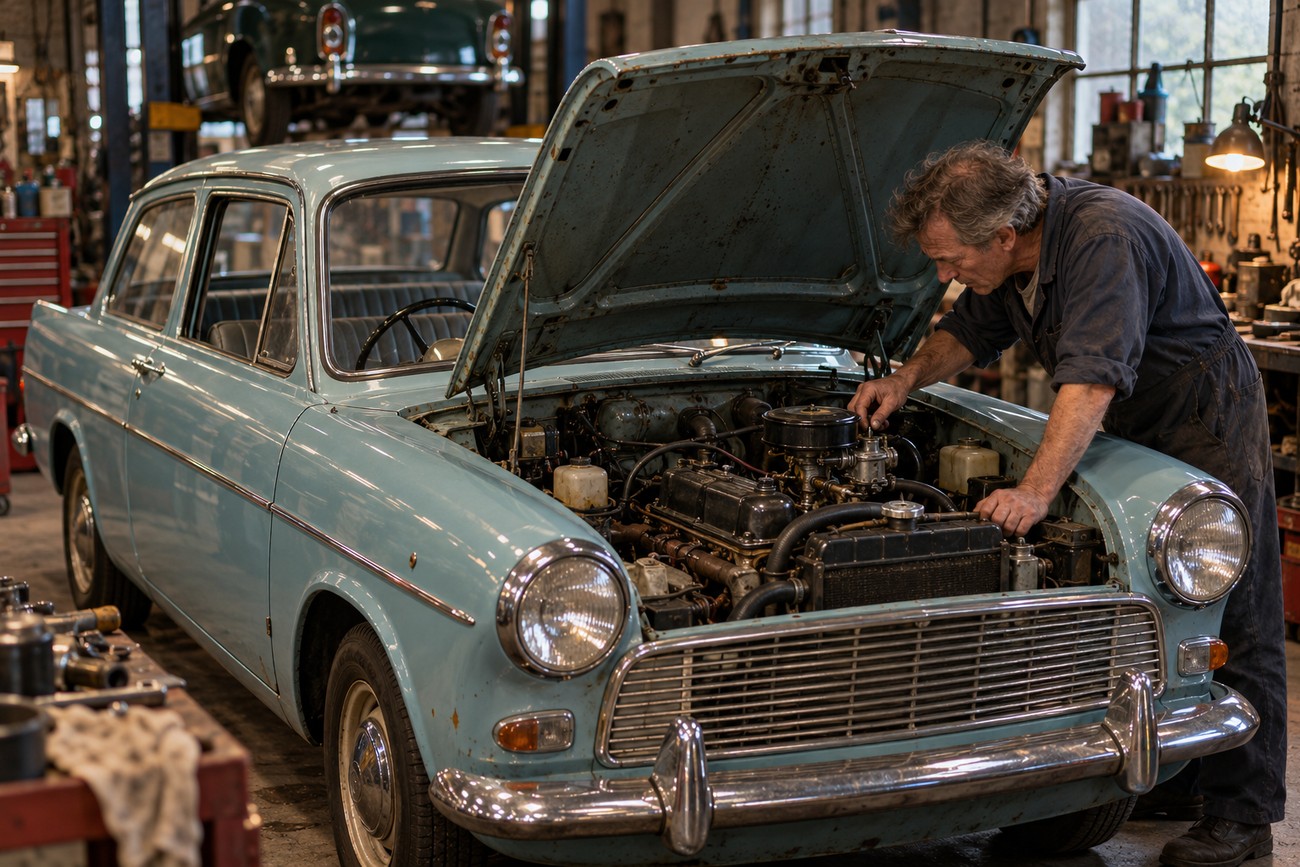
Most Anglia 105Es used a 997 cc OHV Kent inline-four, with approximately 36–39 bhp in base form depending on year and market. It suits the car’s modest size, but a running engine should still be assessed for starting, idle quality, leaks, and cooling. Hesitation or an uneven idle may point to carburetor wear, ignition faults, or unwanted air entering the intake.
A four-speed manual gearbox was usual. Early cars did not necessarily have full synchromesh on every gear, so establish what is correct for the example you drive before treating every awkward shift as damage. Even so, persistent noise or difficulty selecting gears merits investigation; period operation is not a blanket excuse for a worn transmission.
At the rear, a live axle and leaf springs give the car a simple, conventional layout. Steering, braking, road noise, and cabin space will feel dated beside a modern small car, especially on a longer journey. Condition makes a considerable difference: correctly adjusted brakes and sound steering should inspire more confidence than neglected components. Cold starts, poor weather protection, and a cramped driving position are worth experiencing yourself before committing to regular use.
Rust inspection: buy the shell before the engine
Begin beneath the paint, ideally with the car safely raised so its underside can be examined properly. Check the sills and structural rails, then follow the metal toward the suspension mounting areas. Look for swollen seams, fresh underseal over repairs, and uneven welding. A short drive can show that the engine runs; it cannot establish that the structure beneath it is sound.
Move outward to the lower door edges and rear arches, where corrosion may first appear as bubbling or poorly matched paint. Inspect the boot area and the metal around the rear window as well. The aim is to understand how far rust has spread, since an isolated visible patch may be the edge of a larger concealed problem.
Check the rear-window seal and adjacent metal from inside the car as well as outside. Fresh exterior paint can hide a repair that leaves corrosion active behind the trim.
Ask for photographs taken before, during, and after any welding, together with a description of what metal was replaced. Repair quality matters more than the mere fact that work was done. A sound, well-documented shell is generally a better restoration starting point than a strong engine in a badly rusted body: mechanical work is often easier to define than the extent of structural corrosion.
Parts, originality, and the real restoration budget
The Anglia’s straightforward mechanical design can make routine engine and service work approachable. It does not make every restoration inexpensive. Correct body repairs consume time, while trim, seals, and glass-related pieces can be harder to find than common mechanical items. A car missing small exterior details may require more searching than its running condition suggests.
Parts availability also depends on the component, year, and market. Before buying a replacement, compare the existing part, mounting points, and specification; a piece advertised for an Anglia may need adjustment or may belong to another version. Poorly fitting reproduction parts can add labor, while a mixture of older and later Ford components can complicate claims of originality.
A documented repair history offers a firmer basis for judgment than an unsupported “original” description. Photographs of bodywork, parts records, and evidence of continuing maintenance help show what has actually been done. A carefully rebuilt car may be more usable than an untouched but deteriorated one, although buyers who value preservation may judge them differently. Treat claims that the 105E is cheap to maintain as opinion, not a budget.
Is a 105E the right classic for you?
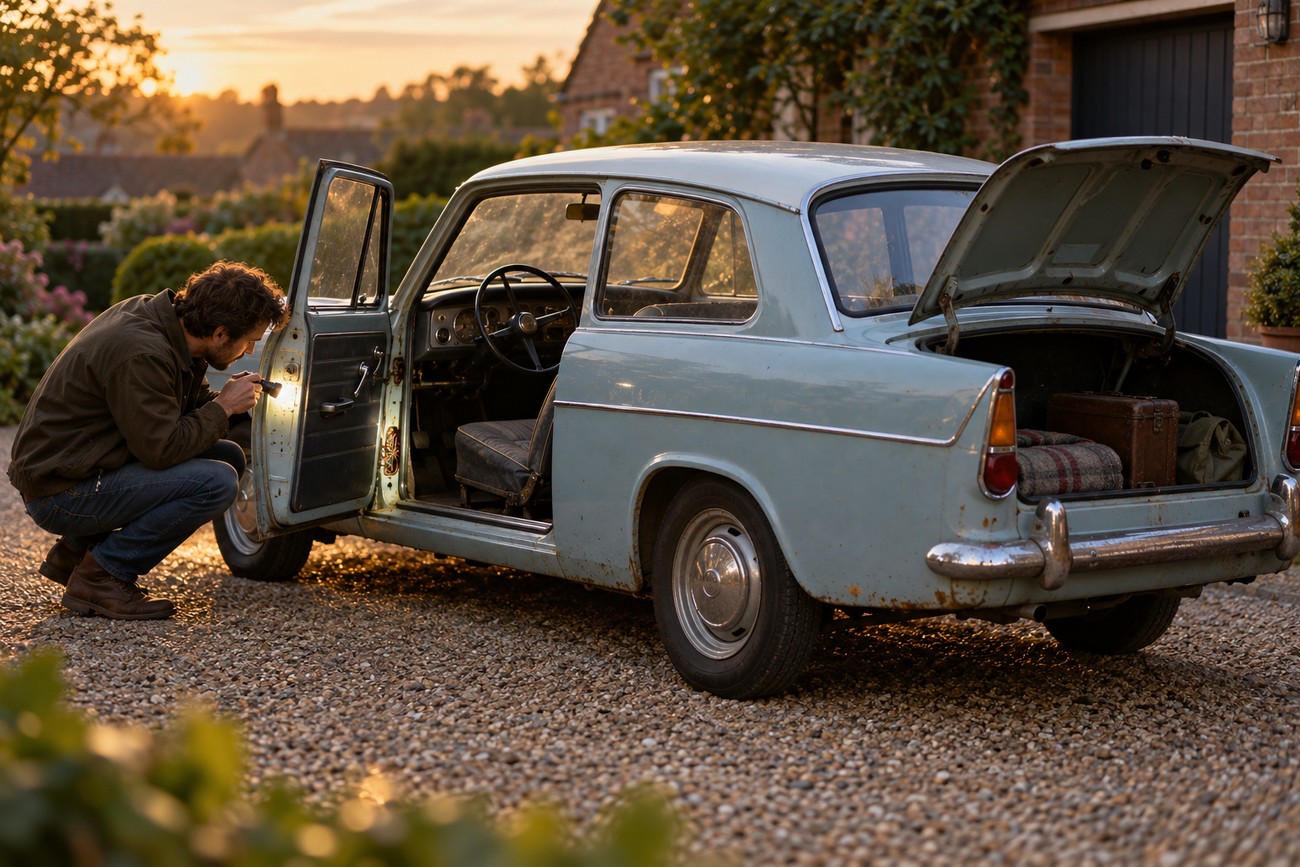
As a weekend car, a 105E can reward an owner willing to plan journeys around an older vehicle’s pace and space. Its controls and cabin are part of that experience, but noise, limited room, and an awkward boot remain practical constraints. Drive a prospective purchase long enough to discover whether you can live with them.
Regular use asks more of the car than a successful start and a brief test drive. Check the brakes, cooling system, ignition, and wiring, and confirm that the doors, windows, and seals provide reasonable weather protection. These are condition checks, not an automatic case for modifying every Anglia. Sorting neglected systems can make an otherwise sound car much easier to use.
Age and previous repairs make maintenance costs hard to predict, even when the basic machinery is simple. Decide how much work you want to take on before being persuaded by paint or an eager engine. For most buyers, structural condition and evidence of competent work should lead the decision; cosmetics come later.
Frequently asked questions
Production figures, asking prices, and details from popular culture are easily mixed with information about other Anglias. For a particular car, records and recent local evidence are more useful than a figure repeated without its scope or date.
How many Ford Anglia 105Es were made?
An exact 105E-specific production total should come from a source that clearly defines which versions it counts. Figures for the wider Anglia range may include other models, so they cannot safely be presented as a 105E total. If a number matters to your research, check its model and market coverage before using it.
How much is a Ford Anglia 105E worth today?
Its value depends on location, structural condition, completeness, and the quality of documented repairs. Compare recent sold listings for similar cars in your market rather than relying on asking prices alone. Factor in any welding or missing parts a candidate needs; a cheaper purchase can carry the larger total cost.
Why did J. K. Rowling choose a Ford Anglia?
Rowling has associated the flying Ford Anglia in Harry Potter with an Anglia owned by a close friend from her youth. That personal connection explains the choice more directly than theories about the 105E’s rear-window design. The fictional car’s abilities should not be read as clues to the real model’s features.
How do I open the Ford Anglia 105E’s back window?
You do not open it: the rear windscreen is fixed glazing, not a hatch. Access luggage through the separate boot lid, and use the side windows for ventilation. Do not pull at the rear glass or its seal; if either is loose, have the fitting and surrounding metal checked.







