
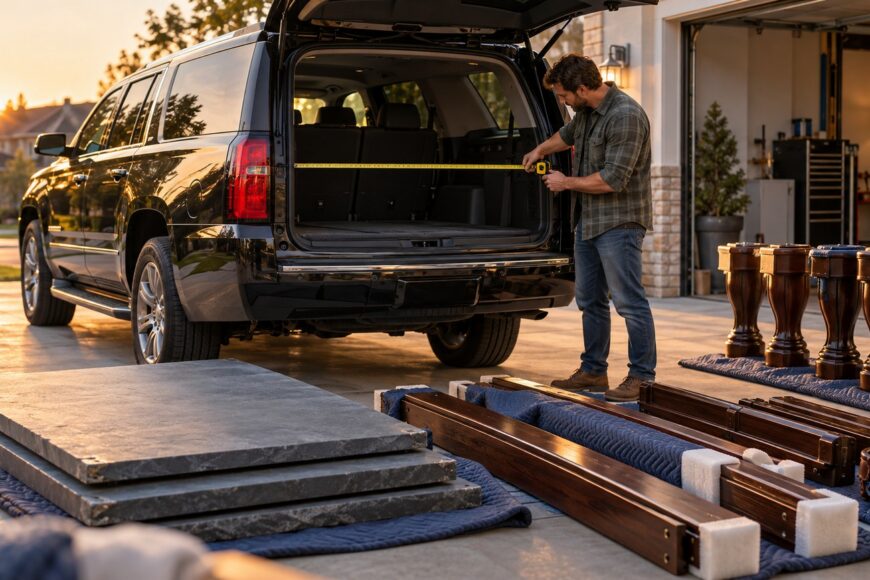
A large Chevrolet Suburban does not automatically accommodate a pool table, especially when the table is treated as one assembled object. The body may be long and spacious, yet the rear opening, wheel arches, roofline, and loading angle can stop a complete table before its length becomes relevant.
The practical answer depends on the Suburban’s generation, the table’s size and construction, the number of seats folded or removed, and the dimensions of every separate component. A properly disassembled table may be transportable, while an assembled table is generally the wrong planning assumption. Measure first, then decide whether the Suburban can handle the load safely.
- Will a Pool Table Fit in a Chevrolet Suburban?
- Measure the Suburban and the Table Before Moving Anything
- Disassemble and Pack the Pool Table for SUV Transport
- Loading the Parts Without Damaging the Suburban
- Secure the Load and Decide Whether the SUV Is Enough
- Common Fit Mistakes and Better Alternatives
- Frequently asked questions
- How heavy is a 7-foot slate pool table?
- How hard is it to install a pool table after moving it?
- How much room is needed around a pool table after delivery?
Will a Pool Table Fit in a Chevrolet Suburban?
An assembled pool table is not guaranteed to fit in any Chevrolet Suburban. Pool tables are normally transported disassembled into slate pieces, a frame, and legs, with rails and cloth-related parts packed separately according to the table’s construction. That changes the problem from fitting one large object to fitting several long, wide, and heavy parts.
Model year matters. The current-generation Suburban is approximately 5733 × 2060 × 1923 mm, with a wheelbase of approximately 3406 mm and eight seats. Earlier generations included examples around 5570 × 2002 × 1861 mm, so the same statement—“it fits in a Suburban”—can describe substantially different vehicles.
Seat configuration also changes the result. A Suburban with the third row folded may still have limited usable length if the second-row seatbacks, wheel arches, or a raised floor become the controlling points. A 7-foot, 8-foot, or 9-foot table also cannot be judged from its size label alone because its slate, frame, and packaging dimensions differ.
The safe conclusion is conditional: a disassembled table may fit after checking each component, each opening, the usable floor, the loading route, and the restraint plan. If one large part only fits diagonally without padding or cannot be secured without blocking a door or window, the vehicle is not a practical transport choice even if the part technically enters.
Measure the Suburban and the Table Before Moving Anything
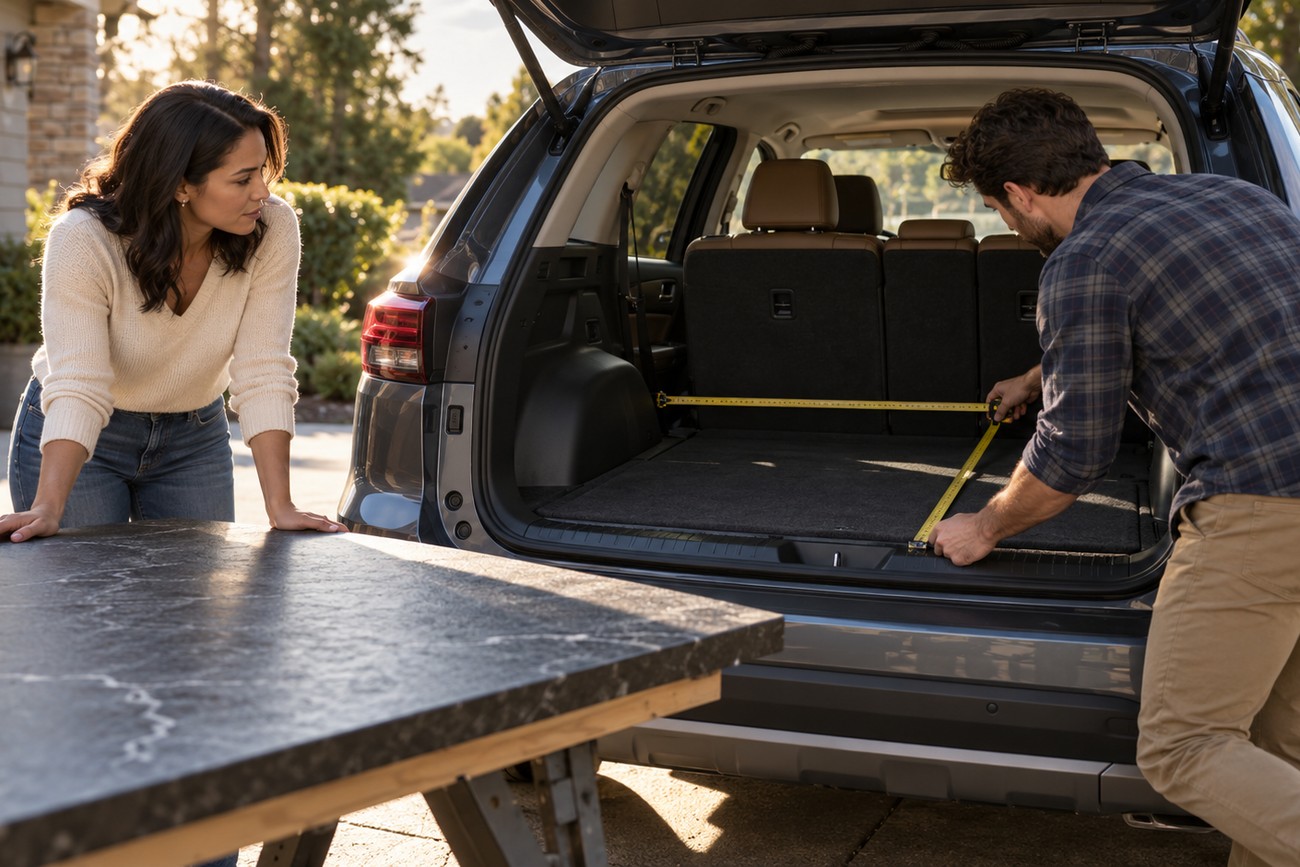
Start with the actual cargo floor, not the vehicle’s published exterior length. Measure from the closed rear door to the second-row seatbacks, then record the narrowest interior width between the wheel arches or trim. Also measure the rear opening, the loading height, and the usable height inside the vehicle.
Exterior specifications can mislead. Listed width is commonly measured without mirrors, while listed height is measured from the ground to the roof; roof rails may not be included. These figures describe the vehicle outside and do not tell you whether a slate piece can pass through the hatch or rotate beneath the roof.
Repeat the measurements with the intended seat arrangement. Folding or removing rows changes the available cargo space, and folded seats can leave a step in the floor that prevents a heavy part from sliding smoothly. Note whether the second row folds flat, whether it must be removed, and whether the side doors provide a more direct route.
Measure the table’s individual slate pieces, frame sections, legs, rails, and packaging. The narrowest opening, rather than the Suburban’s maximum body width, may decide the result. Include blankets, corner protection, and straps in the calculation because protective materials consume space and can change how a component must be positioned.
Disassemble and Pack the Pool Table for SUV Transport
Disassemble the table according to its construction and, where available, the manufacturer’s instructions. Separate the legs, frame, rails, cloth-related parts, and slate. Keep fasteners with the part they belong to, label hardware bags, and photograph connections before removal so reassembly does not depend on memory.
Treat every slate piece as a separate heavy load. The useful planning figure is the weight and handling difficulty of each piece, not a universal weight for the whole table. One slate piece can be difficult to lift, turn, and control even when the total table load appears manageable on paper.
Protect corners and finished surfaces with suitable padding, then wrap parts so they cannot rub against one another. Slate edges deserve particular care because contact with a sill, wheel arch, or another hard component can damage both the table and the vehicle. Blankets and padding must be included in the fit calculation rather than added after the cargo space has already been measured.
Pack long frame sections so they cannot become loose hazards during braking or cornering. Keep rails and smaller hardware together, and avoid placing loose metal parts beside slate. A complete table may be too large for the opening even when its disassembled components fit, which is why the dismantling plan should come before the loading day.
Loading the Parts Without Damaging the Suburban
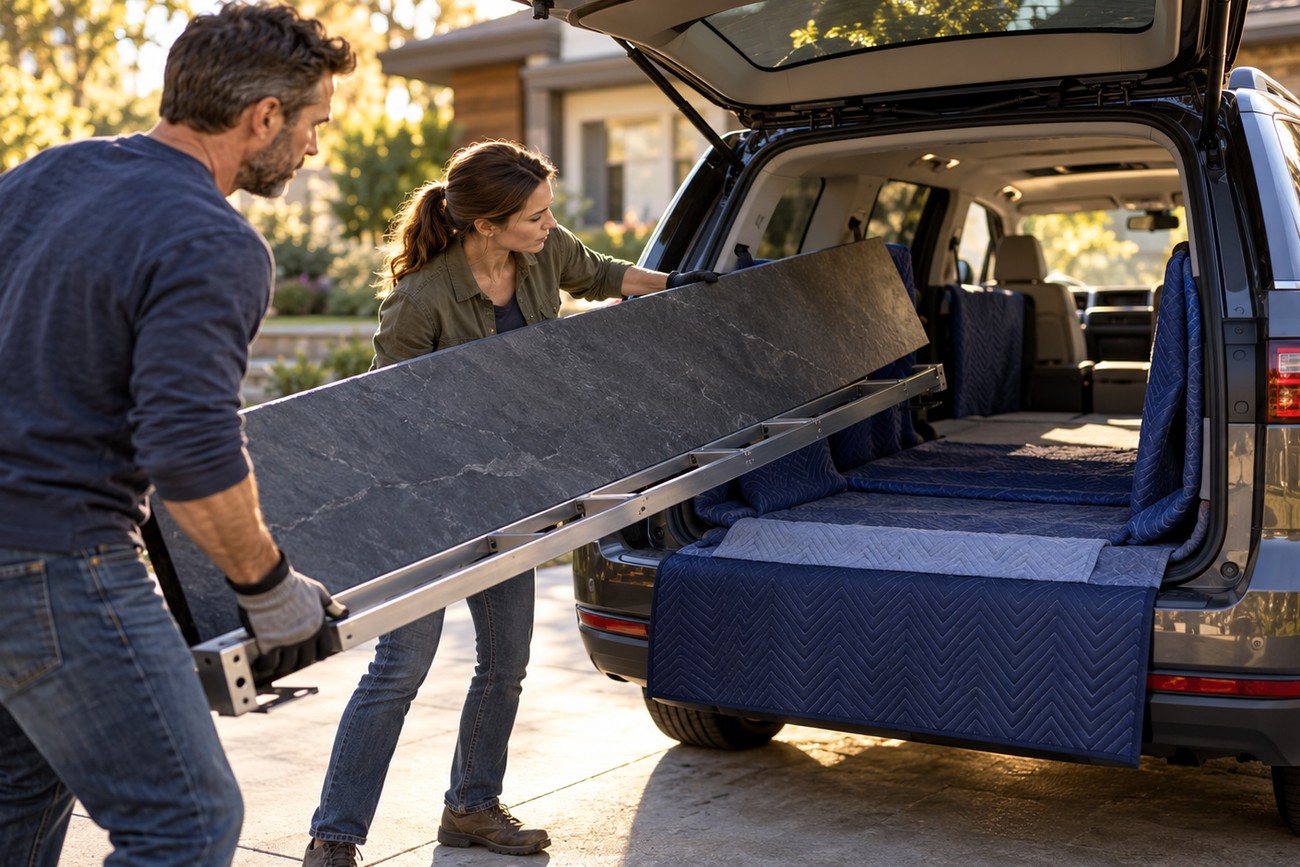
Prepare the vehicle before lifting anything. Fold or remove the required seats, clear organizers and loose cargo, and cover the sill, floor, trim, and exposed plastic along the carrying path. A protected route matters because slate and frame parts can scratch the threshold or interior while being tilted into position.
Plan the insertion angle for each large part. The rear hatch may offer the most obvious access, but a long component can fail at the opening or roofline while being lifted, even though it appears to fit diagonally once inside. Removing only the third row may achieve little if the second row or the rear opening remains the limiting point.
Some components may therefore be easier to load through a side door rather than the rear hatch alone. Use enough people to control the part, especially when lifting or rotating slate, and move slowly around the opening. Forcing a heavy piece through a tight gap can damage the vehicle, the table, or the people carrying it.
Load the largest pieces first while access is clear, then place lighter frame sections and protected hardware around them without creating pressure points. Do not use a folded seat step as an improvised ramp unless it is properly bridged and protected. A smooth, supported surface makes it easier to slide a controlled load than to drag it across upholstery or trim.
Secure the Load and Decide Whether the SUV Is Enough
Fitting is different from transporting safely. Every component must be padded and restrained against sliding, tipping, and contact with the doors, windows, and interior panels. Check that the rear hatch and side doors close without compressing the load, and keep the driver’s view and access to essential controls clear.
Use the vehicle’s suitable tie-down points and place padding between straps and finished surfaces. Straps should hold parts in position without crushing fragile edges. A component that fits only diagonally or only without packaging may be impossible to secure properly, which makes that arrangement unsuitable for road travel.
Handling is another go/no-go test. Heavy slate pieces can exceed what one person can comfortably carry or control, regardless of the available cargo volume. Arrange help before loading, establish where each part will be set down, and avoid improvising a lift at the vehicle threshold.
A cargo van, trailer, or professional mover is the better choice when the opening is too narrow, the loading angle is awkward, the parts cannot be restrained, or the interior cannot be protected adequately. The final decision should follow measured component dimensions, access, handling, and securement—not the Suburban’s exterior length or advertised cargo volume.
Common Fit Mistakes and Better Alternatives
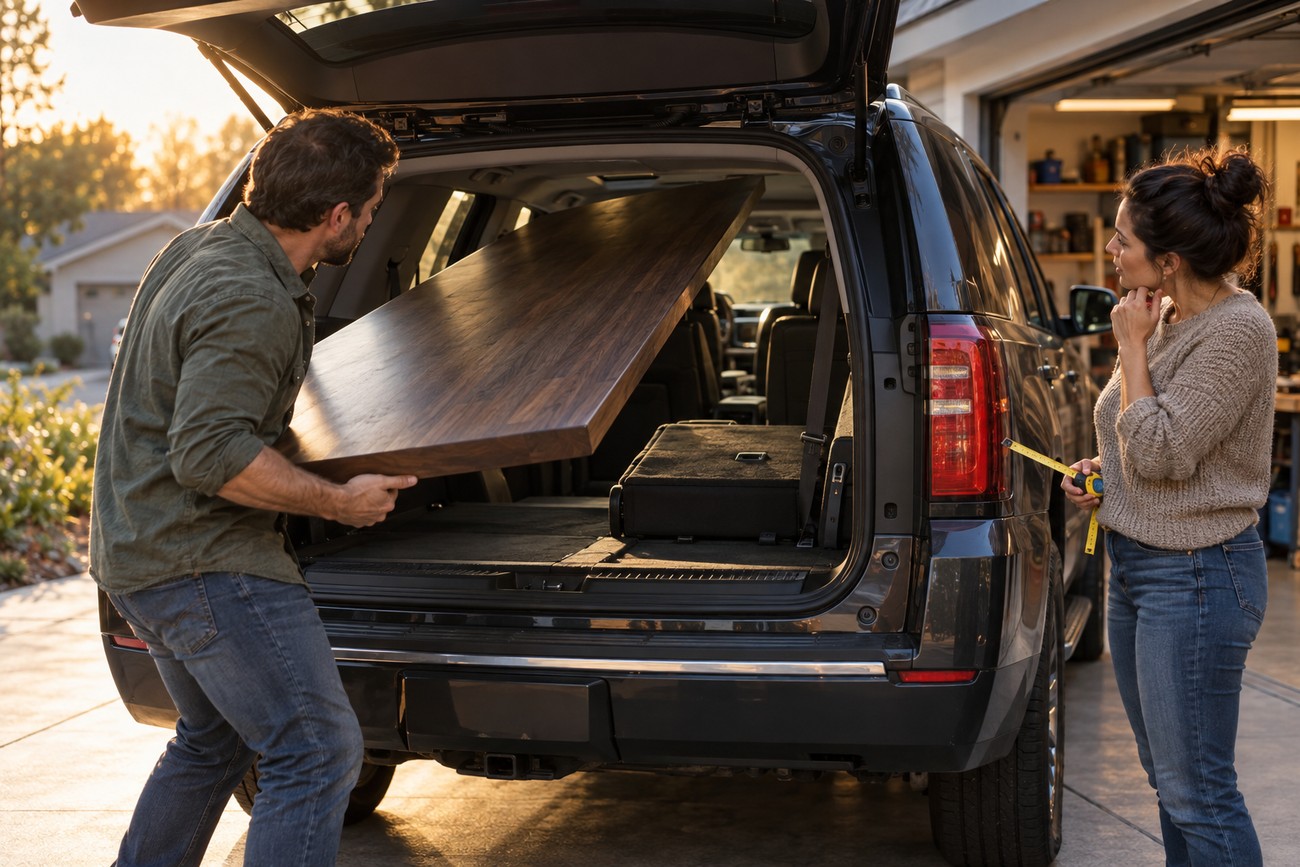
The most common mistake is comparing the table’s overall length with the Suburban’s outside length. Published body dimensions do not equal usable cargo length, opening width, or interior height. A long vehicle can still have a short practical loading path once the closed rear door, seatbacks, wheel arches, and insertion angle are considered.
A wide cargo area also does not guarantee a wide opening. The part may pass through the center of the cabin yet fail at the hatch, where the roofline narrows the turning space. Likewise, removing the third row does not necessarily create a flat or sufficiently long platform if the second row remains upright or leaves a step.
Use this checklist before committing to the Suburban:
- Identify the model year, generation, trim, and seat configuration.
- Measure the cargo floor from the closed rear door to the second-row seatbacks.
- Measure the narrowest interior width, every intended opening, loading height, and turning clearance.
- Record the dimensions and handling needs of each slate piece, frame section, rail, and leg.
- Allow space for blankets, padding, straps, and safe access to the doors.
- Confirm that the finished load can be restrained without blocking windows or doors.
If any answer is uncertain, stop before lifting the first heavy component. Measure and disassemble first, then choose the vehicle based on the largest and heaviest component. That approach may point to the Suburban, a trailer, a cargo van, or a professional moving service.
Frequently asked questions
The table’s construction and the destination room are part of the transport decision. These answers address details that are easy to miss after the vehicle measurements appear acceptable.
How heavy is a 7-foot slate pool table?
There is no reliable universal weight based on the 7-foot label alone. Tables may use different construction methods, and slate may be divided into pieces of different sizes and handling difficulty.
For planning, verify the weight of each slate piece from the table’s documentation or with the mover. That per-piece figure helps determine how many people are needed, how the piece can be turned at the opening, and whether a Suburban loading route is realistic.
How hard is it to install a pool table after moving it?
Installation usually involves rebuilding the frame, reinstalling the legs and rails, fitting cloth-related parts, and carefully leveling the playing surface. The work requires more than putting the visible pieces back in place because alignment affects how the table plays.
Professional setup may be worthwhile when the table uses multiple slate pieces, delicate cloth, or a frame that must be precisely adjusted. A successful move does not guarantee a usable table if reassembly and leveling are rushed.
How much room is needed around a pool table after delivery?
Check the destination before loading the Suburban. Measure the table footprint, cue clearance around all sides, the doorway path, and the area needed to assemble and level the table.
A component can reach the room and still fail to fit its final position because furniture, walls, stair turns, or limited cue clearance block the setup. Confirm the complete delivery route and final assembly area before choosing the transport vehicle.







